The reconstruction of the vast panorama of Ancient Indian history relies on a rich amalgamation of diverse archaeological and textual evidence. These primary and secondary sources, when synthesized, collaboratively offer a multifaceted understanding of the region's evolving society, complex economy, dynamic polity, and profound culture. Their thorough analysis is indispensable for both professional historians and aspiring exam candidates to critically examine and contextualize the pivotal developments in India's foundational history.
In this chapter, you will understand:
- Role of archaeological excavations, temples, and pottery in dating cultural phases.
- Historical value of coinage, epigraphy, and the decipherment of the Brahmi script.
- Categorization of indigenous literature alongside crucial accounts from foreign travelers.
- Specific historical trajectory and material sources of early South India and Tamilakam.
Why this topic matters: Understanding historical sources provides the critical analytical foundation required for mastering ancient Indian history, interpreting primary records, and excelling in competitive examinations such as the Civil Services examination.
Core Idea: Ancient Indian history is reconstructed by cross-referencing physical remains, coinage, and stone inscriptions with domestic literature and foreign travelogues. Together, these complementary streams convert isolated facts into a coherent chronological narrative of social, economic, and political evolution.
Significance of Material Remains and Archaeological Discoveries in Ancient India
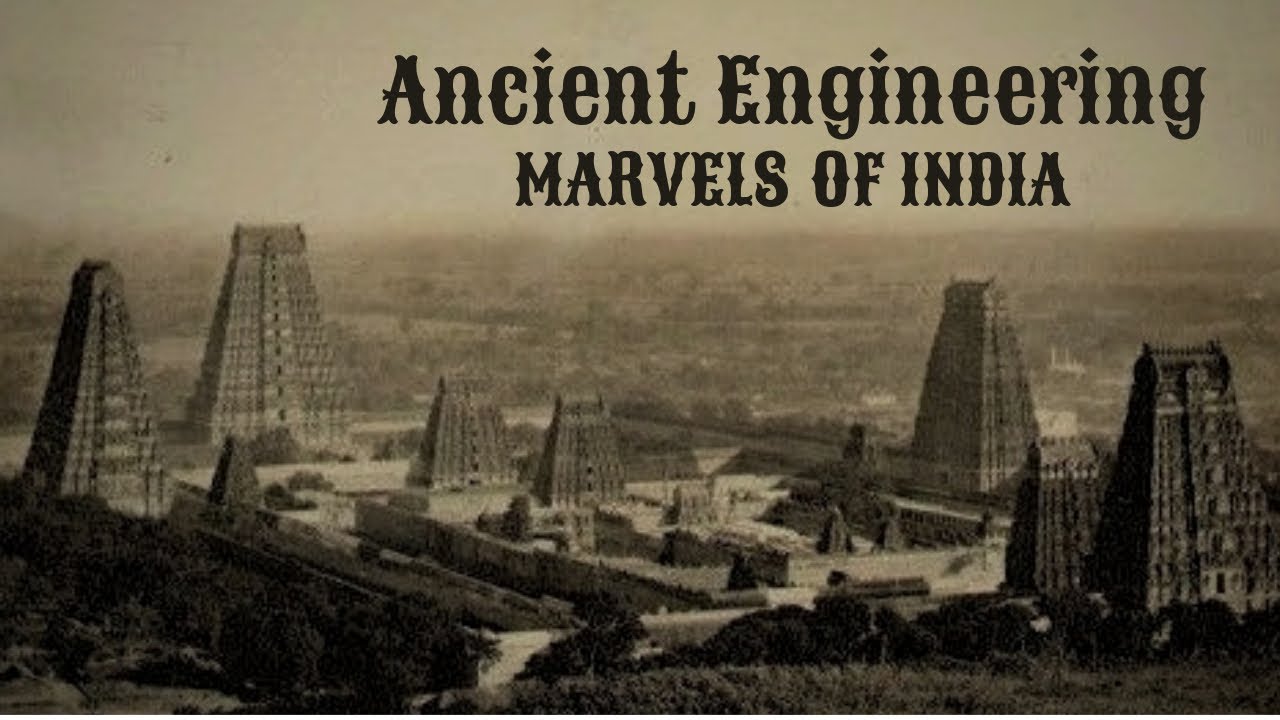
Archaeological evidence, collectively known as material remains—such as ancient temples, extensive monasteries, and significant megalithic sites—are key instruments in reconstructing the daily lifestyle, economic practices, and deep-seated cultural beliefs of ancient populations.
Architectural and Religious Insights from Material Remains
The discovery of large stone temples in South India and remnants of sophisticated brick monasteries in Eastern India (like those in the Gangetic basin) are pivotal, revealing the evolution of religious architectural styles, associated practices, and the geographical spread of major faiths.
- The type of construction materials and architectural styles often dictate the period and the patronage (royal or popular) of these religious structures.
Environmental Impact on Preservation and Site Discovery
The natural climate plays a decisive role in the preservation quality of material remains. Generally, drier regions, such as parts of Western Uttar Pradesh and Rajasthan, yield better-preserved remains than the moisture-laden areas like the dense Gangetic basin.
- The study of pottery found at sites provides a critical chronological framework for various cultural phases.
- Discoveries in dry zones help fill critical chronological gaps in early settlement patterns.
- Moist alluvial soil degrades organic materials rapidly, making inorganic artifacts far more vital in eastern river valleys.
- Submerged sites along coastal lines offer unique evidence of ancient maritime activity and trade setups.
The Crucial Numismatic Role of Coins in Ancient Indian Political and Economic History
Coins are an exceptionally vital numismatic source, acting as small, tangible historical documents that reflect the trade, administrative polity, economic prosperity, and cultural shifts of ancient Indian kingdoms and empires.

- Coins help establish royal genealogies and fix the geographical extent of ruling dynasties.
Composition, Inscriptions, and Materials of Ancient Coins
Ancient Indian coinage was manufactured from a variety of metals, including copper, silver, gold, and lead. Critically, these coins were frequently inscribed with the names of influential rulers, significant deities, or precise dates, allowing for accurate dynastic and economic reconstructions.
Dynastic and Economic Insights from Specific Coinage
The intricate Indo-Greek coins, often featuring Hellenistic influences, and the magnificent Gupta gold coins are exemplary historical treasures. They vividly highlight detailed dynastic succession, the extent of political influence, and periods of unprecedented economic prosperity and extensive trade networks.
Cultural and Religious Elements Reflected in Ancient Coinage
- Beyond their economic value, the religious symbols, artistic motifs, and iconographic elements meticulously placed on ancient coins reveal prevailing cultural practices, the patron deities of ruling houses, and the artistic sensibilities of different historical periods.
- The purity and quantity of gold coinage directly correlate with the financial strength of the state.
- Find-spots of Roman coins across South India confirm extensive trans-oceanic commercial exchanges.
Epigraphy: Decoding Ancient Indian History Through Inscriptions
Epigraphy—defined as the systematic and critical study of inscriptions—is frequently regarded as a more robust and reliable source than numismatics for reconstructing crucial elements of ancient history due to its direct and official nature.
- Inscriptions give us contemporary first-hand information without later scribal modifications or additions.
Physical Locations and Materials Used for Inscriptions
Inscriptions were purposefully engraved on a wide array of durable surfaces: official seals, monolithic pillars, enduring copper plates, massive temple walls, and even baked bricks, ensuring their survival across millennia and providing diverse geographical and temporal contexts.
Monolithic pillars and copper plates served as durable public registers for royal decrees and legal land grants. Language Evolution and Chronology of Ancient Inscriptions
- The earliest significant inscriptions, dating back to (notably those of Ashoka), were predominantly composed in Prakrit. Over time, particularly from onwards, the language of royal and public records progressively shifted toward Sanskrit, reflecting a cultural and linguistic change.
Content and Critical Historical Value of Inscriptions
- These durable records formally documented royal decrees, generous donations to religious institutions, military victories and campaigns, and specific land grants. They are therefore critically important for comprehensive study of administration, social stratification, legal frameworks, and religious evolution.
The Decipherment of Brahmi and the Unlocking of Historical Data
- A pivotal moment in Indian historiography occurred with the successful decipherment of the fundamental Brahmi script by James Prinsep in 1837. This monumental achievement immediately unlocked the vast reserves of historical and administrative data contained within thousands of ancient inscriptions.
Quick Revision Capsule: Key Historical Sources
A structured overview comparing the primary categories of historical sources used to reconstruct ancient Indian history:
| Source Type | Primary Examples | Key Historical Value |
|---|---|---|
| Archaeological Remains | Monasteries, Megalithic graves, Temples, Pottery | Establish socio-economic lifestyle, technological advancement, and cultural chronology. |
| Numismatic Evidence | Indo-Greek coinage, Punch-marked coins, Gupta Gold coins | Reflect economic health, dynastic successions, administrative boundaries, and trade networks. |
| Epigraphic Inscriptions | Ashokan Pillar Edicts, Copper-plate land grants, Temple wall records | Provide contemporary official decrees, land tenure frameworks, legal policies, and dates. |
| Indigenous Literature | Vedas, Epics, Jatakas, Kautilya's Arthashastra | Detail social organization, statecraft, ethical systems, religious practices, and philosophy. |
| Foreign Accounts | Megasthenes' Indika, Travelogues of Fa-Hsien and Hsuan Tsang | Provide external confirmation of internal political conditions, administration, and trade routes. |
Exploring Ancient Indian Life Through Diverse Literary Sources
Ancient literature, while often primarily religious or philosophical in focus, also inadvertently preserves and provides substantial details concerning the prevailing socio-political conditions, economic structures, and cultural life of the time.
The Sacred Vedic Texts and Early Religious Life
The Vedas (spanning roughly ) are the earliest body of literature, offering a deep well of information regarding early Hindu rituals, prayers, philosophical concepts, and the foundational social organization of the Indo-Aryan society.
Epic Literature: Grand Social and Political Narratives
The great Indian Epics, the Ramayana and the Mahabharata, though developed over centuries, reflect the political and social conditions that existed from approximately , providing narratives rich with cultural values and early state formation dynamics.
Buddhist and Jaina Religious and Regional Texts
- A significant corpus of historical and geographical information is found within the religious texts of Buddhism and Jainism, written primarily in Pali and Prakrit languages. These texts offer detailed accounts of various geographical regions, the reigns of important rulers, and the rise of ascetic traditions.
Secular Literature: Foundational Texts on Polity, Law, and Economy
- Non-religious works are equally vital, including the Dharmasutras and Smritis (texts on legal and social laws), and most notably Kautilya’s Arthashastra (a treatise on statecraft, economy, and military strategy). These texts are indispensable for understanding ancient laws, state administration, and economic policy.
External Insights from Foreign Accounts of Ancient India
The valuable travelogues and historical notes left by Greek, Roman, and Chinese travelers and scholars provide critical external perspectives that often corroborate or contrast with indigenous historical sources, adding layers of authenticity and detail.
- Foreign accounts help pin down firm dates in Indian history by aligning domestic events with well-documented foreign chronological records.
Greek Accounts: Megasthenes and the Mauryan Empire
The work Indika by Megasthenes, an ambassador to the Mauryan court, remains a detailed and crucial account, offering a foreigner's view of Mauryan polity, administration, and social organization under Chandragupta Maurya.
Chinese Pilgrims: Fa-Hsien and Hsuan Tsang's Records
Buddhist pilgrims like Fa-Hsien (who traveled during the Gupta period) and Hsuan Tsang (who visited during the reign of Harsha) left meticulously detailed records of the religious, social, and political conditions prevalent during their respective times of travel.
Value and Necessary Caution with Foreign Sources
- While these foreign sources significantly supplement indigenous narratives, historians must approach them with caution, as observations were occasionally influenced by cultural bias or based on second-hand information, sometimes leading to slightly exaggerated or misinterpreted facts.
- Foreign records provide valuable details regarding major ports, import-export trade items, and international diplomatic relations.
- They help corroborate internal accounts concerning royal personalities, court traditions, and economic prosperity.
Understanding the Historical Sense of Ancient Indians
Although the tradition of writing systematic, Western-style history was not prominent in ancient India, various texts and records clearly demonstrate that ancient Indians possessed a defined historical sense and a method of recording the past.
- Ancient historical writing expressed itself through genealogical preservation, royal court biographies, and temple records.
The Puranas and the Preservation of Dynastic Lists
The Puranas are of immense historical value, specifically containing lengthy dynastic lists (Vamshas) of rulers from early to medieval times, framed within the traditional cyclical concepts of time and cosmology.
Biographical Works and Court Chronicles
Works of biography, such as Banabhatta's Harshacharita (a life account of King Harsha) and Kalhana's Rajatarangini (a history of the kings of Kashmir), showcase a sophisticated regional historical writing tradition.
Inscriptions and Regional Historical Narratives
- In addition to these works, the multitude of inscriptions and officially maintained dynastic records from various regions provide localized historical narratives, proving the consistent effort to document events of political significance.
- Kalhana's work stands out as an early example of critical historical methodology that evaluated earlier written sources and inscriptions.
- Genealogical records maintained by family bards helped preserve authentic lineage structures across generations.
South Indian Historical Context and Sources: Focus on Tamilakam
The history of South India, particularly the region of Tamilakam, is uniquely and richly reconstructed from its own distinct set of primary sources, including local inscriptions, the prestigious Sangam literature, extensive archaeological findings, and crucial foreign trade texts.
- The South Indian region developed unique social, political, and cultural institutions alongside distinct trade networks.
Transition to History in South India: Early Polities and Trade
Even the earliest definitive historical records, such as Ashoka’s inscriptions, formally mention the influential early Tamil polities—the Cholas, Cheras, Pandyas, and Satiyaputras. The presence of key trade centers like Korkai, Alagankulam, Karur, and Kodumanal emphatically underscores the region's intense economic activity and maritime connections.
Sources for Comprehensive Historical Reconstruction in South India
The early historical narrative of South India is built upon the confluence of multiple authentic sources:
- Extensive Megalithic burials, complete with their associated grave goods, provide a window into early beliefs and economy.
- Inscriptions written in Tamil Brahmi script, offering socio-economic data.
- The immense corpus of Sangam literature, representing the earliest Tamil anthologies.
- Greek and Roman sources, such as the Periplus of the Erythraean Sea and Ptolemy’s Geography, documenting trade routes.
- Pliny the Elder’s Natural History, describing trade connections with the Roman world.
Megalithic Burials in Tamilakam: Revealing Social and Economic Life
The physical forms of these prehistoric burials include impressive structures like menhirs (single upright stones), dolmens (table-like structures), urns, and stone circles. The valuable grave goods—including pottery, finely crafted metal objects, beads, and even preserved food grains—are primary evidence for understanding the social beliefs, ritualistic practices, and the nascent economic life of the early inhabitants.
Significance of Early Inscriptions: Dedicatory Records and Socio-Economic Data
- Inscriptions found from were primarily dedicatory records, meticulously documenting donations, gifts of caves to monks, and the contributions of various artisans. These records supply invaluable socio-economic data and provide vital textual linkage with the descriptions found in the Sangam texts.
Sangam Literature as a Historical Source: Culture, Society, and Polity
- The Sangam anthologies (dated approximately ), alongside the ethical treatise Tirukkural and the grammatical work Tolkappiyam, are foundational. They offer a direct reflection of the society, political organization (like the Chiefdoms), and sophisticated culture of the ancient Tamilakam region.
Social Organization and Economy of Ancient Tamilakam
- Ancient Tamilakam society was structured around powerful households, independent velir chiefs, and the more established ventar dynasties. Economic wealth was intrinsically linked to productive agriculture and flourishing coastal and internal trade. The developing polity clearly maintained connections with the northern janapadas (kingdoms) of the subcontinent.
Transition from Chiefdoms to Kingdoms: Roman Trade and Urbanism
- A major catalyst for political evolution was the vigorous coastal and overseas trade. The substantial Roman demand for pepper, fine textiles, and luxury goods was a powerful economic engine that fostered significant urbanization and facilitated the crucial political transition from decentralized chiefdoms to powerful, centralized kingdoms.
Role of Poets and Bards: Chroniclers and Patrons
- The esteemed poets and bards of the Sangam era served as the key chroniclers of contemporary heroic tales and political events. They received lavish royal patronage and their narratives effectively reinforced the kinship-based wealth distribution and political legitimization of the ruling class.
Rise of Urbanism and Key Trade Centers
- Coastal ports such as Muziris, Arikamedu, and Puhar rapidly transformed into crucial trade hubs for a variety of luxury goods, sophisticated textiles, and Roman coins. This growth was robustly boosted by the intensive and profitable trade with the Roman Empire.
Conflicts and Heroic Historical Narratives
- The historical records are replete with evidence of frequent and intense wars fought among the three great ruling houses: the Cheras, Cholas, and Pandyas. Heroic legends, such as those detailing the exploits of the Chola king Karikala, vividly highlight the processes of political evolution and the valor celebrated in their culture.
Transition to Kingdoms and Key External Influences
- The developing polities were significantly influenced by the arrival and establishment of Buddhist and Jaina monks, the increasing presence of Brahman settlements, and the gradual process of Sanskritization. Economically, the shift moved from simple barter to a more complex monetized trade system and a more organized form of agriculture.
Summary
The diverse range of material remains, verifiable coins, authoritative inscriptions, indigenous literature, and critical foreign accounts are the foundational pillars upon which the narrative of Ancient Indian history is constructed. From the archaeological evidence of Indus Valley cities around and the pivotal decipherment of the Brahmi script in to the rich cultural data within the Sangam literature and the geopolitical insights from foreign travelers, these sources collectively reconstruct India’s complex past. For UPSC and all other competitive exams, mastering the specific details and the complementary nature of these historical sources is absolutely vital for understanding the profound continuity, major periods of change, and the extensive cultural evolution that define the history of the Indian subcontinent.
Quick Revision Points
Core parameters to keep in mind for examination preparation:
- (i) Primary archaeological remains provide raw material data without subjective bias, establishing clear chronological anchors.
- (ii) Epigraphy offers the most reliable official data, with Ashokan inscriptions in Prakrit marking the earliest deciphered public records.
- (iii) Coinage acts as a primary indicator of administrative boundaries, trade volume, and economic prosperity across kingdoms.
- (iv) Literary sources and foreign travelogues must be cross-checked with physical artifacts to correct cultural biases and hyperbole.
- Exam Tip: Always analyze historical events by combining archaeological data with literary evidence. For instance, when answering questions on Mauryan administration or South Indian trade, cross-reference inscriptions (like Ashokan Edicts) with contemporary texts (like Arthashastra or Sangam literature) and physical coin finds to formulate a high-scoring, balanced answer.
Frequently Asked Questions (FAQ)
Q1: Why are inscriptions considered more reliable than literary sources for ancient history?
A1: Inscriptions were engraved on durable surfaces like stone or metal at the time events occurred. Unlike literary texts, which were repeatedly re-copied over centuries and often subjected to additions or exaggerations, inscriptions provide contemporary, unalterable official records.Q2: What is the significance of the year 1837 in Indian historiography?
A2: In 1837, James Prinsep deciphered the ancient Brahmi script. This groundbreaking achievement allowed historians to read thousands of ancient inscriptions across India, including the edicts of Emperor Ashoka, opening up centuries of direct historical facts.Q3: How do foreign accounts help resolve issues of chronology in Indian history?
A3: Ancient Indian texts rarely maintained chronological dates. Foreign writers (like Greek ambassadors or Chinese monks) recorded events alongside established calendars in their homelands. Identifying known figures (like Chandragupta Maurya in Megasthenes' writings) creates firm chronological reference points.