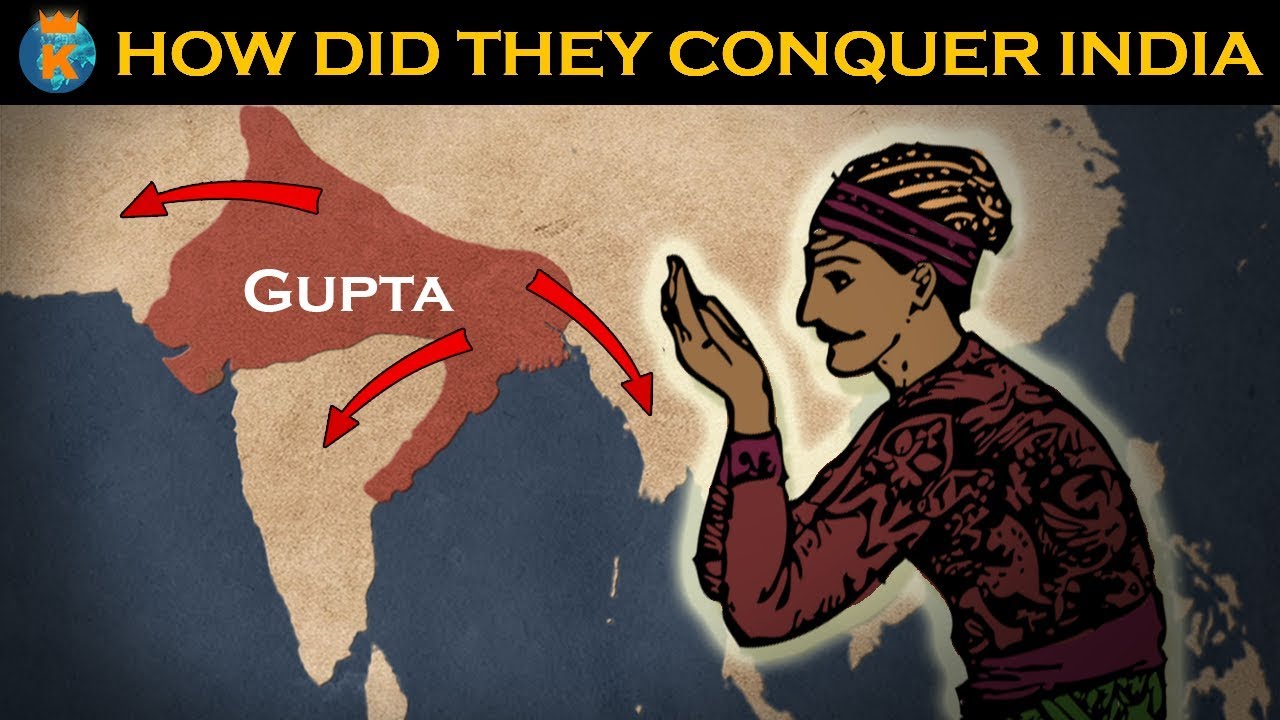
The Gupta Dynasty arose from political fragmentation following the decline of the Mauryan Era, creating a powerful empire across northern India. Establishing their foundation in the fertile regions of Uttar Pradesh and Bihar, the Guptas expanded their domain through planned conquests and international commerce, notably trading with the Byzantine Empire. Their rule established a period of imperial strength, cultural achievement, and intellectual brilliance that shaped classical Indian history.
In this chapter, you will understand:
- The political ascent and governance model of the Gupta Empire.
- Economic strategies including agrarian expansion, trade, and land grant policies.
- Scientific, mathematical, literary, and philosophical achievements during the Golden Age.
- Military conquests under Samudragupta and Chandragupta II alongside causes of eventual decline.
Why this topic matters: This period establishes the baseline for classical Indian administration, art, and science. Understanding Gupta statecraft, trade networks, and land grants is essential for mastering ancient Indian history and competitive examination syllabi.
Core Idea: Starting in , the Gupta Dynasty transformed northern India through centralized political authority paired with local administration. They fostered remarkable growth in Sanskrit literature, metallurgy, mathematics, and long-distance trade before succumbing to external invasions and decentralization in the 6th century.
Political Background and the Calculated Rise of the Gupta Dynasty
The emergence of the Guptas occurred alongside other regional powers, such as the Satavahanas in the Deccan and remnants of the Kushans in the northwest. Their power grew through steady control over agricultural belts and strategic trade routes.
Early Consolidation and Strategic Expansion: Unveiling Gupta Origins
Originally acting as feudatories to the Kushan Empire, early Gupta rulers adopted military and administrative methods that allowed them to accumulate wealth and establish independence.
Archaeological Evidence and Economic Foundations
Stamp coins and inscriptions offer clear evidence of growing royal authority across the Gangetic plains during this era.
- (i) Archaeological findings, including gold coins and detailed inscriptions, document their expanding territorial control.
- (ii) The rise of the Vaishya caste in commercial ventures strengthened state finances and overall economic capacity.
- (iii) Effective management of trade and diplomatic channels expanded their influence across the Indian subcontinent.
Imperial Governance, Centralized Kingship, and Decentralized Administration
While Gupta monarchs adopted elevated titles emphasizing divine power, their administrative structure permitted practical decentralization across provincial, district, and village units.

- (i) The emperor was supported by a royal council of ministers and princes who handled central administrative affairs.
The Hierarchical Administrative Structure and Key Officials
Administrative responsibilities were split into systematic divisions to maintain order and steady revenue collection across vast territories.
- (i) The empire was divided into administrative units ranging from the desha and rashtra down to the provincial bhukti and district level vishaya.
- (ii) Regional administration relied on ayuktakas at the provincial level and vishayapatis managing districts.
- (iii) Local village governance was directed by councils of grama-adhyakshas, village elders called mahattaras, and eight-member boards known as ashtakula-adhikaranas.
Economic Policy and Agrarian Expansion through Strategic Land Grants
The state encouraged agricultural production through land grants, expansion of irrigation systems, and political alliances with religious elites and regional leaders.
- (i) Land transfers helped bring uncultivated wilderness under active farming to raise agrarian yields.
Land Reforms, Agrarian Policy, and Socio-Religious Integration
Granting land served both financial and political goals, anchoring imperial authority in rural regions.
Copper plate inscriptions documented official land grants, exemptions, and royal decrees. - (i) Tax-exempt land grants, such as Agrahara given to scholars and brahmadeya for religious purposes, secured rural loyalty.
- (ii) Scholars utilized knowledge of astrology, agricultural science, and Vedic rituals to assist local farming and community integration.
- (iii) Epigraphical records, such as copper plates from Queen Regent Prabhavati Gupta, confirm these administrative practices.
Broader Economic and Political Impact of Gupta Policies
Merchant guilds, religious establishments, and trade networks provided economic stability to the imperial foundation.
- (a) The circle of feudatories known as the Samanta-chakra offered military backing during peace but created risks of rebellion if the central monarchy weakened.
- (b) Investments in water storage, including reservoirs and stepwells, improved crop yield and protected against regular droughts.
- (c) Integrating forest communities into the wider social structure expanded the state's reach and workforce base.
Knowledge Systems, Intellectual Life, and the Great Academic Flowering
The era supported significant developments in education, science, and philosophy, sustained by traditional learning centers and monastic universities.
Revolutionary Scientific and Mathematical Contributions
Scholars advanced astronomy, mathematics, and medicine, establishing standards that influenced later global research.
- (i) The astronomer Aryabhata wrote the Aryabhatiya, explaining eclipses and calculating the value of pi accurately to four decimal places.
- (ii) The city of Ujjain became an international center for astronomical research and calculation.
- (iii) Works from this period were preserved, translated, and shared internationally by subsequent scholars.
Major Schools of Philosophy and Cosmological Thought
Scholastic discussions flourished across six classical philosophical systems: Nyaya, Vaisheshika, Sankhya, Yoga, Mimamsa, and Vedanta.
- (a) Ideas of cyclical time involving four ages or yugas were debated alongside dynastic records.
- (b) The concept of the Kaliyuga represented periods of societal stress, tied to expectations of restoration by figures like Kalkin.
Quick Revision Capsule: Gupta Empire at a Glance
Key administrative, economic, and cultural highlights of the Gupta era:
| Domain | Key Features & Officers | Historical Impact |
|---|---|---|
| Imperial Governance | Central monarchy with bhukti (provinces) and vishaya (districts); led by ayuktakas and vishayapatis. | Maintained structural stability through balance of central power and local governance. |
| Agrarian Economy | Tax-exempt land grants like Agrahara and brahmadeya; copper plate documentation. | Expanded cultivated lands and secured rural political loyalty. |
| Science & Math | Pioneering works like the Aryabhatiya by Aryabhata; research hub at Ujjain. | Calculated pi ($\pi$), explained eclipse mechanics, and advanced mathematical concepts. |
| Literature & Arts | Works by Kalidasa (Abhijnana-Shakuntala), Natya-shastra commentaries, and Prakrit literature. | Established the golden era of classical Sanskrit drama and artistic standards. |
| Military Expansion | Campaigns led by Samudragupta and Chandragupta II against the Sakas. | Unified northern India and secured access to crucial trade ports. |
Cultural Flourishing, Literary Excellence, and Artistic Zenith
This period is recognized as the classical age of Indian art and literature, characterized by achievements in Sanskrit composition, theater, and sculpture.
The Rich Legacy of Classical Sanskrit Literature
Courts and academic institutions nurtured classical Sanskrit authors whose works remain major literary landmarks.
- (i) Court poet Kalidasa composed famous plays including Abhijnana-Shakuntala and poetic works like Meghaduta.
- (ii) Authors including Bharavi, Magha, Bhavabhuti, and Bana contributed significant prose and poetry to the literary canon.
- (iii) The Natya-shastra provided systematic guidelines for performance, dance, and dramatic arts.
Prakrit and Jaina Literature: A Spectrum of Linguistic Diversity
Alongside Sanskrit, literature in Prakrit languages made narrative works accessible to diverse communities.
- (a) Jaina compositions like the Paumacariyam by Vimalasuri offered distinct perspectives on traditional epics.
- (b) Dramas used Prakrit dialogue for specific characters, illustrating linguistic patterns of the period.
- (c) Regional language development during this era laid early foundations for modern Indian languages.
Military Triumphs and Imperial Expansion under Samudragupta and Chandragupta II
Monarchs like Samudragupta and Chandragupta II used organized military strategies to extend boundaries and secure political authority.
Samudragupta: Military Genius and Strategic Campaigns
Samudragupta expanded imperial control across the northern plains and into southern regions through calculated campaigns.
- (i) The Allahabad Pillar Inscription, written by court poet Harishena, details his military victories and policy approach.
- (ii) His campaigns extended influence into southern India (Dakshinapatha) and secured submissions from forest kingdoms (Atavika rajyas).
- (iii) His political reach extracted tribute from southern powers, including the Pallavas of Kanchi.
Chandragupta II (Vikramaditya): Consolidation and Cultural Patronage
Chandragupta II consolidated imperial territories and provided patronage to arts, literature, and science.
- (a) He defeated the Sakas in northwestern India, securing trade routes and access to coastal ports.
- (b) His court featured prominent figures known as the Nine Gems (Navaratnas), including Kalidasa and Amarasimha.
- (c) Political stability and economic growth during his rule established this era as the Golden Age of India.
Decline and Fragmentation of the Gupta Empire (5th Century AD)
Imperial authority weakened during the late 5th century due to repeated invasions by Huna tribes and growing internal division.
- (i) External conflict in the west led to revenue losses and reduced imperial military readiness.
- (ii) Increasing independence among local chiefs broken imperial unity into separate regional holdings.
- (iii) By the mid-6th century, the centralized state had fragmented into smaller successor kingdoms.
Summary
The Gupta Empire () represents a foundational era in Indian civilization, marked by developments in literature, science, governance, and trade. Rulers like Samudragupta and Chandragupta II consolidated territorial authority and encouraged agricultural expansion through structured land grants. Despite its eventual decline under Huna invasions, the Gupta period provided long-standing administrative, economic, and cultural models for the subcontinent.
Quick Revision Notes
Essential Checkpoints for Examination Review:
- (i) The Gupta Era officially began in under Chandragupta I.
- (ii) Governance combined central monarchical power with structured provincial (bhukti) and district (vishaya) administration.
- (iii) Tax-free Agrahara land grants encouraged agricultural expansion in rural areas.
- (iv) Major intellectual advancements included Aryabhata's astronomical calculations and Kalidasa's classical Sanskrit literature.
- Exam Tip: Pay close attention to administrative terms like bhukti, vishaya, and ayuktakas, as well as primary sources such as the Allahabad Pillar Inscription and royal copper plates, as these are frequently tested in history examinations.
Frequently Asked Questions (FAQ)
Q1: Why is the Gupta period termed the Golden Age of India?
A1: It earned this title due to major advancements in Sanskrit literature, mathematical concepts like pi ($\pi$), astronomical models, classical arts, and stable economic networks supported by long-distance trade.Q2: How did land grants affect the Gupta rural economy?
A2: Grants like Agrahara brought uncultivated land under active farming, increased agricultural yields, integrated local communities into the economy, and established stable revenue streams.Q3: What were the primary causes of the decline of the Gupta Empire?
A3: Key factors included repeated invasions by the Huna tribes, loss of profitable trade territories, and growing autonomy among regional feudatories (samantas), which led to administrative fragmentation by the 6th century.