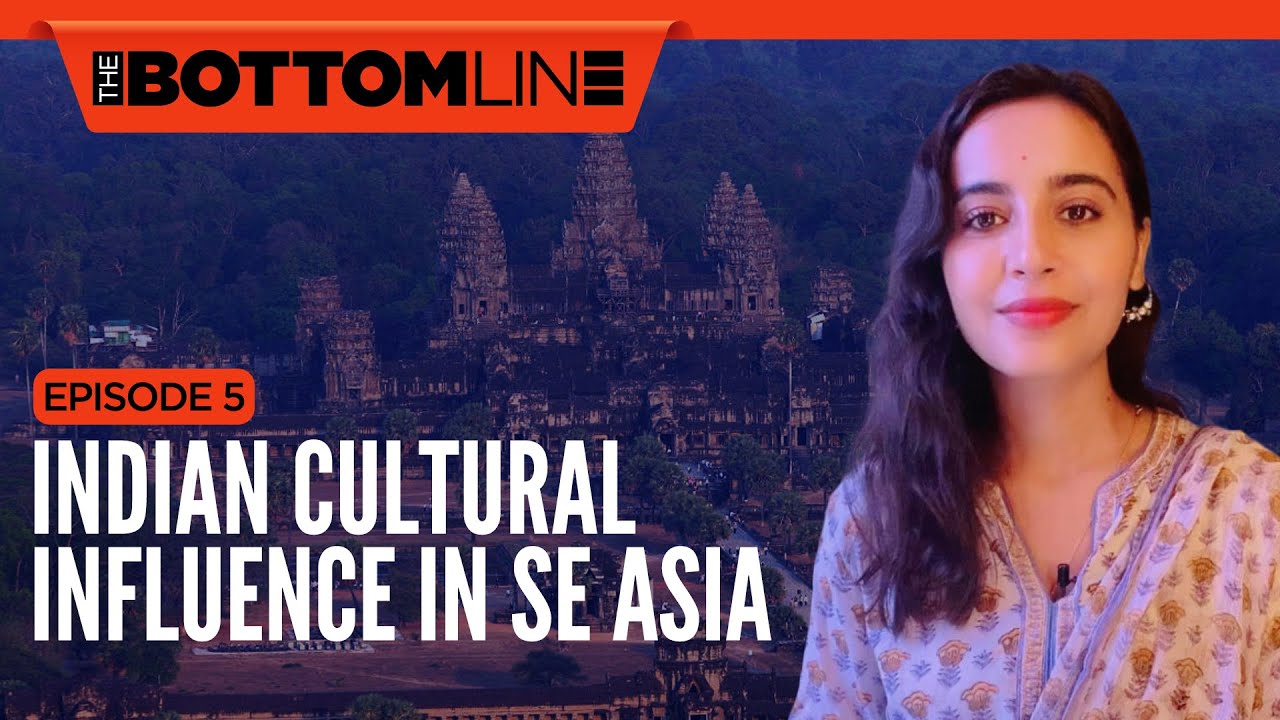
For thousands of years, India shared a close and active relationship with its neighbors across Central Asia and Southeast Asia. This connection grew naturally through busy merchant routes, spiritual movements, and shared civilizational growth. From early trade links marked by Harappan seals around to the wide-reaching diplomatic and religious missions under Emperor Ashoka, India sent out ideas, artistic styles, and spiritual teachings that left a lasting imprint across the continent. Rather than imposing its culture, India engaged in a rich exchange that shaped regional languages, temple architecture, court traditions, and trading networks. Understanding this historical background gives students and history enthusiasts a clearer picture of how Buddhism and Brahmanical traditions helped form the unique cultural identity of classical Asia.
In this chapter, you will understand:
- How ancient trade routes by land and sea carried ideas, goods, and cultural practices across Asia.
- The key role played by royal patrons like Emperor Kanishka and travelers like Fa-Hien and Hiuen Tsang in spreading Buddhist thought.
- The ways Southeast Asian kingdoms blended Indian traditions with local customs to build unique empires like Sri Vijaya.
- The long-term impact of shared scripts, artistic styles, and technological practices between ancient Asian societies.
Why this topic matters: It highlights how peaceful cultural exchange, religious teaching, and trade connected ancient Asian nations, giving crucial context for history examinations and civilizational studies.
Core Idea: India’s ancient interactions with Central and Southeast Asia grew through overland paths like the Silk Route and active sea lanes. Through trade and faith, Indian religious traditions, Sanskrit literature, and artistic methods integrated smoothly into local Asian societies, creating shared cultural bonds that lasted for centuries.
India’s Cultural Impact on Central and Southeast Asia: A Historical Analysis of Trade, Faith, and Civilization (Ancient to Medieval Period)
India maintained steady, multifaceted connections with Central Asia and Southeast Asia through merchant networks, scholarly exchanges, and missionary journeys. These ties started very early with the trade routes of the Indus Valley Civilization and expanded later along the overland Silk Route and busy ocean pathways. This network carried religious philosophies, architectural practices, and language skills across vast distances.
Early Trade Foundations and Overland Corridors
The earliest documented records of foreign trade go back to interactions with Mesopotamia, proven by Harappan seals from Over time, these basic trade links turned into major routes that carried both goods and ideas.
- (i) Ancient trade seals confirm that Indian merchants were part of a global trading system long before recorded written histories.
Philosophical Reach and Missionaries
Core philosophical ideas traveled along these merchant paths, reaching China, Central Asia, Sri Lanka, and Burma (Myanmar).
- (a) Religious teachers and monks traveled alongside trade caravans to introduce core Indian concepts to foreign cities.
- (b) During the , Emperor Ashoka sent out official Buddhist missions, which greatly sped up the spread of Buddhism across the continent.
- (c) These peaceful journeys formed a solid foundation for long-term cultural links between Asian communities.
- (d) Local populations welcomed these new ideas, adapting them to fit their existing customs and daily routines.
The Historic Spread of Buddhism Across Asia: Establishing Enduring Intellectual and Religious Links
The spread of Buddhism served as a strong civilizational bridge that connected India to China, Korea, Japan, and Central Asia. This movement created long-lasting academic and spiritual links that outlasted political changes and royal dynasties.

- The movement of monks and traders built a lasting bridge for sharing knowledge, books, and artistic methods.
Buddhism's Golden Age Under Emperor Kanishka
During the , the Kushan Emperor Kanishka gave strong political and financial backing to Buddhist centers. This support helped push Buddhist influence deep into Central Asia and Afghanistan (the historic Gandhara region).
- (i) Imperial support helped establish monasteries, stupas, and study centers along key mountain passes.
- (ii) From Central Asian trading centers, Buddhist teachings moved into Korea and Japan, often aided by Chinese monks who visited India to find original texts.
- (iii) Indian literature, philosophical works, and art styles enriched major cultural centers along the Silk Route, such as the famous Tun Huang caves.
- (iv) This steady two-way exchange made the Silk Route an active corridor for art, language, and spiritual thought.
The Transformative Journeys of Chinese Buddhist Pilgrims: Scriptural and Cultural Exchange
Determined Chinese scholars made difficult journeys across high mountains and dry deserts to reach India. Their goal was to gather authentic Buddhist scriptures, bring them back, and translate them for their own communities.
- These scholars documented their travels carefully, leaving detailed historical records of ancient Indian society.
Noted Scholars and Practical Exchanges
Travelers like Fa-Hien and Hiuen Tsang preserved important scriptures and helped exchange practical skills between civilizations.
Chinese monks working on translating gathered Sanskrit texts into Chinese scripts. - (a) The pilgrim Fa-Hien traveled to India between specifically to find and copy monastic rules and sacred texts along the Silk Road.
- (b) Later, Hiuen Tsang visited India between and returned to China with original texts, which refreshed Chinese Buddhist study.
- (c) Alongside religious texts, practical knowledge was shared; the West learned the secrets of silk cultivation, while Indian artistic and sculpting styles spread into East Asia.
- (d) These visits established an ongoing tradition of academic translation and cross-cultural learning.
Quick Revision Capsule
Key highlights of India's historical interactions with Central and Southeast Asia:
| Region | Primary Channels of Contact | Key Cultural Outcomes |
|---|---|---|
| Mesopotamia | Prehistoric maritime trade via Gulf routes | Exchange of goods verified by Harappan seals () |
| Central Asia & Silk Route | Overland caravans, royal missions, monastic centers | Spread of Buddhism, Gandhara art, creation of cave sites like Tun Huang |
| China, Korea & Japan | Pilgrim journeys, scriptural translation efforts | Preservation of texts by Hiuen Tsang, spread of Indian art, silk cultivation exchange |
| Southeast Asia (Sri Vijaya, Java) | Monsoon-driven maritime commerce to Suvarnabhumi | Assimilation of Sanskrit, temple architecture, court rituals, and mixed cultural models |
| Sri Lanka & Burma | Ashokan diplomatic and religious missions | Establishment of early Buddhist monastic hubs and literature |
Summary
The story of India’s impact on Central and Southeast Asia demonstrates how peaceful trade, shared faith, and open communication can connect different societies. Driven by brave sea captains, dedicated monks, and traveling scholars, Indian ideas reached far beyond its borders without military conquest. Through these interactions, regions across Asia picked up concepts from Sanskrit literature, Hindu and Buddhist court rituals, and intricate artistic styles, weaving them into their own local customs. In return, India welcomed foreign ideas, forming a vibrant two-way exchange that enriched the entire continent for generations.
Quick Revision Points
Essential facts to review before your history exam:
- (i) Early global trade connections are confirmed by Harappan seals found in Mesopotamia dated to
- (ii) Emperor Ashoka launched systematic Buddhist missions in the , laying the groundwork for Asian cultural ties.
- (iii) Under Kushan Emperor Kanishka (), Central Asia and Gandhara became major hubs for Buddhist learning.
- (iv) Chinese scholars Fa-Hien () and Hiuen Tsang () collected original Sanskrit texts and recorded ancient Asian history.
- Exam Tip: Focus on the dual routes of expansion: overland via the Silk Route for Central Asia/China, and maritime routes to Suvarnabhumi for Southeast Asia. Remember that local Asian populations actively adapted Indian traditions rather than simply copying them.
Frequently Asked Questions (FAQ)
Q1: What evidence proves ancient trade links between India and foreign lands?
A1: Authentic Harappan seals dated between discovered in Mesopotamia offer clear archaeological proof of prehistoric maritime commercial ties.Q2: How did Chinese pilgrims contribute to cultural exchange?
A2: Scholars like Fa-Hien and Hiuen Tsang traveled to India to collect original manuscripts. Hiuen Tsang alone brought back texts, which deeply influenced East Asian scholarship while preserving detailed records of Indian society.Q3: What role did the Sri Vijaya Kingdom play in Southeast Asia's cultural development?
A3: Flourishing between the , the Sri Vijaya Kingdom used its position along key sea routes to become a prominent naval, commercial, and learning center for Hindu and Buddhist traditions in Indonesia.