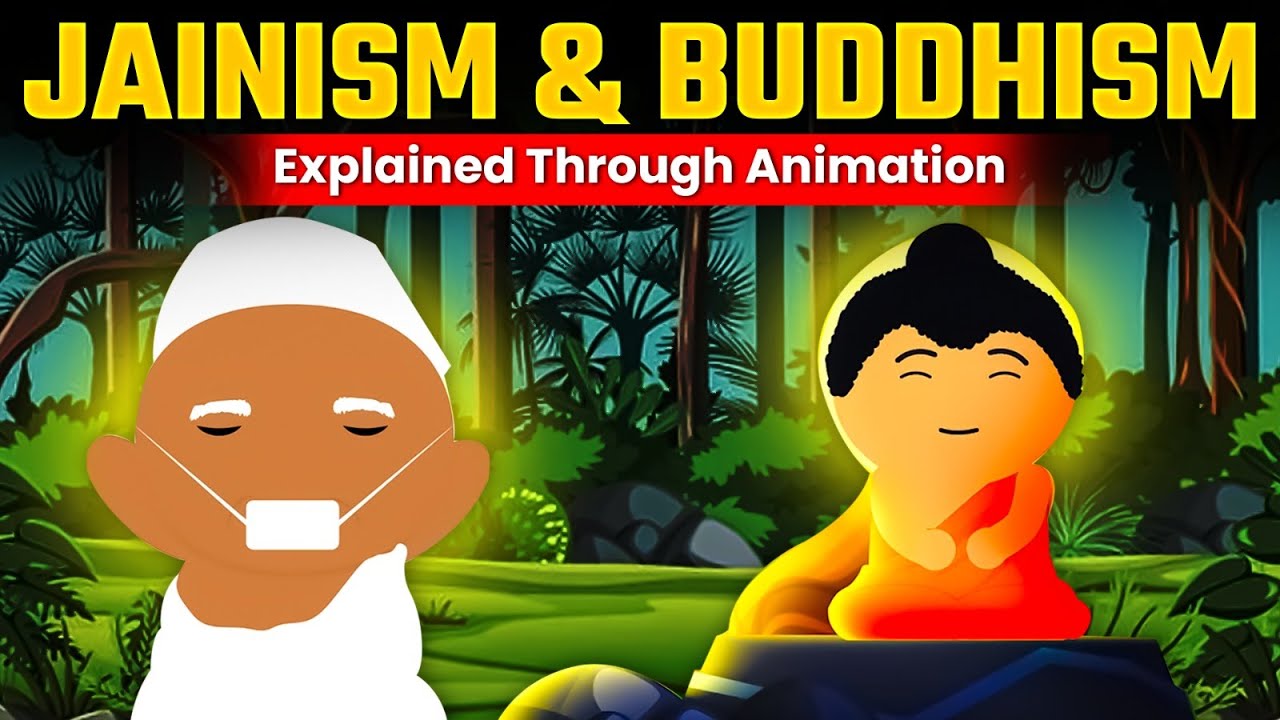
The marked a transformative period in ancient India as Jainism and Buddhism emerged to challenge ritualistic orthodoxy and rigid caste hierarchies. These movements promoted spiritual freedom, ethical living, and social equality, offering students and aspirants of history a deep understanding of how religious reform shaped Indian civilization and its enduring philosophical landscape. During this era, urban expansion and shifting economic roles created an environment where people sought alternatives to expensive sacrifices and complex priestly traditions.
In this chapter, you will understand:
- The social, economic, and religious drivers behind the 6th-century BCE reform movements.
- The core doctrines and ethical framework of Jainism established by Vardhamana Mahavira.
- The Middle Way, Four Noble Truths, and Eightfold Path taught by Gautama Buddha.
- Key philosophical similarities and differences between the two Śramaṇa traditions.
Why this topic matters: Understanding these dual reform movements explains the evolutionary shift in ancient Indian ethics, language usage, and political patronage, while serving as a foundational topic for history examinations.
Core Idea: Dissatisfaction with Vedic rituals and rigid social stratification led to the rise of Jainism and Buddhism in the 6th century BCE. Both emphasized individual ethics and liberation from samsara, with Jainism prioritizing severe asceticism and absolute ahimsa, while Buddhism advocated a balanced Middle Path.
6th Century BCE – Emergence of Jainism and Buddhism: A Period of Spiritual Transformation in Ancient India
The rise of Jainism and Buddhism during the represented a major turning point, initiating a profound shift in Indian spiritual and cultural history. These transformative faiths evolved as profound reactions to growing dissatisfaction within the societal fabric, specifically targeting the complexities of Brahmanical rituals, the oppressive rigidities of the caste system, and the prevalent social inequality across ancient India. Their founders sought to guide humanity toward inner purity and ultimate truth through deep self-realization and all-encompassing compassion, offering an alternative to mechanical rituals or expensive sacrifices.
Historical Context: Religious Unrest and Underlying Social-Economic Factors
The simultaneous rise of these two influential religions was firmly rooted in an existing society that felt burdened by profound inequality, an increasingly complex web of rituals, and perceived corruption within prevailing religious institutions.
- (i) The underlying context of the era was characterized by intense religious unrest and a pervasive public yearning for personal salvation and liberation, moving away from the strict confines of ritualistic dogma.
Social and Economic Catalysts Influencing Spiritual Change in the 6th Century BCE
The socio-economic structure created fertile ground for dissent, as people sought a more equitable spiritual path than that offered by the traditional system.
- The entrenched caste system created rigid divisions that systematically suppressed lower groups, kindling a widespread search for spiritual equality.
- The exclusive use of complex Sanskrit limited access to sacred knowledge; consequently, leaders adopted vernacular languages like Prakrit and Pali to reach all segments of society.
- Increased economic prosperity and rapid urban growth created a new class of merchants (Vaishyas) who sought social recognition corresponding to their growing wealth.
- Expanding trade routes along the Gangetic plain allowed ideas to spread rapidly between towns and intellectual centers.
Jainism: Founded by Mahavira, Emphasizing Strict Asceticism and Supreme Non-Violence
The faith of Jainism, systematically organized by Vardhamana Mahavira (dated traditionally between ), emerged as a demanding path characterized by strict self-discipline, placing supreme emphasis on ahimsa (non-violence) and the ultimate conquest of personal desires for spiritual freedom.

- Mahavira built upon the foundations laid by earlier spiritual teachers, making the practice of extreme non-violence central to daily life.
Teachings and Core Principles of Jainism: The Path to Moksha
Jain philosophy is a guide to ethical living and liberation, built upon the foundation of minimizing harm and maximizing spiritual effort.
- The Founder:Mahavira attained the status of the 24th and last revered Tirthankara (Ford-Maker), propagating a doctrine of renunciation and rigorous meditation.
- Rigorous Asceticism: Followers practice severe penances (tapas), disciplined fasting, and complete detachment from material comforts to purify the soul.
- Ahimsa (Non-Violence): Regarded as the supreme virtue in Jainism, practiced so strictly that harm to any living creature, even tiny insects, is avoided.
- The Tirthankaras:Jainism recognizes a lineage of 24 spiritual teachers who guided humanity toward moksha (liberation from rebirth).
Buddhism: Founded by Gautama Buddha, Advocating the Balanced Middle Way
Buddhism, founded by Siddhartha Gautama (historically approximated to ), imparted a philosophy of balance known as the Middle Way—advocating neither extreme indulgence nor debilitating asceticism—as the practical pathway leading directly to enlightenment (Bodhi) and freedom from suffering.
- The teachings spread rapidly across Asia due to their practical moral focus and egalitarian appeal.
Teachings of the Buddha: The Middle Path to Enlightenment
The teachings of the Buddha provide a pragmatic framework for overcoming human suffering through moral and mental discipline.
The Eightfold Path outlining steps for ethical and mental discipline in Buddhism. - The Middle Way: Rejects both self-denial and indulgence, proposing balanced living as the route to inner peace.
- Core Doctrines: Encapsulated in the Four Noble Truths (reality and cause of suffering) and the Eightfold Path (practical roadmap to nirvana).
- Rebirth and Karma: Teaches that liberation is achieved through ethical action and mental training rather than ritual sacrifices.
- Jataka Tales: A collection of stories recounting the previous lives of Gautama Buddha to illustrate moral values.
Quick Revision Capsule: Comparison of Jainism and Buddhism
A structured comparison highlighting key principles, founders, texts, and philosophical stances of both traditions:
| Feature | Jainism | Buddhism |
|---|---|---|
| Primary Founder / Leader | Vardhamana Mahavira (24th Tirthankara) | Siddhartha Gautama (The Buddha) |
| Core Philosophical Path | Strict Asceticism & Severe Penance | The Middle Way (Madhyamaka) |
| Concept of Soul (Atman/Jiva) | Believes in eternal individual soul (Jiva) in all entities | Teaches Anatta (No permanent self/soul) |
| Supreme Ethical Vow | Absolute Non-violence (Ahimsa) in all aspects | Compassion (Karuna) and Ahimsa without extreme ritual rigor |
| Ultimate Goal | Moksha (Liberation of soul from karmic matter) | Nirvana (Cessation of desire and suffering) |
Summary
The stands out as a remarkable age of spiritual transformation in India. Both Jainism and Buddhism redefined the moral consciousness of the subcontinent by replacing excessive ritualism and hierarchy with guiding principles of compassion, strict discipline, and social equality. Their distinct yet related teachings continue to inspire millions worldwide and remain essential for students exploring the deep roots of Indian philosophy, the history of religious reform, and the dynamics of social change in ancient history.
Quick Revision Points
Key facts to remember for examinations:
- (i) Both faiths belonged to the non-Vedic Śramaṇa tradition, relying on personal effort rather than priestly intercession.
- (ii) Language of instruction was crucial: Jainism used Prakrit dialects while Buddhism used Pali to reach the common populace.
- (iii) Mahavira introduced the fifth vow of celibacy (Brahmacharya) to the four vows of Parshvanatha.
- (iv) The Buddhist doctrine rests upon the Four Noble Truths and the Eightfold Path (Astangika Marga).
- Exam Tip: Focus on comparing Anekantavada (Jain doctrine of manifold perspectives) with Pratītyasamutpāda (Buddhist doctrine of dependent origination), as examiners frequently test these core metaphysical differences alongside their shared social impacts.
Frequently Asked Questions (FAQ)
Q1: What drove the emergence of new religious movements in the 6th century BCE?
A1: Religious unrest against complex Vedic rituals, costly sacrifices, rigid caste structures, and economic shifts brought on by urbanization and trade created strong demand for egalitarian spiritual alternatives.Q2: How do Jainism and Buddhism differ regarding the concept of the soul?
A2: Jainism asserts that every living entity possesses an eternal individual soul (jiva) that must be cleansed through penance, whereas Buddhism teaches anatta (non-self), maintaining that there is no permanent, unchanging soul.Q3: What is the Middle Way in Buddhism?
A3: The Middle Way is a practical philosophy advocated by Gautama Buddha that avoids both extreme sensual indulgence and severe self-mortification, leading to mindfulness, wisdom, and liberation.