
The era of Central Asian contacts with India, spanning from the 2nd century BCE to the 3rd century CE, stands as a transformative period that dramatically reshaped the subcontinent's political map, cultural landscape, and economic vitality. Through successive waves of migrations and invasions by powerful groups like the Indo-Greeks, Sakas, Parthians, and Kushans, ancient India absorbed profound new influences. These changes became especially visible in early coinage, the flowering of Gandhara art, the widespread growth of Mahayana Buddhism, and major advances in governance and international trade networks. For candidates preparing for competitive exams, studying these external contacts offers essential insights into the rich historical synthesis that defined ancient India's classical age.
In this chapter, you will understand:
- The political and military impact of the Indo-Greeks, Sakas, Parthians, and Kushans.
- Pioneering developments in Indian coinage, art forms, and religious patronage.
- How international commerce and the Silk Road connected India to global trade routes.
- Administrative systems like the Satrap model and processes of social assimilation.
Why this topic matters: Questions on foreign dynasties, artistic styles, early coins, and trade routes frequently appear in competitive examinations like UPSC, State PSCs, and history tests.
Core Idea: Between the 2nd century BCE and the 3rd century CE, Central Asian migrations introduced new rulers, minting techniques, and artistic traditions to India. These groups quickly adopted local customs, helped spread Mahayana Buddhism, and integrated India deeply into global Silk Road trade networks.
Central Asian Influences Shaping Indian History: Contacts, Invasions, and Cultural Synthesis (2nd Century BCE – 3rd Century CE)
Central Asian groups profoundly influenced India's administration, artistic traditions, religious development, and commercial activity through a long, dynamic period of interaction. The establishment of powerful foreign dynasties through invasions and subsequent settlements by Central Asian tribes brought significant upheaval to India's political structures while ushering in an era of unprecedented cultural and economic growth.
The Enduring Legacy of the Indo-Greeks in Ancient Indian History: Coinage, Art, and Philosophy
The Indo-Greeks, who flourished during the 2nd century BCE, left a permanent mark on India. They introduced systematic coinage, initiated famous philosophical discussions, and laid the foundations for the Gandhara school of art.
The Great Invasion and Territorial Expansion of the Indo-Greeks (Yavanas)
Under leaders such as Demetrius I, Hellenistic armies crossed the Hindu Kush mountains to establish Greek rule across present-day Afghanistan, Pakistan, and parts of northwestern India, shifting the region's political power balance.
- (i) Their sphere of political control was vast, stretching from the regions of Bactria and Gandhara deep into the subcontinent, reaching as far as Mathura and the fertile Ganges basin.
- (ii) The most renowned ruler was Menander I (Milinda), whose insightful philosophical debates with the Buddhist sage Nagasena were meticulously recorded and preserved for posterity in the vital Buddhist canonical text known as the Milindapanha (Questions of Milinda).
- (iii) The stability provided by their consolidated rule proved instrumental in facilitating robust international trade and intensifying cultural exchanges across diverse geographical and ethnic regions.
Indo-Greek Innovations in Coinage and Art
The Indo-Greeks were responsible for introducing specific artistic and economic practices that transformed early Indian monetary systems and sculpting traditions.
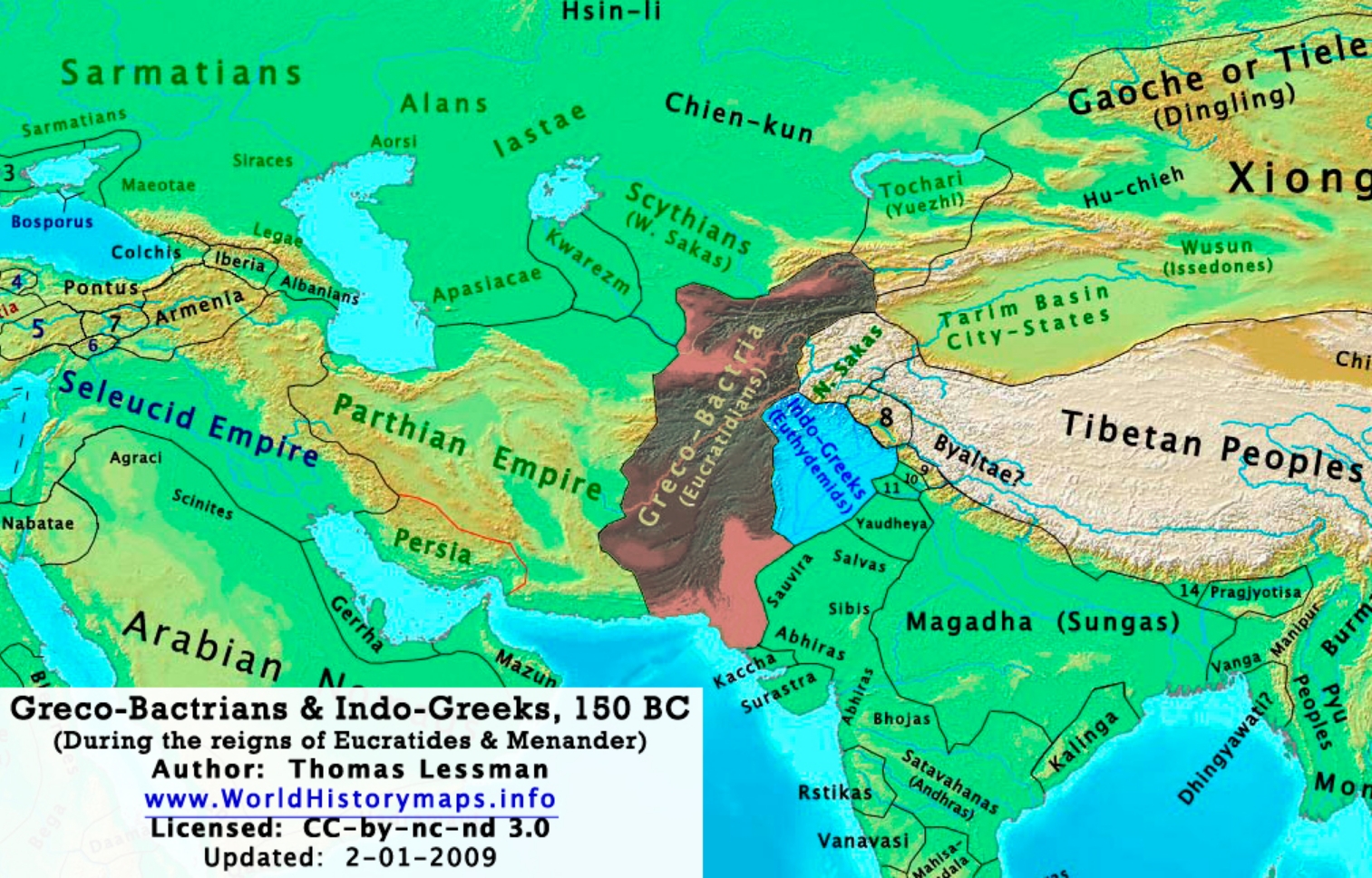
- Indo-Greek coinage set a new standard across Northern India by replacing crude punch-marked coins with properly minted coins.
Pioneering Contributions of the Indo-Greeks: Numismatics and Artistic Innovations
They issued beautifully minted coins that clearly identified the issuing monarch, making it far easier for modern historians to reconstruct exact chronological timelines.
- (a) Coinage Revolution: They were the first in India to issue coins that explicitly bore the names and portraits of kings alongside images of Greek gods, giving a major push to regional and long-distance trade.
- (b) Gandhara Art Patronage: They actively supported early Gandhara art, a unique fusion style combining realistic Greek physical sculpting techniques with traditional Indian Buddhist spiritual imagery.
The Sakas and Parthians: Rule, Expansion, and Cultural Integration
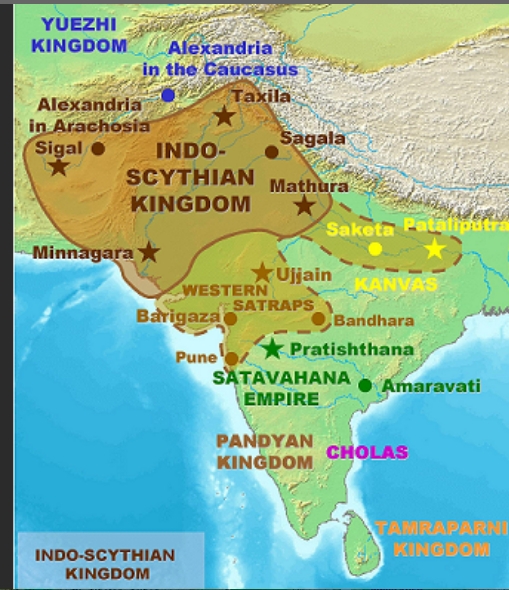
Following the decline of the Indo-Greeks, two central groups—the Sakas and the Parthians—expanded their control over northern and western India, leaving clear administrative and cultural footprints.
- The Sakas (Indo-Scythians) ruled through distinct local branches stationed in places like Taxila, Mathura, Ujjain, and the Western Deccan.
The Sakas (Indo-Scythians): Successors, Multiple Branches, and Cultural Assimilation
Nomadic tribes from Central Asia moved into India after being pushed out of their original homelands, gradually settling down and taking over former Greek holdings.
Indo Greeks Coin: Illustrating Greek Deities and Royal Portraits - (i) The Sakas established administrative centers across Punjab, Mathura, and parts of Western India.
- (ii) Despite their foreign origins, Saka rulers quickly adopted Indian culture. A famous example is Rudradaman I, who issued the famous Junagadh rock inscription written in pure, classical Sanskrit around .
The Parthians and the Rise of the Kushan Empire
The Parthians briefly held power in northwestern India before being eclipsed by the Kushans, who established one of the largest and most influential empires in world history.
Under the Parthians, international connections expanded further. Their best-known king, Gondophernes, is historically linked with the arrival of Christian missionary St. Thomas in India during the .
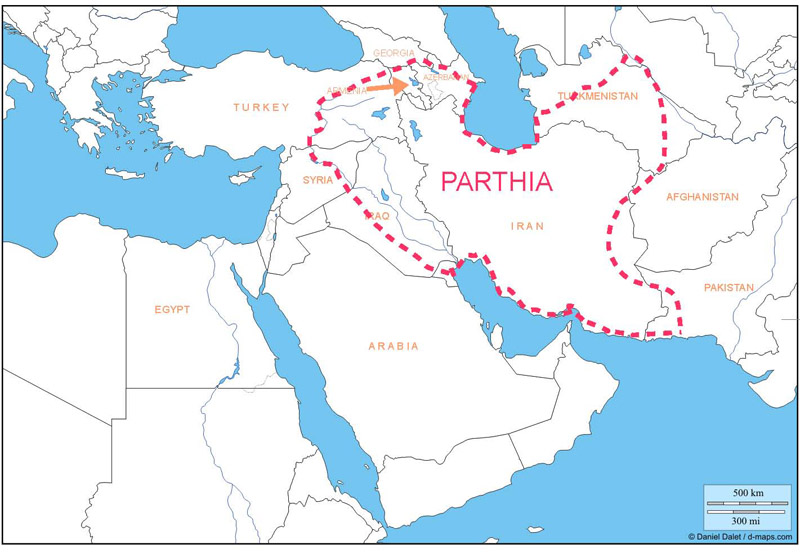
The Parthians in Indian History: Strategic Control and the St. Thomas Connection
Originating in ancient Iran, the Parthians controlled critical frontier regions and served as key brokers for commerce between Rome, Persia, and India.
The Kushans: The Most Influential Central Asian Rulers in India (1st–3rd Century CE)
The Kushans belonged to the Yuezhi nomadic confederation. Moving out of Central Asia, they built a vast empire that stretched from modern Tajikistan and Afghanistan all the way down to Varanasi in North India.
The Grand Expansion of the Kushan Empire and Silk Road Control
Early Kushan rulers like Kujula Kadphises and Vima Kadphises consolidated power and issued gold coins on a large scale, laying the foundation for imperial growth.
- (i) The empire reached its political and cultural peak under Kanishka I (around ).
- (ii) By controlling key nodes of the overland Silk Road, the Kushans collected rich tolls, turning their territory into a wealthy commercial center.
- (iii) Kushan patronage helped transform Mahayana Buddhism into an international faith that spread north along trade routes into Central Asia and China.
The Profound Achievements of Emperor Kanishka: Era, Religion, and Economy
Kanishka’s reign brought long-lasting contributions to the calendar, religion, and the monetary system.
- (a) Saka Era Institution: Kanishka founded the Saka Era calendar starting in (or around his ascension year), which remains the official civil calendar of modern India today.
- (b) Fourth Buddhist Council: He convened the famous Fourth Buddhist Council in Kashmir (Kundalavana), where scholars compiled extensive commentaries and formalized key doctrines of Mahayana Buddhism.
- (c) Gold Coinage: The Kushans minted high-purity gold coins that facilitated large-scale international trade with the Roman Empire and Asian kingdoms.
The Cultural Impact of Kushans: Synthesis of Traditions and Artistic Flourishing
Under Kushan rule, two major schools of art flourished simultaneously: the Greco-Buddhist Gandhara school in the northwest and the indigenous, red-sandstone Mathura school in central North India.
Central Asian Influence on Indian Architecture, Technology, and Global Trade
Beyond politics, Central Asian rulers introduced major changes to daily life, urban planning, military technology, and trade practices across the subcontinent.
- (i) They constructed large stupas, viharas, and brick monasteries that served as major educational centers.
- (ii) They brought practical innovations such as equestrian gear (stirrups, helmets, long coats, and boots), improved iron metallurgy, and new textile weaving styles.
Reforms in Polity, Governance, and Society under Central Asian Rulers
The administrative practices brought by Central Asian rulers modernized local state structures and introduced concepts that influenced later Indian dynasties like the Guptas.
- (i) They popularized the Satrap system (dividing the empire into administrative provinces led by Kshatrapas) and adopted divine imperial titles like Devaputra ("Son of Heaven").
- (ii) Over time, these foreign ruling groups were completely integrated into Indian society, often absorbed into the Kshatriya fold through marriage alliances and religious patronage.
Quick Revision Capsule: Central Asian Dynasties in India
Here is a quick overview summarizing the key foreign groups that settled in India between the 2nd century BCE and the 3rd century CE:
| Dynasty / Group | Key Rulers | Major Historical Contributions |
|---|---|---|
| Indo-Greeks (Yavanas) | Demetrius I, Menander I (Milinda) | Introduced regularized portrait coins; sparked early Gandhara art; famous debate recorded in the Milindapanha. |
| Sakas (Indo-Scythians) | Maues, Rudradaman I | Established the Satrap system; issued the first major public Sanskrit inscription at Junagadh (). |
| Parthians (Indo-Parthians) | Gondophernes | Controlled trade hubs in the northwest; traditionally hosted St. Thomas during his early Christian mission to India. |
| Kushans (Yuezhi) | Kujula Kadphises, Kanishka I | Controlled the Silk Road; started the Saka Era (); held the 4th Buddhist Council; issued pure gold coins. |
Summary
The arrival of Central Asian groups between the 2nd century BCE and 3rd century CE was not just a series of military invasions—it was a deep cultural encounter. The Indo-Greeks, Sakas, Parthians, and Kushans were quickly absorbed into Indian society. In return, they revolutionized Indian coinage, sponsored world-renowned art styles, expanded global commerce along the Silk Road, and helped spread Mahayana Buddhism across Asia.
Quick Revision Points for Exams
Keep these key facts in mind when answering exam questions:
- (i) Indo-Greeks were the first rulers in India to issue coins explicitly linked to named kings and deities.
- (ii) Rudradaman I was a Saka king who repaired Sudarshana Lake and authorized the Junagadh Sanskrit inscription.
- (iii) Kanishka I convened the 4th Buddhist Council in Kashmir and helped popularize Mahayana Buddhism.
- (iv) The Saka Era calendar was established in during this dynamic historical period.
- Exam Tip: Remember to distinguish between the Gandhara (Greco-Buddhist, grey sandstone) and Mathura (indigenous, red-spotted sandstone) art styles, as examiners frequently ask candidates to contrast their visual characteristics and origins.
Frequently Asked Questions (FAQ)
Q1: Why is King Menander I historically significant in ancient Indian history?
A1: King Menander I (Milinda) was the most famous Indo-Greek ruler. His philosophical questions about Buddhist philosophy asked to the sage Nagasena were recorded in the famous Pali text Milindapanha.Q2: What was the main contribution of the Kushans to international trade?
A2: The Kushans controlled key sections of the Silk Road connecting China, India, Persia, and the Roman Empire. This allowed them to regulate trade, issue pure gold coins, and build a flourishing economy.Q3: What is the Satrap administrative system introduced during this period?
A3: The Satrap system was an administrative model where the empire was divided into provinces, each governed by a military governor called a Kshatrapa or Satrap. It was introduced by the Sakas and Parthians and later used by the Kushans.
