The history of the Indian subcontinent features many foreign campaigns, but the Persian and Greek invasions between and reshaped the region's political, economic, and cultural life. Occurring mostly across the Northwest Frontier, these military pushes exposed how deeply fractured local rulers were. This internal weakness created an opening for outside powers and later inspired native dynasties, like the Mauryas, to build strong centralized empires. Understanding who drove these campaigns, why they succeeded, and what cultural legacies they left behind gives crucial context for studying Ancient Indian History.
In this chapter, you will understand:
- The causes and sequence of Achaemenid Persian expansion into the Indus region.
- The lasting administrative, commercial, and artistic legacies of Persian control.
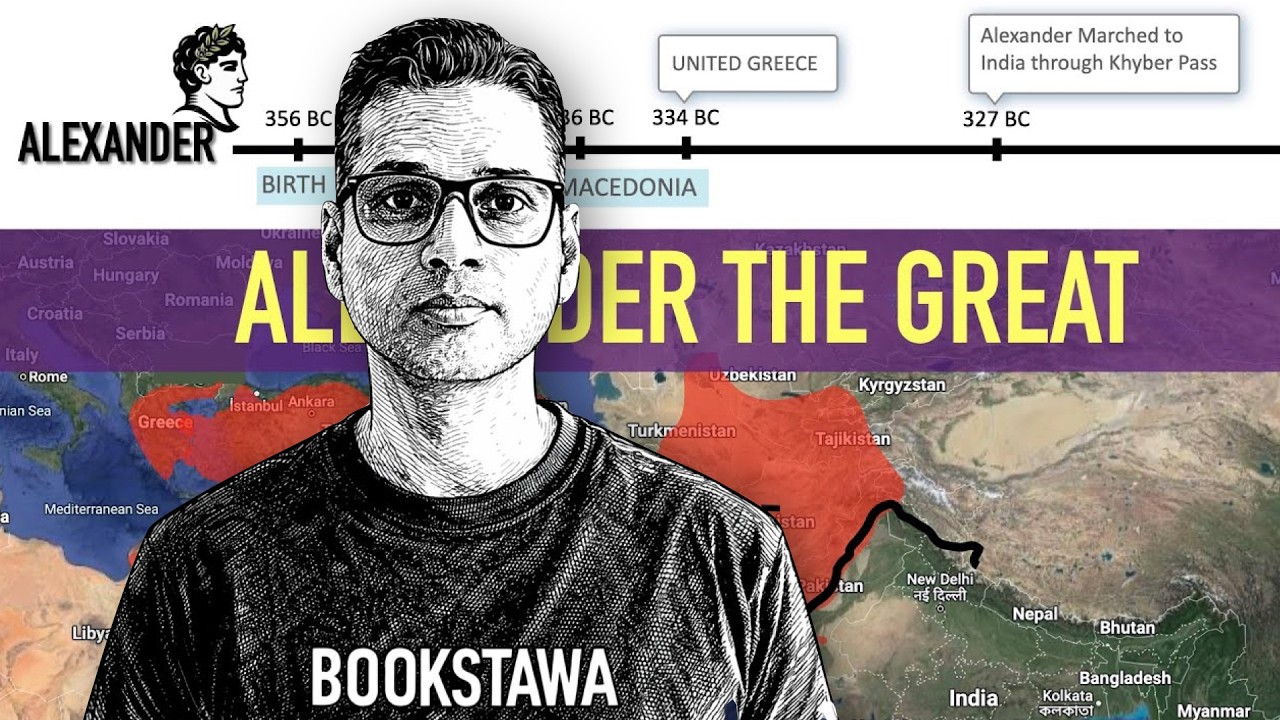
- Alexander the Great's march, key encounters like the Battle of Hydaspes, and his retreat.
- How foreign incursions catalyzed the political unification of India under the Mauryan Empire.
Why this topic matters: This period marks the earliest documented foreign contact with the Indian subcontinent. It links Western classical empires with South Asian statebuilding, explaining the origin of Gandhara art, Kharosthi script, and centralized imperial administration.
Core Idea: Between and , Achaemenid Persians and Macedonian Greeks invaded the northwestern territories of India. Exploiting local political fragmentation, these invasions established global trade links, introduced new artistic traditions, and demonstrated the urgent need for a unified Indian empire.
Early Foreign Invasions: Persian and Greek Campaigns Shaping Ancient Indian History (550–326 BCE)
The Northwest Frontier of India was a frequent entry point for armies seeking wealth and power. Weak local governance made the area particularly vulnerable to Western conquerors.
- The wealth and resources of the subcontinent repeatedly attracted foreign powers, with the Achaemenid Empire leading the first documented incursions.
From the mid-sixth century BCE onward, external forces targeted the northwest, fundamentally altering local trade, governance, and culture.
- (i) These military campaigns showed how fragile and divided the small kingdoms of the northwest were when facing unified armies.
- (ii) The harsh lessons learned from these invasions later motivated Indian strategists to build centralized states, most notably under the Mauryan dynasty.
Persian Invasion: Achaemenid Empire Expansion into Indus Valley (550–330 BCE)
The Persian push into the Indus Valley established the first foreign imperial province inside Indian territory, starting centuries of cross-border trade and institutional sharing.

Cyrus the Great and Darius I: The Achaemenid Conquerors
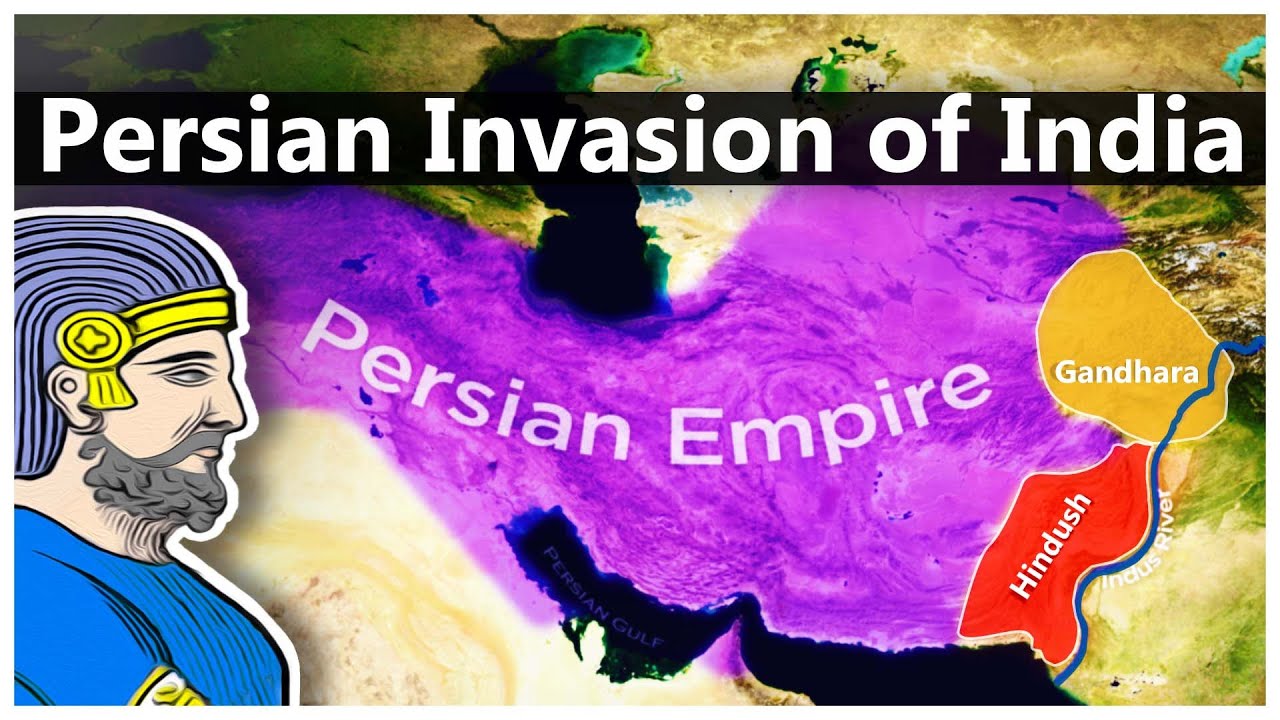
Persian ambition toward India began with Cyrus the Great, founder of the Achaemenid Empire, who campaigned near the borderlands around . Conquest became concrete under his successor, Darius I.
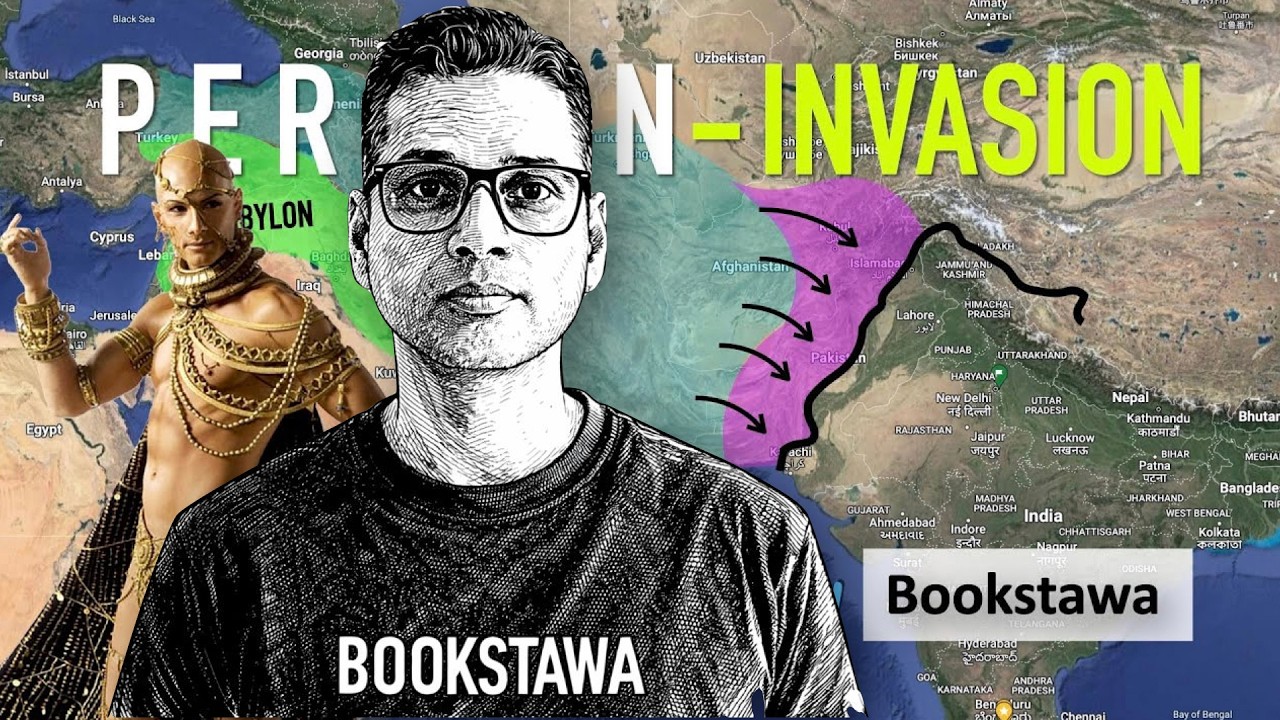
- (i) Around , Darius I led an army across the mountains to annex parts of Punjab, Sindh, and the North-West Frontier Province.
- (ii) These territories were organized into the twentieth satrapy, which proved to be the most fertile and highest tax-yielding province in the entire Achaemenid system.
Persian Control: Decline and Alexander’s Intervention
Persian kings routinely drafted Indian troops into their ranks. Over time, administrative overextension weakened Achaemenid authority in the east.
- (a) Under Xerxes (), Indian infantry and cavalry contingents fought alongside Persian armies during the invasion of Greece.
- (b) Following military failures in Europe, Achaemenid control over the distant Indian provinces slowly slipped away.
- (c) Direct Persian rule in the region ended in when Darius III lost his empire to Alexander the Great.

Map and Territorial Expansion During the Persian Invasion of India Factors Behind the Persian Success: Political Disunity and Geography
A combination of regional rivalry and natural topography made the northwest vulnerable to outside conquerors.
- Political Disunity: While Magadha was busy consolidating power in eastern India, the northwest remained deeply divided.
- (i) Small, competing principalities like Kamboja, Gandhara, and Madra fought each other constantly instead of mounting a unified defense.
- (ii) No single kingdom held enough authority to rally the entire region against an incoming empire.
- Geographical Factors: Natural routes and fertile terrain invited invasion.
- (i) Mountain passes in the Hindu Kush offered clear paths for marching armies.
- (ii) Rich agricultural land and river systems made the area an attractive economic prize.
- Political Disunity: While Magadha was busy consolidating power in eastern India, the northwest remained deeply divided.
Legacy of Achaemenid Rule: Impact on Indian Politics, Trade, and Culture
Achaemenid rule left lasting marks on governance, art, literature, and trade networks across northern India.
Political Transformations and Administrative Influence
Direct exposure to a centralized world empire altered local political thinking.
- (i) The invasion proved how dangerous regional infighting was during a foreign crisis.
- (ii) It created momentum for a single centralized power, culminating in the founding of the Mauryan Empire.
- (iii) Indian rulers adopted the Persian Satrap system of provincial governance, a model later used by the Sakas and Kushanas.

Influence of Persian Administration and Culture in India Economic Growth and Trade Expansion
Inclusion within the Persian realm opened new market opportunities for Indian merchants.
- (i) Commercial routes expanded between the Indus Valley and the Middle East.
- (ii) Local traders gained access to markets reaching all the way to the Mediterranean coast.
- (iii) Foreign items, metallic coins, and new production methods entered Indian markets.

Economic Impact of the Persian Invasion on Indian Trade and Commerce Cultural and Artistic Influences on Mauryan Empire
Persian artistic and administrative practices deeply influenced early Mauryan traditions.

Persian Architectural and Artistic Influence on the Indian Subcontinent - (i) Carving royal messages on public rocks and pillars was inspired by Achaemenid stone inscriptions, most famously seen later in Ashoka's Edicts.
- (ii) The technique of polishing stone to a glass-like sheen was borrowed directly from Persian artisans.
- (iii) The Kharosthi script, written from right to left, developed from official Achaemenid Aramaic.
- (iv) Standardized coinage techniques spread into the northwest, helping modernize local currency.
Quick Revision Capsule: Foreign Invasions Comparison
A side-by-side comparison of the Persian and Greek invasions of ancient India:
| Invasion Era | Key Rulers / Commanders | Primary Impact / Legacy |
|---|---|---|
| Persian Invasion (550–330 BCE) | Cyrus the Great, Darius I, Xerxes | Introduced the Satrap system, Kharosthi script, stone polishing techniques, and enhanced overland trade. |
| Greek Invasion (327–326 BCE) | Alexander the Great, King Ambhi, King Porus | Weakened northwestern regional states, cleared the way for Chandragupta Maurya, and spawned Gandhara art. |
| Administrative Systems | Satrapies (Provinces) & Satraps (Governors) | Provided an imperial framework adopted by later native and foreign dynasties in India. |
| Cultural Synthesis | Greco-Roman & Indian Artisans | Created the Gandhara school of art, featuring realistic depictions of the Buddha. |
| Historiographical Legacy | Megasthenes and accompanying Greek chroniclers | Left behind reliable, dated records of Indian geography, society, and court administration. |
Summary
The Persian and Greek invasions were major turning points in ancient South Asian history. By breaking down the isolation of small northwestern principalities, these campaigns opened crucial trade corridors connecting India with Iran and the Mediterranean. The administrative tools of the Persians and the artistic traditions of the Greeks fused with local customs, leaving lasting cultural marks. Most importantly, by clearing away tiny warring kingdoms, these invasions set the stage for Chandragupta Maurya to unify northern India under a single empire.
Quick Revision Points
Core facts to review before your examination:
- (i) Darius I annexed the Indus region around , forming the lucrative 20th Satrapy.
- (ii) The Kharosthi script evolved from the Aramaic script used in Achaemenid government offices.
- (iii) Alexander the Great crossed the Hindu Kush in and fought King Porus at the Battle of Hydaspes in .
- (iv) The fusion of Greek artistic styles with Indian Buddhist traditions produced the famous Gandhara school of art.
- Exam Tip: Remember that Persian inscriptions inspired Ashoka's pillar edicts, while Alexander's retreat directly aided Chandragupta Maurya in capturing the northwest without facing strong local resistance.
Frequently Asked Questions (FAQ)
Q1: What was the primary reason for the success of Persian invasions in northwest India?
A1: The absence of a strong centralized power in the northwest, combined with constant wars between local principalities like Kamboja and Gandhara, left the region unable to stop the unified Persian army.Q2: How did the Greek invasion under Alexander influence Indian art and culture?
A2: Alexander's campaign established Greek settlements, leading to the development of the Gandhara school of art. This style portrayed the Buddha using Greek classical features, drapery, and realistic human proportions.Q3: What role did Alexander's campaign play in the rise of the Mauryan Empire?
A3: Alexander destroyed or weakened the small, independent kingdoms of the northwest. When his troops retreated, it left a power vacuum that allowed Chandragupta Maurya to quickly unify the region.