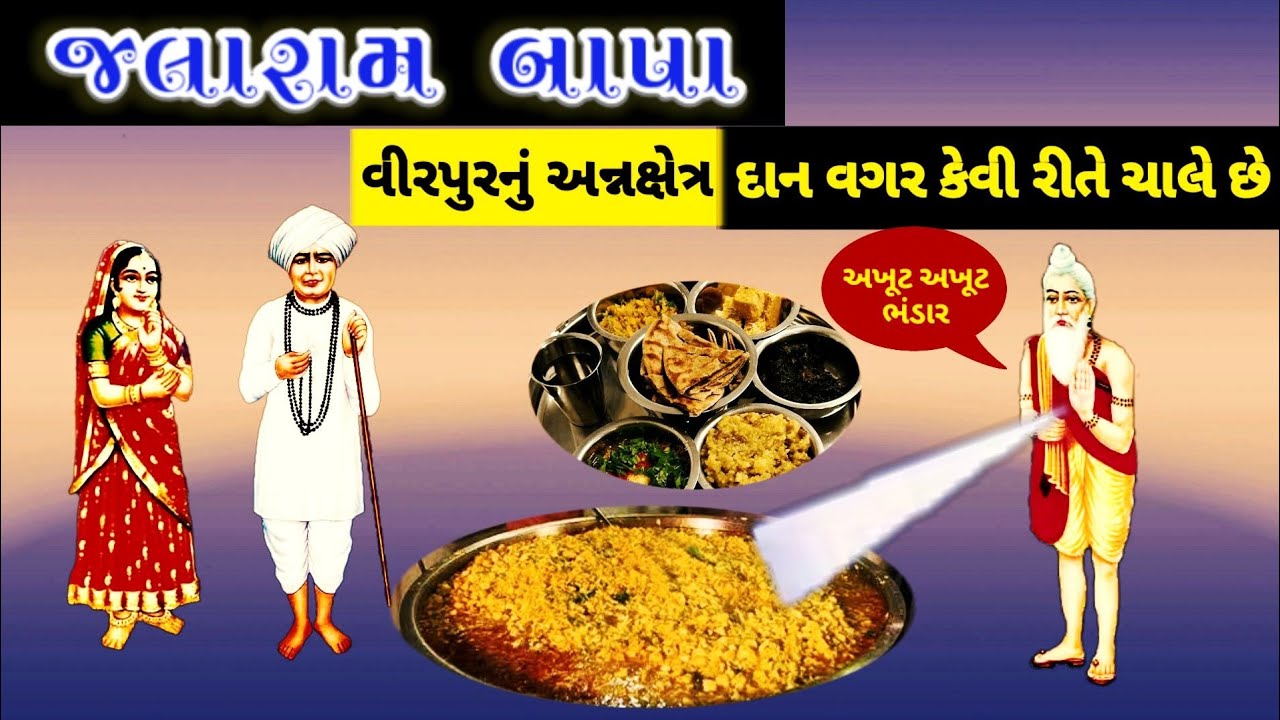
Jalaram Bapa (–) was a highly respected Hindu saint from Gujarat, known for his deep faith, humble lifestyle, and caring service for poor and needy people. Born in Virpur, he started the Sadavrat tradition that offered free meals to saints, holy men, and the underprivileged. His miracles, kindness, and spiritual work made him an important figure in India, and his life lessons remain useful for students preparing for exams in history, religion, and culture.
🎯 In this chapter, you will understand:
- The early life, birth lineage, and marriage of Saint Jalaram Bapa in Virpur.
- His spiritual initiation under Guru Bhoja Bhagat and the setup of the free feeding tradition.
- The key miracles associated with deity idols, grain supplies, and healing the sick.
- His lasting legacy, charitable impact, and core lessons for modern society.
💡 Why this topic matters: Understanding Jalaram Bapa helps students learn about the Bhakti movement, social welfare through religious initiatives, and the cultural history of 19th-century Gujarat.
🧠 Core Idea: True devotion to God is best expressed through selfless service to humanity, especially by feeding the hungry and caring for the needy without any discrimination.
Jalaram Bapa: Life, Miracles, Legacy, and Spiritual Service (1799–1881)
A saint whose life was completely focused on selfless service and devotion to Lord Rama. Jalaram Bapa's life path from an ordinary family in Virpur to becoming one of the most honored Hindu saints of Gujarat proves how faith and kindness can improve society. His focus on feeding hungry people, taking care of travelers, and spreading bhakti traditions won him respect everywhere.
- (i) Born on in Virpur, Rajkot District, Gujarat.
- (ii) Extremely devoted to Lord Rama from his childhood days, celebrating the Diwali festival period as his special birth time.
- (iii) Remembered as a spiritual leader who combined faith with community helping programs.
Early Life and Family Background of Jalaram Bapa
Jalaram Bapa's childhood in Virpur grew inside a religious family atmosphere, which readied him for a life of service. His marriage and family life show how he managed his daily home duties along with his spiritual interests.

Birth and Family Lineage
Born in to Pradhan Thakkar and Rajbai Thakkar of the Lohana clan, Jalaram Bapa's childhood taught him important lessons about dharma, service, and devotion.
- (i) His birth happened during the holy month of Kartika, which is seen as a very lucky start.
- (ii) His mother and father guided him to live simply and stay close to God.
- (iii) He became known early in life for showing care and high respect toward visiting sadhus.
Marriage and Children
In , Jalaram Bapa married Virbai of Atkot, who was the daughter of Pragjibhai Thakkar (Somaiya). Their marriage represented deep commitment and hard work, as both husband and wife later gave their lives to social welfare.
- (a) His wife Virbai is remembered for her strong support and personal efforts alongside her husband.
- (b) They had one daughter named Jamnaben, who followed and kept the family values alive.
- (c) Their family life proved that one can balance daily household duties with spiritual practices.
Spiritual Awakening and Service
Jalaram Bapa's learning period under Bhoja Bhagat was a major turning point in his life. His devotion grew into practical help for the community when he started the Sadavrat program, making sure no visitor or poor person had to go without food.
Discipleship under Bhoja Bhagat
When he was 18 years old, Jalaram Bapa became a student of Bhoja Bhagat of Fatehpur. His teacher gave him the sacred Rama mantra and a prayer rosary (japa mala), setting the main direction for his spiritual life.
- (i) Visiting holy places helped strengthen his bhakti discipline and focus.
- (ii) The lessons from his teacher taught that helping people is the highest duty in life.
- (iii) People knew him as a holy person who served both God and human beings equally well.
The Sadavrat Tradition
With the blessings of his guru, Jalaram Bapa opened a Sadavrat (free meal center) where everyone—holy men, travelers, or local poor villagers—could eat meals without any social or caste differences. This service continues in Virpur even today.
- (a) It guaranteed daily food for travelers, pilgrims, and local people in need.
- (b) It showed that performing seva (selfless service) is identical to worshipping God directly.
- (c) It formed the main reason for his widespread fame as a kind saint.
Miracles and Divine Grace
People remember Jalaram Bapa for several special events that built his image as a saint who possessed divine blessings. These stories spread his name far beyond Gujarat and drew followers from many different social groups.
Miraculous Manifestation of Deities
A visiting holy man gave him a statue of Lord Rama, predicting that a statue of Hanuman would also arrive soon. Later on, statues of Sita and Lakshmana appeared as well, marking a divine presence inside his home.
Sacred idols of Lord Rama worshipped by Saint Jalaram Bapa - (i) Setting up these statues turned Lord Rama into his main family deity.
- (ii) It built up his daily worship routines and helped grow local temple traditions across Gujarat.
- (iii) It encouraged local people to take part in shared bhakti activities.
The Grain Container Miracle
The food supply container in his home never ran empty, no matter how many people were fed every day. This event became a clear sign of endless divine support and generosity.
- (a) It made his belief stronger that God always provides enough for everyone.
- (b) It allowed the Sadavrat center to feed people non-stop every single day.
- (c) It increased the trust and faith that local followers had in his spiritual character.
Healing and Compassion Miracles
Jalaram Bapa became known for helping sick people recover through his sincere prayers to Lord Rama. Accounts such as curing Haraji the tailor demonstrate his role as a caring healer.
- (i) Curing Haraji brought Jalaram the loving name "Bapa" (meaning father figure).
- (ii) People from all social backgrounds and religions came to receive his good wishes.
- (iii) These recovery stories helped his reputation spread all over India.
⚡ Quick Revision Capsule: Overview of Saint Jalaram Bapa
A fast overview of the primary details, dates, and major events from the life of Saint Jalaram Bapa for quick revision:
| Aspect / Event | Key Details | Historical & Cultural Significance |
|---|---|---|
| Birth & Place | in Virpur, Rajkot District, Gujarat | Born into the Lohana family to Pradhan Thakkar and Rajbai Thakkar. |
| Marriage | Married Virbai of Atkot in | Both partners dedicated their life work toward seva (service) and hospitality. |
| Guru & Lineage | Guru Bhoja Bhagat of Fatehpur | Initiated with the sacred Rama mantra and a prayer rosary at age 18. |
| Key Tradition | Established the Sadavrat in Virpur | Free kitchen providing meals to all visitors and sadhus without caste distinction. |
| Death / Passing | Remembered yearly during his punyatithi across temples in India and abroad. |
📝 Summary
Jalaram Bapa (–) remains a major Hindu saint of Gujarat, remembered for his miraculous events, Sadavrat service, and unwavering devotion to Lord Rama. His life of kindness, fairness, and feeding poor people keeps inspiring students, exam test-takers, and devotees through many years. Books such as Jalaram Lila record his life story as an ideal example of practical spirituality.
🚀 Quick Revision Points
Essential facts to review before examinations:
- (i) Established the famous Sadavrat feeding center in Virpur where free food is served to all people.
- (ii) Learnt spiritual practices under his teacher Bhoja Bhagat of Fatehpur starting at age 18.
- (iii) Showed devotion through bhakti focused on Lord Rama alongside his supportive wife Virbai.
- (iv) Inspires modern charitable trusts and social service groups described in texts like Gujarat no Sant Jalaram.
- 💡 Exam Tip: Remember that Jalaram Bapa belonged to 19th-century Gujarat and his main contribution was combining Rama-bhakti with non-discriminatory social feeding (Sadavrat).
❓ Frequently Asked Questions (FAQ)
Q1: Where was Jalaram Bapa born and what was his main spiritual center?
A1: He was born in Virpur, Rajkot District, Gujarat in , which also served as his main place of spiritual work and the site of his Sadavrat.Q2: What is the Sadavrat tradition started by Jalaram Bapa?
A2: The Sadavrat is a free community kitchen tradition that serves healthy meals to pilgrims, sadhus, and poor people without asking for their background or caste.Q3: Who was Jalaram Bapa’s spiritual teacher?
A3: His spiritual teacher was Bhoja Bhagat of Fatehpur, who gave him the sacred Rama mantra as noted in biographical works like Jalaram Bhakti Katha.