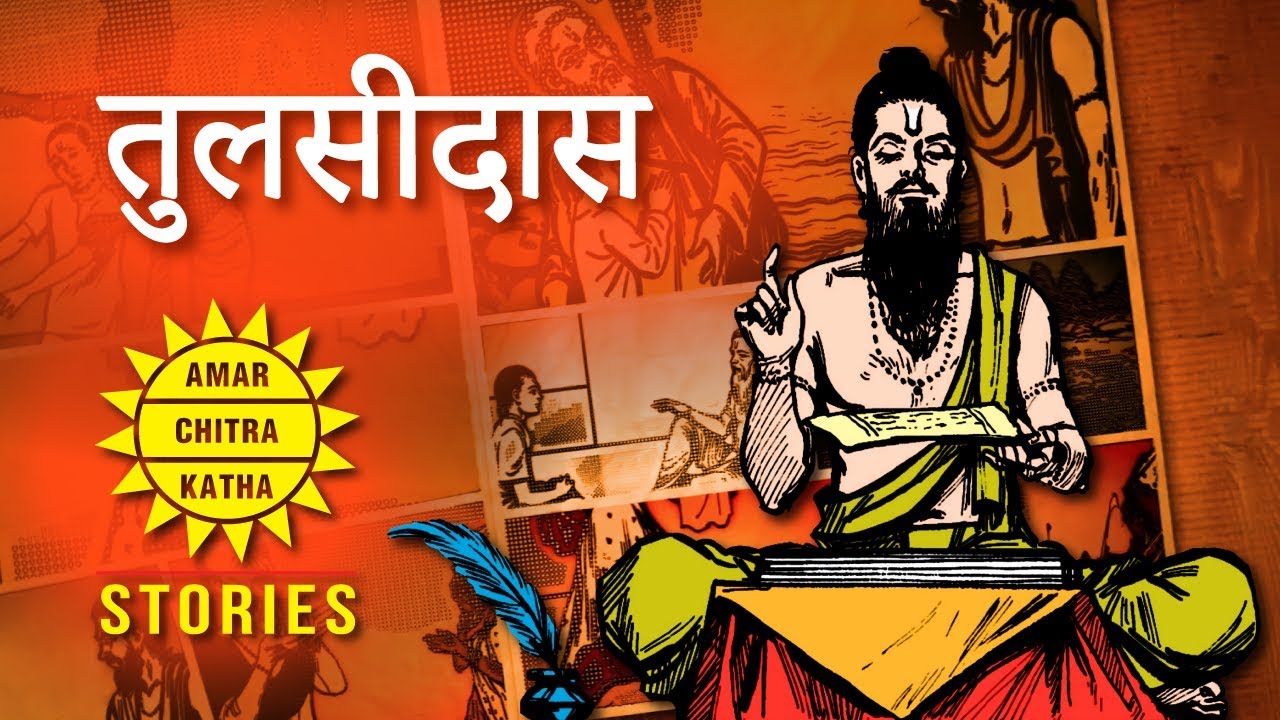
Tulsidas () was a revered Vaishnava saint and poet whose deep devotion to Lord Rama profoundly shaped Indian culture, literature, music, and art. Famous for authoring the epic Ramcharitmanas, his spiritual and literary contributions continue to inspire millions. This guide offers a clear overview of his life, writings, ideas, and impact for students preparing for history and literature exams.
🎯 In this chapter, you will understand:
- The life journey and spiritual experiences of saint Tulsidas.
- His major, minor, and attributed devotional literary works.
- His core philosophy harmonizing Nirguna and Saguna divine concepts.
- His lasting influence on Indian culture, theatre, and religious traditions.
💡 Why this topic matters: Tulsidas made complex spiritual wisdom accessible to ordinary people by writing in everyday regional languages rather than strict classical Sanskrit.
🧠 Core Idea: Unwavering love and devotion (bhakti) toward Lord Rama offers a simple, universal path to spiritual liberation.
Tulsidas: Life, Works, Philosophy, and Legacy (1511-1623)
Tulsidas, born Rambola Dubey in , became a standout figure in Indian devotional literature. His total dedication to Lord Rama helped build the spiritual and cultural environment of India, providing valuable insights for students and spiritual seekers alike.
- (i) Tulsidas's devotion and written works placed him at the heart of Indian cultural history.
- (ii) His ideas blended high philosophical concepts with practical, simple devotional habits.
- (iii) His writings stay at the core of Indian literary and religious studies today.
Life & Works of Tulsidas
This section looks closely at the major stages of Tulsidas's life journey, his growing spirituality, and his famous writings.

Early Life
Born Rambola Dubey in , Tulsidas faced a hard start in life after being left by his parents. Raised by Chuniya and guided by holy mentors, he received an early education in Ayodhya that built his strong knowledge of Hindu scriptures.
- (i) Facing difficulties early in childhood developed his inner strength and interest in spiritual life.
- (ii) Guidance from wise teachers taught him about Vedic texts and prayer routines.
- (iii) Learning holy texts during his young years directly shaped his later poetry.
Marriage & Renunciation
Tulsidas married Ratnavali, but later gave up worldly home life to become a monk. This decision allowed him to focus entirely on meditation and writing religious poetry.
- (a) Giving up household life showed his commitment to turning away from material desires for personal growth.
- (b) Living a simple, celibate life made it easy for him to travel widely and meditate peacefully.
- (c) This stage of his life gave birth to famous masterworks like Ramcharitmanas.
Travels & Spiritual Experiences
He traveled to holy places including Badrinath, Dwarka, and the Himalayas in search of truth. A key turning point was meeting Hanuman, who is said to have helped him receive a divine vision of Lord Rama.
- (i) Visiting sacred locations strengthened his faith and inspired his creative writing.
- (ii) Special spiritual moments added deeper meaning to everything he wrote.
- (iii) Direct experiences with divine figures became central themes across his poems.
Literary Works
Tulsidas wrote many major and secondary texts that enriched devotional literature and spiritual practice. His works are still studied widely for their literary beauty and practical wisdom.
- Major Works:
- Ramcharitmanas: The great retelling of the Ramayana in the Awadhi language, joining storyline with spiritual ideas.
- Dohavali: A collection of short two-line verses carrying moral and spiritual guidance.
- Sahitya Ratna: A poetic Braj-language version of the Ramayana story emphasizing artistic verse.
- Gitavali: A set of heartfelt devotional songs expressing pure love for Lord Rama.
- Krishna Gitavali: Songs dedicated to praising Krishna, displaying his skill across topics.
- Vinaya Patrika: Humble written prayers to Rama showing deep personal modesty.
- Minor Works:Barvai Ramayana, Parvati Mangal, Janaki Mangal, Ramalala Nahachhu, Ramajna Prashna, and Vairagya Sandipini.
- Attributed Works:Hanuman Chalisa, Sankatmochan Hanumanashtak, Hanuman Bahuka, and Tulsi Satsai.
- Major Works:
Death
Tulsidas passed away at the age of 111 on , at Assi Ghat in Varanasi, leaving behind a rich spiritual and poetic legacy that inspires people to this day.
Philosophy & Beliefs of Tulsidas
Tulsidas taught that loving devotion (bhakti) is the best route to spiritual freedom, while smoothly connecting different ideas about God.
Core Beliefs
He brought together Nirguna (formless divine) and Saguna (divine with form) views of God, placing great importance on repeating Rama's name.
- (i) Devotion stands as the main path to reaching liberation.
- (ii) Worship of Lord Rama easily blends with classical Vedantic thinking.
- (iii) Repeating holy names acts as a simple tool for changing oneself for the better.
Views on Deities
He showed great respect to Lord Shiva and other Hindu deities, pointing out how all divine forms are connected.
- (a) Respecting all forms of God helped build an open and welcoming spiritual attitude.
- (b) Broad spiritual respect gave stronger support to his personal devotion.
⚡ Quick Revision Capsule: Tulsidas Key Details
A quick summary of essential facts about Tulsidas for fast exam preparation:
| Aspect | Details & Key Information | Exam Significance |
|---|---|---|
| Life Span | Born (as Rambola Dubey), passed away (Assi Ghat, Varanasi) | Historical timeline and location facts |
| Primary Philosophy | Deep devotion (bhakti) uniting Saguna and Nirguna divine concepts | Core spiritual and philosophical questions |
| Magnum Opus | Ramcharitmanas written in local Awadhi dialect | Major Indian literature identification |
| Key Works | Vinaya Patrika, Dohavali, Gitavali, Hanuman Chalisa | Matching books to authors in exams |
| Cultural Impact | Founded Sankat Mochan Temple; popularized community Ramlila plays | Art, theatre, and cultural history questions |
📝 Summary
Tulsidas's lifetime (), deep faith in Lord Rama, and major texts like Ramcharitmanas make him a key figure in Indian history and literature studies. His ideas, simple poetry, and cultural contributions continue to guide readers today, keeping his work meaningful across generations.
🚀 Quick Revision Points
Essential facts to review before examinations:
- (i) Born as Rambola Dubey in ; later adopted the name Tulsidas.
- (ii) Composed the epic Ramcharitmanas in the everyday Awadhi language.
- (iii) Harmonized Saguna (with form) and Nirguna (formless) divine worship.
- (iv) Popularized Ramlila performances and authored the Hanuman Chalisa.
- 💡 Exam Tip: Remember that Tulsidas wrote Ramcharitmanas in local Awadhi, not classical Sanskrit, which helped spread the Ramayana story to the general public.
❓ Frequently Asked Questions (FAQ)
Q1: What was Tulsidas's childhood name, and when was he born?
A1: Tulsidas was born with the name Rambola Dubey in the year .Q2: What is the most famous work of Tulsidas, and in which language was it written?
A2: His most famous work is the epic Ramcharitmanas, written in the local Awadhi language.Q3: How did Tulsidas contribute to folk culture in India?
A3: He established the Sankat Mochan Hanuman Temple in Varanasi and popularized public Ramlila theatrical plays based on his writings.