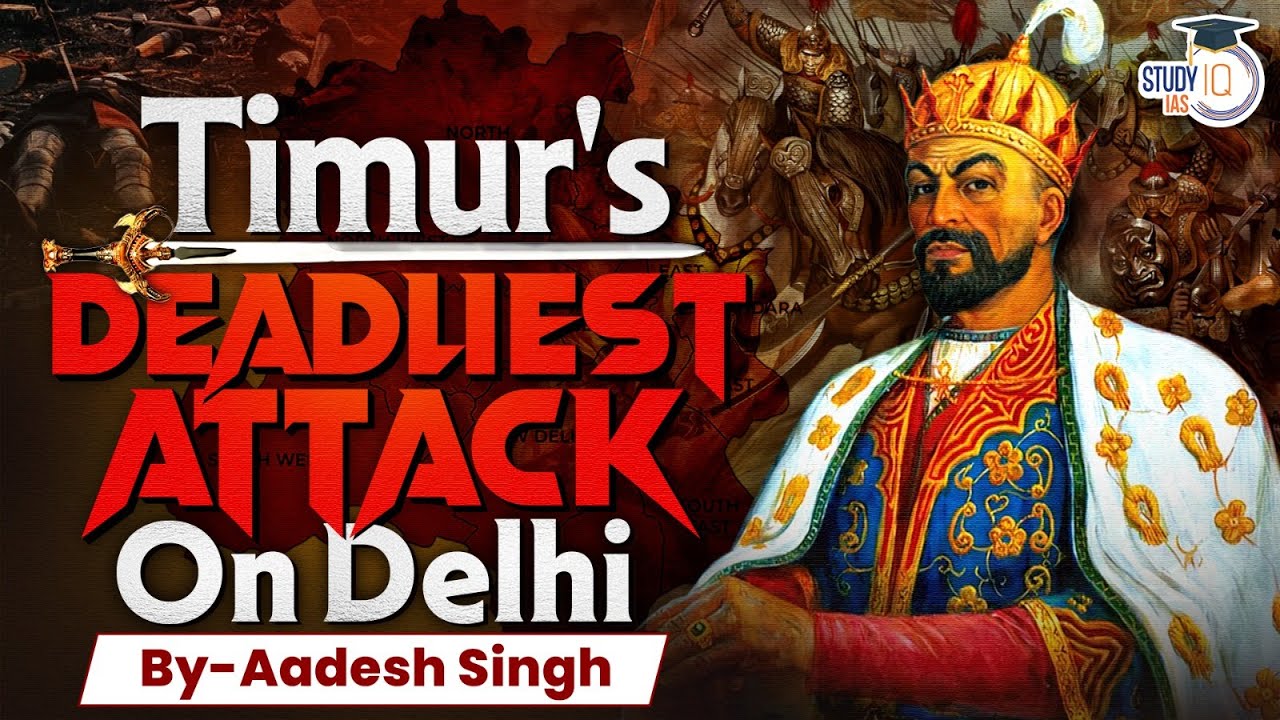
The major shift in medieval Indian history after Timur's attack on Delhi in triggered the freedom of Gujarat and Malwa, changing the political setup. This era saw the rise of strong regional kingdoms under active leaders like Muzaffar Shah and Ahmad Shah I, who expanded their lands, built great buildings, and set up smooth administration. Knowing about these regional power fights is essential for students studying the fall of the Delhi Sultanate and the growth of new independent states.
🎯 In this chapter, you will understand:
- How Gujarat and Malwa gained independence after Timur's invasion in .
- The major administrative and architectural contributions of Ahmad Shah I.
- The prolonged regional rivalry between the kingdoms of Gujarat and Malwa.
- The broader impact of these regional conflicts on North Indian politics.
💡 Why this topic matters: It explains how local governors broke away from Delhi's control to form powerful regional kingdoms that shaped trade, culture, and architecture across western and central India.
🧠 Core Idea: Weakness in central Delhi enabled provincial governors in Gujarat and Malwa to declare independence, leading to state-building as well as intense local power struggles.
Independence of Gujarat and Malwa: Post-Timur’s Invasion and Regional Rivalries (1398–15th Century)
The weakening of central rule in Delhi after the Timurid attack gave a clear chance for Gujarat and Malwa to set up their own independent rule. The end of effective leadership from the Delhi Sultanate left a blank space, which local governors quickly used to take full control and build their own regional power.
- (i) Both the area of Gujarat and the land of Malwa became independent right after Timur's destructive attack on Delhi in , marking the end of centralized control.
- (ii) The ambitious governor, Zafar Khan, officially declared his rule in Gujarat by taking the royal name of Muzaffar Shah in .
- (iii) Under the steady leadership of Muzaffar Shah, the new independent kingdom of Gujarat focused on establishing good governance and strengthening its power across the region.
Ahmad Shah I and the Strategic Expansion of Gujarat: Capital Shift and Architectural Zenith
The rule of Ahmad Shah I was a golden period for Gujarat. It was marked by land expansion, new administrative choices, and grand building projects that shaped the culture of the area.

Strategic Capital Shift and Cultural Defining Architectural Projects
Ahmad Shah I took a big step by moving the administrative center. This began a time of great city development and building work that laid the foundation for Gujarati heritage.
- (i) He shifted the capital from the old city of Patan to the new city of Ahmedabad in , making it a active center for politics and culture.
- (ii) The ruler started and supported major building projects, which formed a unique mix of local Hindu and Islamic art styles that defines medieval Gujarat.
Ambitious Territorial Expansion into Rajput States and Revenue Policies
To guard and grow his state, Ahmad Shah I used strong military actions, taking over neighboring lands and setting up new tax rules across his expanding borders.
- (a) His armies fought against and took over several key Rajput states in Saurashtra and Rajasthan, growing Gujarat's influence.
- (b) After these victories, he kept strong control over these lands and ordered the collection of the tax known as jizyah to build up his money and military power.
- (c) Through these battles and smart political choices, Ahmad Shah I spread Gujarat's strong power deep into western India.
The Complex Policy Mix and Effective Administration under Ahmad Shah I
The ruler's plan focused on stability and trust by carefully balancing the needs of different groups inside his growing kingdom.
- Inclusion of Hindu officials: He showed practical governance by hiring skilled Hindu officials in top positions to ensure balanced local rule.
- Religious conflicts: While building his own power, he had to handle and work through ongoing tensions between different religious groups across his lands.
- Complex policy mix: His whole system used a mixed policy plan made to secure long-term political stability and build trust among all his subjects.
The Intense Rivalry with Malwa and Central Indian Regional Conflicts: A Cycle of Instability
The long and tough fight between the newly formed kingdoms of Gujarat and Malwa became a main feature of central Indian politics, using up resources and stopping either side from taking full control.
Sustained Conflicts and Shrewd Political Manipulation
The relationship between these two strong states was filled with constant tension, direct wars, and secret actions aimed at weakening each other from inside.
- (i) Their connection was marked by constant fighting that often turned into open war, along with changing political partnerships with nearby powers.
- (ii) Rulers used political games by helping and encouraging internal fights or rival leaders within the enemy kingdom to make their neighbor weaker.
- (iii) Both lands made alliances with distant powers and regional states to balance power and counter the military strength of their main enemy.
The Neutralizing Impact on North Indian Politics and Regional Instability
The ongoing fights between Gujarat and Malwa had wide effects, keeping the political future of North India open and bringing general uncertainty to the region.
- (a) Both states grew weaker and tired due to the long, resource-heavy nature of their constant fights and hostility.
- (b) Because of their continuous inner battles, neither Gujarat nor Malwa could gain enough full power to rule over North Indian politics completely.
- (c) This ongoing regional instability hurt key areas by disturbing trade routes, slowing down local cultural growth, and making daily governance difficult.
⚡ Quick Revision Capsule: Gujarat and Malwa Sultanates
Key historical milestones, administrative actions, and developments during the post-Timur era in Gujarat and Malwa.
| Event / Leader | Key Action / Policy | Historical Impact |
|---|---|---|
| Timur's Invasion () | Attacked Delhi and broke central Sultanate control | Created a power vacuum that enabled regional independence |
| Muzaffar Shah () | Zafar Khan declared independence in Gujarat | Established the independent ruling dynasty of Gujarat |
| Ahmad Shah I () | Shifted capital to Ahmedabad & built architectural monuments | Fostered a unique Indo-Islamic architectural style and strong administration |
| Rajput Campaigns | Conquered parts of Saurashtra and Rajasthan; imposed jizyah | Expanded Gujarat's military power and territory in western India |
| Gujarat-Malwa Rivalry | Continuous wars, secret manipulation, and proxy alliances | Drained resources and prevented either state from dominating North India |
📝 Summary
The independence of Gujarat and Malwa after Timur's attack in was a major turning point in medieval Indian history. Leaders like Muzaffar Shah and Ahmad Shah I expanded their lands, moved capitals, built great structures, and setup strong regional identities. However, their constant battles with the Malwa Sultanate drained their resources and created a fragile balance of power across central India. This period shows how local states grew strong as the central Delhi authority weakened.
🚀 Quick Revision Points
Essential facts to review before examinations:
- (i) Zafar Khan became independent as Muzaffar Shah in after Timur's invasion in .
- (ii) Ahmad Shah I established Ahmedabad as the capital city in .
- (iii) The administrative approach in Gujarat mixed jizyah collection with the employment of Hindu officials in top roles.
- (iv) Fights between Gujarat and Malwa kept both states from controlling all of North India.
- 💡 Exam Tip: Focus on the cause-and-effect relationship: Timur's invasion created the power vacuum that directly enabled provincial governors to establish independent kingdoms in Gujarat and Malwa.
❓ Frequently Asked Questions (FAQ)
Q1: What caused Gujarat and Malwa to become independent?
A1: Timur's attack on Delhi in weakened central authority, allowing local governors to declare their independence.Q2: Who shifted the capital of Gujarat to Ahmedabad?
A2: Ahmad Shah I shifted the capital from Patan to Ahmedabad in .Q3: What was the result of the Gujarat and Malwa rivalry?
A3: The continuous battles drained resources from both states, stopping either kingdom from dominating North Indian politics.