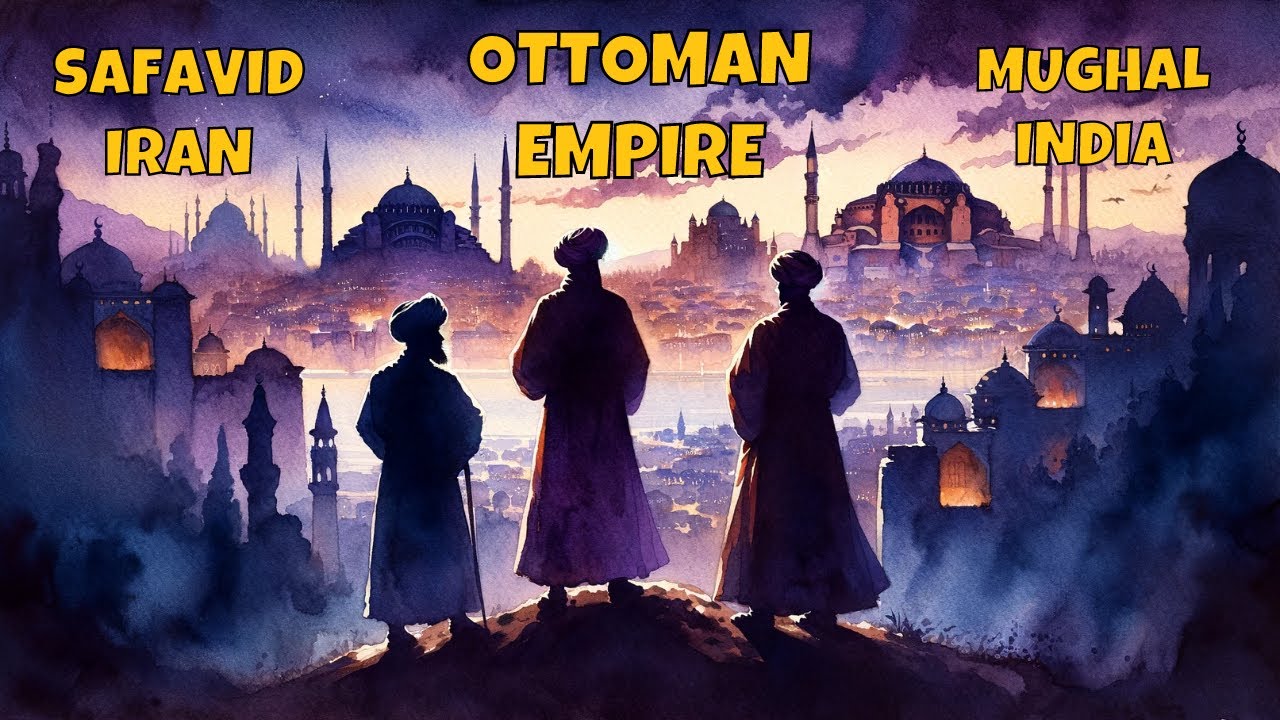
The Persian Conquest of Qandahar in and subsequent Mughal responses marked a critical phase in India's medieval history. This episode highlights Shah Jahan's ambitions for frontier control, the determined campaign led by Aurangzeb to reclaim the city, and the resulting complex diplomatic tensions with powerful neighbors like the Safavids and Ottomans. For students preparing for history and exam purposes, understanding this period is vital as it demonstrates the strategic significance of Qandahar and the broader contest for securing northwest frontier control.
🎯 In this chapter, you will understand:
- The military and geopolitical impact of the Persian capture of Qandahar in .
- Why repeated Mughal military campaigns failed due to siege limits and fortress strength.
- How Mughal-Persian rivalries influenced Asian diplomacy with powers like the Ottoman Empire.
- The lasting strategic importance of Kabul and Qandahar for defense and trade routes.
💡 Why this topic matters: Control over the northwestern gateway was essential for protecting the Indian subcontinent from foreign invasions and keeping lucrative land trade channels open.
🧠 Core Idea: Despite vast resources and army size, the Mughals faced clear military limits against strong fortifications and disciplined artillery, turning Qandahar into a major diplomatic and strategic battleground.
Persian Conquest of Qandahar (1649) and Mughal Responses: Strategic Frontier Struggles Under Shah Jahan and Aurangzeb
The sudden and successful Persian conquest of the strategically vital fortress of Qandahar in dealt a major blow to Shah Jahan's prestige and immediately triggered repeated, costly Mughal attempts to reclaim the gateway city.
This challenging military episode, unfolding between and , publicly exposed the military and logistical limitations of the otherwise powerful Mughal Empire when pitted against determined and well-entrenched Persian resistance at a crucial frontier.
- (i) In , the Persians, under Shah Abbas II, successfully captured Qandahar, an event that deeply wounded Mughal pride and challenged their perception of invincibility on the northern borders.
- (ii) The first major retaliatory action saw the capable prince Aurangzeb lead an immense force of approximately 50,000 troops; while he successfully defeated the Persians in open battle outside the fort, he ultimately failed to breach the massive defenses and seize the city itself.
- (iii) Subsequent and equally grand military attempts to recapture the fortress in , again led by Aurangzeb, and the final, costly endeavor in , led by his elder brother Dara Shukoh, also met with resounding and humiliating failures, confirming the Persian hold.
Mughal Failures at Qandahar: Strategic Limitations and Diplomatic Repercussions
The series of repeated and expensive failures to capture Qandahar decisively highlighted the enormous strength of Qandahar fort against the limitations of medieval artillery and, crucially, underscored Shah Jahan’s deep personal and strategic attachment to the city as a symbol of imperial power.

Fort Strength and Artillery Limitations of the 17th Century
The successful defense of Qandahar demonstrated a significant shift in the balance of defensive versus offensive warfare, proving the limitations of the available siege technology.
- (i) The extensive and layered defensive works of the fort proved highly resistant to sustained and intense Mughal siege warfare, preventing successful breaches.
- (ii) These failures vividly showed the operational limits and technological shortcomings of the 17th-century artillery available to the Mughal forces, which could not inflict decisive damage on the strong fortifications.
- (iii) The prolonged sieges also demonstrated the impressive Persian defensive resilience and their mastery of holding a well-stocked and well-positioned fortress against superior numbers.
Broader Diplomatic Consequences and Asian Power Dynamics
Despite the military setback at the frontier, the stature of the Mughal Empire in the larger Asian geopolitical landscape remained formidable, influencing diplomatic exchanges with other major powers.
- (a) Despite the visible military setbacks, the overall international perception of Mughal prestige as a major land empire in the subcontinent remained remarkably high among neighboring empires.
- (b) Notably, the rival Ottoman Empire sought out diplomatic exchanges and actively pursued Aurangzeb’s support, recognizing the Mughal strength as a crucial counterweight to the Persian Safavids.
- (c) This diplomatic attention highlighted the Mughal Empire’s undeniable role as a major Asian power, whose actions and alliances were significant in the balance of power across the continent.
Shah Abbas II, Mughal-Persian Tensions (1668), and The Secured Frontier
Later in the century, during the reign of Shah Abbas II, tensions between the empires flared up once more, characterized by deliberate insults to Mughal envoys, overt threats of invasion, and high-stakes power maneuvering from the Safavid side.
Insults and Threats Under Shah Abbas II
The Persian ruler, Shah Abbas II, sought to undermine Mughal authority and confidence through inflammatory diplomatic actions and rhetoric.
- (i) Shah Abbas II deliberately insulted Mughal representatives and envoys during their visits to the Persian court, challenging the diplomatic protocols and respect due to a major power.
- (ii) He went so far as to personally disparage the reigning Mughal Emperor, Aurangzeb, in public statements and correspondence, aiming to erode his authority.
- (iii) The most serious act was his threat of a full-scale invasion of the Mughal frontier, a move that prompted massive and immediate Mughal military preparedness and mobilization across the northwestern provinces.
Decline of Persian Threats and Mughal Frontier Security
Despite the high-tension period under Shah Abbas II, the Persian threat ultimately subsided, allowing the Mughals to secure their permanent strategic border.
- (a) The immediate and acute threat from the Safavid Empire was significantly reduced following the death of Shah Abbas II in , leading to a temporary internal lull in Persian imperial aggression.
- (b) Subsequent Persian rulers who succeeded him proved less aggressive and expansionist, posing no serious or sustained danger to core Mughal territories or the established frontier.
- (c) The Mughal strategic frontier was consequently secured and stabilized along the formidable natural barrier of the Hindukush mountains, effectively defining the lasting extent of the empire in the northwest.
Strategic Importance of Kabul and Qandahar for Mughal Defense and Commerce
The control of these two cities was paramount for securing both the territorial integrity and the commercial interests of the Mughal Empire.
The strategic mountain passes of Kabul and trade corridors of Qandahar. - Kabul: This city served as the essential frontier bastion, acting as the key defensive gateway and forward operational base for protecting the heartland of India from incursions from Central Asia.
- Qandahar: Historically recognized as the crucial gateway, this city controlled vital land routes, making it indispensable for controlling the lucrative overland Central Asia trade routes.
- Combined Strategic Value: The combined security of these two major hubs significantly strengthened both the Mughal defense and commerce, making the loss of Qandahar in trade terms a major setback.
⚡ Quick Revision Capsule: Mughal-Persian Struggles over Qandahar
A structured overview of key events, figures, and strategic impacts regarding Qandahar during the 17th century:
| Event / Phase | Key Figures & Dates | Strategic Outcome & Impact |
|---|---|---|
| Persian Capture | Shah Abbas II () | Safavids captured Qandahar, dealing a severe diplomatic blow to Shah Jahan. |
| First & Second Mughal Expeditions | Aurangzeb (, ) | Mughal forces defeated Persian troops in open field but failed to break the fortress defenses. |
| Third Mughal Siege | Dara Shukoh () | Final costly attempt failed, firmly establishing Safavid control over Qandahar. |
| Safavid Diplomatic Threats | Shah Abbas II vs. Aurangzeb () | Insults to Mughal envoys and invasion threats led to major mobilization until Abbas II died in . |
| Frontier Stabilization | Mughal Empire & Safavids (Post-) | The Mughal defense line stabilized along the Hindukush, keeping Kabul secure while losing overland trade through Qandahar. |
📝 Summary
The Mughals, even after permanently losing Qandahar in , successfully maintained their critical northwest frontier defense along the Hindukush, preventing any deep Persian incursions into India. Furthermore, their confident foreign policy consistently emphasized equality with Asian powers such as the Safavids and Ottomans, refusing to submit to any claims of superiority. For students, this era illustrates both the limits of Mughal expansion into Central Asia and the critical importance of sophisticated diplomatic maneuvering alongside military strength in securing an empire's legacy.
🚀 Quick Revision Points
Essential facts to review before examinations:
- (i) Qandahar was captured by Safavid forces under Shah Abbas II in .
- (ii) Three separate Mughal sieges (, , ) failed to retake the fortress due to artillery limitations.
- (iii) The Hindukush range served as the final stabilized boundary for Mughal territorial defense.
- (iv) Kabul remained the forward military base for interior Indian protection, while Qandahar was the prime hub for overland Central Asian commerce.
- 💡 Exam Tip: When answering questions about Mughal foreign policy, contrast the loss of Qandahar as a commercial hub with the successful military defense of the Kabul-Hindukush line against foreign invasions.
❓ Frequently Asked Questions (FAQ)
Q1: Why was Qandahar so important to both the Mughals and Safavids?
A1: Qandahar was a vital strategic gateway controlling the major overland trade routes between India and Central Asia, as well as a prime defensive position against invasion.Q2: Who led the Mughal attempts to recapture Qandahar between 1649 and 1653?
A2: Prince Aurangzeb led the first two expeditions in and , while Prince Dara Shukoh led the third and final attempt in .Q3: How did Mughal relations with the Ottoman Empire connect to the Qandahar conflict?
A3: The Ottoman Empire sought diplomatic ties with the Mughals to create a counterweight against their common rival, the Safavid Dynasty of Persia.