Between and , the No-Changers stepped up as a transformative force in the Indian freedom struggle. By focusing on setting up rural ashrams, spreading national education, and building Hindu-Muslim unity, they created a solid base at the village level. This ground-level work formed the moral core of Gandhian ideology.
🎯 In this chapter, you will understand:
- How the No-Changers kept the freedom movement alive after the Non-Cooperation Movement ended.
- The key roles played by rural ashrams, the charkha philosophy, and national schools.
- The practical and economic limits of khadi and social reform programs.
- How Swarajists and No-Changers cooperated despite having different political methods.
💡 Why this topic matters: It shows how quiet, everyday social service in villages built the public support needed for massive national movements like Civil Disobedience.
🧠 Core Idea: While some leaders entered lawmaking councils, the No-Changers worked directly with ordinary people to build a self-reliant nation from the bottom up.
The Grassroots Revolution: Constructive Work by No-Changers in the Indian Freedom Struggle (–)
After the withdrawal of the Non-Cooperation Movement following the Chauri Chaura incident, the No-Changers took on the job of keeping the national spirit alive through steady work among the public. While other leaders went into legislative councils, No-Changers moved into rural villages to build self-reliance outside British government control.
Key Pillars of Ground-Level Work
Their daily efforts focused on practical self-help, local education, and social support:
- (i) The Ashram Movement: Spiritual and social centers established in places like Kheda and Bardoli in Gujarat acted as operational hubs. These centers led efforts to support tribal groups and marginalized village communities.
- (ii) The Charkha Philosophy: Popularizing the charkha (spinning wheel) and handwoven khadi cloth was more than an economic initiative. It served as a clear statement against British textile imports while giving lower-income families a way to earn independent income.
- (iii) Educational Awakening: To offer an alternative to British-run education, they set up National Schools and Colleges. These institutions taught a curriculum designed to foster self-respect and national pride among young people.
Critical Analysis: Limitations and Challenges of the Constructive Program
Even with their dedicated work, the No-Changers faced major practical challenges and critique from contemporary political observers.

The Dilemma of National Education and Student Retention
The plan for independent national education was ambitious, but it struggled to keep students during quiet political periods when young people needed job security.
Demographic Reach
- (i) The main benefits of national schools mostly reached lower-middle-class urban families and children of wealthier farmers.
- (ii) Most rural families could not afford to forgo official degrees, leaving them largely outside this school system.
Economic Realities for Students
- (i) As active political campaigns slowed down, many students went back to British-approved colleges to secure recognized degrees and jobs.
- (ii) Without an independent job network for national degree holders, many graduates faced career dead-ends.
The Economic and Social Paradoxes of Khadi and Reform
Although khadi became a proud symbol of freedom, it faced difficult economic reality, and social reforms did not always address deeper economic causes.
- (a) The Price of Patriotism: Hand-spun khadi was noticeably more expensive than factory-made British cloth, making it hard for poor families living on tight budgets to buy it regularly.
- (b) Economic Blind Spots: Anti-untouchability campaigns focused heavily on social acceptance, but often overlooked underlying economic struggles and land rights for landless workers.
- (c) Crisis Management: Despite these limitations, No-Changers earned strong public trust by running organized relief efforts during famines and floods.
The Dynamics of Unity: Swarajists and No-Changers
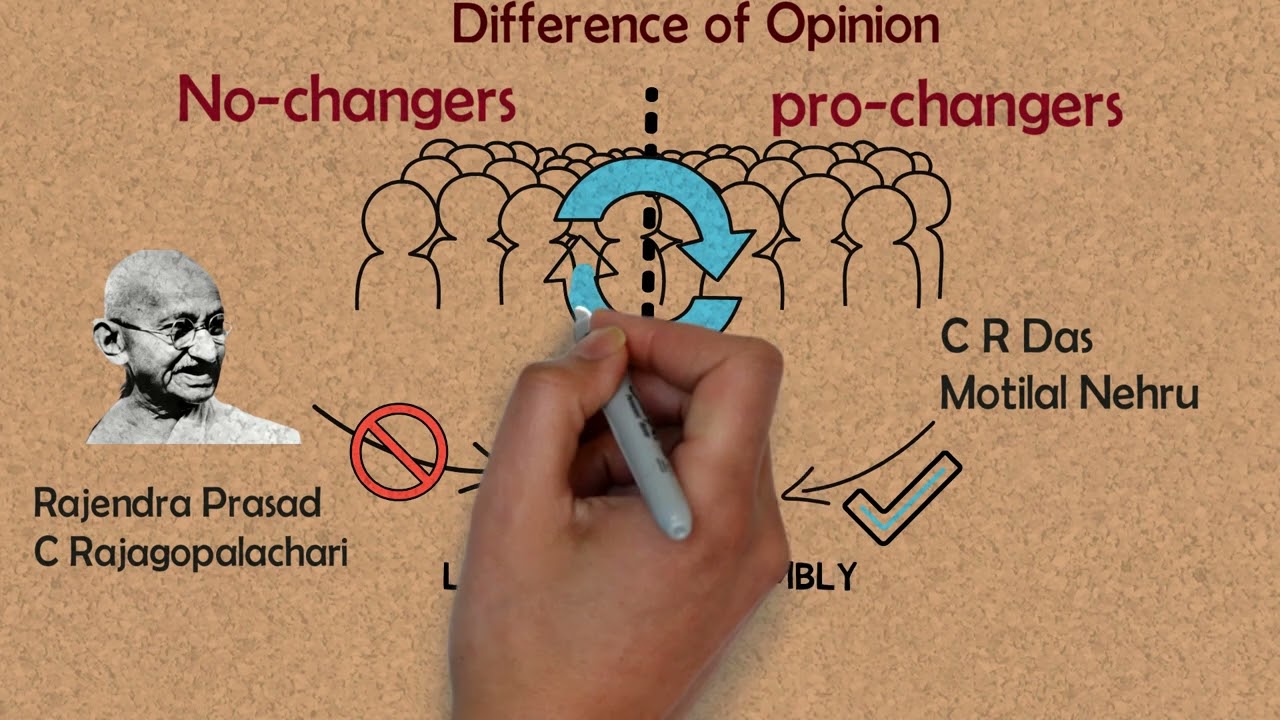
The disagreement inside the Indian National Congress between council-entry supporters (Swarajists) and No-Changers showed strong political maturity on both sides.
Strategic Cooperation
- (i) Maintaining Cordial Ties: Though they disagreed on joining legislative councils, both groups respected each other's contribution to the broader movement.
- (ii) United Front: Whenever national leadership called for major campaigns or Civil Disobedience, both factions quickly rejoined forces.
⚡ Quick Revision Capsule: Constructive Work vs. Council Entry
A quick comparison of the two main strategies within the Indian National Congress during the 1920s:
| Pillar | No-Changers | Swarajists |
|---|---|---|
| Primary Strategy | Village-level social work, national education, and local self-reliance. | Entering legislative councils to challenge colonial policies from inside. |
| Key Figures | Sardar Vallabhbhai Patel, Rajendra Prasad, C. Rajagopalachari. | C.R. Das, Motilal Nehru. |
| Main Tools | Charkha, Khadi, rural ashrams, and national schools. | Debates, council motions, and political walkouts. |
| Major Strengths | Built deep public trust and organized groundwork in rural villages. | Exposed government policy flaws on an official political stage. |
| Key Challenge | Higher cost of khadi and limited employment for national graduates. | Risk of getting drawn into regular official council duties over time. |
📝 Summary
The No-Changers served as silent builders during the Indian freedom struggle between and . Through khadi promotion, national schools, and social work, they built a widespread support base in Indian villages. Although higher costs and limited employment created obstacles, their ground-level network proved crucial when the nation launched full-scale Civil Disobedience.
🚀 Quick Revision Points
Essential facts to review before examinations:
- (i) No-Changers focused on village service following the end of the Non-Cooperation Movement in .
- (ii) Major ashram centers in Kheda and Bardoli led social reform and local outreach.
- (iii) Khadi promoted self-reliance, though higher production costs limited universal daily adoption.
- (iv) Swarajists and No-Changers maintained mutual respect and reunited for civil disobedience campaigns under Gandhian ideology.
- 💡 Exam Tip: Highlight that constructive work was not a departure from politics, but a strategic preparation of the rural masses for future civil disobedience movements.
❓ Frequently Asked Questions (FAQ)
Q1: Who were the main leaders among the No-Changers?
A1: Prominent leaders included Sardar Vallabhbhai Patel, Rajendra Prasad, and C. Rajagopalachari.Q2: What were the main economic challenges faced by the Khadi initiative?
A2: Hand-woven khadi was more expensive and time-consuming to make than machine-made British textiles, making it harder for poor villagers to afford.Q3: How did No-Changers and Swarajists cooperate despite their differences?
A3: They avoided open conflict, supported each other's national value, and formed a single united front during national Civil Disobedience calls.