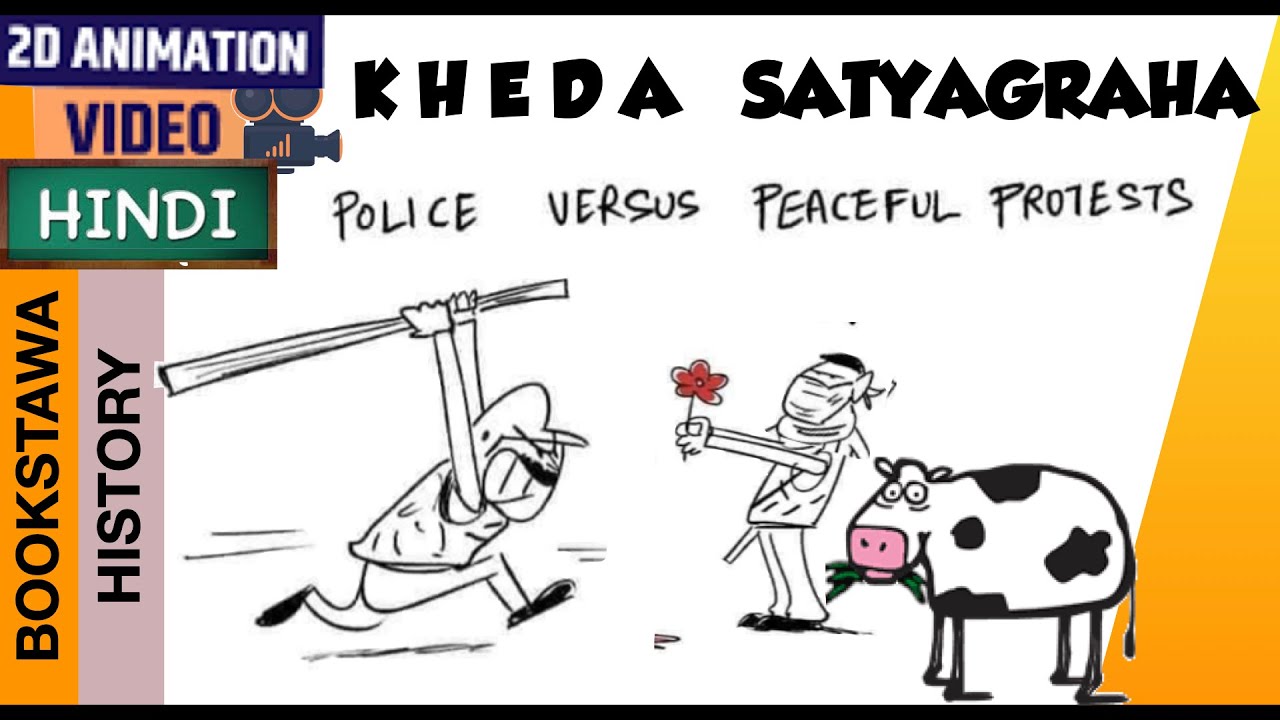
The Kheda Satyagraha of stands out as the first non-cooperation movement led by Mahatma Gandhi, essential for students of Indian history. It arose during a devastating drought in Gujarat, where unjust tax demands pushed peasants into extreme hardship. This disciplined tax revolt not only forced the British government to yield but also proved the undeniable power of non-violent satyagraha.
🎯 In this chapter, you will understand:
- The background and drought crisis that sparked the peasant tax revolt in Kheda.
- The moral leadership of Mahatma Gandhi and organizational strength of Sardar Patel.
- The immediate concessions won by farmers and long-term political impacts.
- The role of satyagraha as a blueprint for India's broader freedom struggle.
💡 Why this topic matters: It marks the first organized non-cooperation movement in rural India, proving that disciplined, non-violent mass resistance could successfully challenge colonial administration.
🧠 Core Idea: When colonial rulers refused tax relief during a severe drought, peasants used non-violent non-cooperation to secure their rights without taking up arms.
Kheda Satyagraha of 1918: The First Non-Cooperation Movement and its Historical Significance
The background of the Kheda Satyagraha highlights the peasants’ resilient spirit against colonial injustice.
In the year , the fields of Gujarat lay parched as a severe drought struck, leading to a catastrophic crop failure that threatened the survival of thousands. According to the existing Revenue Code, if the agricultural yield fell below one-fourth of its normal level, the peasants were legally entitled to a full remission of taxes. However, the British authorities ignored these pleas, demanding full payment despite the famine-like conditions.
- (i) The Gujarat Sabha, acting as a representative body for the suffering farmers, formally requested a suspension of the revenue assessment for .
- (ii) British officials met these requests with cold refusal, threatening the farmers with the immediate confiscation of their property and livestock.
- (iii) The refusal to grant relief sparked a deep sense of resentment, setting the stage for a monumental confrontation between the Indian peasantry and the British Crown.
Gandhi’s Moral Leadership and Sardar Patel’s Grassroots Organization
The Kheda struggle became a grand showcase of unity, discipline, and determination as it flourished under the dual guidance of Mahatma Gandhi and Sardar Vallabhbhai Patel. It was a time when various ethnic and caste communities merged into a single nationalist struggle against oppression.

The Strategic Role of Mahatma Gandhi in the Tax Revolt
Mahatma Gandhi stepped into the Kheda landscape not just as a politician, but as a spiritual anchor who urged the peasants to withhold their taxes as a matter of honor and truth. By positioning himself at the helm, he transformed a local grievance into a national movement of satyagraha.
The Philosophy of Resistance
- (i) Gandhi’s strict advocacy of non-violence ensured that the peasants remained disciplined, even when British officials forcibly seized their land.
- (ii) He successfully turned a standard tax protest into a profound moral example of satyagraha that resonated across India.
- (iii) His presence provided the psychological strength required for poor farmers to stand up against the might of the British Empire.
Sardar Patel’s Dynamic Organizational Leadership and Mobilization
It was during the Kheda Satyagraha that Sardar Vallabhbhai Patel abandoned his lucrative legal career to serve the people. Working alongside Narahari Parikh, Mohanlal Pandya, and Ravi Shankar Vyas, he moved through the villages to ignite the flames of non-cooperation.
- (a) Patel ensured that there was total cooperation across all caste and ethnic communities, preventing the British from using divide and rule tactics.
- (b) His meticulous planning made this one of the most disciplined peasant struggles recorded in the annals of the Indian freedom struggle.
- (c) The organizational network established by Sardar Patel provided a shield for the satyagrahis against government intimidation.
Mass Solidarity and Community Support in Kheda
The movement survived because of the deep solidarity found within the Gujarati communities. As the British government began the confiscation of property, the spirit of the people remained unbroken, fueled by the support of their neighbors.
- (i) Despite losing their cattle and household goods to revenue officials, the peasants refused to surrender their dignity.
- (ii) Local communities offered shelter and protection to the families of those whose lands had been seized, ensuring the struggle could continue.
- (iii) This widespread solidarity granted the Kheda Satyagraha a high level of moral legitimacy, making it impossible for the British to ignore.
The Ultimate Outcome, Long-term Impact, and Historical Evaluation
The Kheda Satyagraha concluded with a significant victory for the peasantry, forcing the British government to issue concessions. More importantly, it established the effectiveness of non-violent resistance and cemented Gandhi’s reputation as a mass leader, serving as a blueprint for the Non-Cooperation Movement of .
Immediate Outcomes and Concessions Won
The tax revolt ended when the British government secretly instructed its officials to collect revenue only from those who could afford to pay, effectively suspending the burden on the poor.
Restoration of seized farmland and cattle back to Kheda peasants following successful negotiations. - (i) Tax collection was officially suspended for the affected year and the following season.
- (ii) All confiscated lands and seized properties were eventually restored to their rightful peasant owners.
- (iii) The proposed unjust increase in the tax rate was significantly reduced, providing much-needed financial relief.
Efficacy of Satyagraha as a Formidable Political Weapon
The success in Kheda proved that satyagraha was not just a theoretical concept but a potent political weapon. It showed that through non-violent means, the masses could achieve justice against a superior military power.
- (i) It strengthened the Indian people's faith in the concept of collective non-cooperation.
- (ii) The movement provided moral strength to the freedom struggle, emphasizing truth over force.
- (iii) The disciplined unity shown by the Kheda farmers became a legendary model for future mass movements in India.
Gandhi’s Evolution and Understanding of the Indian Masses
Through the Kheda Satyagraha, Mahatma Gandhi gained an intimate understanding of the Indian peasantry. He realized their capacity for sacrifice and their deep-seated commitment to the cause of Swaraj.
- (a) Gandhi sharpened his strategies for mass mobilization, learning how to bridge the gap between urban politics and rural reality.
- (b) This experience firmly established him as a leader of the people, a title he would carry throughout the Indian independence movement.
- (c) He identified the specific strengths and limitations of the masses, which helped him plan the Salt March and Quit India movements later.
Nationalist Inspiration and the Commitment of the Youth
The Kheda victory sent a wave of inspiration through the youth of India. Witnessing the British back down before peaceful farmers emboldened a new generation of freedom fighters.
- (i) Gandhi earned immense respect and moral authority, which allowed him to lead the Indian National Congress with a clear mandate.
- (ii) The youth were inspired to commit their lives to the nationalist cause, seeing a tangible path to victory.
- (iii) This movement proved that the Indian freedom struggle was no longer confined to educated city dwellers but had reached the heart of rural India.
Summary of the Kheda Satyagraha and its Importance for Students
The Kheda Satyagraha of remains a cornerstone of the Indian freedom struggle. It is a vital topic for students and exam preparation as it illustrates the first non-cooperation movement and the rise of Mahatma Gandhi and Sardar Vallabhbhai Patel as national icons. By understanding the power of non-violence and satyagraha, students gain insight into how unity and discipline can challenge the most powerful colonial regimes.
⚡ Quick Revision Capsule: Kheda Satyagraha ()
Key details of the Kheda Peasant Revolt for fast examination review:
| Aspect | Key Feature / Details | Historical Importance |
|---|---|---|
| Year & Location | in Kheda District, Gujarat | First major non-cooperation movement in rural India. |
| Primary Cause | Crop failure due to drought; refusal of tax remission under the Revenue Code. | Exposed colonial indifference toward severe rural distress. |
| Key Leaders | Mahatma Gandhi, Sardar Vallabhbhai Patel, Narahari Parikh, Mohanlal Pandya | Patel gave up his law practice; Gandhi established mass spiritual leadership. |
| Core Method | Satyagraha (truthful non-violent resistance) and tax refusal. | Proved peaceful non-cooperation could resist land confiscation. |
| Outcome | Tax suspended for affected farmers; confiscated lands returned. | Provided a tested blueprint for the nationwide movement. |
📝 Summary
The Kheda Satyagraha of was a landmark event in the Indian independence movement. Caused by a severe drought, peasant farmers refused to pay unjust taxes demanded by the British administration. Under the moral leadership of Mahatma Gandhi and the strategic organization of Sardar Vallabhbhai Patel, the farmers held firm without resorting to violence. Their victory forced British authorities to grant tax relief and return seized lands, establishing satyagraha as a primary tool for freedom.
🚀 Quick Revision Points
Essential facts to review before examinations:
- (i) Triggered by severe drought in Kheda in and refusal of revenue remission under British rules.
- (ii) Represented the first rural non-cooperation movement led directly by Mahatma Gandhi.
- (iii) Marked the emergence of Sardar Vallabhbhai Patel as a top leader in the national movement.
- (iv) Demonstrated that non-violent resistance (satyagraha) could successfully defeat harsh colonial policies.
- 💡 Exam Tip: Remember that while the Champaran Satyagraha () was Gandhi's first civil disobedience movement in India, the Kheda Satyagraha () is specifically recognized as his first non-cooperation movement involving peasant tax refusal.
❓ Frequently Asked Questions (FAQ)
Q1: Why is the Kheda Satyagraha called the first non-cooperation movement?
A1: Because it was the first time peasants collectively refused to cooperate with colonial tax collection demands, using non-violent protest as their primary strategy.Q2: What was the main demand of the farmers in Kheda?
A2: Farmers demanded a full suspension of land revenue assessment for because drought had reduced their crop yields below the legally required 25% threshold.Q3: What role did Sardar Vallabhbhai Patel play in this revolt?
A3: Sardar Vallabhbhai Patel left his legal career to organize grassroots mobilization, uniting different caste groups and ensuring complete village-level discipline during the protest.