The intense period between and was a major turning point in India's struggle for freedom. Rising violence, the creation of a temporary government, and continuous political disagreements deeply changed the country's social fabric and politics. Learning about these events helps us understand how modern India took shape.
🎯 In this chapter, you will understand:
- How political tension led to widespread riots across India in .
- Why the British administration shifted its strategy toward a planned exit.
- The establishment and administrative working of the Interim Government.
- The internal conflicts that eventually made the partition of India unavoidable.
💡 Why this topic matters: This crucial phase explains how internal disagreements and political stalemates directly led to the end of British rule and the division of the subcontinent into two nations.
🧠 Core Idea: When national unity broke down and political parties could not work together inside the administration, independence came alongside the tragic reality of partition.
Impact of Communal Riots, Interim Government, and Political Crisis in India ()
As British rule neared its end, the year brought a mix of excitement for freedom and fear of social unrest. The struggle was no longer just about removing foreign rulers, but also about deciding how a free India would be governed. Political disagreements between major leadership groups caused huge challenges during this transitional period.
- (i) Loss of trust between major political groups led to severe public clashes and bloodshed.
- (ii) British officials focused less on routine governing and more on managing a safe exit.
- (iii) The temporary administration suffered from constant political disagreement instead of smooth teamwork.
The Shadow of Violence: Impact of Communal Riots on India's Social Landscape ()
Political calls for direct demonstrations quickly turned into violent widespread unrest that damaged trust between communities.

The Eruption of Large-Scale Communal Riots
Tragedy struck on , when sudden violent riots broke out on a scale never seen before. Often called the Great Calcutta Killings, this event started a cycle of revenge violence across many areas.
- (i) Thousands of people lost their lives, creating deep distrust among populations.
- (ii) Violence spread across major regions, including Calcutta, Bombay, and rural areas in Noakhali and Bihar.
- (iii) Riots in Garhmukteshwar showed how difficult it had become for officials to keep peace and order.
The Pivot of Power: Changed Priorities of the British Government
Seeing the growing danger and instability, British leaders began changing their long-held administrative methods.
Viceroy Wavell's Strategic Shift in
Viceroy Wavell changed his plan compared to the Shimla Conference. He decided to invite leaders of the Indian National Congress to form a temporary administration, even if other political parties initially refused to join.
- (i) This decision altered earlier rules that allowed single parties to block overall political progress.
- (ii) It showed that British administrators wanted to move quickly toward handing over power.
Transition from Rule to Withdrawal
British strategic goals changed from holding onto power to managing an orderly departure:
- (a) Continuing colonial rule had required balancing opposing forces against one another.
- (b) Leaving the country required establishing a working successor leadership to maintain stability after their exit.
Governance Amidst Chaos: Formation of the Interim Government ()
The Interim Government was created to guide the nation toward complete self-rule, but it immediately faced political obstacles.
Leadership Under Jawaharlal Nehru
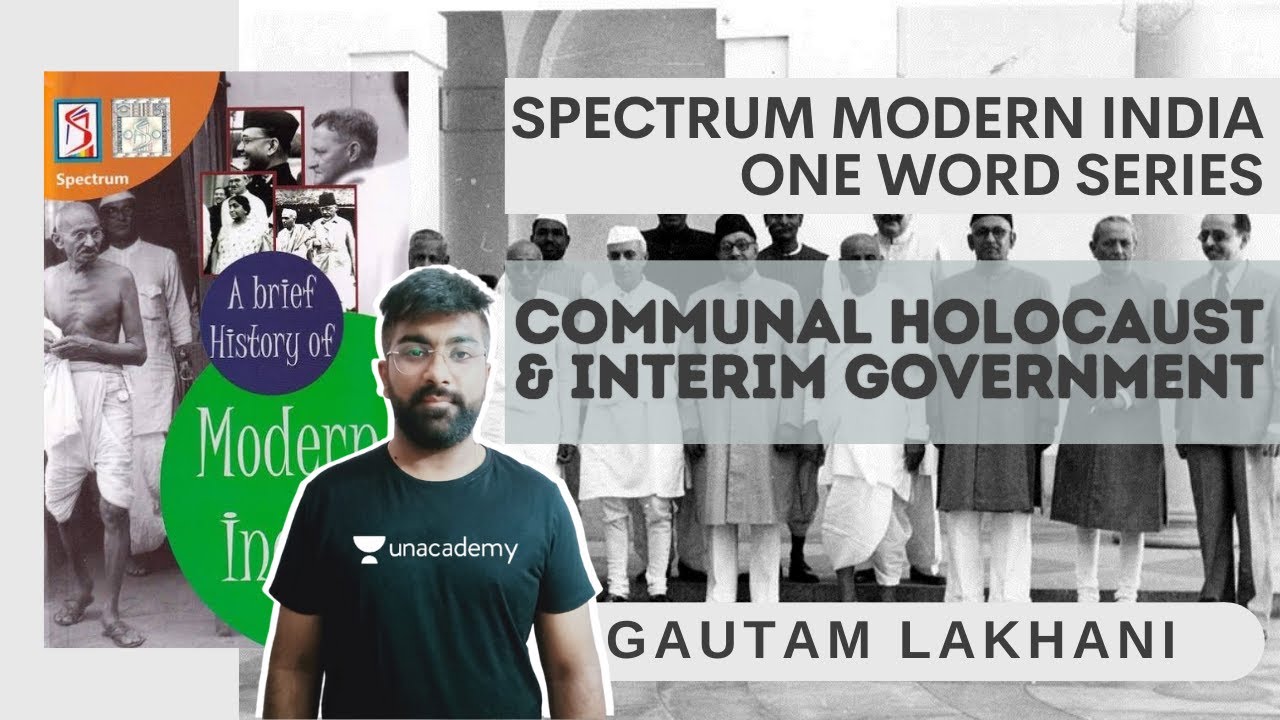
A new administration headed by Jawaharlal Nehru officially assumed office on . Nehru worked to protect national unity and spoke against dividing provinces into strict political groups proposed by colonial planners.
- (i) The temporary government still operated within the existing system under the British Viceroy.
- (ii) The Viceroy kept special veto powers, which he used in regarding prisoners from the Indian National Army (INA).
- (iii) On , representatives from the Muslim League joined the executive body as well.
The Tactical Entry: Conditions of the Muslim League
The entry of these new representatives was aimed at protecting specific political goals rather than working in total harmony with others.
- (i) They kept up public protest actions while simultaneously taking charge of government offices.
- (ii) They rejected the broader Cabinet Mission Plan, creating political delays inside the administration.
- (iii) They demanded strict provincial grouping to increase their influence in places like Assam and the North-West Frontier Province (NWFP).
The Executive Team: List of 14 Key Ministers in India's Interim Government
The cabinet brought together key leaders from different parties and background communities.
Portfolios and Personalities of the Cabinet
This leadership group was the final attempt to run a united executive administration across the whole country before division occurred.
The 1946 Interim Government cabinet members and their assigned portfolios. - Jawaharlal Nehru: Vice President of Executive Council, External Affairs & Commonwealth Relations
- Vallabhbhai Patel: Home, Information & Broadcasting
- Baldev Singh: Defence
- Dr. John Mathai: Industries & Supplies
- C. Rajagopalachari: Education
- C.H. Bhabha: Works, Mines & Power
- Rajendra Prasad: Agriculture & Food
- Jagjivan Ram: Labour
- Asaf Ali: Railways
- Liaquat Ali Khan: Finance
- Ibrahim Ismail Chundrigar: Commerce
- Abdur Rab Nishtar: Communications
- Ghazanfar Ali Khan: Health
- Jogendra Nath Mandal: Law
⚡ Quick Revision Capsule: Interim Government Portfolios ()
Here is a quick view of key cabinet members and their official responsibilities during the transitional government period:
| Minister Name | Assigned Portfolio | Political/Community Background |
|---|---|---|
| Jawaharlal Nehru | Vice President, External Affairs & Commonwealth Relations | Congress Leadership |
| Vallabhbhai Patel | Home, Information & Broadcasting | Congress Leadership |
| Baldev Singh | Defence | Sikh Representative |
| Liaquat Ali Khan | Finance | Muslim League Leadership |
| Jagjivan Ram | Labour | Scheduled Castes Representative |
Sabotage from Within: The Muslim League's Obstructionist Approach
Due to opposing political goals, the temporary administration quickly hit a wall where getting daily tasks done became almost impossible.
Boycotts and Administrative Obstacles
Party representatives chose not to attend the Constituent Assembly when it first met on . This forced the remaining members to work independently on the foundational Objectives Resolution written by Nehru. Members also frequently skipped daily cabinet meetings.
- (i) Regular executive decisions were repeatedly questioned, slowing down everyday work.
- (ii) Liaquat Ali Khan, using his authority as Finance Minister, held back approvals for spending in other departments.
- (iii) Joining the administration turned out to be a tactic to strengthen their call for a separate state from within the power structure.
The Breaking Point: The Crisis of
By early , leaders realized that running a joint government was no longer working. The political standoff reached a complete dead end.
- (i) Congress leaders asked the British government to either insist on cooperation or remove non-cooperating members from office.
- (ii) In , nine cabinet ministers gave an ultimatum to the Viceroy: either the non-cooperating members resign, or they themselves would leave office.
- (iii) The opposing group responded by demanding the entire Constituent Assembly be ended, making partition seem like the only choice left.
📝 Summary
The events between and show how India shifted from colonial rule to self-determination. Severe riots, political deadlocks, and the breakdown of joint administrative efforts made a single united nation impossible to maintain. These developments led directly to independence alongside partition in .
🚀 Quick Revision Points
Essential facts to review before examinations:
- (i) The Great Calcutta Killings started on , causing widespread social unrest.
- (ii) The Interim Government took office under Jawaharlal Nehru on .
- (iii) Liaquat Ali Khan controlled the Finance Ministry, which led to administrative delays inside the cabinet.
- (iv) Disagreements over the Constituent Assembly in early made the partition of India inevitable.
- 💡 Exam Tip: Focus on the dates, portfolio assignments in the Interim Government, and the main reasons why joint governance failed. Questions often ask about specific portfolio holders like Finance and Defence.
❓ Frequently Asked Questions (FAQ)
Q1: When was the Interim Government of India formed?
A1: The Interim Government was sworn in on , with Jawaharlal Nehru leading as Vice President of the Executive Council.Q2: What caused the political deadlock inside the 1946 Interim Government?
A2: Disagreements over joining the Constituent Assembly and budget controls managed by the Finance Ministry created a complete standstill in daily governance.Q3: Why is Direct Action Day significant in modern Indian history?
A3: Marked on , it led to large-scale riots known as the Great Calcutta Killings, which deeply divided communities right before independence.