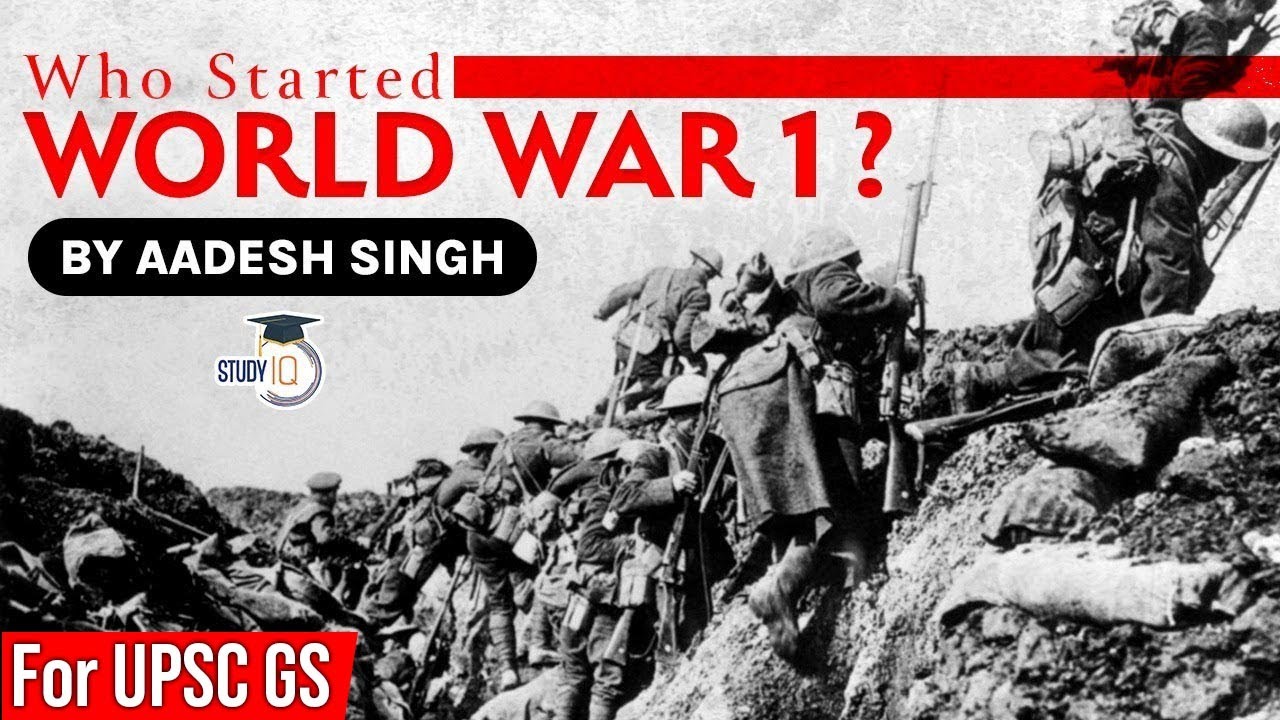
The First World War served as a transformative epoch for the maturing of Indian nationalism, forcing a recalibration of the Indian independence movement against the backdrop of British colonial rule. This era is a cornerstone for students preparing for Indian history exams as it illustrates how the conflict bridged the gap between early political petitioning and the mass movements that followed, making it essential for competitive academic mastery.
🎯 In this chapter, you will understand:
- How global power shifts during influenced Indian political thinking.
- The distinct strategies adopted by Moderates, Extremists, and Revolutionaries.
- The role of overseas networks like the Ghadr Party and Berlin Committee.
- How wartime economic strain and reduced British troop strength created strategic opportunities for Indian leaders.
💡 Why this topic matters: World War I shattered the myth of European invincibility and unified diverse political groups in India to demand self-governance more assertively.
🧠 Core Idea: The Great War transformed Indian politics from cautious petitioning into an active, multi-pronged struggle for Swaraj (self-rule).
Britain’s Allies and the Maturing of Indian Nationalism during WWI (1914-1919)
A global conflict that fundamentally altered the psychological and political landscape of the Indian subcontinent. The outbreak of the Great War was not merely a European affair; it was a catalyst that exposed the cracks in the imperial facade and accelerated the quest for self-governance among the Indian masses and political elite.
- (i) Global Geopolitical Shifts: The First World War () saw Britain leading an alliance with France, Russia, USA, Italy, and Japan to suppress the Central Powers consisting of Germany, Austria-Hungary, and Turkey.
- (ii) Evolution of Political Consciousness: As the conflict progressed, the maturing of Indian nationalism became evident, transitioning from local grievances to a unified demand for a change in the status of the British Raj.
- (iii) Economic and Social Strain: The war years imposed heavy financial burdens on the Indian populace, further highlighting the exploitative nature of British colonial rule.
Nationalist Responses to British Participation in the War
The Indian political spectrum was far from monolithic, with different factions adopting distinct strategies based on their ideological leanings toward the British war effort.

The Moderates' Vision of Loyalty and Reward
The Moderates within the Indian National Congress viewed the war through a lens of duty and constitutional progression, hoping that their cooperation would lead to future concessions.
- (i) They believed that supporting Britain in its hour of need would prove India's fitness for self-rule.
- (ii) Their strategy relied on the expectation of political rewards and a faster transition toward a representative government.
Extremist Hopes and the Return of Tilak
The Extremists, while critical of British methods, initially offered a form of conditional support, banking on the hope that the war would force Britain's hand regarding autonomy.
- (i) Bal Gangadhar Tilak, following his release in , initially signaled a willingness to cooperate, hoping for the grant of self-government.
- (ii) The Great Disillusionment: It soon became clear that Britain had no intention of granting substantial political reforms, rendering the Extremists' hopes largely misplaced.
Revolutionaries and the Strategy of Armed Insurrection
Unlike the Congress factions, the Revolutionaries saw the war as a tactical window of opportunity to strike at the heart of the British Empire while it was distracted on the Western Front.
- (i) Their primary goal was the total liberation of India's independence through any means necessary.
- (ii) They actively sought to align with Germany and Turkey, recognizing that "the enemy of my enemy is my friend."
Revolutionary Activities and International Alliances During the War
While the mainstream politicians debated in councils, secret societies and global networks were mobilizing to take advantage of Britain's military overstretch.
Global Revolutionary Efforts and Overseas Organizations
The fight for Indian freedom moved beyond borders, establishing significant organizational hubs in North America and Europe to coordinate anti-British activities.
Global networks established by Indian freedom fighters across North America and Europe. The Ghadr Party and Berlin Committee
Overseas Indian organizations actively raised funds, distributed literature, and built foreign alliances during the war.
- (i) The Ghadr Party mobilized the Indian diaspora in North America, spreading revolutionary literature and planning armed returns to India.
- (ii) The Berlin Committee in Europe worked closely with German intelligence to funnel arms and funds to Indian insurgents.
- (ii) Military Mutinies: The unrest reached the ranks of the British Indian Army, most notably culminating in the Singapore Mutiny, which shook the colonial administration's confidence.
Impact of the War on British Colonial Control and Military Presence
The massive scale of the conflict in Europe required the relocation of seasoned troops, leaving the internal security of the British Raj dangerously thin.
- (i) Troop Depletion: At one critical juncture, the number of white troops stationed in India plummeted to as low as , a historical low.
- (ii) Strategic Opportunity: This vacuum, coupled with financial strain, created a unique environment where Revolutionary action seemed more viable than ever before.
Revolutionaries' Strategic Vision and Foreign Support
The revolutionaries aimed to synchronize a domestic uprising with international military pressure to collapse the colonial framework.
- (i) They actively lobbied for Germany and Turkey to provide high-grade weaponry and financial backing.
- (ii) The long-term objective was to coordinate a massive, multi-front strike against British authority to force a total withdrawal from the subcontinent.
⚡ Quick Revision Capsule: Impact of WWI on Indian Freedom Struggle
This table summarizes key political factions, their approaches during World War I, and their strategic goals:
| Political Faction | Wartime Strategy | Key Goal / Expectation |
|---|---|---|
| Moderates | Unconditional support to the British war effort | Expected political concessions and self-governance post-war |
| Extremists | Conditional support led by leaders like Bal Gangadhar Tilak | Demanded immediate promise of self-rule (Swaraj) |
| Ghadr Party | Mobilized diaspora in North America for armed revolt | Complete independence through armed rebellion |
| Berlin Committee | Partnered with German intelligence in Europe | Procure arms and funds to support Indian revolutionaries |
| Revolutionary Mutineers | Staged military uprisings like the Singapore Mutiny | Weaken British military control from within the armed forces |
📝 Summary: The Legacy of WWI in the Maturing of Indian Nationalism
The First World War was the crucible in which the maturing of Indian nationalism was forged, exposing the inherent flaws of British colonial rule and diversifying the strategies of the Indian independence movement. From the Moderates and Extremists to the global networks of the Ghadr Party, this period remains vital for students to understand the shift from colonial loyalty to a relentless pursuit of freedom. The events of ensured that the demand for Swaraj would never again be silenced.
🚀 Quick Revision Points
Essential facts to review before examinations:
- (i) World War I lasted from to and involved major global powers split into Allied and Central Powers.
- (ii) Moderates backed Britain expecting self-rule rewards, while Extremists offered conditional support.
- (iii) The Ghadr Party (North America) and Berlin Committee (Europe) sought foreign help to overthrow British rule.
- (iv) British white troop strength in India dropped to a record low of during the war, opening strategic opportunities.
- 💡 Exam Tip: Focus on comparing the responses of Moderates, Extremists, and Revolutionaries during WWI. Questions frequently test how the war served as a turning point leading up to the Non-Cooperation Movement.
❓ Frequently Asked Questions (FAQ)
Q1: How did World War I affect the Indian nationalist movement?
A1: World War I accelerated nationalist consciousness by causing heavy economic strain, exposing British vulnerabilities, and uniting different political factions under a common demand for self-governance.Q2: What was the main difference between the Moderates and Revolutionaries during WWI?
A2: The Moderates supported Britain hoping for constitutional reforms, whereas the Revolutionaries viewed Britain's wartime distraction as a golden chance to launch armed uprisings.Q3: What was the role of the Ghadr Party during the war?
A3: The Ghadr Party operated overseas in North America to organize Indian immigrants, send revolutionaries back to India, and incite military mutinies against British rule.