The Hunter Committee was established in the aftermath of the Jallianwala Bagh massacre to investigate the events of . This structured overview explains the formation, purpose, investigations, findings, global reactions, and historical significance of the committee, highlighting its relevance for students of Indian history and colonial studies.
🎯 In this chapter, you will understand:
- Why the colonial administration was forced to create an official inquiry body in 1919.
- The key testimony given by General Dyer and how the committee judged his actions.
- The contrasting opinions between British authorities, Indian leaders, and global observers.
- How legal protections prevented formal criminal punishment for the perpetrators.
💡 Why this topic matters: It reveals how colonial inquiry commissions functioned and why public accountability was deeply limited under British rule.
🧠 Core Idea: The Hunter Committee officially condemned General Dyer’s excessive force, but political laws protected him from facing actual legal trial or punishment.
📌 Formation and Purpose of the Hunter Committee in Post-Jallianwala Bagh India (1919–1920)
Following the tragic events at Jallianwala Bagh, the British administration was compelled to formalize an inquiry into the unrest that gripped Northern India. The atmosphere in late 1919 was one of extreme tension and public outcry, leading the colonial government to establish a body that could systematically review the disturbances. This move was intended to address the growing demand for accountability regarding administrative and military responses to Indian protests.
- (i) The foundational background involved the official order issued by Edwin Montagu, the Secretary of State for India, on , to look into the Jallianwala Bagh massacre.
- (ii) Key developments included naming this body the Disorders Inquiry Committee, though it became universally recognized as the Hunter Committee, named after its chairman, Lord William Hunter.
- (iii) This context matters because the committee was not restricted to a single event; it was mandated to investigate general disturbances across Bombay, Delhi, and Punjab to evaluate the government's response.
- (iv) A notable aspect of its composition was the inclusion of three Indian members: Sir Chimanlal Harilal Setalvad, Pandit Jagat Narayan, and Sardar Sahibzada Sultan Ahmad Khan, providing a multi-perspective, albeit colonial, framework.
🔍 Investigations and Findings of the Hunter Committee on Jallianwala Bagh
The committee embarked on an extensive journey through major urban centers to reconstruct the timeline of the massacre through the eyes of those who witnessed it.

Committee Proceedings and the Gathering of Witness Statements
The investigative process was rigorous, involving high-level hearings and the scrutiny of written records to understand the depth of the crisis.
- (i) Official meetings were primarily centralized in Delhi, where the committee synthesized evidence arriving from Ahmedabad, Bombay, Lahore, and the local Delhi region.
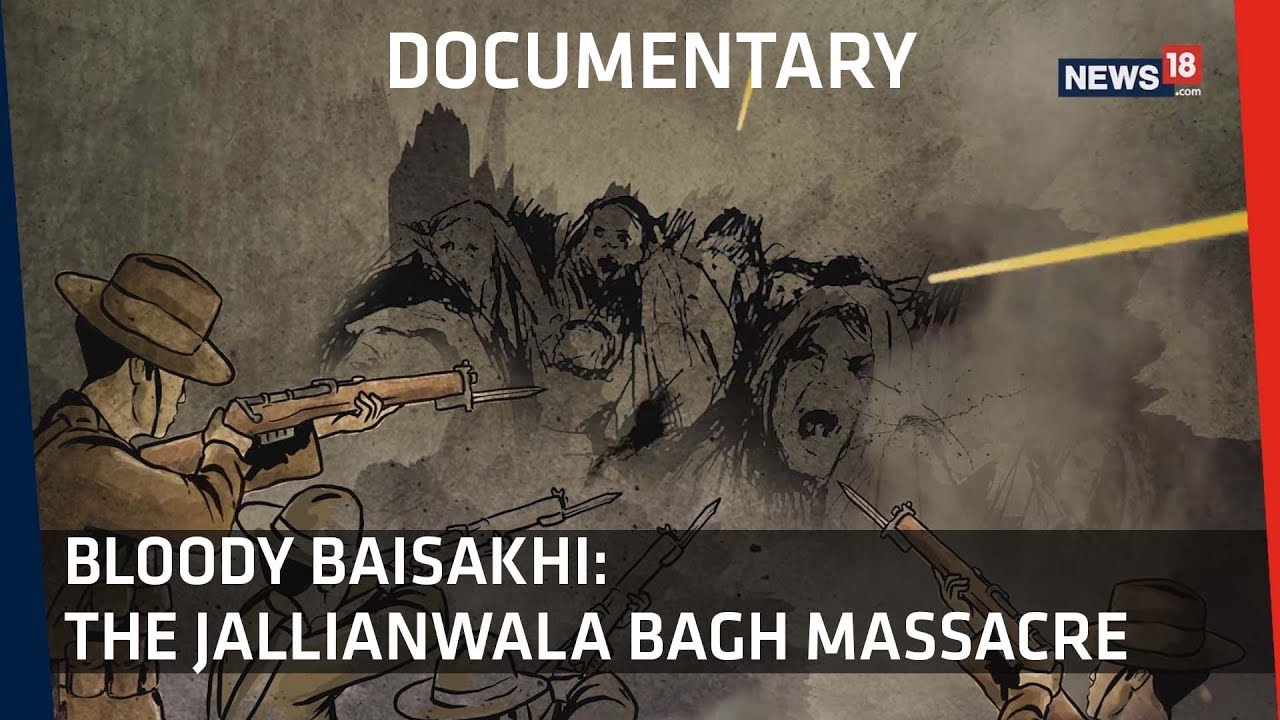
- (ii) The accumulated witness testimonies provided a harrowing look at the scale of the massacre, emphasizing the indiscriminate firing that targeted unarmed civilians trapped within the enclosure.
General Dyer’s Defense and the Resulting Committee Findings
Central to the inquiry was the testimony of General Dyer himself, whose admissions regarding his motivations became a defining element of the final report.
- (i) During his defense, General Dyer stood by his actions, claiming his primary objective was to strike fear into the hearts of those he deemed rebels and to diminish their moral stature.
- (ii) Crucially, he admitted to neglecting the medical needs of the wounded, viewing such assistance as falling outside the scope of his immediate military duties.
- (iii) The final report, released in , ultimately condemned his conduct as excessive, pointing out the total lack of prior notice and the unnecessarily extended duration of firing.
- (iv) While the committee found that Dyer had exceeded his authority, it simultaneously concluded that no organized conspiracy had existed in Punjab during that period.
Indian Members' Emphasis and Inhuman Conduct Observations
- (a) The three Indian members of the committee specifically highlighted the poor dissemination of public notices regarding the ban on gatherings.
- (b) They argued that many innocent individuals were part of the crowd and that Dyer's actions were fundamentally inhuman in nature.
🌍 Aftermath of the Hunter Committee Report and Global Reactions
The publication of the findings resonated far beyond the borders of the Indian subcontinent, sparking intense debates in the British Parliament and the international press.
Consequences for Dyer and the Realities of Legal Outcomes
Despite the moral condemnation found within the report, the actual legal repercussions for the perpetrator of the massacre were significantly limited by colonial legal protections.
- (i) General Dyer avoided any severe legal or penal retribution largely due to the Indemnity Act, which shielded officials from prosecution, and the Army Council chose to uphold his general position.
- (ii) Although he was eventually recalled to England and granted a pension, no formal trial or criminal conviction ever followed his dismissal.
Divergent Global Opinions and Public Reactions to the Tragedy
The international community was split, with prominent British political figures clashing with colonial sympathizers over the morality of the Punjab incident.
Public debates and newspaper headlines in Great Britain and India following the report release. - (i) High-profile figures like Winston Churchill and former Prime Minister H.H. Asquith voiced their condemnation, which played a major role in Dyer’s eventual removal from active service.
- (ii) Conversely, certain British institutions, such as the House of Lords and the Morning Post, supported his actions, even going so far as to raise funds and bestow honors upon him.
- (iii) In India, the controversy surrounding his honor at the Golden Temple served as a catalyst for the Gurudwara Reform movement.
- (iv) The Indian National Congress remained a fierce critic, labeling the implementation of martial law in Punjab as an unjustified and inhuman exercise of colonial power.
⚡ Quick Revision Capsule: Hunter Committee Overview
A quick comparison of key details regarding the Hunter Committee's setup, observations, and eventual outcomes.
| Aspect | Details & Facts | Historical Significance |
|---|---|---|
| Official Title | Disorders Inquiry Committee | Formed on by order of Secretary of State Edwin Montagu. |
| Committee Leadership | Chaired by Lord William Hunter | Included 3 Indian members who wrote dissenting observations on Dyer's inhuman conduct. |
| Scope of Inquiry | Disturbances in Punjab, Bombay, and Delhi | Examined the broader civil unrest rather than focusing exclusively on Amritsar. |
| Key Findings () | General Dyer exceeded his authority; no conspiracy found | Condemned lack of notice before firing and neglect of wounded victims. |
| Legal Result | Protected by the Indemnity Act | Dyer was relieved of duty and retired with a pension, avoiding criminal trial. |
📝 Summary
In summary, the Hunter Committee played a critical role in documenting and evaluating the Jallianwala Bagh massacre of . While it condemned General Dyer's excessive and inhumane actions in its report, colonial legal protections like the Indemnity Act limited true legal accountability. The report split public opinion in Britain, deeply angered Indian nationalist leaders, and remains a vital subject of study regarding administrative responsibility in British India.
🚀 Quick Revision Points
Essential facts to review before examinations:
- (i) Established on under Lord Hunter to investigate disturbances in Northern India.
- (ii) The three Indian members included Sir Chimanlal Harilal Setalvad, Pandit Jagat Narayan, and Sardar Sahibzada Sultan Ahmad Khan.
- (iii) General Dyer defended his lack of medical care and acknowledged his goal was to instill fear in the public.
- (iv) The Indemnity Act shielded Dyer and colonial authorities from prosecution despite condemnation in the final report.
- 💡 Exam Tip: Remember both official names: the "Disorders Inquiry Committee" is the formal designation, while "Hunter Committee" is the common historical name. Note that three Indian members served on the panel and raised strong objections to Dyer's conduct.
❓ Frequently Asked Questions (FAQ)
Q1: Who appointed the Hunter Committee and why?
A1: It was ordered by Edwin Montagu, the Secretary of State for India, in to investigate civil disturbances in Punjab, Bombay, and Delhi following the Jallianwala Bagh massacre.Q2: What were the main findings regarding General Dyer?
A2: The committee concluded that Dyer exceeded his authority, fired without warning, and continued firing for an excessive duration, though it found no evidence of an organized regional conspiracy.Q3: Was General Dyer criminally punished after the report?
A3: No. He was protected from prosecution by the Indemnity Act. He was relieved of his command and recalled to England, where he received a pension and support from political conservative groups like the Morning Post.