This comprehensive guide explains the Subordinate Courts hierarchy within the Indian legal framework, with special focus on the Constitutional Provisions of Part VI of the Constitution of India. It is especially useful for students preparing for judicial services, law examinations, and other competitive examinations because it explains how District Judges are appointed and how the High Court controls the lower judiciary. The subordinate courts are often called the “grassroots” courts because they are the courts most ordinary people visit when they need justice in civil, criminal, family, revenue, or local matters.
🎯 In this chapter, you will understand:
- The place of subordinate courts in the state judiciary and their relationship with the High Court.
- The constitutional provisions contained in Articles 233 to 237 of Part VI.
- The appointment, eligibility, posting, and promotion of District Judges and other judicial officers.
- The administrative control of the High Court over subordinate courts and judicial officers.
💡 Why this topic matters: Subordinate courts are the first point of contact between a citizen and the justice system. If these courts are independent, efficient, and properly supervised, people can obtain fair legal remedies without having to travel to a High Court or the Supreme Court for every dispute.
🧠 Core Idea: The Constitution keeps the lower judiciary close to the people but places it under the supervision of the High Court. This arrangement helps maintain discipline, uniformity, and independence in the administration of justice at the district and local levels.
Subordinate Courts in the State Judiciary and Legal Framework
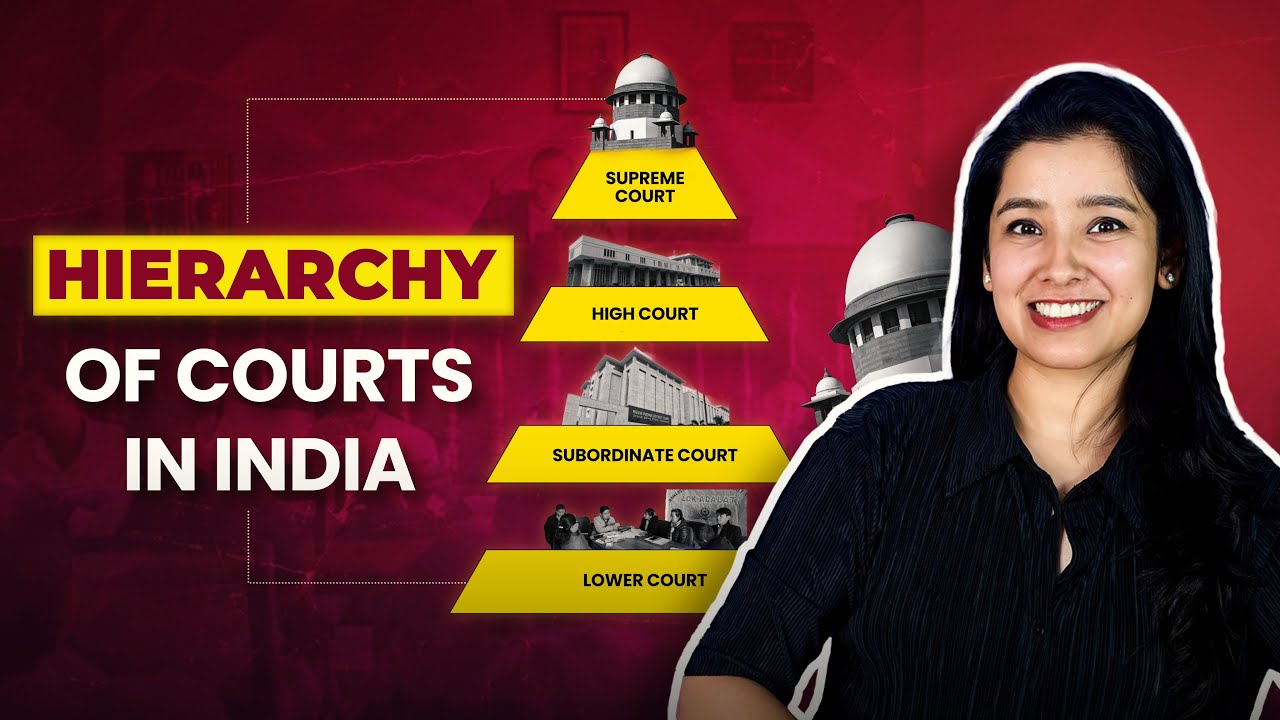
The foundational structure of the state judiciary is designed to provide justice at the grassroots level through a vertical hierarchy. In the grand architecture of Indian justice, the High Court stands as the sentinel at the apex of the state, while the subordinate courts, also called lower courts, form the essential base of the pyramid. These institutions operate at the district and lower levels and serve as the primary interface between the law and the common citizen. A person may first approach a subordinate court for a property dispute, a criminal complaint, a family matter, or a local revenue issue; only in certain situations does the matter move upward to the High Court.
Structure of the State Judiciary
The state judiciary is defined by the leadership of the High Court, under which a network of lower judicial bodies functions to ensure the rule of law. These bodies are formally recognized as subordinate courts because they are legally and administratively under the authority of their respective High Court. Their geographic and jurisdictional spread ensures that legal remedies are accessible to people living outside metropolitan centres. In simple words, the High Court provides supervision and guidance, while subordinate courts handle the day-to-day work of hearing cases and delivering judgments.
- (i) The High Court is the highest judicial authority within a state and supervises the working of courts below it.
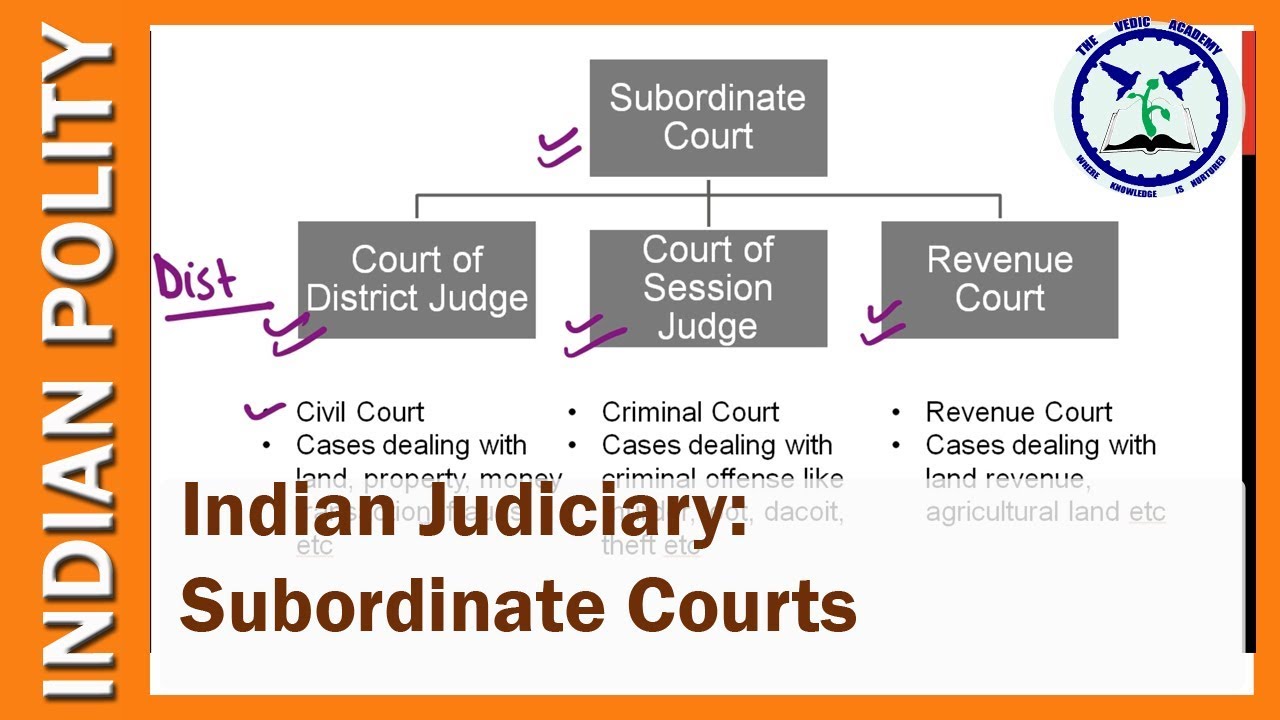
- (ii) The subordinate courts include district courts, civil courts, sessions courts, and other lower judicial bodies.
- (iii) These courts make justice available at the district, taluka, and local levels.
- (iv) Their decisions can often be challenged before the High Court through appeal or revision, depending on the law applicable to the case.
Constitutional Provisions Governing the Subordinate Judiciary
The Constitution of India provides a strong framework to ensure that the lower judiciary remains impartial and free from political or executive interference. These provisions are important because judges dealing with local disputes must be able to decide cases according to law, without fear or favour. The Constitution therefore clearly states who appoints judicial officers, who controls their service matters, and how the terms “District Judge” and “judicial service” should be understood.
Legal Mandates of Articles 233 to 237
Embedded within Part VI of the Constitution, Articles 233 to 237 serve as the bedrock for the organization, appointment, and independence of subordinate courts. These provisions are crafted to uphold the separation of powers and protect the independence of judicial officers who preside over local disputes. Article 233 deals with the appointment of District Judges, Article 234 with recruitment to the judicial service, Article 235 with control over subordinate courts, Article 236 with interpretation of key terms, and Article 237 with the application of these provisions to certain magistrates. [632][636][640]
- (i) These articles prescribe the methods for selecting judicial officers to prevent executive overreach.
- (ii) They define the administrative relationship between the High Court and the lower benches.
- (iii) The framework protects the integrity of the judicial process from the moment of appointment.
- (iv) They ensure that judicial officers are not treated like ordinary government employees whose service matters can be controlled freely by the executive.
Appointment and Eligibility of District Judges
The role of a District Judge is pivotal because such a judge acts as a bridge between regional administration and the higher judiciary. A District Judge usually handles important civil and criminal matters at the district level and may also supervise other courts within the district. Because the position carries major responsibility, the Constitution lays down a careful and stringent selection process. Under Article 233, the Governor appoints, posts, and promotes District Judges in consultation with the High Court exercising jurisdiction over the state. [636][637]
- (i) The Governor of the State holds the formal power to appoint, post, and promote District Judges.
- (ii) This power is not absolute; it must be exercised in direct consultation with the High Court.
- (iii) The High Court’s recommendation is essential because it helps ensure that only legally qualified and suitable persons are selected.
- (iv) This consultative method reduces the possibility of political influence in judicial appointments.
Criteria for Qualification
A person cannot become a District Judge merely by holding a law degree. The Constitution requires professional experience, independence from government service, and the approval of the High Court. These conditions help ensure that the person appointed has practical knowledge of court work and can handle complex judicial responsibilities.
- (a) The candidate must not already be in the service of the Union or a State government at the time of appointment. [636]
- (b) The candidate must have practised as an advocate or pleader for at least . [636]
- (c) The candidate must be recommended by the High Court for appointment as a District Judge. [636]
- (d) After these conditions are satisfied, the Governor makes the formal appointment in consultation with the High Court.
Appointment of Other Judicial Officers
For positions in the judicial service below the rank of District Judge, the selection process involves a multi-layered consultative approach. These officers may work as civil judges, judicial magistrates, or in other lower judicial posts. Their work is equally important because they hear a large number of cases and often provide the first judicial decision in a dispute. Article 234 provides that appointments of persons other than District Judges to the state judicial service are made by the Governor according to rules made for this purpose, after consultation with the State Public Service Commission and the High Court. [635][637]
- (i) The Governor remains the appointing authority for these judicial roles.
- (ii) The Governor must consult the State Public Service Commission for recruitment and evaluation.
- (iii) The Governor must also consult the High Court exercising jurisdiction in relation to the state.
- (iv) This combined consultation helps maintain both administrative fairness and judicial quality in recruitment.
Administrative Control and High Court Supervision
The High Court acts as the guardian and administrator of the lower courts. Article 235 vests control over district courts and courts subordinate to them in the High Court. This control includes the posting and promotion of, and the grant of leave to, persons belonging to the judicial service of a state who hold posts inferior to that of District Judge. [634][637] The purpose of this control is to maintain judicial discipline, protect officers from executive pressure, and ensure that court administration follows a uniform judicial standard.
- (i) The High Court controls the postings and transfers of judicial officers within the state’s territory.
- (ii) It controls the promotion of judicial officers and manages their professional conduct.
- (iii) It also controls the grant of leave to judicial officers holding posts below District Judge.
- (iv) This authority protects members of the judicial service from executive pressure and helps preserve judicial independence.
- (v) The High Court must still act according to the service rules and cannot take away a judicial officer’s lawful right of appeal. [634]
Legal Interpretation of Judicial Terms and Roles
The Constitution uses certain legal terms in a broad and inclusive manner so that all important judicial roles at the state level are covered. Article 236 explains the meaning of “District Judge” and “judicial service.” This interpretation is necessary because different states may use different names for similar judicial positions. By giving a wide definition, the Constitution ensures that the protections and controls discussed in Articles 233 to 235 apply consistently across the judicial system. [638][639]
The Scope of the Term “District Judge”
The term District Judge does not mean only the officer specifically designated as the District Judge in a district. It includes several other judicial officers who perform comparable judicial functions. This broad meaning prevents confusion and ensures that important judicial posts receive the same constitutional treatment.
- (i) It includes the Judge of a City Civil Court.
- (ii) It includes Additional District Judges, Joint District Judges, and Assistant District Judges.
- (iii) It includes the Chief Judge of a Small Cause Court.
- (iv) It includes Sessions Judges, Additional Sessions Judges, and Assistant Sessions Judges.
- (v) It also includes the Chief Presidency Magistrate and Additional Chief Presidency Magistrate. [638][639]
Defining the “Judicial Service”
The expression judicial service refers to a specific professional cadre consisting exclusively of persons intended to fill the post of District Judge and other civil judicial posts inferior to that post. [638] In simple language, it means the group of officers whose main work is judicial decision-making in civil matters, rather than general administrative work.
- (i) It includes persons intended to occupy the office of District Judge.
- (ii) It includes all civil judicial posts that are hierarchically inferior to the position of District Judge.
- (iii) It does not include every government officer; it covers only the judicial cadre.
Application of Provisions to State Magistrates
In certain situations, the Governor may extend the protections of this constitutional chapter to other branches of the magistracy. Article 237 allows the Governor to apply the provisions relating to the judicial service to specified classes of magistrates in the state. [632][639] This provision is important because magistrates also perform judicial functions, especially in criminal matters, and may need the same safeguards of independence and controlled administration.
- (i) The Governor may issue a public notification directing that the provisions regarding the judicial service shall apply to specific classes of magistrates.
- (ii) This ensures that magistrates performing judicial duties can be brought under the same framework of independence and High Court control as civil judges.
- (iii) The Governor may make such application with the necessary modifications and exceptions, depending on local judicial needs.

Conclusion and Significance of Subordinate Courts
The subordinate courts represent the backbone of the state judiciary. They ensure that Articles 233 to 237 protect the independence of the law while keeping justice accessible to ordinary citizens. For students, mastering the appointment of District Judges and the administrative control exercised by the High Court is essential for understanding how justice is delivered at the local level. These courts remain the most important point of legal redressal for the public because most citizens first encounter the legal system through a district court, civil court, sessions court, or magistrate’s court. Their proper functioning maintains the sanctity of the Indian Constitution and strengthens public confidence in the rule of law.
⚡ Quick Revision Capsule: Subordinate Courts under the Constitution
The following table gives a simple revision summary of the main constitutional provisions relating to subordinate courts. It is especially helpful for quick revision before examinations.
| Constitutional Provision | Main Subject | Key Point |
|---|---|---|
| Article 233 | Appointment of District Judges | The Governor appoints, posts, and promotes District Judges in consultation with the High Court. [636][637] |
| Article 234 | Recruitment to judicial service | The Governor recruits persons other than District Judges after consultation with the State Public Service Commission and the High Court. [635] |
| Article 235 | Control over subordinate courts | The High Court controls postings, promotions, and leave of judicial officers below the rank of District Judge. [634] |
| Article 236 | Interpretation of terms | It defines District Judge and judicial service in a broad and inclusive manner. [638] |
| Article 237 | Application to magistrates | The Governor may extend the provisions of this Chapter to certain classes of magistrates. [632][639] |
📝 Summary
Subordinate courts form the base of the state judiciary and bring justice closer to the people. The Constitution, through Articles 233 to 237 in Part VI, regulates their organization, appointments, and administrative supervision. The Governor appoints District Judges in consultation with the High Court, while recruitment to other judicial posts requires consultation with both the State Public Service Commission and the High Court. The High Court controls postings, promotions, leave, and discipline of judicial officers below the rank of District Judge, thereby protecting the lower judiciary from executive interference. [634][635][636][637]
🚀 Quick Revision Points
Essential facts to review before examinations:
- (i) Subordinate courts are under the administrative control of the High Court.
- (ii) Articles 233 to 237 are located in Part VI of the Constitution.
- (iii) A District Judge must have at least of experience as an advocate or pleader and must be recommended by the High Court. [636]
- (iv) Article 235 gives the High Court control over postings, promotions, and leave of judicial officers below District Judge. [634]
- (v) Article 236 broadly defines both District Judge and judicial service. [638]
- (vi) Article 237 allows the Governor to apply these provisions to specified classes of magistrates. [632]
- 💡 Exam Tip: Remember the sequence: Article 233 for District Judges, Article 234 for other judicial officers, Article 235 for High Court control, Article 236 for definitions, and Article 237 for magistrates. Also remember that a District Judge must not be in government service, must have seven years’ experience as an advocate or pleader, and must be recommended by the High Court.
❓ Frequently Asked Questions (FAQ)
Q1: Why are lower courts called subordinate courts?
A1: They are called subordinate courts because they function under the supervision and administrative control of the High Court of the state.Q2: Who appoints a District Judge in India?
A2: The Governor of the state appoints, posts, and promotes District Judges, but must do so in consultation with the High Court. [636][637]Q3: What are the eligibility conditions for appointment as a District Judge?
A3: Under Article 233, the candidate must not be in the service of the Union or a State, must have practised as an advocate or pleader for at least seven years, and must be recommended by the High Court. [636]Q4: What control does the High Court have over subordinate courts?
A4: Under Article 235, the High Court controls district courts and courts subordinate to them, including postings, promotions, and leave of judicial officers holding posts below District Judge. [634]