This comprehensive guide explains the Structure and Functions of Subordinate Judiciary in India. It also explains the importance of the Legal Services Authorities Act, 1987 and the role of NALSA in providing free legal help. For students preparing for competitive examinations, it is important to understand the hierarchy of civil and criminal courts, the working of the District Judge, and the meaning of Article 39A. These topics help in understanding how justice reaches people at the district, town, and village levels.
🎯 In this chapter, you will understand:
- How the subordinate judiciary is organised below the High Court.
- The powers and dual role of the District and Sessions Judge.
- The civil and criminal courts working at lower levels.
- The role of NALSA, Lok Adalats, and free legal services under Article 39A.
💡 Why this topic matters: The subordinate judiciary is the part of the judicial system that most citizens meet first when they have a civil dispute or face a criminal case. Understanding its structure helps students see how justice is delivered from the district level down to villages, and how legal aid makes justice accessible to weaker sections of society.
🧠 Core Idea: India’s judicial system works in layers. The High Court supervises the courts below it, while district-level courts handle everyday civil and criminal matters. At the same time, NALSA and the Legal Services Authorities Act, 1987 ensure that people who cannot afford legal help can still approach the courts.
The Comprehensive Structure of Subordinate Judiciary and NALSA Framework in India
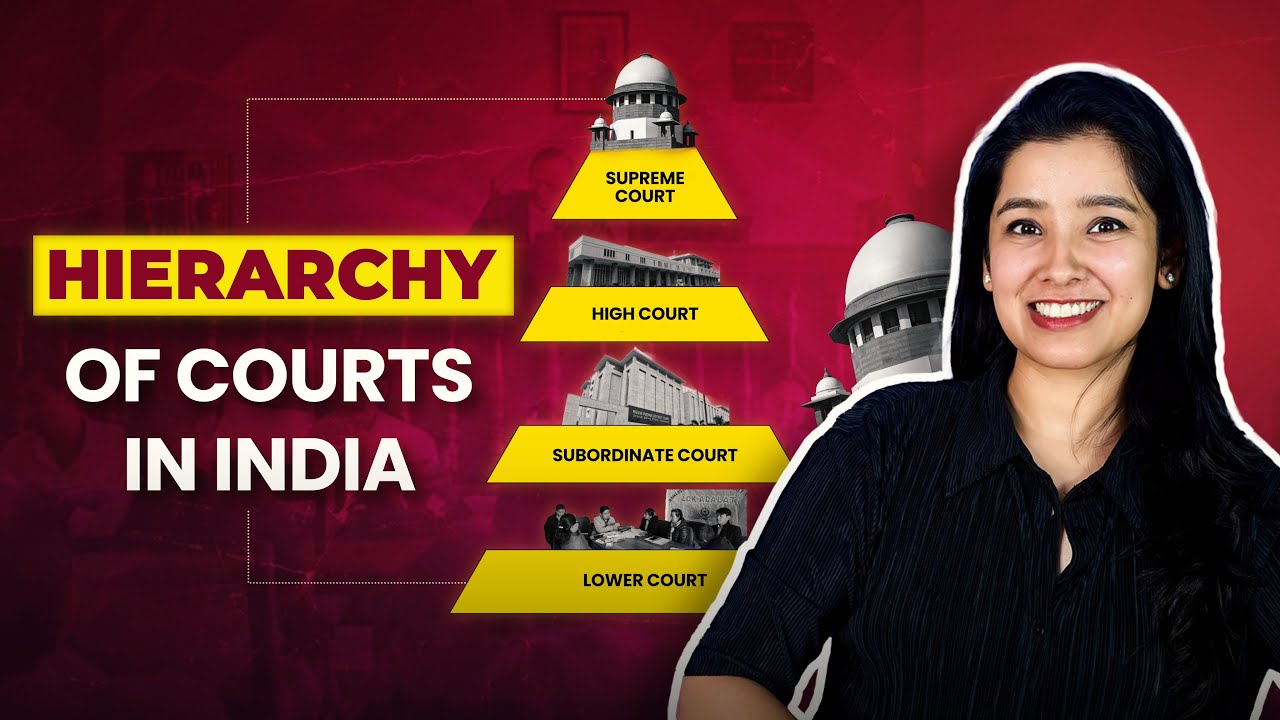
The judicial system of India does not work only through the Supreme Court and the High Courts. A large part of everyday justice is delivered by courts that exist below the High Courts. These courts are called the subordinate judiciary because they work under the supervision and administrative control of the High Court of the concerned state. The word “subordinate” does not mean that these courts are less important; rather, it means that they form the lower and wider base of the judicial pyramid.
The foundational architecture of India’s judicial system begins at the grassroots level, where states determine the specific organisation and nomenclature of local courts. While the broader framework remains consistent, the organisation, jurisdiction, and nomenclature of these subordinate courts are decided by individual states, leading to minor variations across the Indian landscape. Generally, the judiciary positioned below the High Court is meticulously arranged in three levels of civil and criminal courts to ensure localised justice.
- (i) States maintain the primary authority to decide the jurisdiction and naming conventions of their lower courts. For this reason, the same kind of court may have a slightly different name in different states.
- (ii) The structure ensures a systematic flow of justice from the district level down to the villages. Small disputes can be resolved closer to the people, while serious matters move to higher courts.
- (iii) The High Court maintains administrative control over this entire subordinate tier to ensure judicial integrity. This supervision helps maintain uniform standards in judicial work and administration.
The Pivotal Role of the District and Sessions Judge
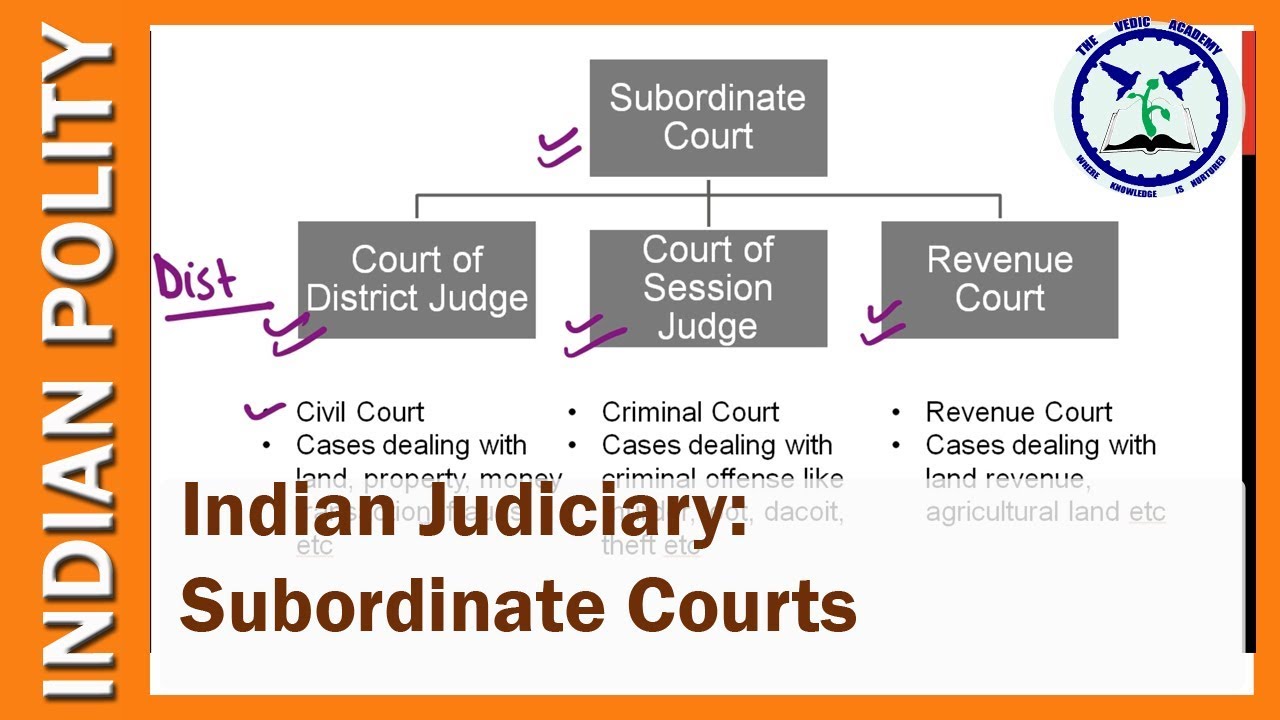
At the apex of the district-level hierarchy sits a dual-capacity judicial officer who serves as the backbone of local law enforcement and civil redressal. This judge handles important civil disputes, serious criminal cases, appeals from lower courts, and many administrative responsibilities connected with the district judiciary. Because the District Judge works at the head of the district courts, this position is often considered the most important post in the subordinate judiciary.
Understanding the Dual Identity of the District Judge
The District Judge represents the highest judicial authority within a district, wielding significant original and appellate jurisdiction. This role is a story of two hats worn by the same individual depending on the nature of the trial. In simple words, the same judge may be called by different titles according to whether the case before the court is civil or criminal.
- (i) The individual is titled the District Judge when presiding over complex civil matters and property disputes. Such matters may include disputes relating to land, contracts, family property, injunctions, and other civil rights.
- (ii) The designation shifts to Sessions Judge the moment they begin handling criminal cases involving state prosecution. In such cases, the judge hears serious offences and exercises criminal jurisdiction.
- (iii) Beyond the courtroom, this officer exercises vital administrative and supervisory powers over every other subordinate court within their geographical district. This includes oversight of the working and administration of the courts under the district judiciary.
Jurisdiction and the Power of Capital Punishment
The legal reach of the Sessions Judge is profound, extending to the most severe penalties recognised by the Indian Penal Code. This power shows the importance of the Sessions Judge in the criminal justice system. However, the law also places safeguards so that the gravest punishment is not imposed without proper higher judicial scrutiny.
- (a) The Sessions Judge is empowered to award any sentence authorised by law, including life imprisonment. This means the Sessions Judge can deal with serious criminal cases and impose punishment according to the law.
- (b) In cases of capital punishment, the judge can pass a death sentence; however, the law mandates a mandatory confirmation by the High Court before execution, ensuring a fail-safe against judicial error. This confirmation requirement acts as an important safeguard in the administration of the highest punishment.
- (c) Any party aggrieved by the decisions of the District Judge has the right to file an appeal, which is subsequently heard by the High Court. Thus, the High Court acts as the next higher forum for reviewing such decisions.
The Tiered Hierarchy of Courts Below the District Level
To manage the vast volume of litigation, the system branches into specialised tiers handling varying degrees of civil and criminal severity. This arrangement prevents every case from going directly to the District Judge. Small and less serious matters are handled by lower courts, while more valuable civil suits and more serious criminal cases are handled by higher courts within the district judiciary.

Intermediate Level: Subordinate Judges and Chief Magistrates
Positioned immediately below the District & Sessions Court, these intermediate courts handle substantial legal workloads with varying financial and punitive limits. They form the middle level of the subordinate judiciary. Their role is important because they take up many cases that are too important for the lowest courts but may not always require the direct attention of the District Judge.
- (i) On the civil side, the Subordinate Judge’s Court operates with unlimited pecuniary jurisdiction, meaning they can hear suits involving any monetary value. In simple language, there is no upper money limit on the civil cases that this court can hear.
- (ii) On the criminal side, the Chief Judicial Magistrate’s Court takes centre stage, adjudicating cases that are punishable with imprisonment for a term up to seven years. This court therefore deals with criminal matters of considerable seriousness.
The Lowest Tier: Munsiff Courts and Judicial Magistrates
The primary point of contact for the common citizen often occurs at the lowest level of the judicial ladder, where smaller disputes and minor offences are resolved. These courts help people seek justice without having to travel to a higher court for every small matter. They also reduce the burden on higher courts by handling a large number of less serious cases.
- (i) The Court of Munsiff governs the civil side, managing suits of small pecuniary value to ensure swift resolution for minor financial disagreements. Such courts deal with smaller money-related civil disputes.
- (ii) The Court of Judicial Magistrate handles the criminal side, trying various offences that carry a maximum punishment of three years imprisonment. These courts therefore deal with comparatively less serious criminal offences.
Specialised Judicial Forums: Cities, Small Causes, and Panchayats
Specific geographic and social contexts in India require specialised court structures, ranging from bustling metropolitan hubs to rural village squares. India is a large country with different kinds of populations and legal needs. Big cities may have a large number of civil and criminal cases, while villages may need simple local forums to settle petty disputes quickly.
Metropolitan and Small Causes Courts
In large presidency towns and metropolitan areas, the nomenclature changes to reflect the urban complexity of the civil and criminal landscape. In these areas, courts are organised in a way that suits the heavy population, busy commercial activity, and large number of legal disputes found in cities.
- (i) City Civil Courts, led by Chief Judges, handle urban civil litigation, while Metropolitan Magistrates manage criminal proceedings. Thus, the city system has separate arrangements for civil and criminal work.
- (ii) Small Causes Courts exist in certain states to resolve minor civil disputes using a summary procedure; while their decisions are usually final, the High Court retains the power of revision. A summary procedure means that the case is decided through a simpler and quicker process.
Village Level Justice through Panchayat Courts
For rural empowerment, several states have institutionalised Panchayat Courts to handle petty local disputes through traditional yet legally recognised formats. These courts bring justice closer to villages and help people resolve small local matters without unnecessary delay or expense.
Regional Variations of Village Courts
The names of village-level courts differ from state to state. This variation reflects the local legal traditions and administrative practices of different regions.
- (i) In various regions, these are known as Nyaya Panchayat or Gram Kutchery.
- (ii) Other states refer to them as Adalati Panchayat or Panchayat Adalat, focusing on local mediation and settlement.
National Legal Services Authority (NALSA) and Access to Justice
The constitutional promise of justice for all is operationalised through a robust legal aid network established under Article 39A. Legal aid means helping people who cannot afford the cost of court proceedings, lawyers, documents, or other legal requirements. The purpose is to make sure that poverty or social disadvantage does not become a barrier to justice.
The Constitutional and Legislative Foundation
The Indian Constitution, through Article 39A, mandates that the State provides free legal aid to ensure that justice is not denied to any citizen due to economic or other disabilities. This provision recognises that a person may have a genuine legal problem but may not have enough money to fight a case. Free legal aid helps such a person approach the legal system with dignity and confidence.
This constitutional goal is supported by Articles 14 and 22(1), which safeguard equality before law. Equality before law means that every person should be treated fairly by the legal system, and no one should be denied justice merely because of poverty, social background, or other disability.
- (i) The Legal Services Authorities Act, 1987 was enacted to give these principles teeth, officially coming into effect on . The Act provides the legal framework for organising legal services across the country.
- (ii) NALSA was established as the central body to monitor, evaluate, and guide the nationwide legal aid programmes. It helps coordinate legal services and ensures that the legal aid system works in a planned manner.
- (iii) The framework creates a hierarchy of aid, from the Supreme Court Legal Services Committee down to Taluk Legal Services Committees. This structure allows legal services to function at national, state, district, and taluk levels.
Core Functions and the Scope of Free Services
NALSA acts as the architect of the Lok Adalats system and ensures that the “weaker sections” are not left defenceless in the face of legal battles. A Lok Adalat is a forum for amicable settlement of disputes. It encourages the parties to reach a peaceful agreement instead of continuing a long and costly court battle.
- (i) Primary Functions: These include providing competent legal assistance, organising Lok Adalats for amicable settlements, and running legal awareness campaigns in backward areas. Legal awareness campaigns teach people about their rights and the legal help available to them.
- (ii) Coverage of Costs: Free legal aid is comprehensive, covering the payment of court fees, hiring lawyer services, and obtaining certified copies of documents. This support reduces the financial burden on eligible persons.
- (iii) Procedural Support: It also includes the preparation of appeals, printing of paper books, and necessary translations for the court. These services help a person complete the required legal procedures properly.
Eligibility: Who Can Claim Free Legal Services?
The law identifies specific vulnerable groups who are entitled to state-sponsored legal support regardless of their ability to pay. The purpose of these eligibility rules is to give priority to people who may face difficulty in protecting their legal rights because of poverty, social disadvantage, custody, disability, or other vulnerable conditions.
- (i) Vulnerable Demographics: This includes all women, children, and members of Scheduled Castes and Scheduled Tribes. These groups receive special recognition under the legal services framework.
- (ii) Victims and Workers: Industrial workers, victims of human trafficking, begar, or victims of mass disasters and violence are also covered. This ensures that people facing exploitation or sudden hardship can seek legal assistance.
- (iii) Economic Thresholds: Persons with an annual income below ₹1,00,000 (or ₹1,25,000 for cases in the Supreme Court) and those in custody or living with disabilities are entitled to free legal services. The income limit helps target legal aid towards those who genuinely need financial support.
⚡ Quick Revision Capsule: Subordinate Judiciary and NALSA
This table gives a quick view of the main courts, their functions, and the legal aid framework. It is useful for last-minute revision before examinations.
| Court / Authority | Main Function or Jurisdiction | Important Point |
|---|---|---|
| District Judge | Highest judicial authority in a district for civil matters and property disputes. | Has original and appellate jurisdiction. |
| Sessions Judge | Handles criminal cases involving state prosecution. | Can award life imprisonment; death sentence requires mandatory confirmation by the High Court. |
| Subordinate Judge’s Court | Civil court below the District Court. | Has unlimited pecuniary jurisdiction. |
| Chief Judicial Magistrate’s Court | Criminal court below the Sessions Court. | Handles cases punishable with imprisonment up to seven years. |
| NALSA | Central body for legal services and legal aid. | Established under the Legal Services Authorities Act, 1987; organises Lok Adalats and legal awareness campaigns. |
📝 Summary
The Subordinate Judiciary serves as the essential first tier of the Indian legal system, ensuring that civil and criminal justice reaches every district. The District Judge acts as the highest judicial officer in a district and becomes the Sessions Judge while dealing with criminal cases. Below this level, Subordinate Judges, Chief Judicial Magistrates, Munsiffs, and Judicial Magistrates handle different kinds of civil and criminal matters. Special courts such as City Civil Courts, Small Causes Courts, and Panchayat Courts meet the needs of urban areas and villages. Through the efforts of NALSA and the Legal Services Authorities Act, 1987, which came into effect on , the constitutional goal of universal access to justice is brought to life. For students, mastering this hierarchy and the eligibility for legal aid is vital for understanding how Article 39A protects the rights of the marginalised in modern India.
🚀 Quick Revision Points
Essential facts to review before examinations:
- (i) The subordinate judiciary refers to courts below the High Court, organised mainly in three levels of civil and criminal courts.
- (ii) The District Judge handles civil matters, while the same officer is called the Sessions Judge in criminal matters.
- (iii) The Subordinate Judge’s Court has unlimited pecuniary jurisdiction, and the Chief Judicial Magistrate’s Court handles cases punishable with up to seven years’ imprisonment.
- (iv) Free legal aid is based on Article 39A and is implemented through the Legal Services Authorities Act, 1987 and NALSA.
- 💡 Exam Tip: Remember the civil and criminal sides separately. For civil courts, recall District Judge, Subordinate Judge, and Munsiff. For criminal courts, recall Sessions Judge, Chief Judicial Magistrate, and Judicial Magistrate. Also remember that a death sentence passed by a Sessions Judge requires confirmation by the High Court.
❓ Frequently Asked Questions (FAQ)
Q1: What is the subordinate judiciary?
A1: The subordinate judiciary is the system of courts working below the High Court. It includes district-level and lower civil and criminal courts that handle most everyday legal disputes.Q2: Why is the District Judge also called the Sessions Judge?
A2: The same judicial officer is called the District Judge when dealing with civil cases and the Sessions Judge when dealing with criminal cases. The title changes according to the nature of the case.Q3: What is the role of NALSA in providing legal aid?
A3: NALSA monitors and guides legal aid programmes across India. Under the Legal Services Authorities Act, 1987, it provides legal assistance, organises Lok Adalats, and runs legal awareness campaigns for eligible and weaker sections of society.