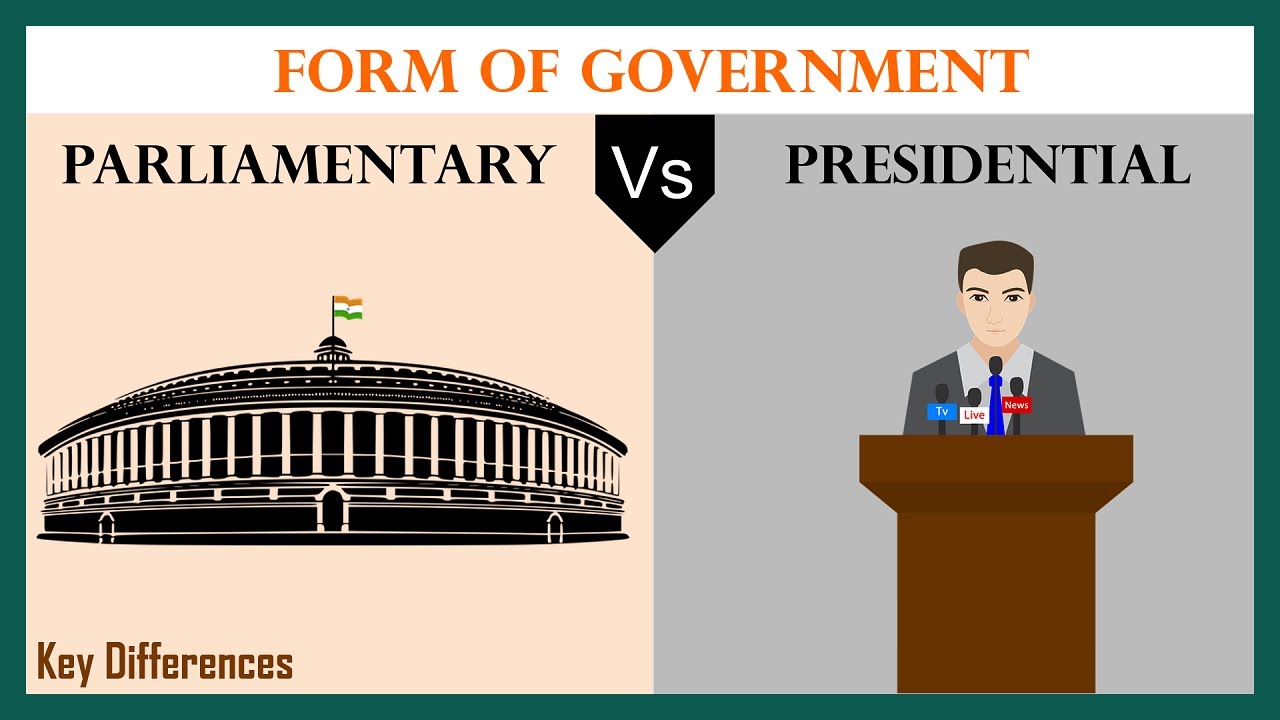
This detailed analysis covers the doctrine of separation of powers and executive accountability, providing essential insights for students preparing for competitive examinations and political science assessments.
🎯 In this chapter, you will understand:
- The foundational contrast between fixed executive tenure and legislative responsibility.
- Analysis of leadership roles including Head of State and Head of Government.
- Examination of how checks and balances prevent the concentration of absolute power.
- The merits and demerits of parliamentary government, including accountability, instability, and cabinet dominance.
💡 Why this topic matters: Understanding how nations distribute power is fundamental to political science. This comparison sheds light on the functional reality of the executive and legislative relationship across different global models.
🧠 Core Idea: A deep dive into the structural differences and operational mechanics of the world’s primary democratic systems.
Presidential and Parliamentary Systems: A Comprehensive Governance Comparison
Understanding how nations distribute power is fundamental to political science. This comparison sheds light on the functional reality of the executive and legislative relationship across different global models.
- (i) The foundational contrast between fixed executive tenure and legislative responsibility.
- (ii) Analysis of leadership roles including Head of State and Head of Government.
- (iii) Examination of how checks and balances prevent the concentration of absolute power.
Features of the Presidential Government
The Presidential model, epitomized by the United States, operates on a strict independence of the executive branch from the legislature.
The American Executive Model and its Constitutional Framework
In the American model, the President occupies a dual role that defines the nation’s leadership. Unlike systems where roles are split, here the President serves as both the ceremonial Head of State and the functional Head of Government, directly overseeing the vast executive branch.
- (i) The President is chosen through a specialized electoral college for a fixed four-year term.
- (ii) Stability is a core feature; removal is only possible through impeachment for serious constitutional violations.
The Role of the Kitchen Cabinet
- (i) The President is assisted by a Cabinet or a smaller advisory group nicknamed the ‘Kitchen Cabinet’.
- (ii) These members are non-elected departmental secretaries appointed, dismissed, and answerable solely to the President.
- (iii) Neither the President nor his secretaries hold seats in Congress, ensuring no overlap in personnel.
Separation of Powers and Legislative Independence
The doctrine of separation of powers serves as the bedrock of this system, creating a landscape where branches operate in distinct silos to prevent overreach.
- (a) The President has no authority to dissolve the House of Representatives, maintaining the legislature’s fixed existence.
- (b) Legislative, executive, and judicial authorities are distributed among three distinct, independent branches.
- (c) Decisions made by the Presidential cabinet are not subject to Congressional approval or direct answerability.
Merits of the Parliamentary System
The Parliamentary system thrives on the fusion of powers, emphasizing harmony and collective responsibility between the makers and executors of law.

Harmony, Responsibility, and the Prevention of Autocracy
The Legislature–Executive Harmony inherent in this system fosters a spirit of cooperation. Because the executive is drawn from the legislature, conflicts are naturally minimized through integrated governance.
- (i) Responsible Government: Ministers remain collectively answerable to Parliament for every action taken.
- (ii) Tools like question hour, discussions, and no-confidence motions ensure constant accountability.
- (iii) Executive authority rests with a Council of Ministers rather than a single leader, effectively preventing autocracy.
Alternative Mechanisms and Broad Representation
One of the most flexible aspects of this system is the Alternative Government Mechanism, which allows for leadership changes without the chaos of immediate general elections.
- (a) If a ruling party loses its majority, the Head of State can invite the opposition to form a government.
- (b) As Dr. Jennings famously remarked, “the leader of the opposition is the alternative prime minister.”
- (c) Broad Representation: The ministry reflects regional and community diversity, ensuring a pluralistic approach to governance.
Demerits of the Parliamentary System
Despite its accountability, the Parliamentary model faces challenges regarding stability and the potential for a “dictatorship of the cabinet.”
Government Instability and Policy Discontinuity
The survival of the ministry hinges entirely on legislative confidence, which can lead to significant Government Instability during times of political fragmentation.
- (i) Instances like the short tenures of governments led by Morarji Desai, Charan Singh, V. P. Singh, Chandra Shekhar, H. D. Deve Gowda, and I. K. Gujral illustrate this fragility.
- (ii) Policy Discontinuity: Uncertain tenures discourage long-term planning, as seen when the Janata Government () reversed Congress policies, only for them to be restored in .
Cabinet Dictatorship and the Rule by Amateurs
When a party holds a massive majority, the line between leadership and dominance blurs, leading to what critics call a Cabinet Dictatorship.
- (i) Dominance was observed during the tenures of Indira Gandhi and Rajiv Gandhi, as noted by thinkers like H. J. Laski and Ramsay Muir.
- (ii) Absence of Strict Separation of Powers: Bagehot famously described the cabinet as a “hyphen” joining the two branches, criticizing the lack of clear boundaries.
The Challenge of “Rule by Amateurs”
- (i) Ministers are often political appointees lacking specific subject expertise.
- (ii) The Prime Minister’s choice is restricted to MPs, whose time is divided between party duties and administration.
⚡ Quick Revision Capsule: Presidential vs Parliamentary Systems
Use this capsule to revise the major differences between the two systems before examinations.
| Feature | Presidential System | Parliamentary System |
|---|---|---|
| Executive–Legislature Relationship | Executive is independent of the legislature. | Executive is drawn from and responsible to the legislature. |
| Leadership | The President is both Head of State and Head of Government. | The Head of State and Head of Government roles are separated. |
| Tenure | The President serves a fixed four-year term. | The ministry remains in office while it enjoys legislative confidence. |
| Accountability | The President and secretaries are not directly answerable to Congress. | Ministers are collectively answerable to Parliament. |
| Key Idea | Separation of powers prevents concentration of authority. | Fusion of powers supports cooperation, as described by Bagehot. |
📝 Summary
This analysis concludes that while the presidential system prioritizes the separation of powers and fixed tenure for stability, the parliamentary system emphasizes political accountability and cooperation. For students, understanding these trade-offs—such as those involving Dr. Jennings’ theories or historical Indian Prime Ministers—is crucial for mastering constitutional logic and the nuances of global executive structures.
🚀 Quick Revision Points
Essential facts to review before examinations:
- (i) The American President is elected through the electoral college for a fixed four-year term.
- (ii) Impeachment is the constitutional process for removing a President for serious violations.
- (iii) In a parliamentary system, the Council of Ministers is collectively responsible to Parliament.
- (iv) Dr. Jennings described the leader of the opposition as the “alternative prime minister.”
- 💡 Exam Tip: Remember the central contrast: the presidential system separates powers and offers fixed tenure, while the parliamentary system fuses powers and ensures continuous executive accountability.
❓ Frequently Asked Questions (FAQ)
Q1: What is the main feature of the presidential system?
A1: The main feature is the strict independence of the executive from the legislature, with the President serving a fixed term.Q2: What is a no-confidence motion?
A2: A no-confidence motion is a parliamentary tool through which ministers remain accountable to Parliament and may lose office if they lose legislative confidence.Q3: Why is the parliamentary system said to have a fusion of powers?
A3: Because the executive is drawn from the legislature; Bagehot described the cabinet as a “hyphen” joining the legislative and executive branches, reflecting the absence of strict separation of powers.