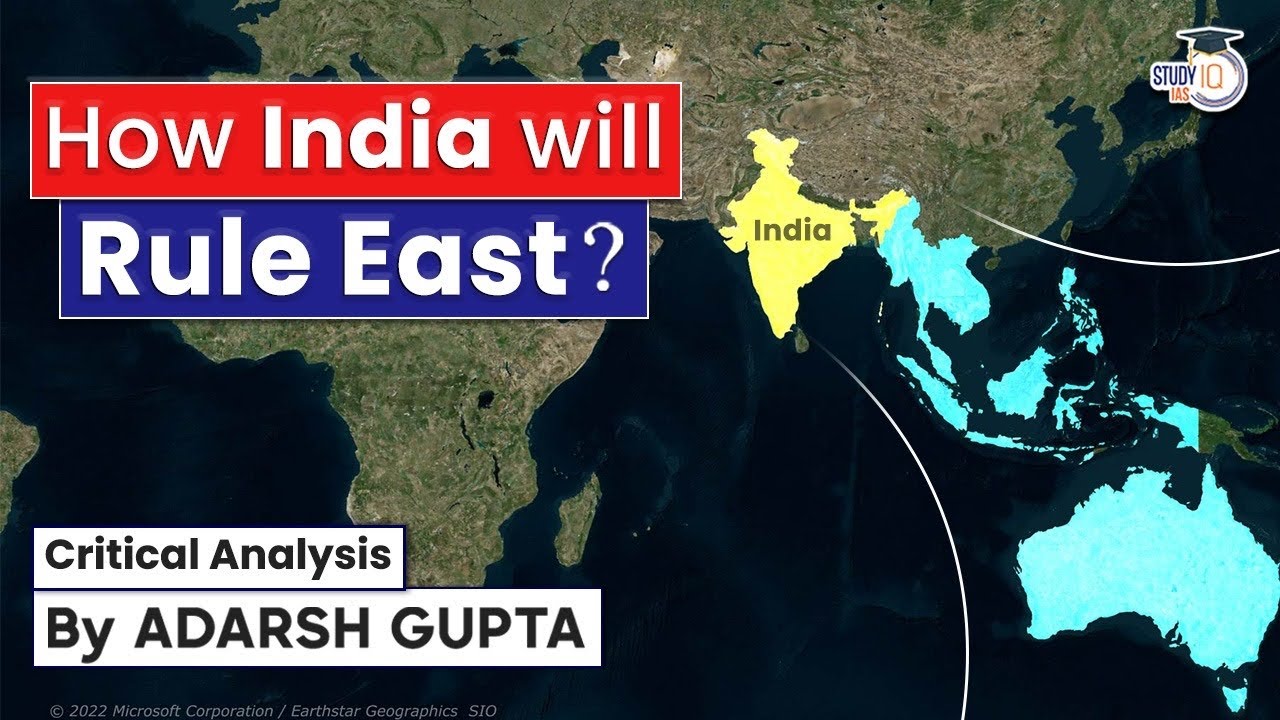
India’s transformative Act East Policy, launched in , serves as a major foundation for modern diplomacy. It grew out of the older Look East Policy from . The new policy focuses on taking a highly active role in the Asia-Pacific region. This strategic change brings together economic energy, cultural ties, and sea security. It provides very important lessons for students studying international relations, global politics, and regional studies.
🎯 In this chapter, you will understand:
- How India transitioned from the Look East Policy to the Act East Policy.
- The major pillars of India's strategic framework in the Asia-Pacific region.
- The critical role North East India plays as a gateway to Southeast Asia.
- How economic, cultural, and security goals work together in modern diplomacy.
💡 Why this topic matters: As the global power center shifts towards Asia, understanding how India positions itself diplomatically and economically is crucial for grasping modern geopolitics.
🧠 Core Idea: The Act East Policy is a proactive, multi-layered strategy that upgrades India's regional role from a passive economic observer to an active security provider and strategic partner.
Geopolitical Evolution and Origins
The move to the Act East Policy in was a major shift by the Indian government. It built on the base originally set by Prime Minister P.V. Narasimha Rao in . Moving from just "looking" to actually "acting" shows India's strong desire to be a reliable security provider and a top business partner in the East. This change started with several big diplomatic announcements.
- (i) The policy officially came to life during the India-ASEAN Summit in . Here, Prime Minister Narendra Modi shared his vision for a new phase of trade and growth.
- (ii) The plan was made even clearer by External Affairs Minister Sushma Swaraj during her trip to Vietnam. She specifically asked Indian diplomats to stop just watching and start working proactively with other nations.
- (iii) Because of this shift, India is no longer just watching the Asia-Pacific region grow. It is now an active participant helping to shape the area's security rules.
Comprehensive Key Features of the Framework
The Act East Policy is a detailed plan that goes far beyond simple trade. It involves strong political, security, and cultural pillars.
Extended Neighbourhood in the Asia-Pacific
India now treats the Asia-Pacific as its extended neighborhood. It has moved away from a simple trading relationship to a comprehensive strategic partnership. This means creating permanent systems so countries can regularly talk about shared local challenges.
- (i) Expanding ties beyond money and business to include politics and shared culture.
- (ii) Setting up long-lasting ways for top government leaders to meet and work together often.
- (iii) Using soft power along with business deals to build deep trust in the region.
Strategic Partnerships with Major Nations
A central part of this policy is building very strong, two-way friendships with powerful countries like Japan, Australia, and Vietnam. These relationships help create a balanced and fair system in the region so everyone can do well.
- (i) Making defense and business connections stronger with Indonesia, Malaysia, and Singapore.
- (ii) Working more closely on advanced technology and factories with the Republic of Korea.
- (iii) Teaming up with ASEAN as a united group to keep the region stable and peaceful.
Engagement in Multilateral Regional Fora
India is now much more active and helpful in regional organizations. This makes sure that the Indian point of view is included in all major decisions about the Indo-Pacific area.
- (i) Playing a main role in the ASEAN Regional Forum (ARF) and the East Asia Summit (EAS).
- (ii) Using platforms like BIMSTEC and the Mekong Ganga Cooperation (MGC) to successfully connect South Asia with Southeast Asia.
- (iii) Working through the Indian Ocean Rim Association (IORA) to focus on safe seas and ocean-based economies.
Integration of Domestic Development
A unique part of the policy is how it matches India's own big national projects, like Make in India. By matching new infrastructure building with what the region needs, India hopes to become a shared manufacturing center.
- (i) Connecting India's Smart Cities project with the region's knowledge of building modern towns.
- (ii) Working together in space, science, and technology to help everyone grow faster.
- (iii) Focusing on teaching new skills and helping people meet each other to keep the economy healthy.
North East India as a Strategic Gateway
The North Eastern states, especially Arunachal Pradesh, are no longer seen as just border areas. They are now viewed as the main front door to Southeast Asia. The policy heavily focuses on developing this region to make direct trade and cultural sharing much easier.
Connectivity and Physical Infrastructure
Improving the physical pathways between nations is a top priority.
- (a) Speeding up the building of roads that cross international borders, alongside modern airports.
- (b) Improving phone networks and power lines to support a modern digital economy.
Trade and Cultural Synergy
Connecting people and markets directly improves regional stability.
- (a) Pushing Arunachal Pradesh as a main center for sharing culture with ASEAN countries.
- (b) Making local trade routes stronger so the North East region is less cut off economically.
Reviving Civilizational and Cultural Links
The policy uses shared history to build friendly diplomatic ties. By talking about how religions like Buddhism and Hinduism spread in the past, India creates a feeling of shared identity with its eastern neighbors.
- (i) Setting up educational exchanges through historic places that have been brought back, like Nalanda University.
- (ii) Pushing for religious travel routes to help everyday people connect more closely.
- (iii) Supporting cultural festivals that celebrate the art and dance traditions that both regions share.
Economic Engagement and Trade Agreements
The business side got a massive boost on , when the ASEAN-India Agreement on Trade in Services and Investments officially started. This deal opened fresh chances for Indian professionals and investors in the area.
- (i) Making it much easier for services and skilled workers to travel across borders for work.
- (ii) Growing financial investments between the countries to help support regional business chains.
- (iii) Making sure that all trade deals are fair and good for all ASEAN members in the long term.
Strategic Security and Maritime Cooperation
In a time of arguments over ocean borders, India focuses heavily on sea security. It insists on following international rules, like UNCLOS, to help keep the Asia-Pacific region peaceful.
- (i) Working together to stop terrorism and crimes that cross national borders.
- (ii) Doing navy practice drills together to keep the seas free and open for cargo ships.
- (iii) Matching security rules with global standards to stop local fights before they start.

⚡ Quick Revision Capsule: Pillars of Act East Policy
Review the main strategies and the direct impact they have on regional relations.
| Strategic Pillar | Key Focus Area | Primary Impact |
|---|---|---|
| Diplomatic Shift | From Look East to Act East | Proactive strategic and security engagement. |
| Economic Integration | Services & Investments | Enables smoother cross-border professional mobility. |
| Northeast Gateway | Infrastructure & Connectivity | Links India directly to ASEAN markets physically. |
| Cultural Diplomacy | Shared History (Buddhism/Hinduism) | Builds regional trust through historical soft power. |
| Maritime Security | UNCLOS Compliance | Ensures safe, free, and open navigation across oceans. |
📝 Summary
The Act East Policy launched in has successfully made India a highly important part of the Asia-Pacific region. By bringing together physical connectivity, shared culture, and modern commerce, it perfectly meets the strategic needs of the . For students, knowing about this policy is very important to see how India handles tricky global politics while helping the whole region stay safe and wealthy.
🚀 Quick Revision Points
Essential facts to review before examinations:
- (i) The policy evolved from the 1992 Look East approach into the proactive 2014 Act East Policy.
- (ii) The North Eastern states serve as the critical physical and cultural gateway to Southeast Asia.
- (iii) The ASEAN-India Agreement heavily boosted trade in services and investments.
- (iv) Security is maintained by strictly adhering to international maritime laws like UNCLOS.
- 💡 Exam Tip: When writing essays on India's foreign policy, always connect the economic initiatives (like building roads in the North East) directly to the broader security goals (like maritime cooperation). They are two sides of the same strategy.
❓ Frequently Asked Questions (FAQ)
Q1: What is the main difference between the Look East and Act East policies?
A1: Look East primarily focused on economic integration and trade observation, while Act East expands into active strategic partnerships, defense cooperation, and robust cultural exchanges.Q2: Why is North East India so important to this framework?
A2: The North East shares physical borders with Southeast Asian nations. By developing infrastructure there, India creates a direct land route for trade and cultural exchange with ASEAN countries.Q3: How does the policy address maritime safety?
A3: It emphasizes joint naval exercises, anti-terrorism collaborations, and strict adherence to global treaties like UNCLOS to ensure open and safe shipping lanes.