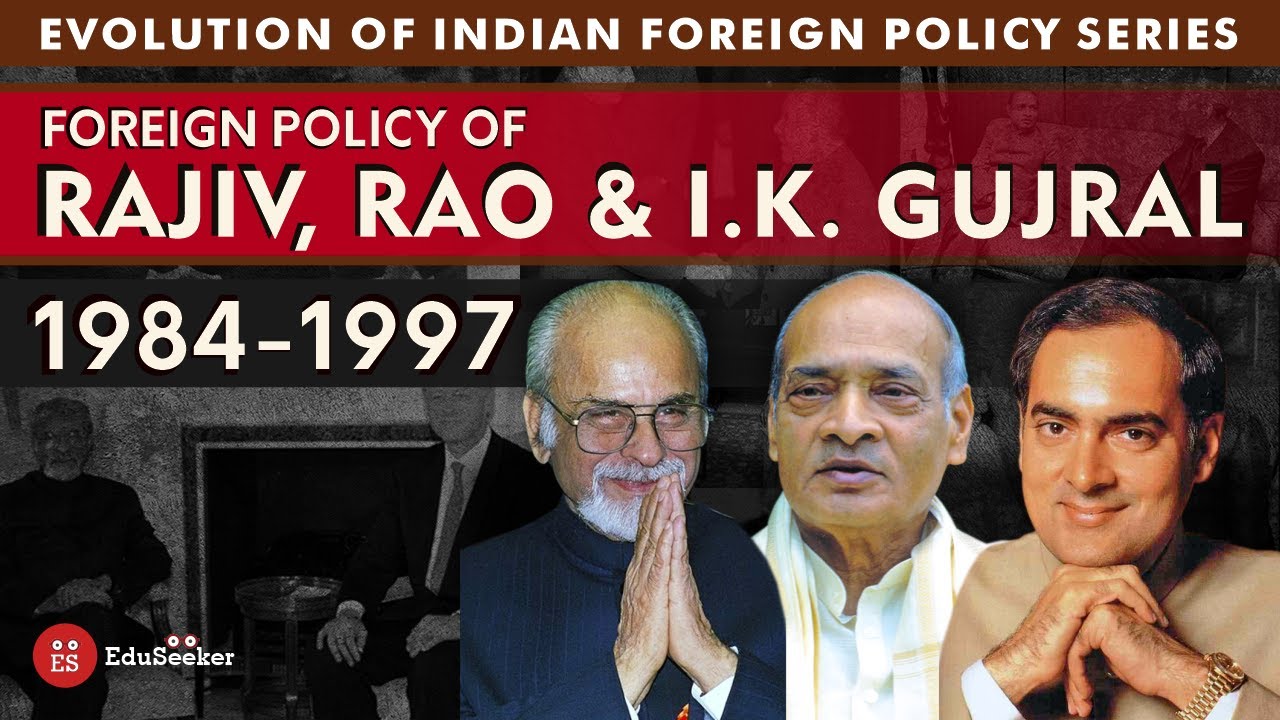
The Gujral Doctrine of India’s foreign policy remains a key foundation for South Asian diplomacy. It was created in the crucial year by former Prime Minister I.K. Gujral. This approach helps students preparing for exams understand how a large country can build trust by respecting territorial integrity and offering non-reciprocity without asking for immediate favors in return.
🎯 In this chapter, you will understand:
- The historical shift in India's regional diplomacy during .
- The five core rules that guide peaceful relations with neighboring countries.
- How giving without expecting direct returns builds lasting regional trust.
- The strategic benefits of maintaining peace on domestic growth and security.
💡 Why this topic matters: It marks a major turning point in how India treats its smaller neighbors, choosing friendly support over dominant power.
🧠 Core Idea: Generosity and mutual respect from a larger nation create a safer and more peaceful neighborhood for everyone.
The Gujral Doctrine of India’s Foreign Policy: A Paradigm Shift in 1996
The launch of the Gujral Doctrine in by I.K. Gujral transformed India’s neighborhood relations. It shifted focus away from strict power plays and moved toward building genuine trust.
In the mid-1990s, India realized that its own growth depended heavily on having stable and peaceful neighbors. This led to a strategy that favored long-term friendship over short-term gains.
- (i) The doctrine promotes unilateral concessions, meaning India gives more to its neighbors than it expects back.
- (ii) It relies on non-reciprocity toward smaller South Asian neighbors to help them feel secure.
- (iii) The main goal was to build strong, friendly ties and lower regional tensions and old conflicts.
The Five Guiding Principles of the Gujral Doctrine
To bring this vision to life, I.K. Gujral outlined five specific principles that changed how India interacts with nearby nations.

Principle of Non-Reciprocity and Good Faith
India chose not to demand a "tit for tat" trade-off from smaller neighbors. This proved that true regional leadership comes from helpfulness rather than pressure.
Engagement with Specific Nations
- (i) India works in good faith with Bangladesh and Nepal.
- (ii) It provides generous and friendly support to Bhutan and the Maldives.
- (iii) It strengthens sea-based and diplomatic connections with Sri Lanka.
Regional Security and Non-Interference Protocols
The policy set clear rules to protect the internal decisions of sovereign countries from outside interference.
- (i) No South Asian country should let its territory be used against another, which prevents cross-border fighting.
- (ii) All nations must strictly refrain from interfering in the domestic affairs of their neighbors.
- (iii) Every nation must respect the territorial integrity and sovereignty of other states.
Peaceful Resolution Through Bilateralism
A key element was solving regional issues directly through two-way talks, keeping third-party forces out of local matters.
- (i) All disagreements, big or small, must be settled through peaceful discussions.
- (ii) Every nation meets as an equal during negotiations (sovereign equality).
The Strategic Significance of the Gujral Doctrine
This initiative was not just kindness—it was a smart long-term strategy to establish India as a reliable global leader.
Achieving Total Peace and Strategic Counterbalancing
By winning the trust of nearby countries, India created a friendly border area so it could focus on bigger nation-building goals.
- (i) The plan aimed to achieve total peace with immediate neighbors to keep attention on internal growth.
- (ii) It strategically balanced out tense relations with Pakistan in the west and China in the north.
- (iii) By keeping regional relationships smooth, India limited the chance for outside powers to exert unwarranted influence in South Asia.
⚡ Quick Revision Capsule: Gujral Doctrine Principles
Here is a quick overview of the key rules that define this foreign policy framework:
| Principle | Core Focus | Key Goal |
|---|---|---|
| Non-Reciprocity | Give more to neighbors without expecting equal returns | Build trust with smaller nations |
| Non-Interference | Respect internal decisions of sovereign states | Prevent cross-border tension |
| Territorial Respect | Honor boundaries and sovereignty | Ensure regional stability |
| Bilateral Dialogue | Solve disputes directly between two involved nations | Avoid third-party interference |
| Peace Perimeter | Create friendly relations around borders | Prevent unwarranted influence from outside global powers |
📝 Summary
Established in by I.K. Gujral, the Gujral Doctrine changed how India approaches its neighbors. By choosing generosity over demands, India built a peaceful neighborhood that protects its security and supports economic development.
🚀 Summary and Educational Importance of the Gujral Doctrine
The Gujral Doctrine remains an essential topic for students of international relations. By focusing on non-reciprocity and territorial integrity, I.K. Gujral provided a clear map for South Asian peace. Understanding these five principles helps students master India's foreign policy evolution and its goals for regional harmony.
🚀 Quick Revision Points
Essential facts to review before examinations:
- (i) Introduced in by Prime Minister I.K. Gujral.
- (ii) Applies non-reciprocity toward smaller neighbors like Nepal, Bangladesh, Bhutan, Maldives, and Sri Lanka.
- (iii) Promotes solving issues through direct, two-way peaceful talks.
- (iv) Creates a stable neighborhood to reduce outside influence in South Asia.
- 💡 Exam Tip: Focus on the concept of "Non-Reciprocity"—it means doing good for neighbors without asking for something in return, which is the heart of this doctrine.
❓ Frequently Asked Questions (FAQ)
Q1: Who introduced the Gujral Doctrine and when?
A1: It was introduced by I.K. Gujral in the year when he served as India's Minister of External Affairs.Q2: What does non-reciprocity mean in this context?
A2: It means India gives support and concessions to smaller neighboring countries without expecting them to return equal favors.Q3: How does the doctrine help India's national security?
A3: By maintaining friendly neighbors, India secures its borders, prevents cross-border conflict, and limits foreign power influence in South Asia.