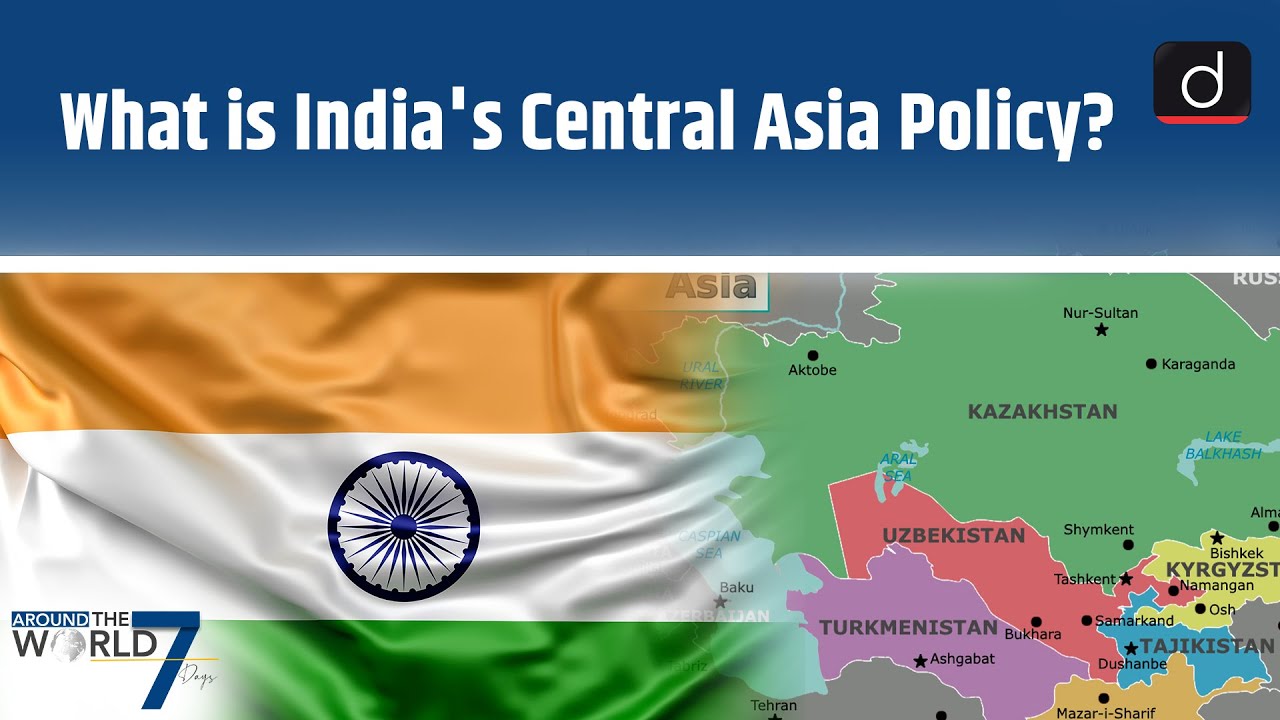
This comprehensive analysis explores the Connect Central Asia Policy, a landmark diplomatic initiative launched in to foster regional stability and economic growth. Designed for students and competitive exam aspirants, this guide details the strategic ties between India and the five Central Asian Republics, emphasizing the geopolitical importance of the International North South Transport Corridor (INSTC).
🎯 In this chapter, you will understand:
- The origin and core objectives of the Connect Central Asia Policy launched in .
- Key strategic pillars including security, economic partnerships, and soft power diplomacy.
- Infrastructure and trade initiatives like the International North South Transport Corridor (INSTC).
- The strategic importance of Central Asia in India's broader foreign policy framework.
💡 Why this topic matters: Understanding this policy highlights how India expands its presence in Eurasia to secure energy resources and build trade routes.
🧠 Core Idea: Central Asia is India's "extended neighborhood," vital for energy security, counter-terrorism, and regional stability.
Connect Central Asia Policy India 2012: Expanding Regional Engagement
The year marked a significant shift in India's foreign policy with the formal launch of the Connect Central Asia Policy.
This policy was created to deepen political, economic, security, and cultural ties with landlocked Central Asian nations. By engaging Kazakhstan, Kyrgyzstan, Tajikistan, Turkmenistan, and Uzbekistan, India aimed to restore historical links along the ancient Silk Road while addressing modern-day energy security and regional stability concerns.
- (i) The policy serves as a proactive approach to strengthening bilateral relations through a multidimensional engagement strategy.
- (ii) It emphasizes Central Asia as part of India's "extended neighborhood," highlighting its role in Eurasian geopolitics.
- (iii) The initiative balances traditional diplomacy with modern technological collaboration and infrastructure development.
Key Features of the Connect Central Asia Policy Framework
The core of this policy rests on multiple pillars ranging from hard security to soft power diplomacy, ensuring a complete partnership with the Central Asian Republics.

Political and Security Engagement for Regional Stability
India’s security architecture in the region focuses on promoting peace and active counter-terrorism. Engagement happens through strategic diplomatic visits and military cooperation aimed at addressing shared security risks in Eurasia.
-
(i) Diplomatic Reinforcement
- (a) Strengthening political relations through frequent high-level visits by heads of state and ministers.
- (b) Maintaining regular interaction within bilateral and multilateral forums to align common interests.
-
(ii) Strategic and Military Cooperation
- (a) Deepening strategic cooperation through specialized military training and capacity-building programs.
- (b) Collaborative efforts in joint research and counter-terrorism coordination to ensure regional safety.
-
(i) Diplomatic Reinforcement
Economic Cooperation: Energy, Agriculture, and Infrastructure
The economic focus of the Connect Central Asia Policy centers on resource security and sustainable development. By combining India's technical skills with the region's vast natural resources, both sides aim for mutual growth.
Education, Health, and Technology: Building Human Capital
India’s soft power is visible in its support for higher education and healthcare across Central Asia. This creates strong ties between people across borders.
Human Capital and Cultural Collaboration Initiatives - Energy Partnerships: Establishing long-term ties in energy and natural resources to support industrial growth.
- Agricultural Ties: Enhancing collaboration in agriculture, focusing on value-added crop production for food security.
- Infrastructure Development: Setting up construction projects and steel rolling mills using local resources and labor.
- Academic & Health Outreach: Setting up a Central Asian University in Bishkek and introducing tele-education and tele-medicine networks.
⚡ Quick Revision Capsule: Connect Central Asia Policy
Below is a quick reference summary outlining the main components of India's strategic policy framework in Central Asia:
| Policy Pillar | Key Focus Areas | Primary Objective |
|---|---|---|
| Political & Security | High-level visits, counter-terrorism, military training | Ensure regional peace and stability in Eurasia |
| Economic & Energy | Natural resources, value-added farming, steel mills | Secure long-term energy and fuel industrial growth |
| Human Capital | Tele-medicine, tele-education, university ties | Build human-centric connections through soft power |
| Connectivity | International North South Transport Corridor (INSTC) | Overcome landlocked limits through trade routes |
| Geopolitical Role | Engagement in SCO, regional balancing | Position India as a key regional stakeholder |
📝 Summary
The Connect Central Asia Policy launched in remains an important pillar of Indian foreign policy. For students, understanding this topic is essential because it links regional geopolitics, energy needs, and trade routes like the International North South Transport Corridor (INSTC). It demonstrates India's active role as a key player in Eurasia.
🚀 Quick Revision Points
Essential facts to review before examinations:
- (i) Policy launched in targeting five landlocked Central Asian Republics.
- (ii) Core focus includes energy security, counter-terrorism, and regional stability.
- (iii) Key transit projects involve the reactivation of the INSTC for trade.
- (iv) Soft power initiatives include tele-education, tele-medicine, and academic exchanges.
- 💡 Exam Tip: Focus on the five Central Asian countries (Kazakhstan, Kyrgyzstan, Tajikistan, Turkmenistan, Uzbekistan) and the significance of INSTC for competitive exam questions.
❓ Frequently Asked Questions (FAQ)
Q1: When was the Connect Central Asia Policy launched?
A1: The policy was formally introduced in to strengthen India's strategic ties in Central Asia.Q2: Which countries are part of the Central Asian Republics?
A2: The five countries are Kazakhstan, Kyrgyzstan, Tajikistan, Turkmenistan, and Uzbekistan.Q3: What is the significance of the INSTC in this policy?
A3: The International North South Transport Corridor (INSTC) helps bypass trade land barriers to connect India with Central Asia and Europe.