The foreign policy of India serves as a strategic plan designed to protect national interests while building strong international relations. By looking at factors like geographical location, historical legacy, and economic strength, this guide gives a simple and clear breakdown for students preparing for political science exams and UPSC preparation.
🎯 In this chapter, you will understand:
- The core principles and foundations shaping India's external diplomacy.
- How non-alignment and Panchsheel protect strategic independence.
- India's historical fights against colonialism, apartheid, and global inequality.
- The nation's role in the United Nations, global peacekeeping, and nuclear safety.
💡 Why this topic matters: Indian foreign policy shows how a developing nation can balance moral principles with real-world security to become a respected global leader.
🧠 Core Idea: India balances sovereign national security with global peace, non-alignment, and equal international partnerships.
Indian Foreign Policy: Principles and Objectives in the Modern Era
India’s approach to global affairs rests on a practical framework that balances friendly diplomacy with strong protection of its own national interests. The core of India's international work centers on managing relations with other sovereign states to maintain global stability. This approach continuously evolves alongside the nation's historical traditions and the changing international environment of the 21st century.
- (i) Key factors shaping policy include the geographical landscape and the political structure of the Indian republic.
- (ii) The economic standing of the country directly affects its strength in international trade and global meetings.
- (iii) Active leadership and strong public opinion ensure that foreign choices match the goals of the people.
Promotion of World Peace in India’s Foreign Policy
Since gaining independence, the Republic of India has considered international peace as an essential requirement for human progress.
The Constitutional Foundation of Peace
Working toward world peace is a official Constitutional obligation under Article 51, which directs the state to build just and honorable relations between nations.
- (i) Prime Minister Jawaharlal Nehru explained that for developing countries, “Peace is not merely a hope but an urgent necessity.”
- (ii) India maintains that international peace forms the real foundation required for overall economic development.

Anti-Colonialism and Support for Liberation Movements
Having experienced foreign rule for centuries, India grew into a steadfast defender of the sovereignty of oppressed nations.
Dismantling Colonial and Imperial Structures
India’s official stance firmly opposes imperialism in every form, treating it as a primary risk to global security and basic dignity.
- (i) India offered major support to freedom movements across Afro-Asian countries, especially in Indonesia, Ghana, and Namibia.
- (ii) Neo-colonialism, meaning subtle economic control over smaller countries, remains an ongoing target of Indian diplomatic opposition.
Anti-Racialism: The Moral Compass of Indian Diplomacy
India has consistently acted as a international leader against institutionalized discrimination and unfair treatment based on race.
The Crusade Against Apartheid and Racial Inequity
The Indian government maintains that racialism damages international cooperation and breaks basic human rights standards.
The Landmark Decision of 1954
In , India took decisive action to cut off all official ties with South Africa to protest racial segregation.
- (i) India ended diplomatic relations with South Africa in in direct protest against the apartheid system.
- (ii) Steady pressure from India within the United Nations helped secure freedom for Zimbabwe and Namibia from minority rule.
Non-Alignment: Navigating the Cold War and Beyond
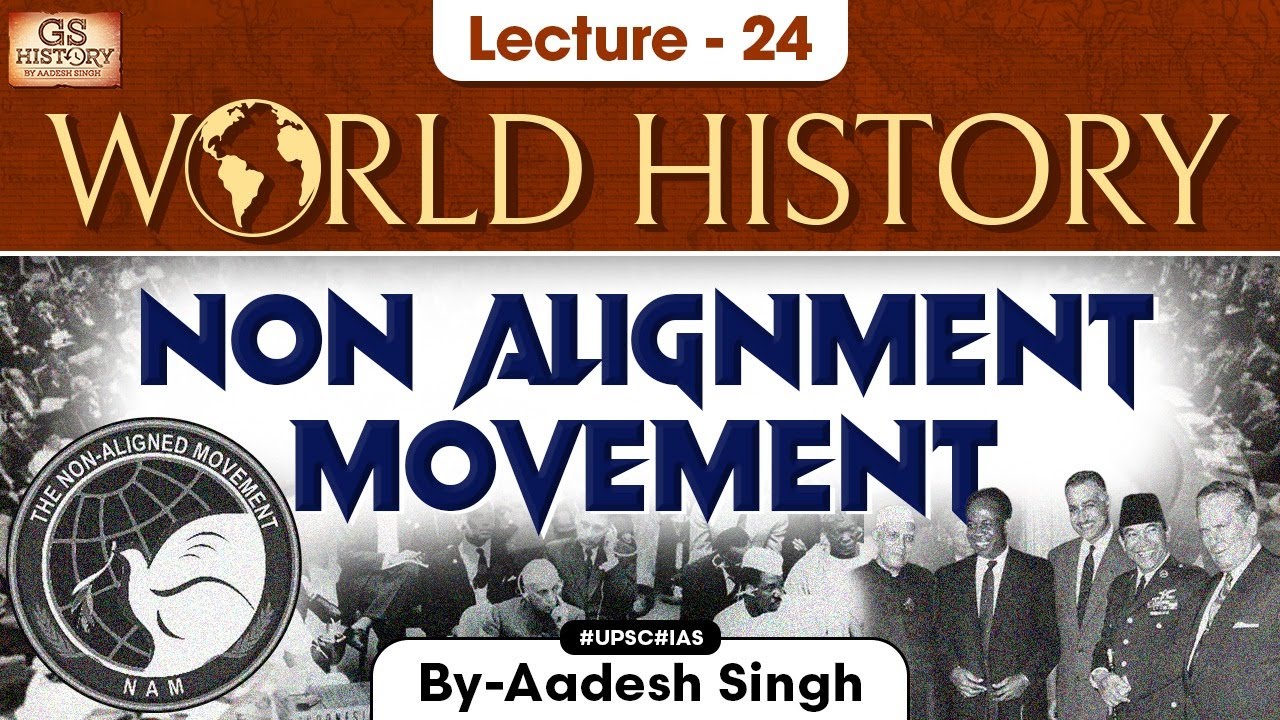
After reaching independence in , India helped start the Non-Alignment Movement (NAM) to protect its freedom of decision.
The Strategy of Strategic Autonomy
By staying neutral between the American capital group and the Soviet communist group, India kept the ability to make independent decisions suited to its own priorities.
- (i) Military Alliances: India refrains from joining military blocks that could drag the nation into unnecessary wars.
- (ii) Universal Friendship: The strategy aims to build friendly relations with all nations, regardless of their political systems.
Panchsheel: The Ethical Framework for Mutual Respect
The Panchsheel principles stand as a major milestone in international law and peaceful co-existence.
The 1954 Indo-China Treaty on Tibet
Drafted by Jawaharlal Nehru and Chou-En-Lai in , these five guidelines were created to manage relationships between India and China.
- (i) Territorial Integrity: Showing mutual respect for borders and national sovereignty.
- (ii) Non-Aggression: Pledging not to use military force against one another.
- (iii) Internal Affairs: Following a rule of non-interference in the home matters of other nations.
- (iv) Equality: Working together for shared benefits as equal partners.
- (v) Co-existence: Accepting that different political systems can live together peacefully.
Afro-Asian Bias: Strengthening South-South Cooperation
India has consistently supported the Global South, encouraging unity among countries that faced past colonial rule.
Leading the Voice of Developing Nations
Through international meetings and regional groups, India worked to raise the political influence of countries across Asia and Africa.
- (i) India hosted the historic Asian Relations Conference in New Delhi in to build regional cooperation.
- (ii) The Bandung Conference served as a major step that reinforced Afro-Asian identity.
- (iii) Institutional Support: India helped establish key groups like the Group of 77 in and SAARC in .
- (iv) Because of its supportive role, India is frequently viewed as a helpful neighbor among nearby states.
India and the Commonwealth: A Partnership of Equals
In , India made a practical choice to stay a member of the Commonwealth of Nations.
Maintaining Sovereignty within a Global Network
This membership was carefully set up so that it would not weaken India’s republican character or its total independence.
- (i) This association offers a helpful venue for cultural and economic collaboration between member states.
- (ii) India demonstrated its leadership when it hosted the 24th Commonwealth Summit in New Delhi in .
India’s Commitment to the United Nations (UNO)
As a founding member since , India has continually backed the United Nations as the main organization for global teamwork.
Global Diplomacy and Peacekeeping Contributions
India uses the UN assembly to oppose colonialism and support human rights across the globe.
- (i) Historical Leadership:Vijay Lakshmi Pandit earned a key position as UNGA President in .
- (ii) Peacekeeping Operations: Indian peacekeepers have served honorably in missions in Korea, Congo, and Somalia.
- (iii) Security Council Aspirations: After serving several terms as a non-permanent member, India continues to present a strong case for a permanent seat on the UN Security Council.
Disarmament Policy: A Quest for a Nuclear-Free World
India’s policy on disarmament builds on the principle that true international safety should not depend on nuclear weapons.
Balancing Peace with National Security
While India calls for eliminating nuclear weapons worldwide, it insists that all treaty rules must apply fairly and be non-discriminatory.
- (i) In , India arranged a six-nation conference in New Delhi to suggest a practical plan for nuclear disarmament.
- (ii) The CTBT and NPT Debate: India decided not to sign the NPT in or the CTBT in because those agreements gave unfair advantages to major powers (USA, Russia, China, UK, France).
- (iii) India protects its sovereign nuclear options to secure its borders, while maintaining a clear policy of "No First Use."
⚡ Quick Revision Capsule: Indian Foreign Policy Foundations
This table summarizes key milestones, treaties, and principles that shape India's relations with other nations:
| Pillar / Treaty | Year / Event | Core Significance |
|---|---|---|
| Article 51 | Constitutional duty directing the state to promote international peace and honor treaties. | |
| Non-Alignment Movement | onward | Strategy to stay independent from Cold War power blocs and maintain strategic autonomy. |
| Panchsheel Agreement | Five principles of peaceful co-existence signed by Nehru and Chou-En-Lai. | |
| Apartheid Boycott | Severed diplomatic ties with South Africa to fight institutionalized racial discrimination. | |
| NPT & CTBT Stance | / | Refused unfair treaties cited in NPT and CTBT while keeping a "No First Use" nuclear stance. |
📝 Summary
In summary, the foreign policy of India combines practical protection of national security with global peace values. By promoting world peace, following Panchsheel, and leading non-alignment since , India maintains a strong voice within the United Nations. For students, understanding these major agreements and policies is essential for studying India's role as an influential global power.
🚀 Quick Revision Points
Essential facts to review before examinations:
- (i) Article 51 guides India's constitutional responsibility toward international law and peace.
- (ii) The Panchsheel agreement established non-interference and peaceful co-existence.
- (iii) India created the Non-Alignment Movement after to keep independent decision-making powers.
- (iv) Major treaties like the NPT and CTBT were rejected because they created unequal rules for non-nuclear nations.
- 💡 Exam Tip: Focus on Panchsheel's five principles, Article 51, and the reasons why India rejected the NPT and CTBT when answering political science exam questions.
❓ Frequently Asked Questions (FAQ)
Q1: What is the main objective of India's foreign policy?
A1: The main goal is to protect national security and economic growth while promoting global peace, sovereign equality, and international cooperation.Q2: What are the Panchsheel principles?
A2: Formulated in , Panchsheel consists of five rules: mutual respect for territorial sovereignty, non-aggression, non-interference in internal affairs, equality for mutual benefit, and peaceful co-existence.Q3: Why did India refuse to sign the NPT and CTBT?
A3: India rejected the NPT () and CTBT () because these agreements were discriminatory, allowing five major powers to keep nuclear arms while placing restrictions on other nations.