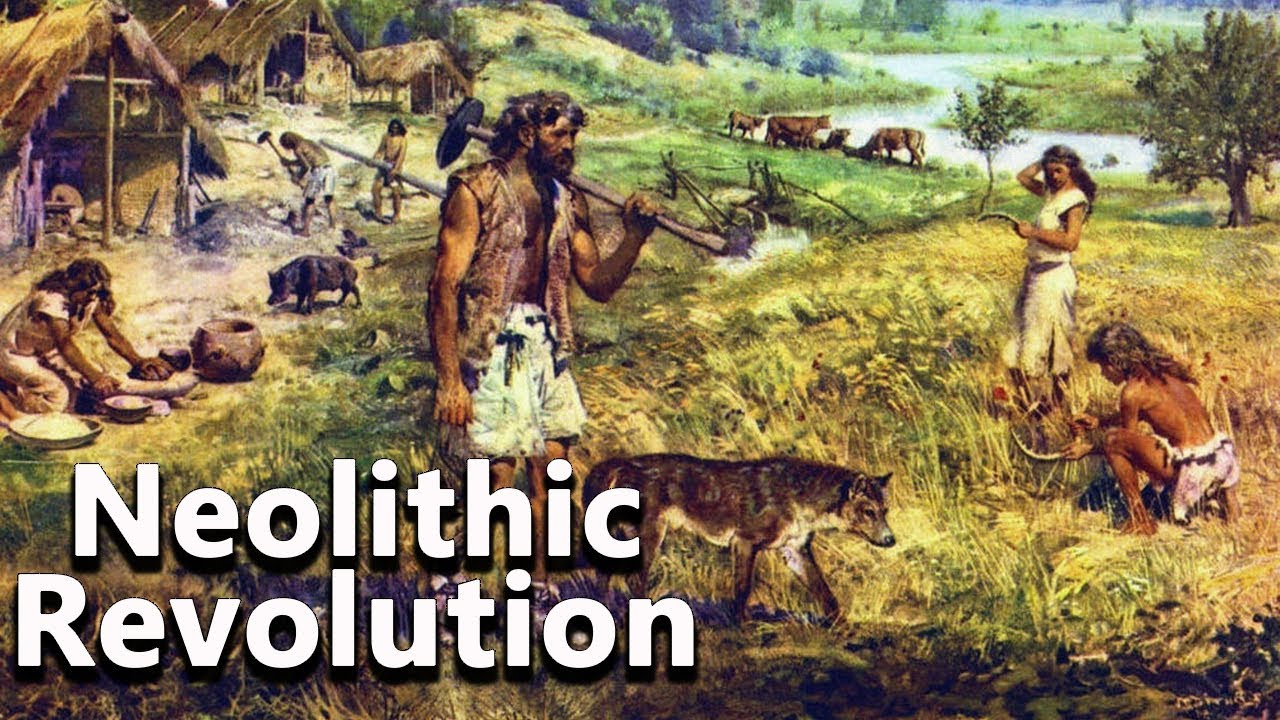
The Neolithic Age represents a dramatic turning point in the human history of the Indian subcontinent. Starting around in northwestern regions like Balochistan, local communities began stepping away from nomadic hunting and gathering to build permanent, settled farming villages. This period laid the core groundwork for future urban centers through early advancements in toolmaking, crop cultivation, animal husbandry, and shelter construction. Key archaeological finds range from underground pit houses in the icy northern valleys to early forms of dental care and massive cattle ash mounds in the south, demonstrating how distinct geography shaped local survival strategies.
In this chapter, you will understand:
- Early food production and dental innovations at Mehrgarh
- Unique cold-climate pit dwellings and bone tools in Kashmir
- Pioneering rice farming and specialized polished stone axes in Eastern India
- Peninsular cattle-keeping traditions and northeastern shifting cultivation
Why this topic matters: Understanding Neolithic regional diversity clarifies how localized farming techniques, trade networks, and housing methods set the stage for pre-Harappan cultures and the later Bronze Age urban revolution across South Asia.
Core Idea: The Agricultural Revolution across South Asia was not a single, identical event, but a rich tapestry of regional responses. Varied landscapes inspired distinct adaptations, from cold-insulated subterranean houses and early medical practices to specialized rice farming and livestock herding.
Regional Developments in the Neolithic Age Across the Indian Subcontinent (c. 7000–1500 BCE)
A story of innovation and adaptation unfolded as Neolithic communities established distinct cultural and agricultural practices across varied geographical zones of ancient India. The shift toward permanent living brought deep shifts in technology, daily diet, and community structures, proving that South Asia's transition to farming was wide-ranging yet uniquely tailored to local environments.
- Key Aspects of Regional Differentiation
Early communities modified their daily routines based on local climate and natural resources, establishing distinct cultural footprints that persisted for generations.
- (i) The core transformation was the shift from hunting and gathering to active food production, an era commonly called the Neolithic Revolution, which required ground stone tools, storage vessels, and new social customs.
- (ii) Archaeological digs show that different zones adopted farming at different times, specializing in crops and livestock suited to their immediate soil and weather patterns.
- (iii) Preserving these distinct regional styles provided a sturdy foundation for the broader pre-Harappan cultural landscape.
Pioneering Innovations and Northern Regional Developments (Mehrgarh and Kashmir Valley)
The earliest signs of South Asian farming appear in the northwestern hills, while the high altitude of the Kashmir Valley offers a clear look at how early humans adapted to severe cold.
Early Dentistry in Neolithic Mehrgarh: The Dawn of Medical Intervention
Switching to a grain-heavy diet rich in ground wheat and cooked starches brought a new physical challenge: increased dental decay and wear. The major archaeological site of Mehrgarh in modern Balochistan offers remarkable physical proof of human problem-solving under these changing conditions.
- (i) Excavations revealed human teeth with precise micro-drill marks, standing as a pioneering advancement in primitive healthcare and early dentistry.
- (ii) These findings show that as early as the , early village dwellers were inventing practical solutions for health issues tied to their new agricultural diet.
- (iii) This level of manual skill proves that the Mehrgarh culture possessed technical intelligence that extended far beyond basic hunting and farming.
The Valley of Kashmir: The Unique Pit Dwellers of Burzahom
Situated in the cold northern heights, Burzahom displays a rich cultural progression through the era into later and times, shaped largely by the need for warmth.
- (a) Housing Adaptation: Residents dug oval-shaped pit dwellings deep into the soil to shelter themselves against harsh winter winds. These underground spaces featured wide bases, narrow top openings, and sturdy post-holes for wooden protective roofs.
- (b) Tool Technology and Culture: People here relied heavily on polished bone and stone tools. Digs unearthed large standing stones called menhirs, distinct coarse redware pottery, and early copper arrowheads that indicate small-scale metal trade.
- (c) Agriculture and Trade: Harvests included wheat, barley, lentils, and common peas. Finding domestic lentils strongly hints at long-distance exchange with Central Asia, while other finds confirm contact with neighboring early Harappan groups.
- (d) Cultural Phases and Finds: Excavations split the site into an early aceramic phase (before pottery) and a later ceramic phase. Artifacts include fine black ware, wheel-made painted pottery, and ornamental beads made of agate and carnelian. Intricate domestic burials contained the remains of wild dogs alongside ibex horns, while a stone slab carving shows a hunter with his dog under the sun.
Agricultural Heartland: Neolithic Expansion in the Ganges Valley, Central, and East India
The fertile river basins of Northern and Eastern India turned into primary centers for crop experimentation. Abundant water and deep soils allowed populations to grow rapidly while perfecting the wet-rice farming techniques that still feed the region today.

- Key Environmental Drivers
Annual river floods left behind rich topsoil that supported heavy crop yields, helping permanent farming villages thrive across the Gangetic plains.
Gangetic and Eastern Regional Advancements
Settlements across modern-day Uttar Pradesh, Bihar, and West Bengal demonstrate an early mastery of cereal farming, tool grinding, and ceramic production.
Ganges Valley and Central India: The Origin of Rice Cultivation
Riverine sites across Uttar Pradesh and Bihar hold critical evidence regarding how native plants were domesticated, offering some of the world's oldest proof of organized rice farming.
- (i) Key Sites and Earliest Evidence: The ancient site of Lehuradeva in Uttar Pradesh yielded charred rice grains dated to around , pushing back the traditional timeline for rice farming in Asia. Other important regional centers include Chopani Munda, Koldiwa, Mahagara, Chirand, and Senuwar.
- (ii) Diversified Farming: Villagers raised a wide range of food crops, including hulled barley, several strains of wheat, rice, peas, lentils, chickpeas, mustard seeds, flax, and jackfruit.
- (iii) Subsistence Strategy: Finding bones from domesticated cattle, sheep, and goats along with wild game remains points to a balanced lifestyle that blended livestock raising, hunting, and seasonal farming. Handmade and cord-marked pottery also became everyday household gear.
East India: Focus on Tool Innovation and Specialized Axes
Neolithic settlements in Bihar and West Bengal are celebrated for their distinctive polished stone tools, specifically designed to clear heavy tropical vegetation.
- (a) Important Sites: Primary regional locations include Birbhanpur, Chirand, Kuchai, Golbaisasan, and Sankarjang.
- (b) Tool Innovations: Artisans produced smoothed stone axes, including pointed butts, heavy celts, narrow chisels, and distinct shouldered axes that made clearing thick woods and working timber much easier.
Peninsular and North-Eastern Adaptations: Cattle Keeping and Shifting Cultivation
Further south and east, environmental landscapes demanded entirely different lifestyles. The dry plateaus of Southern India favored large-scale cattle pastoralism, while the lush, hilly terrain of the Northeast inspired early forms of forest clearing and rotational farming.
- Distinct Landscape Adjustments
High hill terrain and dry granite plateaus created natural boundaries that encouraged distinct local survival techniques, separate from the river plains of the north.
South and North-East India Traditions
From accumulated cattle dung mounds on the Deccan plateau to slash-and-burn clearing in the eastern hills, southern and northeastern groups carved out their own unique cultural paths.
Polished stone axes and celts used for forest clearing and farming South India: Cattle-Keeping and Ash Mounds
Communities spread across Andhra Pradesh, Karnataka, and Tamil Nadu built their economies around livestock, leaving behind massive ash mounds formed by periodically burning accumulated cattle dung in ritual settings.
- (i) Material Evidence: Digs frequently yield polished stone axes, sharp blade tools, and fired-clay animal figurines. These small terracottas highlight the heavy cultural and economic value placed on cattle herds.
- (ii) Key Sites: Prominent locations include Sanganakallu, Tekkalakota, Brahmagiri, and Maski in Karnataka; Nagarjunakonda and Ramapuram in Andhra Pradesh; and Paiyyampalli in Tamil Nadu.
North-East India: The Adaptation of Shifting Cultivation
In the forested hills of northeastern South Asia, high annual rainfall and steep terrain favored rotational farming over permanent, plowed fields.
- (a) Timeline: Neolithic activity in this zone took shape somewhat later, generally flourishing between and .
- (b) Key Sites: Forested hill sites like Daojali Hading in Assam and Sarutaru offer vital evidence of this regional tradition.
- (c) Agricultural Practice: Tool shapes and soil layers indicate the practice of rotational shifting cultivation (locally known as Jhum), where small forest plots were cleared, farmed, and left fallow to recover naturally.
Quick Revision Capsule
A fast overview comparing major Neolithic zones, their core economic activities, and defining regional features:
| Neolithic Region | Key Archaeological Sites | Defining Features & Key Finds |
|---|---|---|
| North-West | Mehrgarh | Earliest farming village (), mud-brick homes, early dentistry marks on teeth. |
| Northern (Kashmir) | Burzahom, Gufkral | Subterranean pit dwellings, polished bone tools, redware pottery, dog burials. |
| Central & Gangetic | Lehuradeva, Koldiwa, Chirand | Early rice farming (), bone implements, cord-marked pottery vessels. |
| Eastern India | Daojali Hading, Kuchai | Shouldered stone axes, polished celts, early shifting cultivation (Jhum). |
| Southern Peninsula | Sanganakallu, Maski, Paiyyampalli | Cattle pastoralism, burning of accumulated dung mounds (ash mounds), humped cattle terracottas. |
Summary
The Neolithic Age across South Asia was a vibrant period of regional adaptation. Rather than following a uniform template, different groups adapted their technology and food gathering methods to match their immediate landscapes. Early dentistry at Mehrgarh shows creative solutions to dietary shifts, underground pit houses at Burzahom reflect simple engineering to beat the winter cold, wet-rice farming in the Gangetic basin built a foundation for food security, and southern pastoralism shaped early cattle traditions. Together, these regional developments laid the economic, technological, and cultural groundwork for the urban Bronze Age communities that followed.
Quick Revision Notes
Core Exam Focus Points for Fast Review:
- (i) Mehrgarh in Balochistan provides the earliest evidence of settled agriculture and primitive dental drilling in South Asia around .
- (ii) Burzahom in Kashmir stands out for its underground pit dwellings, rich collection of polished bone tools, and ceremonial burials of pets with owners.
- (iii) Lehuradeva in Uttar Pradesh offers groundbreaking early evidence for domesticated rice cultivation dating back to roughly .
- (iv) South Indian Neolithic sites are defined by widespread cattle herding and large ash mounds formed by burning seasonal dung heaps.
- Exam Tip: Pay close attention to regional tool variations when answering exam questions. Pair shouldered axes with the North-East, polished bone tools and pit houses with Kashmir, ash mounds with the Deccan peninsula, and early cord-marked pottery with rice farming in the Ganges Valley.
Frequently Asked Questions (FAQ)
Q1: What makes the site of Mehrgarh so important in South Asian history?
A1: Mehrgarh is one of the earliest known farming settlements in the Indian subcontinent, dating to around . It shows the transition from nomadic life to settled wheat and barley farming, early mud-brick house construction, and the earliest physical proof of dental drilling.Q2: Why did the Neolithic inhabitants of Burzahom build subterranean pit dwellings?
A2: The people of Burzahom dug underground pit houses to protect themselves from the freezing winds and harsh winters of the Kashmir Valley. The surrounding soil acted as natural insulation, keeping the living space warmer than above-ground shelters.Q3: What are southern Neolithic ash mounds and how were they formed?
A3: Ash mounds are large hillocks of burned material found across southern India at sites like Sanganakallu and Maski. They were created when early cattle-herding communities periodically accumulated and burned large piles of dried cow dung, likely during seasonal festivals or clearing rituals.