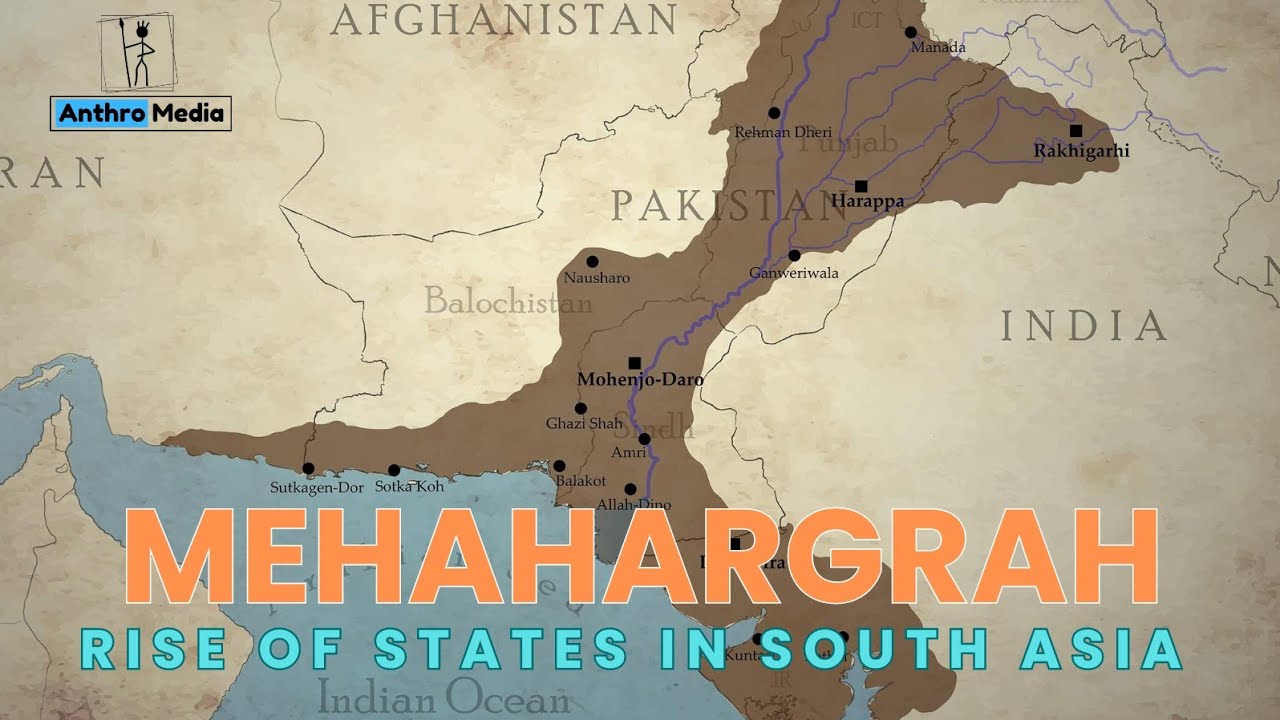
The ancient site of Mehrgarh is fundamentally recognized as one of the most archaeologically significant sites across the entire South Asian subcontinent, providing an unparalleled window into the critical Neolithic and Chalcolithic periods. Chronologically fixed to around 7000–5500 BCE, this settlement offers tangible proof of the earliest agrarian communities, highlighting pivotal agricultural innovations and remarkable cultural advancements, making its study indispensable for students preparing for history and archaeology exams. By tracking how humans shifted from mobile bands to settled farming villages, Mehrgarh fills a massive gap in human history and sets the stage for the urban expansion that defined later generations in the fertile valleys nearby.
In this chapter, you will understand:
- The profound geographical and historical significance of Mehrgarh as the undisputed cradle of early permanent settlements in South Asia.
- How early Neolithic settlers established foundational cattle-herding and crop cultivation strategies around 7000 BCE.
- The architectural shift toward multi-story mud-brick homes, granaries, and organized urban planning by 4000 BCE.
- The development of advanced craft specialization, from Togau Ware pottery to metallurgy and long-distance trade networks.
Why this topic matters: This historical turning point outlines the physical transition from a nomadic lifestyle to organized farming. Understanding Mehrgarh is vital for cracking exam questions regarding the origin patterns of regular settlements, trade routes, and the direct foundations of the mature Indus Valley Civilization.
Core Idea: Between 7000 BCE and 4000 BCE, the community at Mehrgarh pioneered early agricultural techniques, advanced structural designs, and artistic pottery styles. They successfully managed domesticated livestock and structured common storage spaces. This long-lasting development represents a major step forward, showing how local stone tool cultures steadily integrated copper metallurgy and expanded trade links across Central Asia.
Archaeological Significance of Mehrgarh: The Gateway to the Indus Valley Civilization and Earliest Agrarian Settlements
Mehrgarh stands as the undisputed cradle of early agriculture and permanent settlement across the vast expanse of South Asia. Strategically positioned to the west of the great Indus River, this profound site documents humanity's critical transition from traditional nomadic, hunting-and-gathering lifestyles to stable, settled agrarian communities, marking a monumental shift in societal structure.
Mehrgarh is internationally recognized as the location possessing the earliest known evidence of established agrarian settlements within the South Asian subcontinent, fundamentally rewriting the region's history timeline.
The distinct Mehrgarh culture, with its advanced yet nascent societal patterns, is rightfully considered the direct and crucial precursor to the highly developed and widespread Indus Valley Civilization that followed centuries later.
The early inhabitants displayed a preference for organized cattle-herding over the uncertainties of hunting, a practice that paralleled their gradual but significant development of innovative agricultural technologies for staple crops like wheat, barley, and importantly, cotton.
Mehrgarh's Pivotal Role as a Precursor to the Indus Valley Civilization: Understanding Early Cultural Practices
The layers of habitation at Mehrgarh yield critical evidence detailing early cultural practices, spiritual beliefs, and sophisticated societal organization that were instrumental in shaping the characteristics of the later massive Indus Valley settlements.

Figurines and Fertility Symbols: Unveiling Early Artistic and Religious Expression in Mehrgarh
During excavations, archaeologists uncovered a substantial collection of miniature terracotta figurines at Mehrgarh. These small statues predominantly depict women, often adorned with strikingly elaborate hairstyles and featuring overtly pronounced breasts. This consistent artistic representation strongly suggests the veneration of a powerful fertility goddess, symbolizing abundance and life. Interestingly, the appearance of male figurines only becomes noticeable in the later periods of the settlement’s history.
- The consistent presence of female figurines offers vital clues into the settlement's early social and ingrained religious symbolism, possibly related to the success of agriculture and childbirth.
- The subsequent emergence of male figurines reflects an evolving narrative regarding societal roles and perhaps a shift in religious focus or emphasis over the extensive duration of the settlement.
- Taken together, these complex and varied findings unequivocally highlight the deep roots of artistic expression and provide unique insights into early gender representation within the Mehrgarh culture.
Neolithic Settlers: The Critical Transition to Agrarian and Cattle-Herding Practices around 7000 BCE
The earliest known Neolithic settlers undertook a crucial migration from the surrounding demanding mountainous regions down to the more accessible and resource-rich open pastures at Mehrgarh. This move catalyzed a profound societal shift, as they gradually and definitively abandoned the unpredictable life of hunting-and-gathering in favor of stable, dedicated agriculture and structured cattle-herding.
- To support their sustenance and growing population, the inhabitants meticulously raised domesticated animals, including robust sheep, resilient goats, and essential cattle.
- These settlers successfully transitioned into dedicated agriculturists, mastering the cultivation and management of foundational cereal crops such as sturdy wheat and versatile barley.
- This foundational phase, estimated to span ca. 7000–5500 BCE, is academically referred to as the Early Food-Processing Stage, clearly reflecting the primary and vital focus on organized crop cultivation and food management.
Technological and Cultural Developments in Mehrgarh: Innovations in Housing and Craftsmanship
The industrious inhabitants of Mehrgarh were pioneers, demonstrating highly innovative approaches in core areas like housing construction, agricultural techniques, and sophisticated crafts, thereby establishing crucial technological and cultural foundations for all subsequent South Asian civilizations.
Housing and Infrastructure: The Evolution of Durable Mud Brick Homes and Urban Planning
The community initially constructed smaller, simple circular or rudimentary rectangular houses utilizing local materials such as mud and light reed. However, the recurring threat of devastating floods along the river systems necessitated a rapid and practical adaptation. This challenge spurred the residents to begin building more durable and robust two-storey homes made of sturdy mud brick by around 4000 BCE, showcasing early architectural resilience.
- The adaptation of construction methods to include mud-brick walls and elevated floors was a direct response to mitigate the destructive potential of recurring natural disasters.
- The consistent construction of these structured homes and supporting facilities clearly demonstrated the nascent understanding of urban planning and organized community living concepts.
Ancient mud-brick storage facilities utilized for crop management and food security. - The strategic utilization of large common granaries provided essential storage, guaranteeing crucial food security for the growing settlement, especially through times of environmental stress.
Pottery and Artisanship: The Sophistication of Wheel-Made Togau Ware
The skilled residents of Mehrgarh quickly adopted the use of pottery wheels to expertly craft intricate, symmetrical vases and various functional vessels. This proficiency in working with clay signifies not only a major leap in craftsmanship but also a refinement of their inherent artistic sensibilities.
- Artisans created elaborate and aesthetically pleasing designs, typically applying vibrant red slips to the surface and then painting complex geometric or narrative patterns using black paint.
- This particular style of ceramics is historically classified as Togau Ware, distinguished further into chronological types ranging from the earliest Togau A to the later, more developed Togau D.
- Early pottery designs frequently featured intricate and realistic animal motifs, a complexity that tended to be simplified or replaced by geometric patterns in the later periods of ceramic production.
Architectural and Craftsmanship Advancements: Tools, Materials, and Western Trade Links
The people of Mehrgarh were exceptionally skilled craftsmen, demonstrating an early ability to seamlessly integrate locally sourced resources with sophisticated technological knowledge, evidenced further by the clear influences of long-distance trade in their finished art and technology.
Innovative Tools and Precious Materials: Copper Technology and Western/Central Asian Trade
The dedicated craftsmen at Mehrgarh ingeniously fashioned essential tools from readily available local copper ore, marking the beginning of metallurgy in the region. They also expertly utilized various minerals as fine pigments for the decoration of their pottery and other art pieces.
- Notable stone tools recovered include sophisticated borers and precise geometric microliths, featuring shapes such as fine lunates (crescents), sharp triangles, and versatile trapezes, indicative of highly specialized manufacturing.
- The significant presence of luxury materials like rare turquoise and deep-blue Lapis Lazuli (a material foreign to the region) strongly suggests the establishment of organized trade links with communities in distant Western and Central Asia.
- The artisans were highly proficient in producing fine, high-quality wheel-made pottery, recognizable by its distinctive, expertly shaped rims and characteristic painted motifs, marking a high point of early ceramic technology.
The Historic Transition from Neolithic to Chalcolithic Eras in the Fifth Millennium BCE
The thriving small settlement at Mehrgarh was not static; it famously witnessed the historic and monumental societal shift known as the transition from the Neolithic (New Stone Age) to the Chalcolithic (Copper Age) phases by the middle of the fifth millennium BCE, approximately 4000 BCE. This transition represents profound societal, economic, and technological progressions that paved the way for the greater urbanism that was to follow.
- The increasing use of local copper technology signaled the movement out of the strict Stone Age, bringing new possibilities for tools and weaponry.
- This period saw increasing societal complexity, driven by agricultural surpluses and specialized craft production.
Mehrgarh Historical Timeline & Core Archaeological Artifacts
This quick revision capsule highlights the distinct phases, material developments, and organizational strategies recorded across the long occupation history of the site:
| Historical Phase & Date | Key Material / Technology Used | Primary Societal & Economic Focus |
|---|---|---|
| Early Neolithic (ca. 7000–5500 BCE) | Stone microliths (lunates, triangles), bone tools | Transition to cattle-herding, domesticating goats, and initial farming of wheat and barley. |
| Early Ceramic Era | Handmade pottery evolving toward wheel-turned methods | Introduction of storage vessels to manage crop yields and support growing town populations. |
| Developed Pottery Phase | Togau Ware (Togau A to D types) with animal and geometric designs | Advanced craft specialization and artistic expression using black paint and red slips. |
| Chalcolithic Transition (ca. 4000 BCE) | Local copper ore smelting, metallurgy tools | Technological shift into the Copper Age, building complex multi-room structural layouts. |
| Mature Trade Phase | Imported turquoise, Lapis Lazuli minerals, specialized borers | Establishment of long-distance resource distribution networks with Western and Central Asia. |
Summary
The archaeological site of Mehrgarh holds immeasurable and enduring value for comprehending the profound evolution of agrarian societies across the entire South Asian subcontinent. Spanning the period from 7000–5500 BCE and progressing past 4000 BCE, the site meticulously documents the crucial development trajectory of agriculture, sophisticated pottery, metallurgy, specialized tools, and permanent settlements. Ultimately, students and researchers are provided with vital, foundational insights into the earliest known human civilization in the region and its progressive, influential pathway toward the majestic Indus Valley Civilization.
Quick Revision Points for History Students
Focus closely on these core regional developments during your final exam preparation:
- (i) Location and Context: Situated west of the Indus River, tracking the monumental shift from hunter-gatherer bands to structured villages.
- (ii) Crop Innovations: Earliest regional management of foundational crops like wheat, barley, and the early use of cotton texturing.
- (iii) Architectural Progress: Evolved from mud-and-reed shelters into multi-room mud-brick structures featuring central storage granaries to safeguard agricultural surplus.
- (iv) Artistic Legacy: Celebrated for fine terracotta female figurines symbolizing fertility, along with stylized wheel-made ceramics classified as Togau Ware.
- Exam Tip: When evaluating early trade networks, always cite the discovery of non-native materials like turquoise and Lapis Lazuli at Mehrgarh. These items provide undeniable proof of active, long-distance trade links operating between South Asia and Central/Western Asia as early as the Neolithic period.
Frequently Asked Questions (FAQ)
Q1: Why is Mehrgarh considered historically important to the South Asian region?
A1: It holds the oldest verified evidence of human agriculture and settled life in South Asia (dating back to 7000 BCE). This fundamentally maps how local societies transitioned out of a nomadic lifestyle and laid down the cultural, structural, and agricultural practices that later shaped the Indus Valley Civilization.Q2: What did the discovery of ceramic Togau Ware reveal about early craftsmanship?
A2: Togau Ware shows that early artisans rapidly mastered pottery wheels to shape large, symmetrical vessels. Their elaborate styles utilized red surface slips decorated with intricate black geometric or animal figures, tracking a clear timeline of artistic growth from Phase A through Phase D.Q3: How did environmental conditions affect architectural styles in early Mehrgarh?
A3: Frequent river flooding forced the community to abandon flimsy mud and reed shelters. By roughly 4000 BCE, they adapted by engineering durable, multi-story houses made of sturdy mud bricks, complete with dedicated community granaries to protect food supplies from seasonal climate swings.