The economic backbone of the ancient Harappan civilization relied on a highly productive, thriving agricultural base. This system was directly sustained by the annual floods of the fertile Indus River. This robust food production did not just feed urban populations; it laid the foundation for extensive trade networks. To support complex commerce, the Harappans developed highly sophisticated systems of measurement and uniform weight structures. By understanding how these ancient people managed their agrarian resources and structured their trading methods, we gain deep insight into how one of the world's earliest urban societies maintained stability and uniformity across thousands of miles without modern technology.
In this chapter, you will understand:
- How the fertile Indus River environment supported widespread food surpluses.
- The primary crops harvested by the Harappans and their pioneering role in cotton farming.
- The varieties of livestock domesticated for labor, food, and industrial resources like ivory.
- The structural mechanics of the uniform decimal and cubical weight system used in trade.
Why this topic matters: This subject highlights how ecological management and rigorous social standardization allow an ancient economy to thrive. It is a fundamental pillar of ancient history curricula, illustrating the transition from basic survival farming to highly organized state commerce.
Core Idea: The economic stability of the Indus Valley Civilization (IVC) rested on utilizing natural river floods to generate surplus crops. This agricultural wealth funded and organized an extensive mercantile system. This market was strictly regulated by a highly precise, uniform system of weights, measures, and binary-decimal scaling ratios across all major settlements.
Agriculture and Economy of the Indus Valley
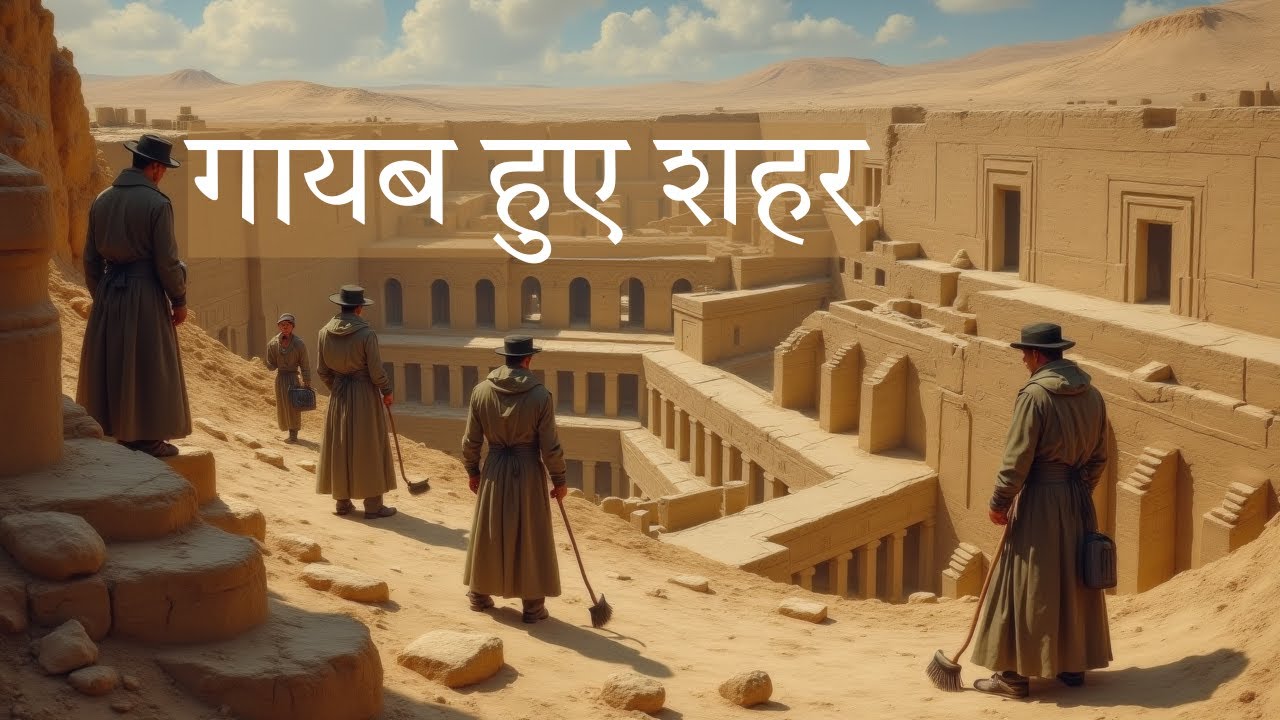
The entire logistical framework of the Harappan civilization shows an advanced mastery over geographical challenges. Despite an environment that was largely semi-arid or dry, regular natural cycles provided everything necessary for immense economic growth.
Harappan Agriculture and Animal Domestication
Every year, the seasonal flooding of the Indus River left behind thick layers of rich, nutrient-heavy alluvial soil. This natural fertilization allowed Harappan farmers to consistently generate large crop surpluses and comfortably maintain massive livestock herds year after year.
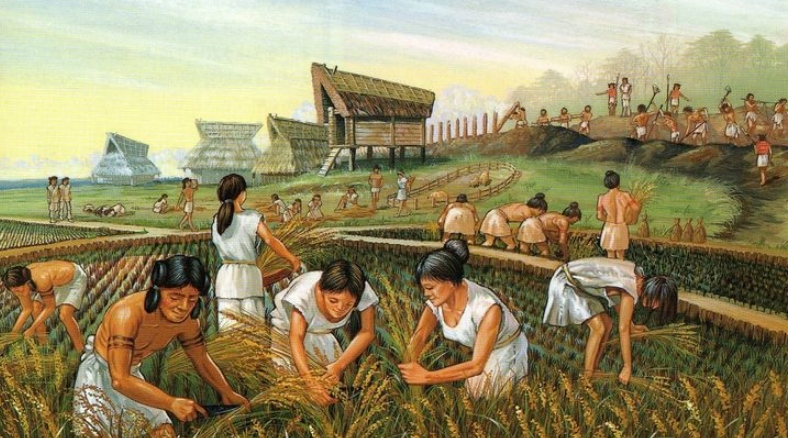
Representation of Agriculture at Indus Valley Civilization Key Crops and Production Methods
Harappan cultivators targeted specific seasonal cycles to maximize their yields, ensuring dietary stability across both cities and rural villages.
- (i) Key Crops: The fundamental staple food crops grown included wheat, barley, peas, dates, sesame, and mustard. It is historically monumental that the Harappan people were the earliest known society globally to cultivate and spin cotton.
- (ii) Specific Crop Use: Clear archaeological evidence demonstrates that rice cultivation was actively practiced as early as 1800 BCE, particularly near the coastal port site of Lothal.
- (iii) Farming Limitations: It is vital for students to note that the IVC had no knowledge of sugarcane cultivation, nor did they ever use the horse or smelt iron tools.
- (iv) Livestock: The communities successfully tamed and raised a vast array of fauna. This included cattle (featuring both the distinct humped zebu and shorthorn varieties), buffaloes, goats, sheep, pigs, dogs, and cats. Furthermore, the elephant was extensively utilized, with precious ivory tusks regularly harvested for artistic and cultural manufacturing.
Standardized Weights and Measures for Commerce
Commercial transactions across the civilization required a reliable framework to ensure equity, prevent fraud, and facilitate long-distance trade from northern outposts down to maritime ports.
- The vast scale of Harappan trade routes demanded absolute uniformity across all manufacturing centers.
Standardized Weights and Measures
The existence of an identical, unchanging system of weights and measures operating across thousands of miles of territory proves the incredible administrative organization of this civilization.
- (a) Uniformity: Merchants and administrative officials carried out trade using highly standardized weights and measures. These solid, cubical weights were precisely carved out of durable mineral stones such as chert, limestone, and steatite to prevent tampering.
- (b) Decimal System: The mathematical calibration of these weights shows a clear reliance on a decimal system. This layout is visibly reflected in the highly organized, discovered ratios which scale upwards following the strict pattern of 1:2:4:8:16:32.
- (c) Precision Tools: Graduated measuring bars and linear measures made of shell and ivory have been excavated by archaeologists. These scales reveal the high levels of precision required for urban architectural engineering, city planning, and commercial logistics.
Economic Trade Integration
The marriage of predictable agricultural surplus and accurate measuring toolkits allowed the economy to expand well beyond local village bartering.
- Surplus food grains were collected and stored centrally inside massive urban state granaries.
Raw Material Sourcing
Standardized measurement allowed urban artisans to precisely track raw commodities shipped from distant mining regions.

Visual overview of Harappan commercial standardization tools - Standardized scaling systems enabled seamless transactions for precious stones like lapis lazuli.
- Weights made from chert provided uniform measurement standards from rural outposts to capital cities.
- Linear scales ensured structural consistency across all public brick platforms and municipal buildings.
- Maritime trade units at coastal docks were calibrated to match inland administrative weights exactly.
Quick Revision Capsule
Review this concise economic overview summarizing the vital components of Harappan civilization infrastructure:
| Economic Domain | Primary Elements & Crops | Core Operational System |
|---|---|---|
| Agricultural Base | Wheat, barley, peas, dates, sesame, mustard | Utilization of the seasonal alluvial silt deposits from the annual Indus River inundation. |
| Industrial Innovations | Global pioneer in cultivating and processing cotton | Supplied textile materials for internal wear and international maritime export markets. |
| Faunal Domestication | Cattle, buffaloes, sheep, goats, pigs, elephants | Provided vital agricultural field labor, heavy transport power, and valuable raw materials like ivory. |
| Commercial Weight Systems | Tamper-resistant cubical weights carved from chert and steatite | Regulated by a precise mathematical configuration scaling via 1:2:4:8:16:32 ratios. |
| Measurement Engineering | Graduated scales and precise linear measures | Utilized unified standard units to verify commercial trade volumes and municipal civic construction. |
Summary
The economic foundations of the Indus Valley Civilization show us a society that mastered both large-scale farming and commercial organization. By utilizing the annual floods of the Indus River, they secured a steady food supply that allowed cities to grow. They pioneered the cultivation of cotton and managed large herds of livestock. To keep trade running smoothly across their vast territory, they introduced highly reliable cubical weights and linear scales. These tools followed a strict mathematical ratio, ensuring that whether a merchant was trading at an inland city or a coastal port, the rules of commerce remained completely identical.
Quick Revision Points
Keep these fundamental historical truths in mind for rapid topic review:
- (i) The Indus River provided annual alluvial deposits that allowed farmers to regularly produce food surpluses.
- (ii) Cotton was grown for the first time in human history by the people of the Harappan civilization.
- (iii) Major agricultural blind spots existed; the culture had zero knowledge of sugarcane, iron, or the domestic horse.
- (iv) Commercial trade relied entirely on cubical chert weights operating on a strict binary/decimal scaling ratio of 1:2:4:8:16:32.
- Exam Tip: Examiners regularly test students on what the Harappans did NOT have. Always remember that sugarcane, iron, and the horse are completely absent from valid archaeological findings of the Indus Valley Civilization. Memory of the specific weight ratio sequence 1:2:4:8:16:32 is also highly tested.
Frequently Asked Questions (FAQ)
Q1: What allowed the Harappan civilization to maintain an agricultural surplus in a dry climate?
A1: The civilization relied on the annual natural flooding of the Indus River. The floodwaters deposited massive layers of rich, fertile alluvial silt across the farming plains, allowing crops to thrive despite the semi-arid regional climate.Q2: What are the most notable inclusions and omissions in Harappan farming?
A2: The Harappans were the historical pioneers of cotton cultivation and successfully grew staples like wheat and barley. However, they did not grow sugarcane, and they completely lacked access to iron tools or the domestic horse.Q3: How did the Indus Valley Civilization structure its trade measurement tools?
A3: They utilized highly uniform, unalterable cubical weights made out of rocks like chert and limestone. These weights functioned on a precise math system with fixed relative ratios of 1:2:4:8:16:32, showcasing an early application of binary and decimal systems.