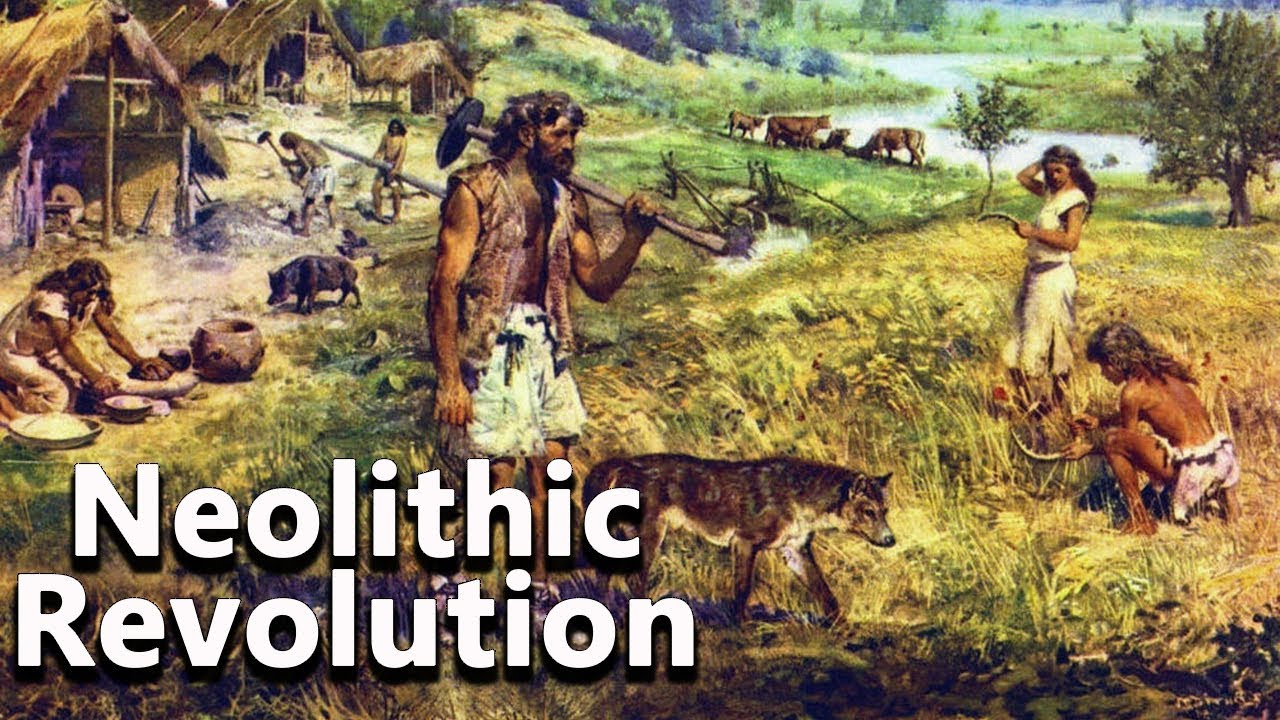
Around , human history took a massive turn. People moved away from hunting wild animals and gathering plants to settle down, farm the land, and raise livestock. Known as the Neolithic Revolution, this transition completely changed how human societies worked. First defined in the by Australian archaeologist V. Gordon Childe, this era laid the ground rules for modern civilization. The shift was driven by several big factors: shifting global climates that reduced wild food, growing populations that needed more to eat, and early tool innovations that made farming possible alongside wild grains like wheat, barley, and rice.
In this chapter, you will understand:
- The environmental and social causes of the Neolithic Revolution.
- Early animal domestication and shifting cultivation systems.
- Technological milestones, including polished stone tools and the potter's wheel.
- Key archaeological sites across the Indian subcontinent.
Why this topic matters: Learning about early farming helps us understand how human communities built the foundations of trade, village governance, tool technology, and permanent housing that eventually birthed world civilizations.
Core Idea: Between and , humans shifted from a roaming lifestyle to established farming villages. This era introduced animal domestication, polished stone tools, pottery, long-distance trade, and ritual practices. While farming created steady food supplies, it also brought challenges like crop failures and disease risks from living close together.
Emergence of Early Agriculture and Livestock Management
Between and , early farming practices began taking root across key regions. A primary example of this early phase is seen at Mehrgarh, located in North-Western India. During these early stages, semi-nomadic groups built simple homes out of mud and grew crops like six-row barley, emmer, einkorn wheat, jujubes, ilanthai, and dates without using clay pottery yet.
Shifting Cultivation and Domestic Animals
Early farmers often used a system of shifting cultivation, farming a piece of land for a few harvests and then moving on when the soil lost its nutrients. At the same time, people began bringing wild animals into daily life to help with work and food supplies.
- Dogs were kept for protection and to help during hunts.
Work Animals and Pastoral Alternatives
Animals changed how work was done and provided a steady supply of resources for daily survival.
- Asses and oxen were trained as beasts of burden to carry heavy loads.
- Cattle provided fresh milk for daily diets.
- Sheep and goats supplied meat, milk, and wool.
- Some groups preferred a nomadic pastoral lifestyle, moving herds across grasslands instead of building permanent farms.
Growth of Settled Village Communities and Trade Networks
From to , settled village life became well established. Communities in Mehrgarh and surrounding areas began firing pottery, making decorative items, and trading with distant neighbors for raw materials.

- Settlers traded across long distances for rare goods like lapis lazuli brought all the way from Badakhshan.
Village Structure and Social Governance
Because crops required constant care, roaming was no longer practical. People constructed durable homes out of mud and stone, expanding small camps into organized villages, walled towns, and lake-side wooden platform dwellings.
- Councils of elders helped maintain order using unwritten customary laws.
- Labor split into focused jobs for farmers, miners, and tradespeople.
- Early watercraft, like dugouts made by burning out log centers, were built for river travel.
- Craftspeople produced terracotta figurines and glazed faience beads.
Advancements in Tools, Technology, and Cultural Beliefs
Tool-making evolved rapidly during this era, allowing communities to clear land and process harvests far more efficiently than before.
- Farmers crafted polished stone tools, including sharp sickle blades for harvesting and grinding stones for processing harvested grain.
The Potter's Wheel and Artistic Expression
Technological improvements radically altered transport methods and craft work across regions.
Examples of refined stone tools and decorated ceramic vessels used by early agriculturalists. - The invention of the wheel made transporting goods on heavy carts much easier.
- Adapting the wheel into the potter's wheel allowed artisans to shape smooth, balanced earthen jars quickly.
- Artists decorated walls with painted scenes of wildlife, hunting, and community dances.
- Spiritual practices grew around structured burials, ancestor worship, and reverence for natural elements like Mother Earth, Rain, and the Sun.
Quick Revision Capsule
Key Indian subcontinent sites and their archaeological discoveries:
| Archaeological Site | Geographic Region | Major Findings & Evidence |
|---|---|---|
| Chopani-Mando | Belan Valley | Early wild rice collection and transitional foraging evidence |
| Koldihawa | Belan Valley | Early evidence for domesticated rice cultivation |
| Burzahom & Gufkral | Kashmir Valley | Cultivation of lentils, masur, peas, wheat, and barley |
| Senuwar | Bihar | Diverse mix of millets, pulses, and grain crops |
| South Indian Sites | Peninsular India | Cultivation of finger millet (ragi), horse gram, green gram, and date palms |
Summary
The Neolithic Revolution was a defining milestone in human history. By shifting from hunting and gathering to organized farming, communities secured reliable food surpluses that made permanent settlements possible. This transition powered the eventual rise of great ancient civilizations in Egypt, Mesopotamia, China, and the Indus and Ganges valleys. However, living together in dense villages also created new difficulties—such as vulnerability to crop famines, sanitation concerns, agricultural pests, and diseases passed between livestock and humans.
Quick Revision Notes
Core takeaways for quick review:
- (i) The transition to agriculture was named the Neolithic Revolution by archaeologist V. Gordon Childe.
- (ii) Mehrgarh serves as a vital early site showing mud homes, early crops, and animal domestication.
- (iii) Key technological leaps included polished stone axes, sickles, long-distance trade, and the potter's wheel.
- (iv) Farming created surplus food for complex societies but also brought risks like crop failures and infectious diseases.
- Exam Tip: Remember the distinction between early sites: Chopani-Mando shows wild rice gathering, whereas Koldihawa provides early proof of domesticated rice. Also note that Mehrgarh's earliest layers had farming and livestock without pottery present.
Frequently Asked Questions (FAQ)
Q1: What was the main catalyst for the Neolithic Revolution?
A1: A mix of climate changes after the Ice Age, growing human populations needing more food, and technological readiness with wild seed varieties led people to start farming.Q2: How did animal domestication support early farming villages?
A2: Domesticated animals provided labour for heavy work (oxen and asses), security and hunting help (dogs), and consistent food supplies like milk, meat, and wool (cattle, sheep, goats).Q3: What negative side effects came with early agricultural life?
A3: Dense village living and animal contact increased disease risks, sanitation troubles, pest infestations, and reliance on single crops that could fail during droughts.