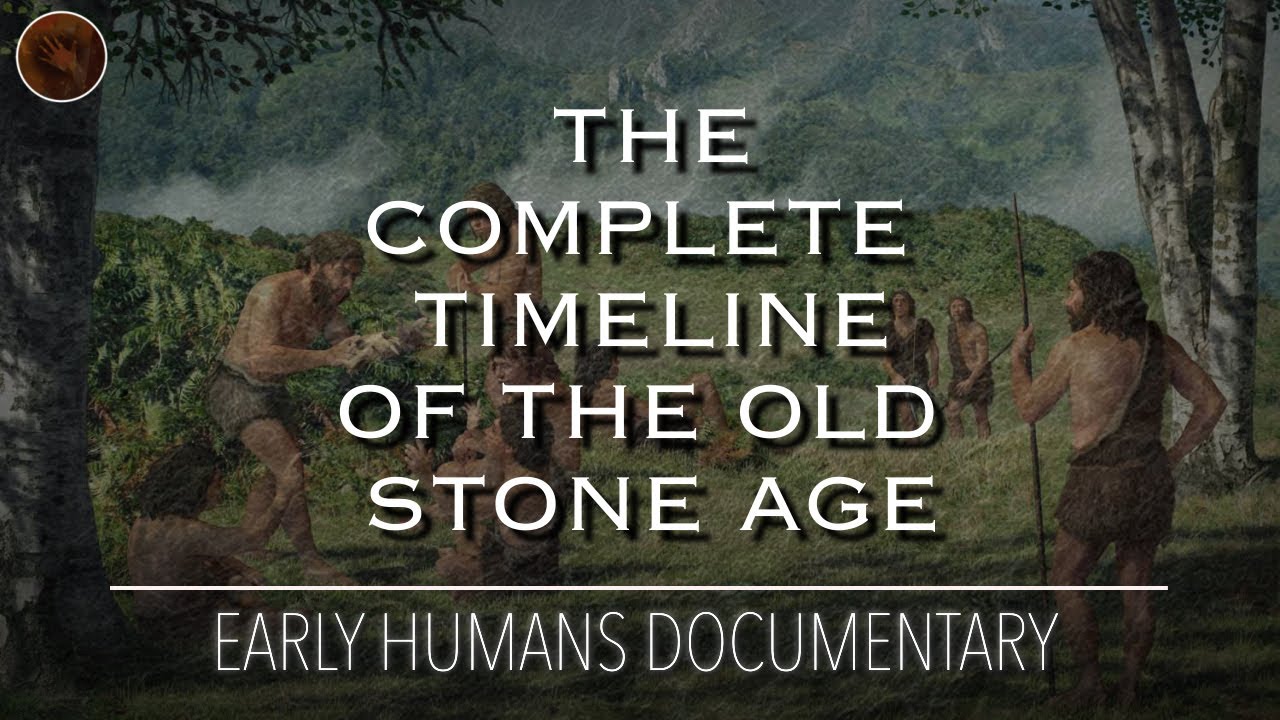
Human history spans millions of years, moving from simple stone tools to organized towns and cities. To make sense of this huge timeline, historians break it down into stages based on how people lived, what tools they made, and whether they left behind written records. By studying these early stages, we can see how humans moved from wandering around to gather food to growing crops, working with metals, and forming settled societies. Exploring these early eras gives us a clear look at how human culture and technology first took shape across the world and in India.
In this chapter, you will understand:
- The core differences between the Prehistoric and Historic periods based on written evidence.
- The step-by-step technological progress through the Stone, Chalcolithic, and Iron Ages.
- The three distinct phases of the Paleolithic Age in India and their specialized tool types.
- Pioneering archaeological discoveries that built our understanding of Indian prehistory.
Why this topic matters: Learning about early human history helps us see how farming, metalworking, and tool design transformed small nomadic groups into thriving ancient civilizations.
Core Idea: Human progress started with basic stone tools in the Paleolithic era, moved to farming in the Neolithic, and grew into settled, complex societies with the arrival of metalworking in the Chalcolithic and Iron Ages.
Prehistoric and Historic Periods: Divisions, Technological Stages, and Cultural Developments in Early Human History
The vast timeline of human existence is fundamentally categorized into two major segments: the Prehistoric Period and the Historic Period. This demarcation is based purely on the advent of written records, marking a pivotal moment in civilization.
Understanding the fundamental divide between these two eras requires looking at how we collect evidence from the past:
- (i) The Prehistoric Period encompasses the entire span of time before the invention of writing, meaning that all our knowledge about this age is derived exclusively from material evidence uncovered through meticulous archaeological excavations.
- (ii) Conversely, the Historic Period commences with the emergence of written documentation, allowing historians to glean insights from direct textual evidence alongside archaeological findings.
- (iii) The study of the prehistoric era, lacking written accounts, relies heavily on the analysis of artifacts, tools, dwelling sites, and fossil remains to reconstruct the story of early humanity.
The Stone Age: Earliest Phase of Human Development and Tool Technology
The Stone Age represents the most ancient phase of human technological development, characterized by the dominant use of stone as the primary raw material for tools and implements. This critical era is further divided into three progressive sub-periods, each reflecting advancements in human culture and survival strategies.

Paleolithic Period: The Epoch of Hunting and Gathering
The Paleolithic Period, or the Old Stone Age, marks the longest phase of the Stone Age, characterized by early humans leading a completely nomadic hunter-gatherer lifestyle. Their survival was intrinsically linked to hunting wild animals and collecting forest produce, relying on crude, unpolished stone tools for all tasks.
- (i) Defined by a subsistence strategy focused entirely on hunting animals and gathering natural resources like fruits, roots, and herbs.
- (ii) The primary technological hallmark was the use of basic, chipped stone tools, often heavy and rough, reflecting the earliest stages of human craftsmanship.
Mesolithic Period: The Transitional Era of Microliths and Emerging Food Practices
The Mesolithic Period served as a crucial transitional phase, where the core reliance on hunting and gathering persisted but was accompanied by the gradual, initial experimentation with small-scale food production. This era is technologically marked by the widespread use of microliths—small, highly refined stone tools.
- (a) Continuity of the hunter-gatherer economy alongside the refinement of hunting techniques and tool designs.
- (b) Significant development in stone tool technology with the characteristic emergence of microliths (tiny, geometric stone tools).
Neolithic Period: The Revolution of Agriculture and Food Production
The Neolithic Period, or the New Stone Age, signifies a revolutionary shift in human history, fundamentally defined by the beginning of plant cultivation (agriculture) and animal husbandry (domestication). This monumental change transitioned human societies from a mobile, food-collecting economy to a settled, food-producing economy.
- (i) The invention of agriculture, leading to permanent or semi-permanent settlements and the development of the earliest villages.
- (ii) Technological advancement includes the use of polished stone tools, which were far more effective than the rough tools of the preceding era.
The Chalcolithic Age (Copper Age): The Dawn of Metal Use and Early Villages
Following the dominance of stone, humanity entered the Chalcolithic Age, often referred to as the Copper Age, a pivotal transitional period where copper metallurgy was first introduced and used alongside traditional stone tools. This age catalyzed the growth of settled life, forming the basis for subsequent urban civilizations.
Defining Chalcolithic Culture: Metallurgy and Agro-Pastoralism
The Chalcolithic culture is primarily characterized by the initial, pioneering use of the metal copper, coexisting with stone implements. Economically, these societies were based on agro-pastoralism, meaning they combined farming with animal rearing for sustenance, fostering the first complex village structures.

Early copper tools coexisting with polished stone implements in Chalcolithic farming communities - (i) Technological Fusion: The simultaneous use of copper (the first metal) and stone tools.
- (ii) Economic Base: The development of stable agro-pastoral economies, marking a significant step beyond simple subsistence.
The Rise of Early Urban Settlements: Precursor to the Indus Valley Civilization
In various regions, the technological and economic sophistication of the Chalcolithic Age led to remarkable progress, culminating in the rise of early urban settlements. In the Indian subcontinent, this trajectory reached its peak with the flourishing of the highly sophisticated and organized Indus Valley Civilization along the Indus River and its tributaries.
- (a) Advanced technological and economic growth surpassing simple village life.
- (b) The ultimate expression of this advancement in India was the Indus Valley Civilization, one of the world's great Bronze Age urban societies.
The Iron Age: Widespread Use of Ferrous Metal and Societal Complexity
Succeeding the Chalcolithic Age, the Iron Age is defined by the widespread adoption and mastery of ferrous metallurgy. The introduction of iron tools and weapons profoundly impacted daily life, leading to transformative advancements in virtually every sector.
Impact of Iron Technology on Society, Agriculture, and Warfare
The superior strength and abundance of iron compared to copper revolutionized ancient societies. Its use led to significant advancements in agriculture, with better ploughshares, improved craftsmanship, and drastically changed the dynamics of warfare with stronger weapons. This technological shift facilitated larger-scale deforestation and cultivation.
- (i) Technological Catalyst: Iron tools facilitated major improvements in agricultural productivity and craftsmanship.
- (ii) Social and Political Shift: The era witnessed the formation of more complex social structures and the establishment of powerful political entities (like early kingdoms or Mahajanapadas), often marking the true beginning of the Historic Period with extensive written records.
Quick Revision Capsule: Prehistoric Ages at a Glance
This table summarizes key characteristics, tools, and lifestyle advancements across early human technological eras:
| Age / Period | Key Tools & Technology | Lifestyle & Subsistence |
|---|---|---|
| Paleolithic Age | Crude stone core tools, hand-axes, cleavers, flake tools, burins | Nomadic hunter-gatherers dwelling in caves and rock shelters |
| Mesolithic Age | Microliths (tiny, geometric refined stone tools) | Hunting, gathering, and early trials in small-scale food production |
| Neolithic Age | Polished stone tools, grinding stones | Settled village life driven by agriculture and animal domestication |
| Chalcolithic Age | Copper tools used alongside stone implements | Agro-pastoral economy with early village and urban networks |
| Iron Age | Ferrous metal tools, iron ploughshares, durable weapons | Advanced farming, large kingdoms (Mahajanapadas), complex social order |
Summary
Human progress spans a continuous trajectory starting from basic stone-chipping techniques to complex metalworking and settled state formations. The Paleolithic period introduced foundational stone tools during the Ice Age, which evolved into refined microliths in the Mesolithic and brought about agricultural villages in the Neolithic. As humans mastered metallurgy—first with copper during the Chalcolithic Age and later with iron—economic production exploded. This enabled larger populations, clearance of forests, growth of urban centers like the Indus Valley Civilization, and eventually the rise of historic kingdoms with written documentation.
Quick Revision Points for Students
Key facts to remember for examinations:
- (i) Prehistory relies strictly on unwritten archaeological artifacts, whereas History starts with written records.
- (ii) The three Paleolithic phases are Lower (core tools), Middle (flake tools), and Upper (blades and burins).
- (iii) Copper was the first metal used by humans during the Chalcolithic Age.
- (iv) Robert Bruce Foote is recognized as the father of Indian prehistory after discovering a Paleolithic hand axe in 1863 A.D.
- Exam Tip: Remember that the shift from nomadic life to settled life happened in the Neolithic Age with the arrival of farming. Also, note the exact tool types for each Paleolithic phase, as examiners frequently ask to match tool types with their respective sub-periods.
Frequently Asked Questions (FAQ)
Q1: What is the main difference between the Prehistoric and Historic periods?
A1: The main difference is the presence of written records. The Prehistoric period has no written records and relies entirely on archaeological items like stone tools and fossils. The Historic period begins when written evidence becomes available to document events.Q2: Which was the first metal discovered and used by early humans?
A2: Copper was the first metal discovered and used by early humans. Its introduction marks the start of the Chalcolithic Age, where copper tools were used together with traditional stone implements.Q3: Who is known as the father of Indian prehistory and why?
A3: Sir Robert Bruce Foote is known as the father of Indian prehistory. In 1863 A.D., he discovered the first prehistoric Paleolithic tool (a hand axe) at Pallavaram near Chennai, proving that early humans lived in ancient India.