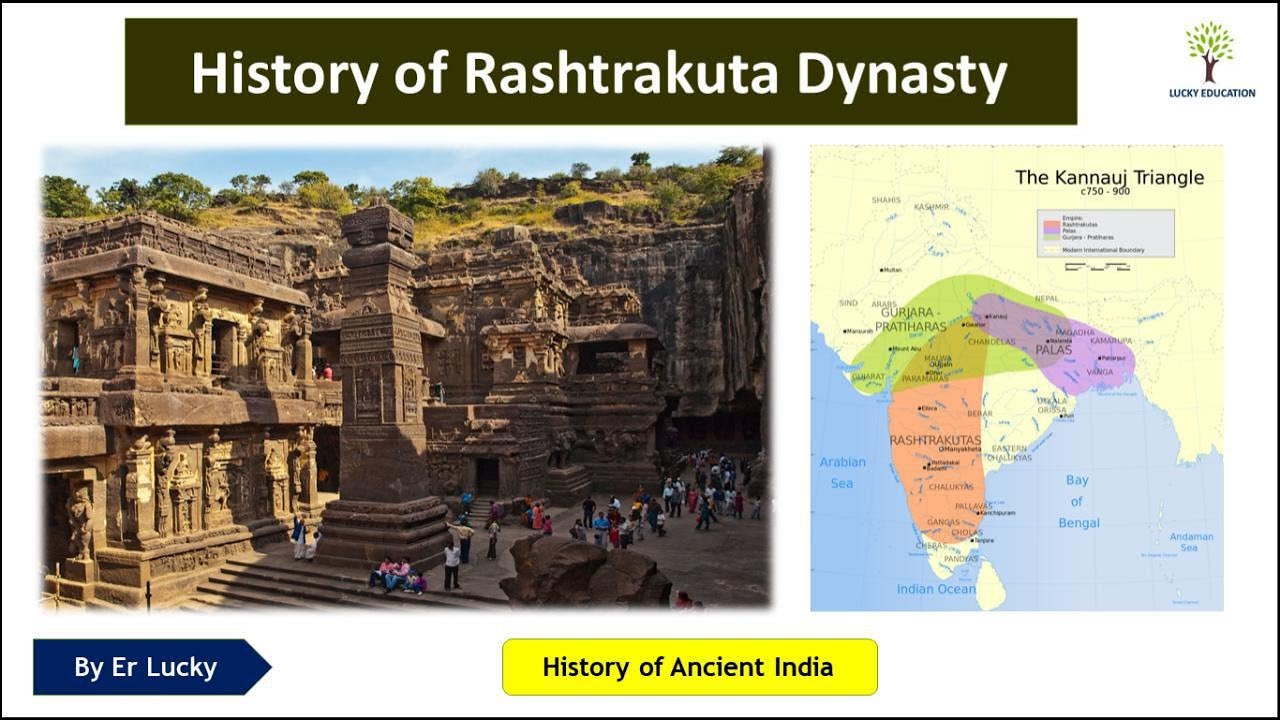
The administrative structure of the Rashtrakuta Empire offers clear insights into medieval Indian governance across South Asia. Governing an expanse estimated at seven and a half lakh villages, this empire combined political ideals from the Gupta Empire and early Chalukyas with a growing feudatory system. Between the 8th and 10th centuries CE, the Rashtrakuta dynasty established stability across the Deccan by pairing strong monarchical power with structured regional governance. Understanding how revenue flowed from local farms up to the royal court reveals how large medieval realms maintained authority across diverse regions.
In this chapter, you will understand:
- The role and powers of the Rashtrakuta monarch at the head of civil and military governance.
- The administrative hierarchy dividing the realm into Rashtra, Vishaya, and Bhukti.
- The autonomous feudatory network and its military and financial duties to the crown.
- Grassroots administration managed by village headmen, local elders, and trade guilds.
Why this topic matters: It highlights how medieval South Indian dynasties balanced strong royal control with local autonomy, serving as a primary model for land revenue and military organization in Indian history examinations.
Core Idea: The Rashtrakuta administrative machinery depended on a royal central executive linked to provincial governors and vassal chiefs. Power extended downward to organized village councils that managed daily public works, tax collection, and civic order. Over time, expanding land grants and autonomous feudatories shaped a distinct feudal governance model across the Deccan.
Central Authority and Imperial Framework (c. 753–982 CE)
The Rashtrakuta rulers established a vast kingdom across South and Central India. Their administrative model blended traditions from the Gupta Empire, Northern governance under Harsha, and earlier Chalukya practices in the Deccan region.
The Imperial Monarchy and Court
At the center of all governance sat the King, who exercised supreme executive, judicial, and military power across the empire.
- (i) The sovereign served as the zenith of civil administration and held full command as commander-in-chief of all armed forces to preserve public order.
- (ii) Royal authority required direct obedience from ministers, provincial governors, administrative officers, and semi-autonomous vassal chiefs.
- (iii)
Dynastic Succession and Internal Rivalries
Because clear succession laws were not formally codified, royal transitions often led to internal disputes among imperial princes.
- Rulers like Dhruva and Govinda IV came to power by deposing older brothers during succession conflicts.
- Ministers and high military officers often played decisive roles during contested accessions.
- Queen consorts and royal princesses occasionally managed administrative duties or governed specific territories.
- Young heirs governed smaller provinces to build administrative experience before taking the throne.
Territorial Divisions and Regional Governance
To collect taxes and enforce royal decrees efficiently, the empire organized its directly ruled lands into systematic administrative units.

- Directly administered territories were structured from top to bottom into provinces, districts, and local groupings.
Provincial and District Administration
Specialized imperial officers managed each administrative tier to balance central revenue needs with local enforcement.
- Rashtra formed the largest administrative unit, equivalent to a modern province, governed directly by a royal appointee termed the Rashtrapati.
- Vishaya operated as a district unit under the supervision of a Visayapati who managed local revenue and policing.
- Bhukti constituted a smaller subdivision comprising a cluster of villages managed by localized administrative officers.
- Governors worked with councils such as the Rashtramahattaras and Vishayamahattaras to collect land taxes and maintain public order. High-ranking officers were frequently compensated through rent-free land grants rather than cash salaries.
Vassal Chiefs and the Feudatory Network
A central feature of Rashtrakuta governance was its reliance on powerful vassal families who controlled broad frontier and interior territories.
- Vassal chiefs supplied regiments to imperial armies and maintained peace within their assigned domains.
Autonomy and Obligations of Feudatory Rulers
Feudatories operated with internal freedom but remained bound to the central throne through formal duties.
Historical land grant inscription detailing privileges awarded to local feudatories. - Chiefs like those of the Ganga Kingdom provided vital troops that expanded imperial borders into neighboring regions.
- Prominent feudatory regions were identified by their official village counts, such as Gangavadi 96000, Banavasi 12000, Belvola 300, Purigere 300, Bagenad 70, and Kisukad 70.
- Feudatories paid regular annual tribute, attended royal court ceremonies, and sent military forces when summoned by the King.
- Marriage alliances frequently linked powerful feudatory families directly with the Rashtrakuta royal lineage to prevent rebellions.
Quick Revision Capsule: Rashtrakuta Governance Tiers
Key administrative tiers, responsible authorities, and primary functions across the empire:
| Administrative Unit | Governing Official / Body | Primary Administrative Role |
|---|---|---|
| Central Court | Monarch & Royal Ministers | Overall imperial policy, supreme judicial decisions, and command of armed forces. |
| Rashtra (Province) | Rashtrapati | Provincial revenue collection, maintaining regional garrisons, and enforcing imperial decrees. |
| Vishaya (District) | Visayapati & Vishayamahattaras | District law enforcement, land surveys, and local tax oversight. |
| Feudatory Domains | Vassal Chiefs (e.g., Ganga chiefs) | Autonomous local rule, military support to the central army, and annual tribute collection. |
| Grama (Village) | Village Headman & Local Committees | Grassroots tax collection, maintenance of roads and irrigation tanks, and local dispute resolution. |
Summary
The Rashtrakuta administrative system represents a vital chapter in medieval Deccan history. By combining centralized royal executive power with flexible provincial divisions and autonomous feudatory domains, the dynasty built a resilient political framework. Although the King held supreme authority, widespread land grants, hereditary administrative roles, and powerful vassal chiefs decentralized practical power over time. Understanding this balance—from the central court down to village committees—helps illustrate how medieval Indian states managed land revenue, military defense, and local civic needs.
Quick Revision Points
Core takeaways for swift examination review:
- (i) The King held supreme executive, military, and judicial authority across the empire.
- (ii) Directly ruled territories were organized into Rashtra (provinces), Vishaya (districts), and Bhukti (local units).
- (iii) High-ranking civil and military officers were commonly compensated through rent-free land grants.
- (iv) Feudatory territories were recognized by fixed village counts, such as Gangavadi 96000 and Banavasi 12000.
- Exam Tip: Pay special attention to administrative terminology like Rashtrapati, Visayapati, and grama-mahajana. Questions frequently test the multi-tiered territorial divisions and the structural role of feudatory land grants in medieval Deccan governance.
Frequently Asked Questions (FAQ)
Q1: What were the main territorial divisions in the Rashtrakuta Empire?
A1: The empire was split into three main tiers: the Rashtra (province), managed by a Rashtrapati; the Vishaya (district), overseen by a Visayapati; and the Bhukti (smaller sub-district unit), which managed groups of villages.Q2: How was local administration structured at the village level?
A2: Villages were managed by a hereditary village headman and an accountant, assisted by local elders known as grama-mahajana. In regions like Karnataka, village committees maintained public roads, water tanks, schools, and temples using a share of local tax revenue.Q3: What role did feudatories play in the Rashtrakuta military and political framework?
A3: Feudatory chiefs governed large territories autonomously. In exchange, they supplied military units during wars, paid annual tribute, attended royal court ceremonies, and helped defend imperial borders.