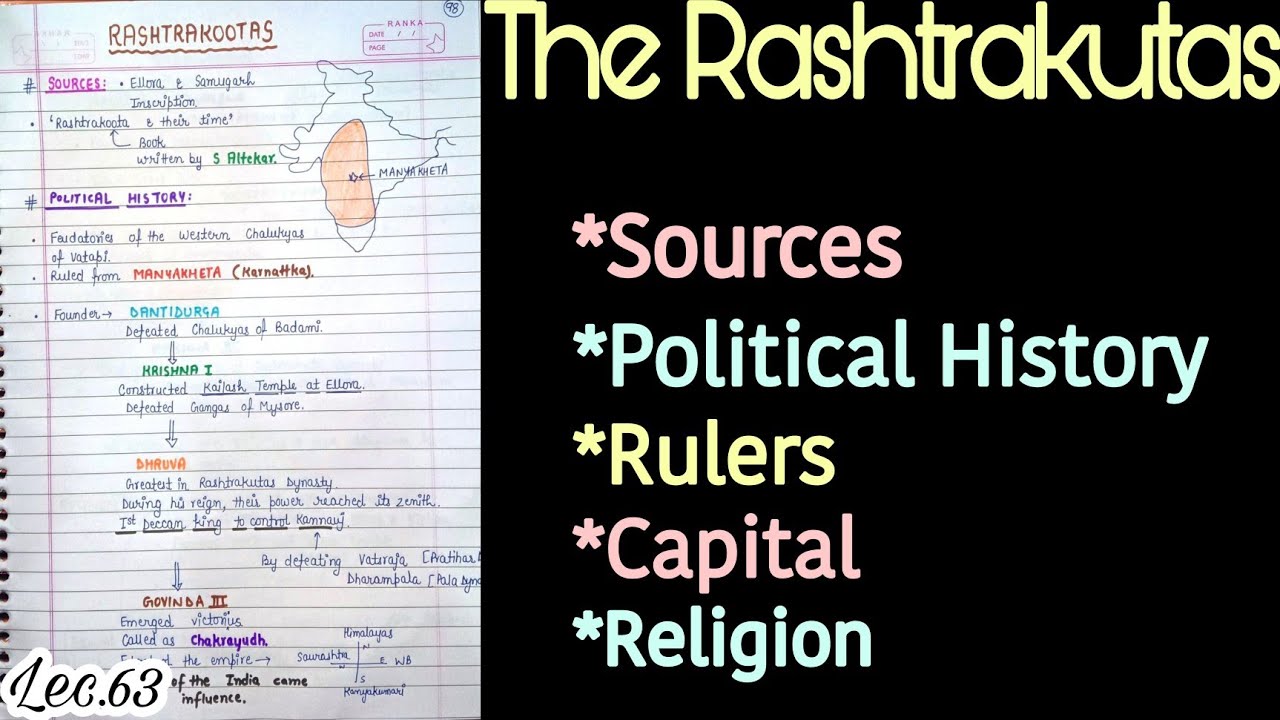
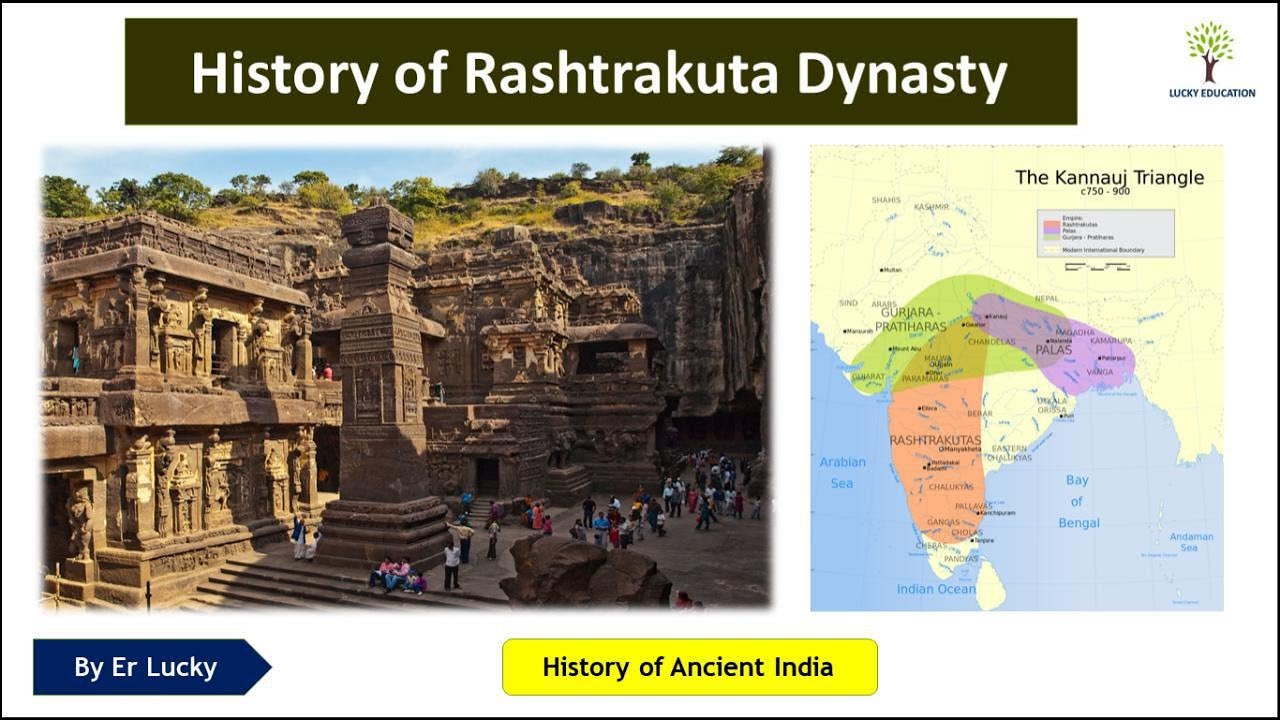
The story of the Rashtrakuta dynasty, a dominant imperial power in Deccan India, is essential reading for anyone studying early medieval history. The name literally means "chief of a region", pointing to their beginnings as local administrative officials under the Chalukyas. Starting in the , they broke away from their overlords to build a massive empire. Their strategic location allowed them to control profitable maritime trade routes along the western coast, while military leaders like Dantidurga and Govinda III turned the dynasty into a major political force that shaped Indian history for centuries.
In this chapter, you will understand:
- How a provincial administrative role transformed into an imperial dynasty.
- The geographic, economic, and trade advantages that fueled Rashtrakuta expansion.
- Key achievements of major rulers including Dantidurga, Krishnaraja I, and Govinda III.
- The cultural contributions, religious patronage, and lasting administrative legacy of the empire.
Why this topic matters: It highlights the dynamic shift of power in the Deccan, showing how administrative control over trade routes and agricultural lands could build an empire capable of challenging major powers across northern and southern India.
Core Idea: Rising from regional administrative roles under the Chalukyas, the Rashtrakutas built a powerful empire in the Deccan through military skill and trade wealth. Over two centuries, they shaped regional politics, patronized art and religion, and left behind an enduring administrative and cultural legacy.
The Rashtrakutas: Unraveling Nomenclature, Provincial Origins, and Imperial Rise (8th Century CE)
Understanding the rise of the Rashtrakutas requires looking at their administrative titles and early provincial duties before they established their independent साम्राज्य (empire).
Debates on Rashtrakuta Lineage Claims and Deep Deccan Roots
Historical records and regional inscriptions offer valuable insights into how these administrative officers gradually amassed power across the central peninsula.
Assertion of Lineage from Satyaki and Tungas
Dynasties in early medieval India often linked their family lines to legendary heroes to establish legitimacy, and the Rashtrakutas followed the same tradition.
- The term Rashtrakuta comes from the Sanskrit words Rashtra (meaning territory or division) and Kuta (meaning leader or head). It originally designated a provincial administrator appointed by a sovereign ruler.
- Inscriptions like the Naravana plates issued by Chalukya Vikramaditya II mention a official named Rashtrakuta Govindaraja serving as a vijnapati (petitioner), confirming their early administrative standing.
- Historian Romila Thapar noted that Dantidurga, who eventually founded the imperial line, began his career as a high-ranking officer serving the Chalukyas of Badami before carving out his own kingdom.
Geopolitical Dominance and Economic Foundation for Expansion
The rise of the empire relied heavily on favorable geography, rich agricultural lands, and command over lucrative trade routes.

- The central position of the Deccan enabled Rashtrakuta armies to march north into the Gangetic plains or south into Tamil territories whenever political opportunities arose.
Legacy of Constant Warfare and Great Imperial Rivals
Economic stability provided the resources needed to sustain large standing armies during prolonged campaigns against competing regional powers.
- Rich agricultural yields from inland river valleys guaranteed steady state revenue and food supplies for military campaigns.
- Dominance over the western seaboard allowed the state to control maritime trade with West Asia and Arab merchants, bringing in significant wealth.
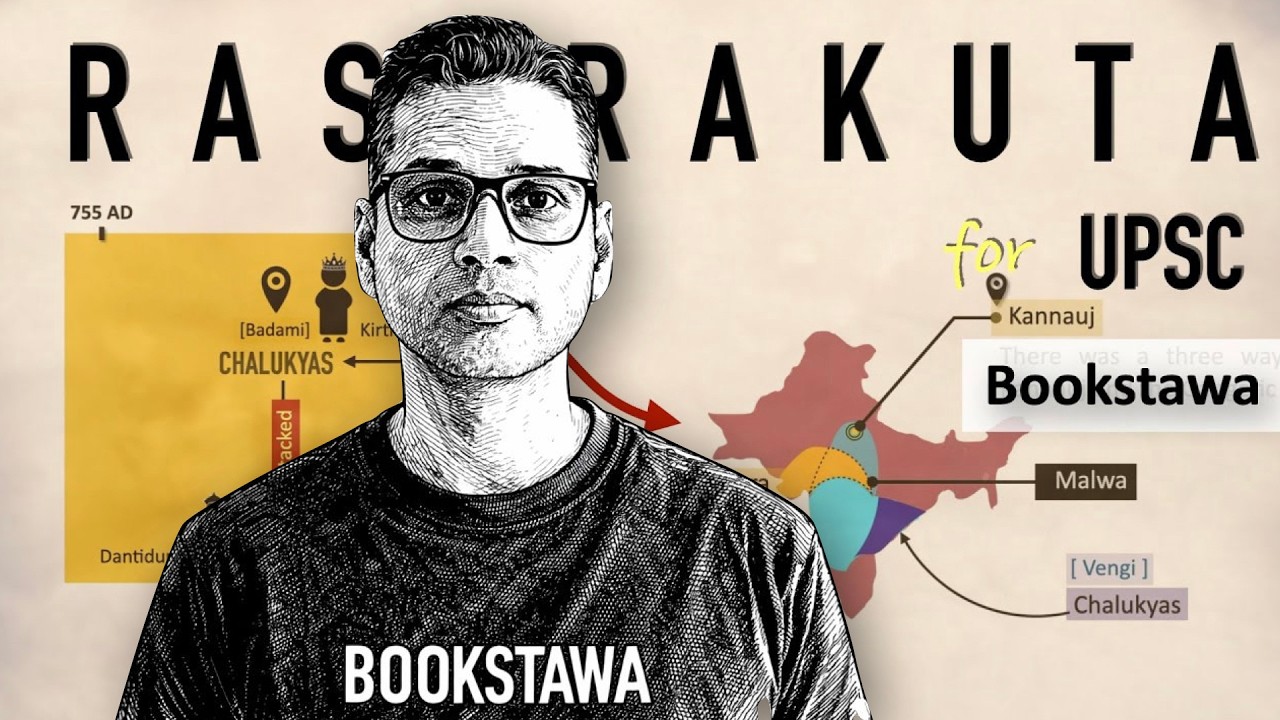
- Their central location meant they constantly fought major rivals, including the Gurjara-Pratiharas in the north, the Eastern Chalukyas of Vengi in the east, and the Pallavas, Pandyas, and Cholas in the south.
- Rulers proudly adopted the hereditary title Lattalura-puravareshvara (lord of the city of Lattalura), pointing to modern Latur as their original ancestral home.
The Imperial Foundation: Dantidurga and the Early Dynastic Line
The transformation from a regional chieftaincy into a sovereign empire took shape under the bold leadership of Dantidurga during the mid-8th century.
- Early members of the family used the Palidhvaja banner and the Garuda-lanchhana emblem as symbols of authority before achieving full sovereignty.
Dantidurga: From Subordinate to Emperor (c. 735 – 756 CE)
Dantidurga established his administrative center at Manyakheta (modern Malkhed) and formally declared independence through impressive military victories.
Epigraphic records documenting the early conquests and royal titles of Dantidurga. - He adopted royal titles such as Prithivivallabha, Maharajadhiraja, Parameshvara, and Paramabhattaraka to signal his independent status.
- He also used the distinctive epithet Khagavaloka (one whose gaze is as sharp as a sword edge) to reflect his military reputation.
- After capturing Kanchi, he formed a political alliance with Nandivarman Pallavamalla by marrying his daughter Reva, securing his southern border.
- His uncle Krishnaraja I took the throne around , defeated Rahappa, and expanded control across modern Maharashtra, Karnataka, and Andhra Pradesh.
Quick Revision Capsule: Key Rashtrakuta Monarchs and Titles
This overview summarizes the key rulers, their reign periods, titles, and major contributions for quick review:
| Monarch | Prominent Regal Titles | Major Historical Contribution |
|---|---|---|
| Dantidurga | Prithivivallabha, Maharajadhiraja, Khagavaloka | Founded the imperial line; defeated the Badami Chalukyas; established the capital at Manyakheta. |
| Krishnaraja I | Shubhatunga, Akalavarsha, Rajadhiraja Parameshvara | Consolidated Deccan holdings; defeated Rahappa; commissioned the famous Kailashnath Temple at Ellora. |
| Dhruva Dharavarsha | Nirupama, Kalivallabha, Dharavarsha, Shrivallabha | Initiated aggressive northern campaigns; defeated rival kings in the Gangetic Doab. |
| Govinda III | Jagattunga, Kirti-Narayana, Tribhuvanadhavala | Expanded the empire to its maximum territorial extent from the Himalayas to Kanyakumari. |
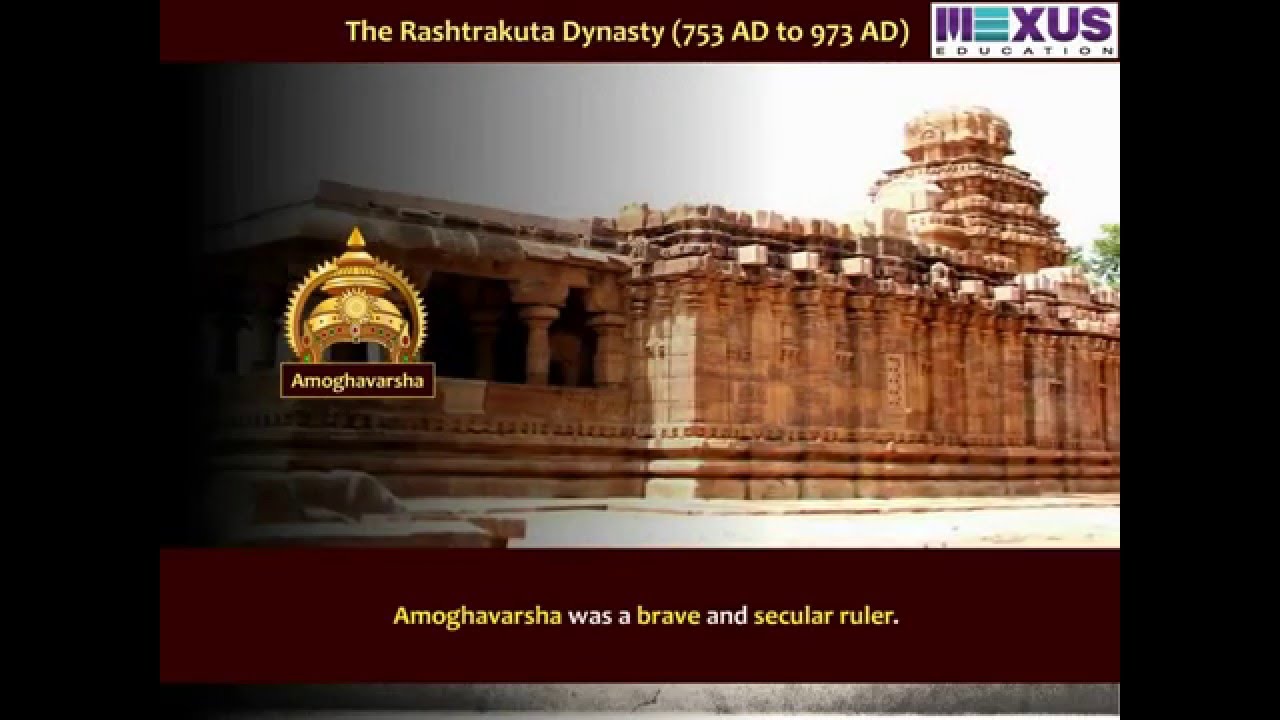
| Amoghavarsha I | Nripatunga, Atishayadhavala, Vira-Narayana | Ruled for 68 years; patronized Jainism and literature; authored the Kannada literary work Kavirajamarga. |
Summary
The Rashtrakuta dynasty represents a major turning point in early medieval Indian history. Emerging from local administrative roles under the Badami Chalukyas, they built a powerful empire that dominated the Deccan for over two centuries. Through strong leadership, clever political marriages, and control over profitable coastal trade routes, rulers like Dantidurga, Krishnaraja I, Dhruva, and Govinda III successfully challenged rival dynasties across the subcontinent. Beyond military conquest, monarchs like Amoghavarsha I made lasting contributions to literature, architecture, and religious tolerance, leaving behind a rich legacy that continued to influence regional governance long after their fall.
Quick Revision Points for Students
Focus on these core facts when preparing for history examinations:
- (i) The name Rashtrakuta refers to a provincial administrative head (Rashtra + Kuta) under earlier ruling dynasties.
- (ii) Historical records, including the Lattalura-puravareshvara title, point to a clear origin in the Deccan, specifically around modern Latur.
- (iii) Dantidurga founded the independent imperial line around after overthrowing Chalukyan authority.
- (iv) Amoghavarsha I enjoyed one of the longest reigns in Indian history (), earning fame for his cultural contributions and support of Jainism.
- Exam Tip: Remember the distinction between military consolidators like Govinda III and cultural patrons like Amoghavarsha I. Questions frequently focus on trade links with Arab merchants, architectural achievements like the Ellora rock-cut temples, and the administrative meaning of the name Rashtrakuta.
Frequently Asked Questions (FAQ)
Q1: What does the term "Rashtrakuta" mean, and what were their origins?
A1: The term combines "Rashtra" (territory) and "Kuta" (chief or leader), meaning the head of a administrative region. They originally served as provincial officials under the Chalukyas of Badami before declaring independence in the 8th century CE under Dantidurga.Q2: Who was the most powerful military conqueror of the Rashtrakuta Dynasty?
A2: Govinda III (793–814 CE) is widely considered their greatest military strategist. He led successful campaigns into northern India, Malwa, and Kalinga, while also defeating southern powers like the Cholas, Pandyas, and Kanchi Pallavas.Q3: Why is the reign of Amoghavarsha I significant?
A3: Amoghavarsha I ruled for 68 years (814–878 CE) and prioritized peace, literature, and art over aggressive conquest. A devout follower of Jainism, he built the magnificent capital of Manyakheta and wrote the Kavirajamarga, the earliest available work on rhetoric in the Kannada language.