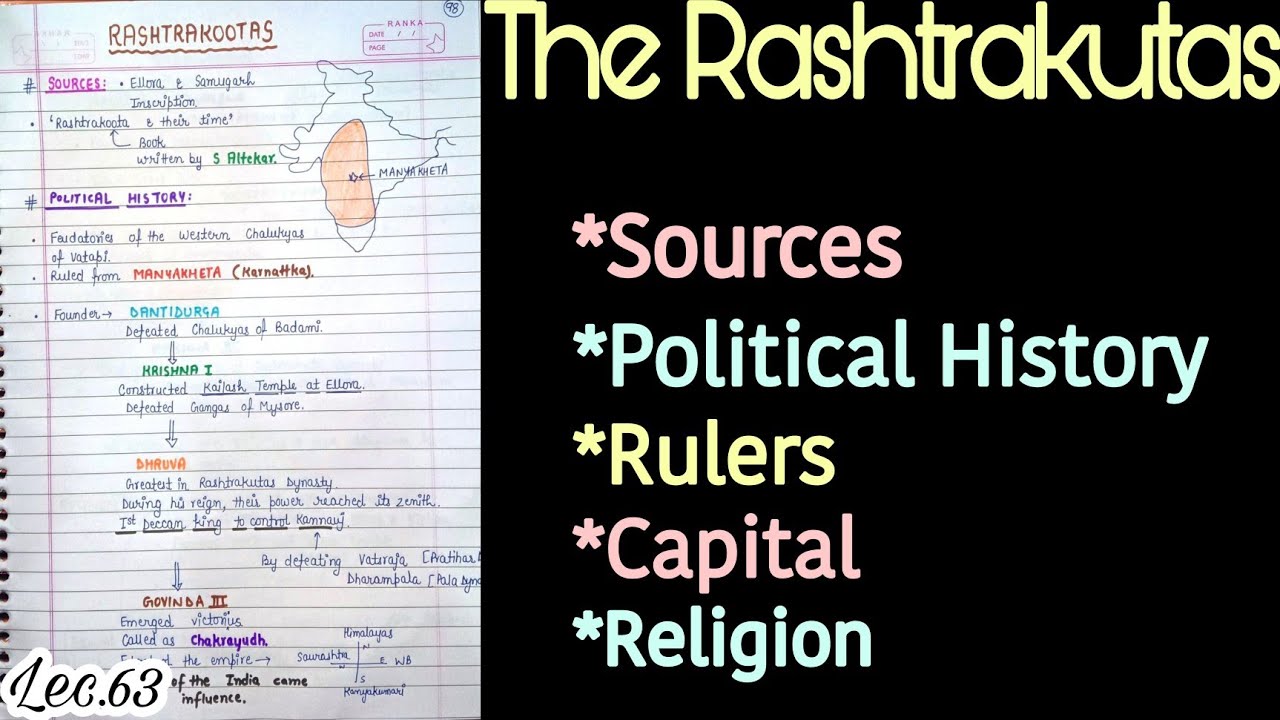
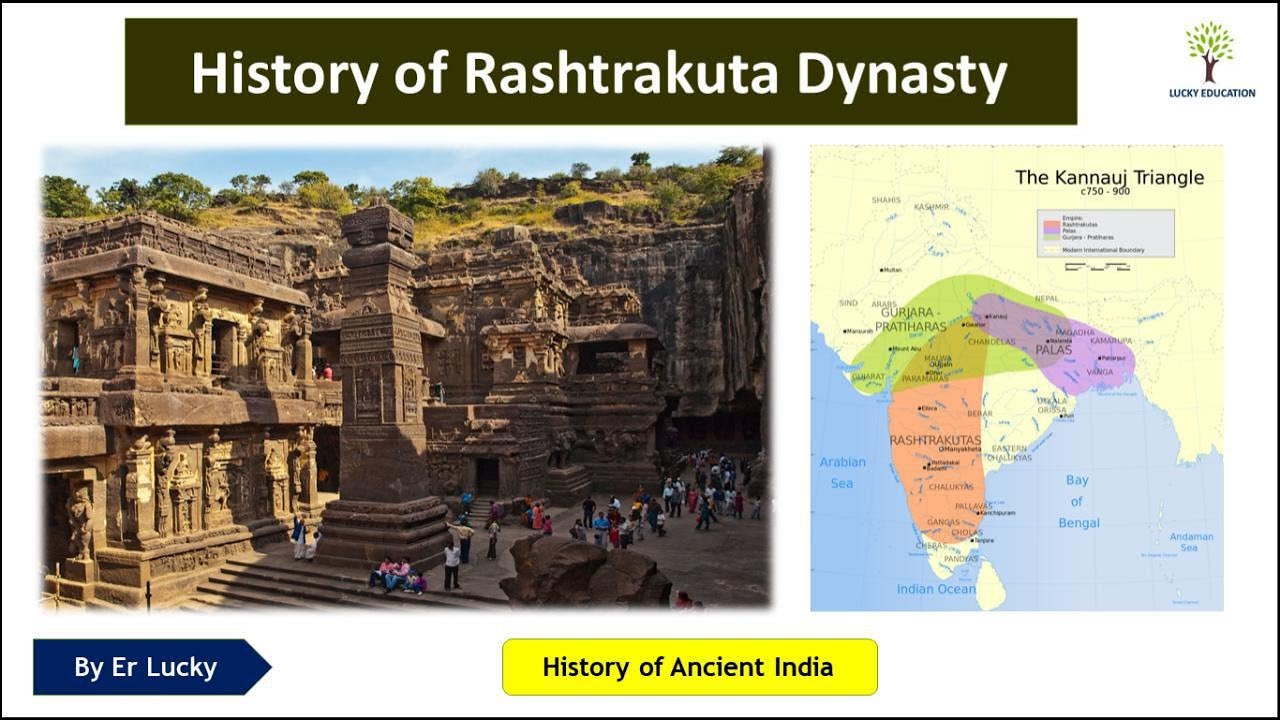
This detailed historical account explores the Rashtrakuta Dynasty's succession struggles and military campaigns, focusing on pivotal rulers like Krishna II, Indra III, and Krishna III. Students and history enthusiasts preparing for competitive exams can gain valuable insights into the internal rebellions and external wars that ultimately led to the decline of this formidable Deccan power, spanning the period from up to . Understanding how this ruling family expanded its influence across central and southern India gives us a clear picture of medieval Indian politics, army strategy, and how internal family rivalries could destabilize even the strongest kingdoms.
In this chapter, you will understand:
- The challenging accession and foreign campaigns of Krishna II
- The military revival and northern conquests under Indra III
- The internal feudatory rebellions during the rule of Govinda IV
- The peak expansions under Krishna III and the eventual collapse of the empire
Why this topic matters: It highlights the administrative structure, military expansion, and fragile internal politics of medieval Deccan empires, serving as a core section for history exams and general studies syllabus.
Core Idea: The later Rashtrakuta period was a turbulent era marked by alternating phases of imperial glory and rapid internal decay. While strong monarchs like Indra III and Krishna III pushed imperial boundaries from Kanauj to Rameshwaram, internal palace coups and rising feudatory powers ultimately caused the dynasty's sudden fall in 972 CE.
Major Rebellions and the Challenging Accession of Krishna II to the Rashtrakuta Throne (Post-879 CE)
The long reign of Amoghavarsha I was marked by numerous internal conflicts and widespread dissent across the vast Rashtrakuta dominion. The stability of the empire was constantly threatened by local uprisings, setting a difficult stage for the next sovereign.
Managing such a huge kingdom proved tough as central control began to slip near the end of the ninth century.
- (i) The predecessor's vast kingdom experienced continuous internal strife, suggesting a weakening central power that struggled to control its extensive territories and regional chiefs.
- (ii) Following this turbulent period, Krishna II, the son of the deceased ruler, took the throne around , inheriting a kingdom burdened by deep domestic unrest.
- (iii) Krishna II assumed the royal titles of Akalavarsha and Shubhatunga, honorifics meant to signal his hope for a long, prosperous, and stable rule.
Krishna II's Struggles and Foreign Campaigns: Akalavarsha's Turbulent Reign
Despite holding grand titles, Krishna II faced heavy obstacles while consolidating power, spending most of his energy suppressing local revolts and fighting unsuccessful foreign wars.
Success in Terminating the Lata Viceroyalty
One of the most significant achievements of Krishna II’s early reign was ending the semi-independent Lata viceroyalty in the western region.
- (i) The dismantling of the Lata viceroyalty showed Krishna II's firm attempt to assert direct rule over semi-autonomous borderlands.
- (ii) This strategic decision helped restore central administration control over important trade links along the coast.
Disgrace and Defeat Against Vengi and the Cholas
However, Krishna II's attempt to expand into neighboring lands brought him into conflict with the Eastern Chalukyas of Vengi and the rising Chola power, leading to severe setbacks.
- (a) His military marches into the Vengi territory failed, wasting vital resources and lowering imperial prestige.
- (b) Battles against the ascending Chola line ended in major defeats that weakened the authority of the Rashtrakuta monarch.
- (c) These military losses were so damaging that historical records suggest Krishna II suffered a period of temporary exile or forced withdrawal from his capital.
Indra III Restores Rashtrakuta Glory: The Conquest of Kanauj and Imperial Revival
The grandson of Amoghavarsha I, named Indra III, proved to be an outstanding military strategist who revived the empire's power and marched deep into North India.

The Four Imperial Titles of Indra III
Indra III took four main ceremonial titles that reflected his military confidence and his role in bringing back imperial pride.
- (i) Nityavarsha: Meaning 'Constant Rainer,' symbolic of endless prosperity and resourcefulness.
- (ii) Rattakandarapa: A title praising his personal heroism and status among warrior nobility.
- (iii) Kirti-Narayana: Meaning 'Vishnu of Fame,' honoring his vast military victories.
- (iv) Rajamarathanda: Declaring him the 'Sun among Kings,' highlighting his supreme status over rival rulers.
The Ambitious Military March and the Decisive Sack of Kanauj
Indra III's army achieved remarkable feats, taking Rashtrakuta authority deep into the Gangetic heartland.
- (a) His army marched through Lata and Malawa, projecting force far beyond the Deccan core.
- (b) The campaign pushed all the way to Kalpi and captured Kanauj, the primary political prize of northern India.
- (c) In , his forces defeated the northern ruler Mahipala and sacked Kanauj, proving Rashtrakuta dominance across India.
Al-Masudi's Tribute to Rashtrakuta Power and Balhara's Respect
The international stature of the kingdom reached great heights during this time, caught in the writings of foreign visitors.
- (i) The famous Arab writer Al-Masudi visited India during this era and wrote about the ruler, whom he called Balhara (a corruption of Vallabharaja).
- (ii) He recorded that the Rashtrakuta king was the most respected ruler in India, holding real sway over surrounding kingdoms.
Govinda IV's Controversial Rule and the Feudatory Revolt (C. 934-935 CE)
After the golden phase under Indra III, Govinda IV came to power, but his reign was marred by bad governance, leading to a quick rebellion by his own feudatories.
The Impressive Titles of Govinda IV
Even though his rule was unstable, Govinda IV used many high-sounding imperial titles.
- (a) Suvarnavarsha: Meaning 'Rainer of Gold.'
- (b) Prabhutavarsha: Meaning 'Abundant Rainer.'
- (c) Chanakyachaturmukha: Comparing his mind to the political thinker Chanakya.
- (d) Vikranta Narayana: Meaning 'Valiant Vishnu.'
- (e) Nripati Trinetra: Meaning 'Three-Eyed King.'
Feudatories Rebel and the Overthrow of Govinda IV
Dissatisfaction with Govinda IV led to widespread anger across the administration.
Visual overview of feudatory alliance uniting against Govinda IV around 934 CE - (i) Local chieftains and feudatories joined forces to oppose Govinda IV's bad policies and disputed claim to power.
- (ii) The combined strength of the provincial lords proved too much for the palace guards to handle.
- (iii) Govinda IV was overthrown around , and his uncle Amoghavarsha III was placed on the throne to bring back order.
Quick Revision Capsule: Later Rashtrakuta Rulers
This quick review table outlines the major emperors, their reigns, key events, and military outcomes:
| Ruler Name | Regnal Period | Key Historical Events & Accomplishments |
|---|---|---|
| Krishna II | – | Ended the Lata viceroyalty; faced major defeats against Vengi Chalukyas and Cholas. |
| Indra III | – | Sacked Kanauj in ; praised by Arab writer Al-Masudi as India's supreme ruler. |
| Govinda IV | – | Adopted grand titles but was overthrown by a joint uprising of local feudatories. |
| Krishna III | – | Defeated Cholas at Takkolam (); set up a victory pillar at Rameshwaram. |
| Khottiga & Karka II | – | Capital Manyakheta sacked by Paramaras in ; dynasty ended by Taila II Chalukya. |
Summary
The history of the Rashtrakuta Empire between and shows how external conquests and internal succession struggles shaped medieval South Asia. Brilliant victories—such as Indra III sacking Kanauj in and Krishna III expanding all the way to Rameshwaram after beating the Cholas in —stand alongside moments of severe weakness. When central authority stumbled under weak rulers like Govinda IV or Khottiga, provincial feudatories revolted and foreign enemies struck back. The sack of the capital Manyakheta by the Paramaras in brought a final end to this great Deccan power, leading to the rise of the Western Chalukyas under Taila II.
Quick Revision Notes
Key Facts to Remember for Exams:
- (i) Krishna II () centralized control by abolishing the semi-autonomous Lata viceroyalty.
- (ii) Indra III captured Kanauj in ; Al-Masudi documented his supreme standing across India under the title Balhara.
- (iii) Krishna III defeated Parantaka I Chola at the Battle of Takkolam in and erected a victory pillar at Rameshwaram.
- (iv) The empire collapsed in after the Paramaras destroyed Manyakheta, paving the way for Taila II Chalukya to seize power.
- Exam Tip: Remember the chronological sequence of rulers: Krishna II -> Indra III -> Govinda IV -> Amoghavarsha III -> Krishna III -> Khottiga -> Karka II. Pay special attention to the Battle of Takkolam (949 CE) and the sack of Manyakheta (972 CE), as these are frequently asked in competitive history papers.
Frequently Asked Questions (FAQ)
Q1: Who was the Rashtrakuta ruler that sacked Kanauj in 915 CE?
A1: Indra III led a bold northern campaign across Malawa and Lata to capture and sack Kanauj in 915 CE, temporarily dethroning the northern king Mahipala.Q2: What was the significance of Krishna III's southern military campaign?
A2: Krishna III defeated the Chola ruler Parantaka I in the Battle of Takkolam (949 CE), annexed northern Chola lands, and marched south to Rameshwaram, where he set up a pillar of victory.Q3: How did the Rashtrakuta Empire finally come to an end?
A3: After Krishna III died, the empire weakened under Khottiga. In 972 CE, the Paramara ruler Siyaka sacked the capital Manyakheta. Taila II of the Chalukya line took advantage of this chaos to overthrow Karka II in 973 CE, ending Rashtrakuta rule.