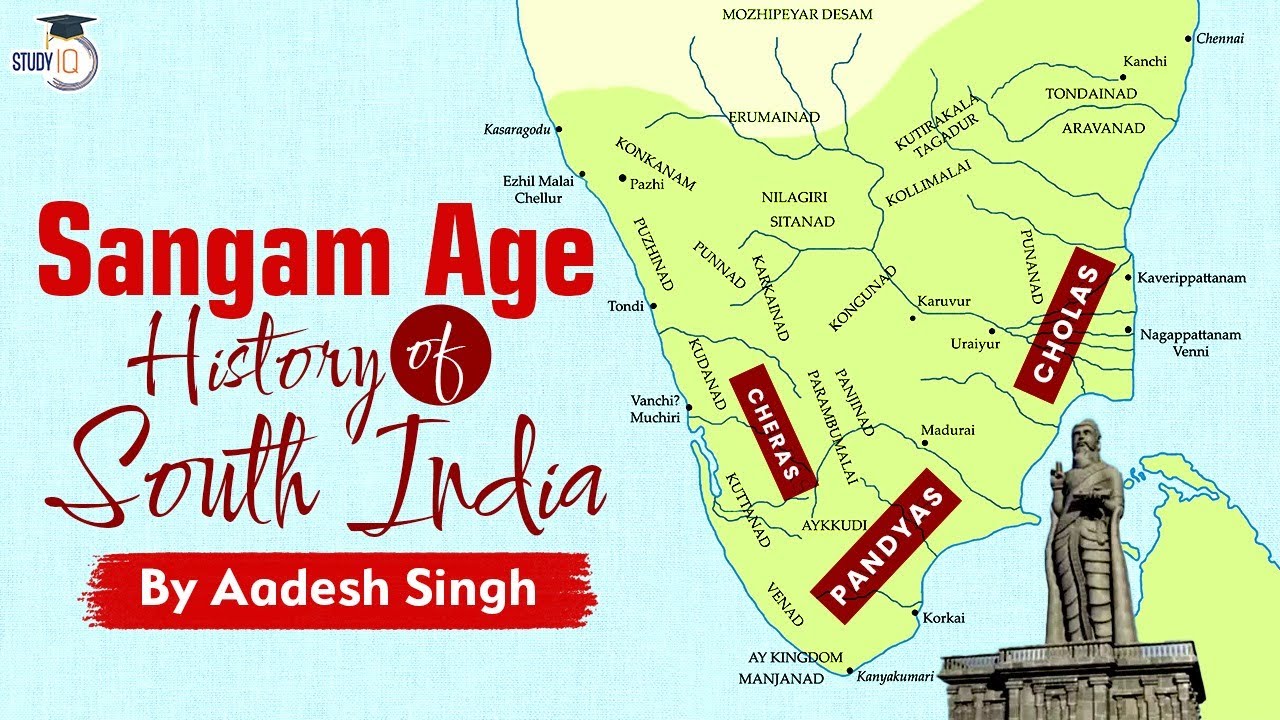
The Chera Dynasty stood as one of the three principal Tamil Kingdoms of ancient South India, governing much of present-day Kerala and parts of western Tamil Nadu. Emerging during the Sangam Period, the Cheras carved out a distinct identity through their mastery of maritime trade, strategic positioning along the Arabian Sea, and vibrant cultural patronage. Their ports linked southern India to distant global empires, most notably the Roman Empire, turning cities like Muziris into thriving international markets. Beyond trade, the Cheras left an indelible mark on Indian spiritual life by establishing the Pattini Cult and encouraging a rare climate of religious pluralism. Studying their rise, governance, and ultimate breakdown offers crucial insights into early Indian history and maritime commerce.
In this chapter, you will understand:
- The origins and major rulers of both the Early and Later Chera Kingdoms.
- The maritime trade network connecting Chera ports with ancient Rome.
- Key administrative features, local assemblies, and royal governance methods.
- The cultural traditions, temple architecture, and reasons for dynastic decline.
Why this topic matters: Questions about the Chera Dynasty frequently appear in historical studies and competitive exams. Understanding their trade routes, literary references, and emblems provides foundational knowledge of ancient South Indian polity.
Core Idea: The Cheras built a commercial powerhouse across Kerala and Tamil Nadu. Driven by spice exports, strategic ports, and strong regional governance, they maintained long-standing economic stability until external wars and internal division broke their central power.
History of the Chera Dynasty: Ancient Tamil Kingdom's Rise and Maritime Dominance in Kerala (Sangam Era to 12th Century AD)
The Chera monarchs commanded significant influence across southern India, using their coastal positioning to control maritime channels and lucrative forest goods.
Royal Emblems and Geographical Reach
Known in regional traditions as Keralaputras (sons of Kerala), the Chera rulers established their early center at Vanji, building a prosperous realm along the Arabian coast.
- (i) Their official royal emblem was the Bow and Arrow, representing martial skill and dominance over mountainous border regions.
- (ii) Bustling port cities such as Tondi and Musiri served as major centers for international sea trade.
- (iii) The earliest historical records detailing Chera achievements come from the classical verses of Sangam Literature.
Foundational Rulers and Literary Footprints: The Early Chera Kings of the Sangam Period
During the Sangam Era, pioneering Chera kings expanded territory, developed sea routes, and promoted regional literature and religious cults.

Uthiyan Cheralathan: The Earliest Known Founder of the Chera Lineage
Historical accounts recognize Uthiyan Cheralathan as the foundational ruler of the primary Chera lineage, operating out of Kuzhumur in the Kuttanad area of Kerala.
- (i) Ancient poets praised him for grand hospitality, earning him the title Perum Sorru Udhiyan Cheralathan (Uthiyan of the Great Feast).
- (ii) His reign established control over key passes through the Western Ghats, setting a precedent for future territorial expansion.
The Great Conquerors: Imayavaramban and Cheran Senguttuvan's Defining Contributions
Military authority and cultural patronage peaked under two standout monarchs, Imayavaramban Nedum Cheralathan and his famous successor Cheran Senguttuvan.
- (a) Imayavaramban Nedum Cheralathan: His title translates to "one whose boundary reaches the Himalayas," highlighting his wide military ambition.
- (b) Cheran Senguttuvan: Ruling during the , this celebrated king led bold northern expeditions up to the Himalayas.
- (c) Pattini Cult: Senguttuvan introduced the Pattini Cult, establishing formal worship of Kannagi as the symbol of chastity across Tamil lands.
Preserving the History: Sangam Literature as the Primary Chera Source
Modern knowledge of the early Chera monarchs depends almost entirely on classic Tamil anthologies.
Sangam leaf manuscripts provided the principal records for early Chera genealogy - (i) Pathitrupattu: A collection of ten poems dedicated entirely to praising individual Chera kings.
- (ii) Akananuru: Focuses on romantic themes while offering useful details regarding Chera territory and daily life.
- (iii) Purananuru: Features poems on statecraft, war, and the generosity of Chera rulers.
The Resurgence: Later Chera Kingdom (Kulasekhara Dynasty) and Its Political Landscape
After centuries of relative obscurity, Chera power was revived in the under the Kulasekhara Dynasty, creating a reorganized administrative order.
Kulasekhara Alwar: Founding the Second Chera Kingdom at Mahodayapuram
The revival started around under Kulasekhara Alwar, the founder of the Second Chera Kingdom, who moved the capital to Mahodayapuram (near modern Kodungallur).
- (i) Succeeding his father Thidaviradhan, he restored central rule across coastal regions.
- (ii) His royal authority had to balance power alongside influential Brahmin settlements and regional chieftains known as Naduvazhis.
Ramavarma: Political Insecurity and the Complexities of Succession
Later rule fell to Ramavarma (also called Kulasekhara Perumal or Ramar Tiruvati), whose time on the throne saw severe political instability.
- (a) The dynastic system used a collateral succession model, passing rule to the eldest living male relative in the family tree.
- (b) To check Chola expansion between the and , the Cheras formed strategic diplomatic ties with the Pandyas and Sri Lanka's Lambakannas.
Chera Governance: Administration, Royal Authority, and Local Manram Assemblies
The Chera state balanced direct royal command with community-level administration.
- Central Power: The king led the military and state affairs, aided by a council of seasoned ministers and scholars.
- Royal Audience: Daily durbar assemblies allowed ordinary subjects to bring concerns directly to the king.
- Local Assemblies: Local disputes and municipal work were handled by village bodies called Manram, ensuring effective governance at the grassroots level.
Economic Prosperity and Global Connections: Chera Trade with the Ancient Roman Empire
The Chera economy thrived on maritime commerce, exporting valuable cash crops and natural wealth across Indian Ocean trade routes.
Factors Driving Chera Economic Dominance and Prosperity
Natural geography and seasonal weather gave Chera ports an enduring advantage over rival coastal trade centers.
- (i) Spice Exports: The region held a virtual monopoly on black pepper, highly valued across Roman markets as "black gold."
- (ii) River Systems: Navigable rivers made it simple to move mountain harvests straight down to ocean-going vessels.
- (iii) Monsoon Winds: Merchant ships used predictable trade winds to cross the sea quickly between the Middle East and South India.
Muziris Seaport: A Hub for Roman Trade and Settlement
The seaport of Muziris stood out as a premier trading hub, hosting resident foreign merchants and significant wealth.
- (a) Historical records note that two Roman military units were stationed at Muziris to protect commercial interests.
- (b) Key export goods alongside spices included ivory, fine timber, pearls, and high-grade gemstones.
Cultural Fabric, Religious Tolerance, and the Final Decline of the Cheras
Chera society blended ancestral Dravidian customs with incoming traditions, producing durable temple architecture before political forces dismantled the state.
Religious Syncretism and Social Life: Native Cults and Women's Status
The Chera realm permitted varied religious communities to thrive side by side while maintaining traditional local traditions.
- (i) Native Customs: Worship focused heavily on ancestor worship, sacred tree groves, and heroic memory stones.
- (ii) Deities: The war goddess Kottavai held widespread devotion and was gradually integrated into broader tradition as Devi.
- (iii) Pluralism: Communities of Jains, Buddhists, Brahmins, Jews, and Christians lived and traded freely throughout the realm.
- (iv) Social Classes: Caste structures were less rigid than in neighbor kingdoms, allowing groups like the Pana, Kuruva, Paraya, and Veta defined roles.
- (v) Role of Women: Women held respected social standing, with royal women frequently taking part in key public ceremonies.
Art and Architecture: The Distinct Dravidian Temple Style of the Cheras
Chera builders created lasting Dravidian temples adapted to local rainfall patterns and stone sources.
- Materials and Layout: Masons built structures using granite and sandstone, working off octagonal or rectangular ground designs.
- Structural Elements: Standard layouts included a central sanctuary (Garbhagriha), a decorative tower (Vimanam), open halls (Mandapams), and gateway towers (Gopurams).
The End of the Chera Kingdom: External Invasions and Internal Fragmentation
A mix of severe military invasions and growing internal divisions brought down central Chera rule over time.
- (i) Rashtrakuta Invasions: A major campaign by the Rashtrakutas around damaged central royal authority.
- (ii) Chola Conflict: Decades of continuous war with the powerful Chola Empire drained Chera wealth and stripped away key lands.
- (iii) Internal Fragmentation: As central command weakened, regional Naduvazhi leaders claimed autonomy, breaking the kingdom into small independent chiefdoms.
Quick Revision Capsule
Key highlights of the Chera Dynasty summarized for quick reference:
| Historical Era | Key Rulers / Aspects | Major Contributions / Features |
|---|---|---|
| Early Sangam Period | Uthiyan Cheralathan, Senguttuvan | Established capital at Vanji; introduced Pattini Cult; featured in Pathitrupattu. |
| Later Chera Era | Kulasekhara Alwar, Ramavarma | Capital at Mahodayapuram; governance balanced with local Manram assemblies. |
| Economy & Ports | Muziris, Tondi | Controlled black pepper trade; hosted Roman garrisons; exported ivory and gems. |
| Society & Religion | Dravidian Syncretism | Worship of Kottavai and Kannagi; co-existence of Jainism, Christianity, and Judaism. |
| Architecture | Dravidian Temple Style | Granite structures featuring Garbhagriha, Vimanam, and Mandapams. |
Summary
The Chera Dynasty shaped ancient South India's trade and culture across two distinct eras—the Early Sangam Period and the Later Kulasekhara Dynasty. By turning ports like Muziris into global trade hubs for black pepper and luxury goods, they linked South India directly to Roman markets. Their rulers patronized literature, introduced lasting traditions like the Pattini Cult, and developed local governance through Manram assemblies. Though continuous wars with the Cholas and internal division eventually fragmented their power, the Chera legacy remains central to understanding South Indian history.
Quick Revision Points
Essential facts to review before examinations:
- (i) The Chera royal emblem was the Bow and Arrow, symbolizing military authority.
- (ii) Cheran Senguttuvan led northern campaigns and introduced the worshipping of Kannagi through the Pattini Cult.
- (iii) Muziris was the primary port connecting South Indian spice trade directly with the Roman Empire.
- (iv) The primary literary work chronicling Chera royalty is the Sangam collection Pathitrupattu.
- Exam Tip: Focus on the difference between the Early Cheras (capital at Vanji, Sangam Age) and the Later Cheras (Kulasekhara Dynasty, capital at Mahodayapuram). Questions frequently test their ports (Muziris), literary sources (Pathitrupattu), and royal emblem (Bow and Arrow).
Frequently Asked Questions (FAQ)
Q1: What was the significance of Muziris in the Chera Kingdom?
A1: Muziris was the principal seaport of the Chera realm, acting as a massive global market for black pepper, ivory, and gemstones. It hosted foreign merchants and Roman military units, making it a critical hub for international trade.Q2: Which literary source offers the most detailed account of Chera kings?
A2: Pathitrupattu, an anthology within Sangam Literature, provides dedicated praise and genealogy for the Chera monarchs of the early era.Q3: What caused the ultimate collapse of the Chera Dynasty?
A3: Prolonged wars against the imperial Cholas severely drained Chera power. This allowed local chieftains known as Naduvazhis to assert independence, breaking the unified kingdom into smaller principalities.