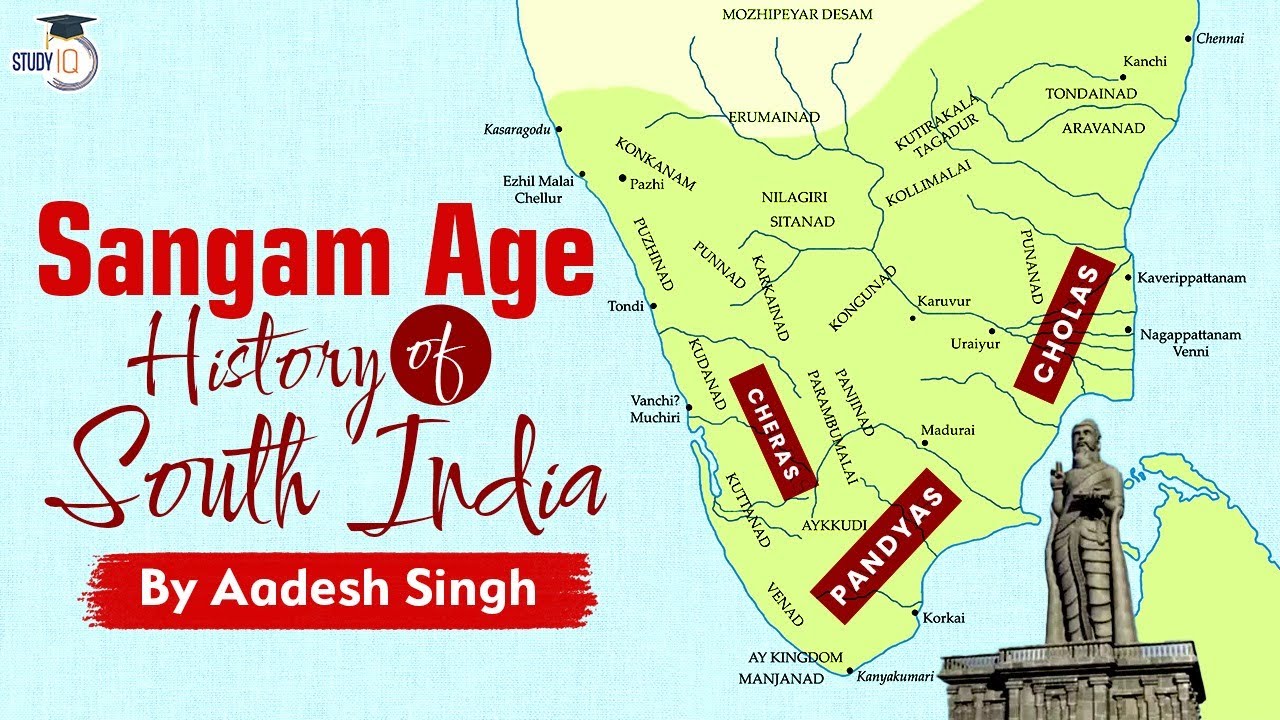
The history of the ancient Tamil region offers a fascinating look at how a society keeps its past alive through oral traditions, classical poetry, and physical artifacts. For generations, people across the southern peninsula preserved memories of great kings, heroic battles, and everyday life through songs. Today, modern archaeological digs and inscriptions confirm that many of these early stories reflect real historical events. By looking at ancient Tamil literature alongside physical evidence, historians can piece together the social structure, political power, and rich culture that shaped early South India.
In this chapter, you will understand:
- How Sangam poetry serves as a collective memory for ancient Tamil society.
- The historical value of Puram and Akam poetic categories.
- Dynastic genealogies of the Chera, Chola, and Pandya rulers.
- How to distinguish historical facts from poetic hyperbole and northern cultural synthesis.
Why this topic matters: Studying early Tamil literature and archaeology helps us understand how early state systems formed in South India, how oral traditions preserve real history, and how trade and cultural exchanges connected different parts of the Indian subcontinent.
Core Idea: Ancient Tamil literature contains a blend of genuine historical events, royal genealogies, and cultural practices. While bards often used poetic praise to win royal favors, modern historical methods help separate true events from hyperbole, revealing a vibrant and sophisticated classical society.
Delving into the Historical Heritage and Collective Memory of the Ancient Tamil Region
The historical legacy of the Tamil land, preserved through centuries of oral telling and written poems, continues to be validated by modern archaeology and historical research.
Indian society is well known for its long-standing cultural continuity, and the Tamil region is a prime example of this enduring tradition. For hundreds of years, the Tamil people carefully handed down accounts of their past heroes, urban centers, and customary lifestyles.
- (i) This ongoing practice involves connecting important ancient events to a long-established past. While early claims rested mostly on literary evidence, many of these traditions remain active and meaningful today.
- (ii) Systematic archaeological excavations and historical analysis have confirmed the deep roots of Tamil culture, supporting the core historical claims found in classical poems.
Collective Memory and Historical Glimpses in Sangam Literature
The large body of classical Sangam literature covers many aspects of life and provides clear proof of a shared historical memory that preserved key events for future generations.

Sangam Literature as a Reservoir of the Past
As the cornerstone of classical Tamil writing, Sangam literature captures essential historical moments that ancient society wanted to remember.
- (i) The preservation of history in these poems is selective, focusing on specific achievements and heroes rather than providing a continuous year-by-year record.
- (ii) Within these verses, scholars find both real past events and firsthand descriptions of the political and social conditions that poets witnessed.
- (iii) The ancient grammar text Tolkappiyam points to an even older tradition, referencing earlier literary works around without naming them directly, showing that a structured literary style existed long before grammar rules were formally written down.
Historical and Cultural Narratives in Puram and Akam Songs
Bards wrote Puram poems to praise the public deeds and warfare of rulers, while Akam poems focused on private emotions and personal love. Together, both styles offer valuable glimpses into real historical events and social customs.
Dual Components of Historical Consciousness
Classical Tamil poetry preserves historical knowledge through two main approaches:
- (a) Description of the Historical Past: Poems detail royal family trees, major military campaigns, the performance of Vedic sacrifices, and legendary origins of ruling dynasties.
- (b) Contemporary Historical Narratives: Bards and poets recorded immediate political developments, trade activities, and social changes happening around them.
- (i) Puram songs mention major historical battles and rulers directly, whereas Akam songs weave these historical facts gently into the background of romantic verses.
The Description of the Past in Tamil Poetic Narratives: Genealogies and Myth
Sangam poets skillfully combined historical details with creative storytelling, including royal lineages, traditional myths, and cultural ideas shared with neighboring regions.
Genealogy and the Cheras, Cholas, and Pandyas
The lineages of the three main ruling dynasties—the Cheras, Cholas, and Pandyas—appear regularly across Sangam works. A crucial source for Chera history is the anthology Patitrupathu, which was composed of ten poetic sections detailing Chera rulers, though the first and last sections are lost today.
Inscriptions and literary anthologies like Patitrupathu preserve royal Chera lineages. - (i) Each surviving chapter of Patitrupathu provides specific facts about Chera kings, written by court poets who observed their military achievements and governance firsthand.
Imayavaramban Neducheralathan: The Conquering Chera King
The second section of Patitrupathu honors Imayavaramban Neducheralathan, the courageous son of Utiyan Cheralathan and Venmal Nallini.
- (a) Bards praised him for marching north and carving his royal bow emblem onto the Himalayas as a symbol of his power and victories.
- (b) The poet Kumattur Kannanar composed verses celebrating these campaigns and received 500 villages along with a portion of kingdom revenues as a reward, showing the close connection between kings and court poets.
Palyanai Selkezhukuttuvan and Vedic Ascension
The third section details the life of Palyanai Selkezhukuttuvan, brother of Imayavaramban, whose rule was marked by religious activities and royal generosity.
- (i) The court poet Palai Kauthamanar received generous royal gifts after performing ten major Vedic sacrifices, reflecting the gradual blending of northern religious customs into southern royal courts.
Kalankai Kanni Narmudi Cheral: The Victor at Vaakai Parantalai
The fourth section describes the military success of Kalankai Kanni Narmudi Cheral, who earned fame through decisive battle victories.
- (a) He defeated King Nannan at the famous Battle of Vaakai Parantalai, an event carefully recorded in court poetry.
- (b) The poet Kappiyatru Kappiyanar received 4,000 gold coins and lands within the kingdom for documenting these achievements.
Kadal Pirakottiya Senkuttuvan: The Conqueror of Kings
The fifth section focuses on Kadal Pirakottiya Senkuttuvan, son of Imayavaramban and a Chola princess, highlighting a strategic alliance between two great ruling houses.
- (i) Records state that he defeated rival chieftains and expanded his military presence across sea and land.
- (ii) The famous poet Paranar celebrated these conquests and was rewarded with land revenues from the fertile Umbarkadu region.
Quick Revision Capsule
A quick summary of key Chera kings, their achievements, and the poets who recorded their reigns:
| Chera Ruler | Key Achievement or Event | Associated Poet & Reward |
|---|---|---|
| Imayavaramban Neducheralathan | Carved bow emblem on Himalayas; defeated northern rivals. | Kumattur Kannanar (Given 500 villages) |
| Palyanai Selkezhukuttuvan | Supported religious rituals and performed Vedic rites. | Palai Kauthamanar (Royal patronage & gifts) |
| Kalankai Kanni Narmudi Cheral | Defeated King Nannan at Battle of Vaakai Parantalai. | Kappiyatru Kappiyanar (Given 4,000 gold coins) |
| Kadal Pirakottiya Senkuttuvan | Led naval and land campaigns; formed Chola alliance. | Paranar (Granted Umbarkadu revenues) |
Summary
The ancient Tamil region holds a unique place in Indian history because of how well its classical literature, oral traditions, and archaeological remains align. Through Sangam collections like Patitrupathu and grammar works like Tolkappiyam, bards recorded royal lineages, battle victories, and social practices. While poets often included exaggerated praise to earn royal rewards, critical historical analysis helps us separate fact from poetic flair. These texts demonstrate an advanced literary tradition, vibrant trade networks, and a rich culture that selectively absorbed outside influences while maintaining its distinct identity.
Quick Revision Points
Essential facts to review before examinations:
- (i) Sangam Literature consists of Akam (inner feelings/love) and Puram (outer actions/warfare) poetic categories.
- (ii) Patitrupathu is a primary source dedicated specifically to ten generations of Chera rulers.
- (iii) Tolkappiyam is the oldest surviving Tamil grammar text, referencing earlier literary works over .
- (iv) Historical evaluation requires distinguishing genuine historical details from bardic hyperbole and later added epilogues (patikams).
- Exam Tip: When answering questions about Sangam history, always distinguish between Puram and Akam poetry styles, and highlight how archaeological digs back up details found in literature like Patitrupathu.
Frequently Asked Questions (FAQ)
Q1: What is the main difference between Puram and Akam songs in Sangam literature?
A1: Puram songs focus on public life, kings, battles, and direct historical events. Akam songs deal with personal emotions, love, and human relationships, weaving historical facts quietly into the background.Q2: Why is the text Patitrupathu so important for South Indian history?
A2: Patitrupathu is a classical anthology specifically dedicated to the Chera dynasty. It provides valuable information about individual kings, military battles, and the rewards given to court poets.Q3: How do modern historians deal with poetic exaggeration in ancient Tamil texts?
A3: Historians compare literary descriptions with physical archaeological finds, stone inscriptions, and foreign trade accounts to verify real events and filter out bardic hyperbole.