The history of southern India, particularly Tamil Nadu, reveals a fascinating shift from prehistoric iron-using communities to organized states during the early centuries. This change was led by the famous ruling trio: the Cheras, Cholas, and Pandyas. Guided by the rich texts of Sangam literature, studying this era helps us understand how early governments formed, how long-distance trade routes grew, and how distinct social groups emerged across the peninsular region.
In this chapter, you will understand:
- The transition from Megalithic burial sites to organized rural settlements
- The political structure of the Muvendar (Cheras, Cholas, and Pandyas)
- The cultural blend of indigenous beliefs and early Brahmanical traditions
- The economic foundation based on trade, agriculture, and military force
Why this topic matters: It explains the initial rise of urban centers, statecraft, and literature in southern India, forming a core part of ancient Indian history exams.
Core Idea: Southern India moved from highland Megalithic burial traditions into an organized, literate civilization. Powered by fertile river deltas, active ocean trade, and dynamic royal houses, the Sangam Age set the cultural and political foundation for the deep south.
Transition to Historical Period: Megalithic Culture and Early Tamil Kingdoms
Unlike northern regions, the historical age in the southern tip of the peninsula started later. It grew directly out of highland Megalithic traditions. A society usually reaches its historical phase when settled farming develops, distinct social groups form, writing is adopted, and written literature emerges to preserve history and law.
Megalithic Traditions and Agrarian Settlement
In the deep south, especially around the Kaveri delta, these changes took firm root around Before this time, upland areas were home to communities known as Megalith builders.
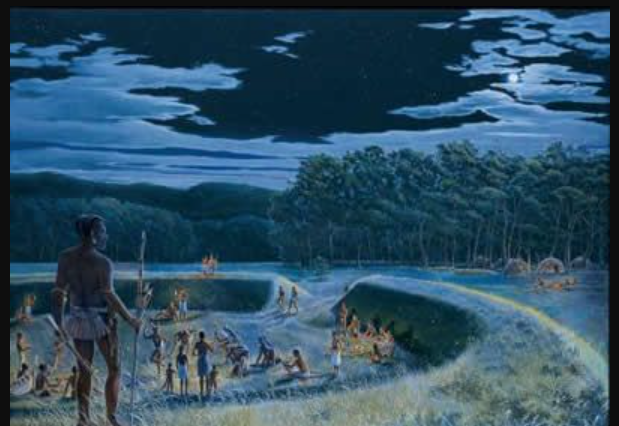
- Megaliths are large stone structures usually built around grave sites.
Distribution and Chronology of Megalithic Sites
These grave structures are scattered throughout the southern highlands, with dense clusters in eastern Andhra Pradesh and Tamil Nadu.
- Megalithic culture began around
- It flourished steadily from to
- In isolated spots, these practices continued into the , overlapping with the early kingdoms.
The Muvendar: Cheras, Cholas, and Pandyas as Early Kingdoms of the Sangam Era
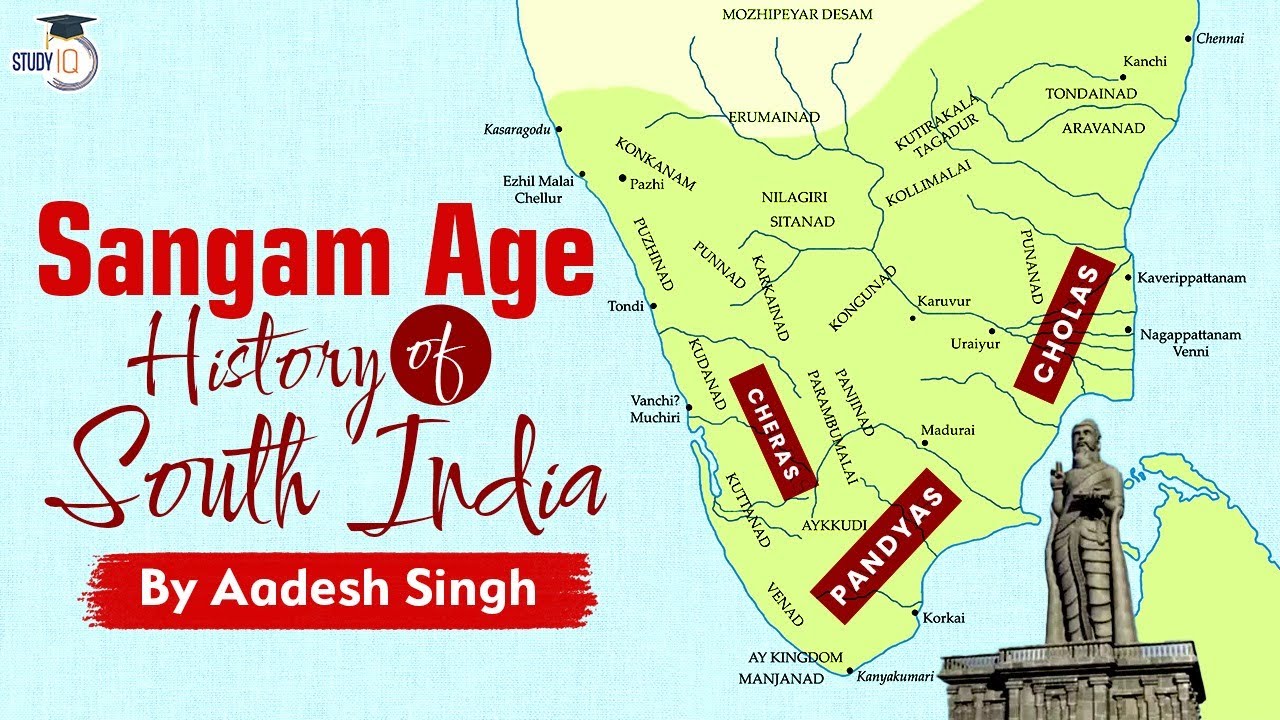
The far south was led by three major ruling families—the Cholas, Pandyas, and Cheras (also called Kerala). Together, they were called the Muvendar, and their rule defined the early Sangam Age.
- The Pandya family held power in the southernmost and southeastern regions of the peninsula.
The Powerful Pandya Kingdom
The Pandyas were widely famous for their wealth and maritime connections.
- Megasthenes, the Greek ambassador during the , provided the earliest external record of the Pandyas.
- He highlighted that the Pandya kingdom was wealthy in pearls, gained through active sea trade.
- He noted that a woman ruled the state, suggesting early Pandya society may have had matriarchal influences.
Cholas and Cheras in Early Records
The Cholas and Cheras were documented in the rock edicts of the Maurya Emperor Asoka during the
- The heart of the Chola kingdom was called Cholamandalam, located around the fertile Kaveri delta, which became known as the Coromandel coast.
- The Chera (or Kerala) territory lay along the western coast, controlling trade along the Malabar Coast.
The Rise of Brahmanism and Indigenous Faith in South India
During the early Christian centuries, southern religious life saw a mix of local traditions and ideas coming from the north.
- Northern cultural customs entered through royal patronage, though their early reach was selective.
Brahmanical Influence and Religious Debates
Brahmanical customs began to shape royal courts across the region.
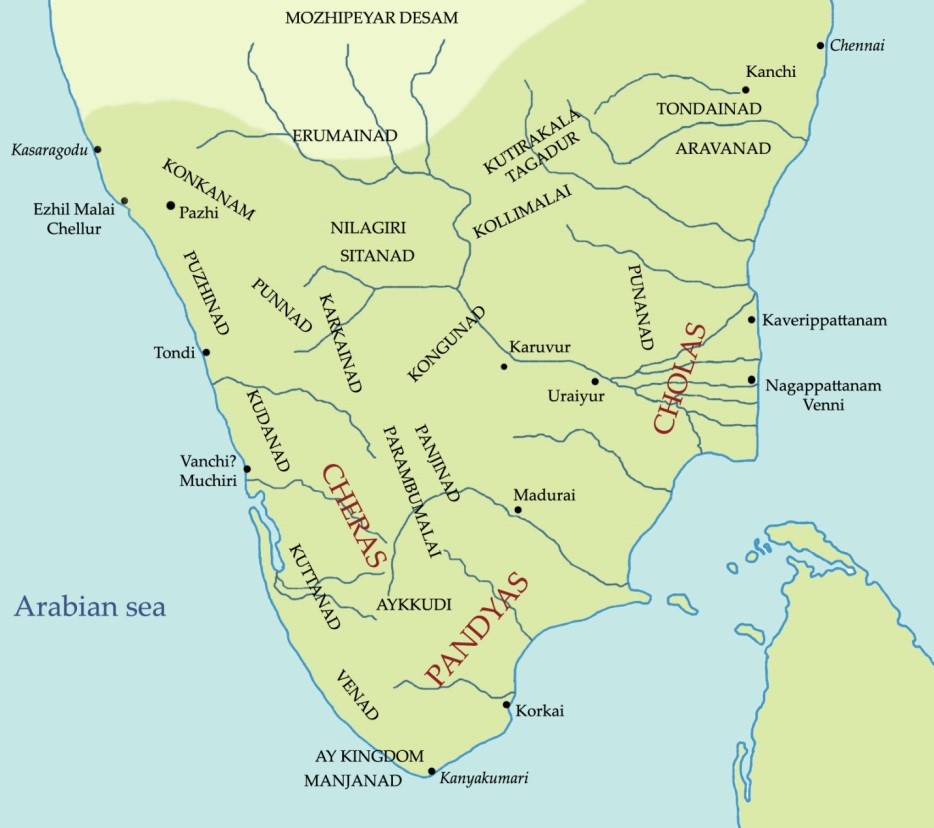
Political map showing the territories of the Cheras, Cholas, and Pandyas - Early Brahmanical influence was largely restricted to elite groups and specific urban pockets.
- Sangam rulers routinely sponsored Vedic sacrifices to establish religious legitimacy.
- Scholars of the Vedas held frequent debates with incoming Jaina and Buddhist teachers.
The Local Deity Murugan
Despite northern influence, most everyday people worshiped local deities.
- The most popular local deity was Murugan, associated with mountains and hunting.
- Over time, Murugan was given the title Subramaniya, linking him with the northern deity Skanda.
Quick Revision Capsule
Key details of early South Indian history for quick review:
| Kingdom / Subject | Geographical Core | Key Characteristics |
|---|---|---|
| Megalithic Culture | Upland regions of Tamil Nadu & Andhra | Large stone graves, iron tools, transition to farming |
| Pandya Kingdom | Southern & Southeastern Tip (Madurai) | Famous for pearls, trade, mentioned by Megasthenes |
| Chola Kingdom | Kaveri Delta (Cholamandalam) | Fertile farmland, ocean trade, Coromandel coast |
| Chera Kingdom | Western Coast (Kerala/Malabar) | Controlled spice trade along the Malabar Coast |
| Sangam Literature | Compiled in Tamil language | Main historical source, corroborated by Greek-Roman records |
Tamil Language and the Foundation of Sangam Literature
The primary source for reconstructing socio-political life in early Tamil country is Sangam literature.
Compilation and Authenticity of Sangam Texts
These literary texts were gathered and organized over several generations.
- The main body of texts was compiled between and .
- Details in these poems match independent descriptions found in Roman trade logs and archaeological digs.
Brahmi Inscriptions near Madurai
Writing was practiced well before the Christian era in southern India.
- Over 75 short cave inscriptions in the Madurai region use the Brahmi script.
- These carvings contain early forms of Tamil mixed with Prakrit words.
- Dating to , they show that Jaina and Buddhist monks were present in local cave shelters.
Sources of Royal Revenue and Military Might
The strength of early Tamil states relied on trade income, agricultural taxation, and a structured army.
Trade and War Spoils
Both local and long-distance trade provided steady revenue to royal treasuries.
- Rulers posted guards along trade routes to protect merchants and curb smuggling.
- Spoils captured during military campaigns served as another key source of wealth.
Agricultural Produce and Taxes
Farms produced staple grains such as paddy and ragi alongside valuable cash crops.
- Farmers grew sugarcane, fruits, turmeric, and valuable black pepper.
- Kings collected a regular percentage of all harvested farm goods as state tax.
Professional Standing Army
Early rulers maintained organized military forces to protect their land and enforce laws.
- Armies moved past tribal fighting units to form organized standing forces.
- Military branches included ox-drawn chariots, war elephants, cavalry, and foot soldiers.
Social Stratification and Class Structure
Growing trade and central state authority led to clear social divisions across Tamil society.
Support for Brahmanas and Court Poets
Tax wealth allowed rulers to support scholars, poets, and religious figures.
- Brahmanas served as court poets and received generous gifts from rulers.
- Early Tamil Brahmanas had local customs that allowed the consumption of meat and wine.
Ruling Elite, Peasantry, and Labor Groups
Social standing was shaped by land ownership, political power, and line of work.
- Wealthy landowners, called vallalas, held major military and civil roles under Chola and Pandya kings.
- The ruling elite, known as the arasar, routinely married into prosperous vallala families.
- Farm labor was mainly carried out by working-class women known as kadaisiyar.
- Forest tribes and marginalized groups lived on the edges of urban centers in poverty.
Summary
The move from Megalithic burial sites to the historical Sangam Age represents the start of organized statecraft, literacy, and commerce in southern India. Led by the Cholas, Cheras, and Pandyas, the region built strong trade links with the Mediterranean and Southeast Asia. Balanced by dynamic social groups, rich literature, and blended religious practices, the Sangam era laid the cultural groundwork for southern India.
Quick Revision Points
Key facts to remember for exams:
- (i) Megalithic cultures used iron tools and built stone tombs, starting around
- (ii) The three main Sangam dynasties (Muvendar) were the Cholas, Cheras, and Pandyas.
- (iii) Megasthenes left early records highlighting the Pandya pearl trade and possible matriarchal features.
- (iv) Tamil-Brahmi cave inscriptions near Madurai confirm early literacy from
- Exam Tip: Remember the social terms: arasar (kings/rulers), vallalas (wealthy landowners), and kadaisiyar (agricultural laborers). These class distinctions frequently appear in ancient history questions.
Frequently Asked Questions (FAQ)
Q1: What defines the transition from Megalithic culture to the historical period in South India?
A1: The historical period began with settled village farming, clear social classes, the use of Brahmi script for writing, and the creation of Sangam literature aroundQ2: Who were the Muvendar during the Sangam Age?
A2: The term Muvendar refers to the three traditional ruling houses of Tamil land: the Cholas, the Cheras, and the Pandyas.Q3: What role did Megasthenes play in recording early South Indian history?
A3: Megasthenes provided one of the earliest external records of the Pandya kingdom in the , documenting their wealth in pearls and noting female leadership.