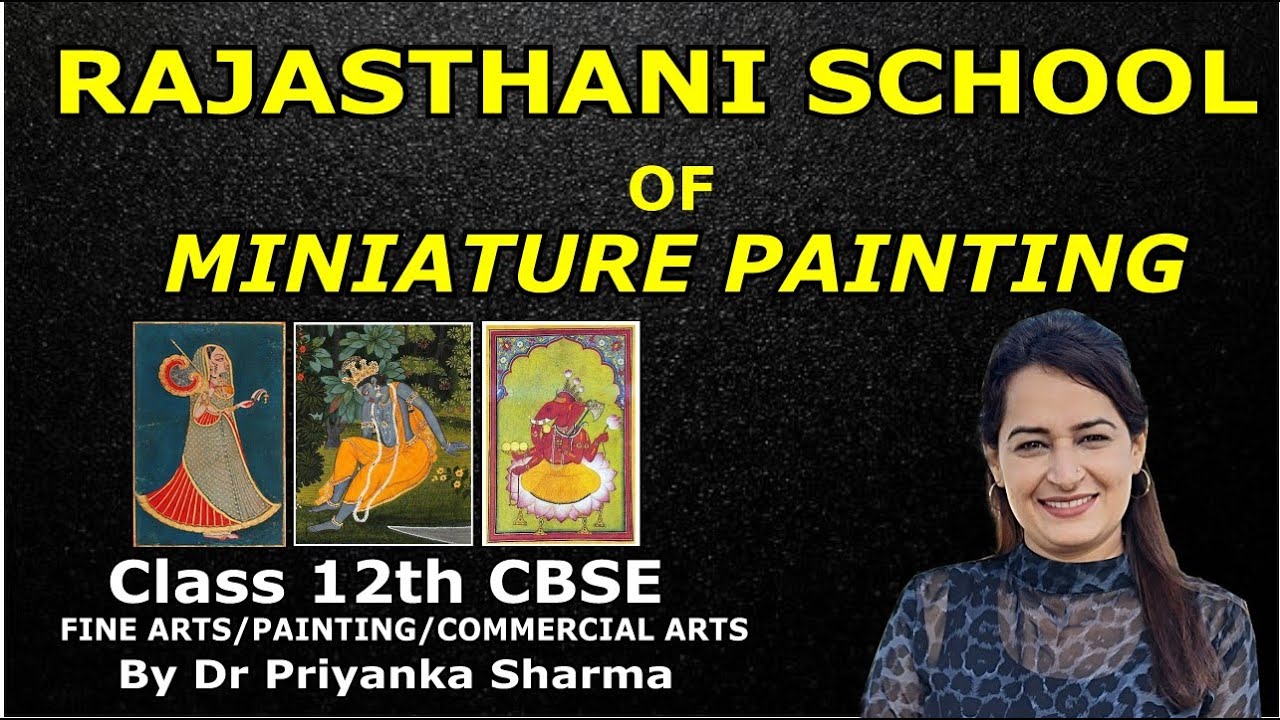
The Mewar School of Painting represents a magnificent tradition within Rajasthani miniature art, evolving from early local styles around the . This school is crucial for students preparing for art history exams. It shows a vibrant color palette, distinct storytelling methods, and major works by famous artists like Sahibdin and Manohar, especially under the royal support of Maharana Jagat Singh I. The unique Nathdwara School also grew from this tradition, focusing on Pichhwais and the deity Shrinathji.
🎯 In this chapter, you will understand:
- The growth of the Mewar School from local roots to royal court art.
- Key master artists like Sahibdin, Manohar, and Nisardin.
- Narrative techniques like aerial perspective in the Yuddha Kanda set.
- The Nathdwara branch, Pichhwai cloth paintings, and Shrinathji art.
💡 Why this topic matters: It forms the core foundation of Indian miniature art history and demonstrates how indigenous Indian styles blended with courtly traditions.
🧠 Core Idea: Mewar painting moved from simple local roots into a highly detailed narrative art form, capturing both holy epics and royal court life.
Mewar School of Painting: Evolution, Masters, and Narrative Techniques ()
Tracing the glorious journey of the Mewar School of Painting from its local roots to its refined courtly look under royal support.
The Mewar School is widely known as one of the oldest centers of painting in Rajasthan. Its style is a strong mix of ideas, moving from early local traditions toward a refined courtly style, especially after leaders like Karan Singh connected with the Mughals.
- (i) The early developmental stages of the Mewar School faced hard times, including the loss of many early art pieces due to long wars with the Mughals.
- (ii) The true start of this unique school is linked to a famous group of Ragamala paintings created in by the artist Nisardin at Chawand.
- (iii) The visual style of this early Chawand Ragamala set showed older regional features, marked by a direct approach, simple layouts, bright colors, and light use of decorative details.
The Golden Era of Mewar Painting under Maharana Jagat Singh I ()
The reign of Maharana Jagat Singh I was a major turning point. During this time, Mewar visual art took on a bold new direction, led by famous court artists Sahibdin and Manohar.

The Signature Styles and Significant Illustrated Texts by Sahibdin and Manohar
These two master artists took the Mewar School to new heights, moving from simple art to highly detailed storytelling, which helps in understanding the Mughal influence on Rajasthani art.
- (i) Sahibdin’s Masterpieces: The painter Sahibdin is famous for his rich visual works, including the iconic Ragamala (dated ), the holy Bhagvata Purana (completed in ), the romantic Rasikapriya, and the large Yuddha Kanda of Ramayana (from ).
- (ii) Manohar’s Landmark Work: The painter Manohar is noted for illustrating the Bal Kanda of Ramayana in , adding significantly to the royal project.
- (iii) Later Literary Illustrations: This tradition of illustrating holy and poetic texts continued with Jagannath’s special piece, the Bihari Satsai (dated ). Other key texts painted in the late include the Harivamsha and Sursagar.
Sahibdin's Yuddha Kanda: Innovative Storytelling and Viewpoint in Miniature Art
The Yuddha Kanda (Book of Battles) shows the amazing technical skill built under Sahibdin, especially when painting large scenes and complex warfare.
The Yuddha Kanda: A Major Folio of the Jagat Singh Ramayana Set ()
This section, part of the famous Jagat SinghRamayana collection from , shows a big shift toward clever visual space and deep storytelling in the Mewar School.
- (i) Introduction of High Viewpoint:Sahibdin used an angled aerial viewpoint within his miniatures. This method helped show the massive size and energy of the epic war.
- (ii) Complex Storyline Strategy: To cover the wide scope of the epic, he used clever storytelling tricks. He combined several events into one painting, or spread a single major event across multiple pages to show extra detail.
- (iii) Depiction of Conflict: The artwork clearly captures crucial battle moments, such as Indrajit’s use of magic weapons and clever field moves against Lord Rama’s army.

Yudhakanda of Ramayana - A compelling Mewar School painting depicting the grand battle scenes from the Yudhakanda (Book of War) of the Ramayana, showcasing the bravery of Lord Rama and the use of powerful strategies during the battle with Ravana’s forces, illustrating Sahibdin’s skill in composition.
The Shift to Courtly and Everyday Themes in Eighteenth-Century Mewar Art
As the Mewar School moved into the , its main focus changed. Instead of only painting religious books, artists started capturing the daily power, events, and royal leisure of court life.
New Subjects and Aesthetic Styles ()
The artwork changed to suit new royal requests, featuring subjects that highlighted the king and his life.
- (a) Thematic Shift: Painting in Mewar focused more on court news and events. It documented royal court meetings and leisure activities, moving away from purely religious books.
- (b) Color Choice: Painters preferred a bright color selection, where bold reds and yellows became signature shades of the Mewar style.
- (c) Famous Royal Portrait: A great example is the portrait of Maharana Jagat Singh II out hawking, which is now kept at the Metropolitan Museum of Art, New York.
The Nathdwara School of Painting: Devotion, Pichhwais, and Shrinathji
A distinct sub-school grew at Nathdwara, near Udaipur, created out of deep devotion for the deity Shrinathji in the late .
The Rise of Nathdwara as a Devotional Art Center
The Nathdwara School specialized in religious art, made specifically for the daily rituals and worship of Shrinathji.
- (i) Pichhwai Tradition: The main creation of this school was the large Pichhwai, which is a detailed cloth painting hung behind the idol of Shrinathji during festivals.
- (ii) Devotional Focus: These artworks centered on Lord Krishna as Shrinathji, showing scenes from his life or changing seasons.

Krishna as Shrinathji - A divine depiction of Lord Krishna as Shrinathji, a famous feature of the Nathdwara School of Mewar Painting. This style shows his iconic stance, often representing the lifting of Mount Govardhana.
The Dominance of Courtly and Everyday Themes in Late Mewar Painting
In the late , the Mewar School firmly focused on recording royal life, court events, and kingly power.
Expanded Topics: Royalty and Historical Records
The court desired new styles of art, resulting in paintings focused on royal figures and their activities.
- (a) Court Life Topics: Artwork centered on detailed portraits of kings, grand court gatherings, hunting trips, and festive celebrations.
- (b) Private Life Scenes: The topics grew to show activities in the royal women's quarters (zenana) and games played by royalty.
- (c) Wide Landscapes: A painting of Maharana Jagat Singh II (reign ) traveling in the countryside while hawking shows this change. It uses an angled landscape view to give a wide look at the far horizon.
⚡ Quick Revision Capsule: Mewar School Features
A quick summary table showing the evolution, main artists, key texts, and styles of the Mewar School of Painting:
| Phase / Branch | Key Artists & Period | Main Features & Works |
|---|---|---|
| Early Phase (Chawand) | Nisardin () | Simple layouts, bright colors, early Ragamala series. |
| Golden Era | Sahibdin, Manohar () | Detailed epic stories; Ramayana, Bhagvata Purana, aerial perspective. |
| 18th Century Mewar | Court painters under Jagat Singh II | Court scenes, hunting, bright red and yellow palettes, portraiture. |
| Nathdwara Branch | Devotional Guilds (Late ) | Focus on Shrinathji, creation of cloth backdrops called Pichhwais. |
| Late Literary Works | Jagannath () | Paintings of literary texts like Bihari Satsai and Sursagar. |
📝 Summary
The Mewar School of Painting is a foundational tradition in Rajasthan, marking the shift from local art to detailed court miniatures from the to the . Master artists like Sahibdin and Manohar introduced clever storytelling methods and aerial viewpoints in works like the Yuddha Kanda. Over time, the style turned toward bright court scenes and led to the devotional Nathdwara School with its famous Pichhwais.
🚀 Quick Revision Points
Essential facts to review before examinations:
- (i) The Ragamala by Nisardin at Chawand marks the start of early Mewar art.
- (ii) Maharana Jagat Singh I ruled during the golden period of Mewar painting.
- (iii) Sahibdin introduced an angled aerial perspective to depict large battle scenes.
- (iv) The Nathdwara School created cloth paintings called Pichhwais for Shrinathji.
- 💡 Exam Tip: Focus on Sahibdin's narrative techniques in the Yuddha Kanda and the difference between main Mewar court art and Nathdwara Pichhwais.
❓ Frequently Asked Questions (FAQ)
Q1: What marks the official beginning of the Mewar School of Painting?
A1: The school officially started with the Ragamala paintings made by the artist Nisardin at Chawand in .Q2: What are Pichhwais and which sub-school made them?
A2: Pichhwais are large cloth paintings used as backdrops for the deity Shrinathji, created by the Nathdwara School.Q3: What special perspective technique did Sahibdin use in the Yuddha Kanda?
A3: Sahibdin used an angled aerial perspective to fit large, complex battle scenes from the Ramayana onto a single page.