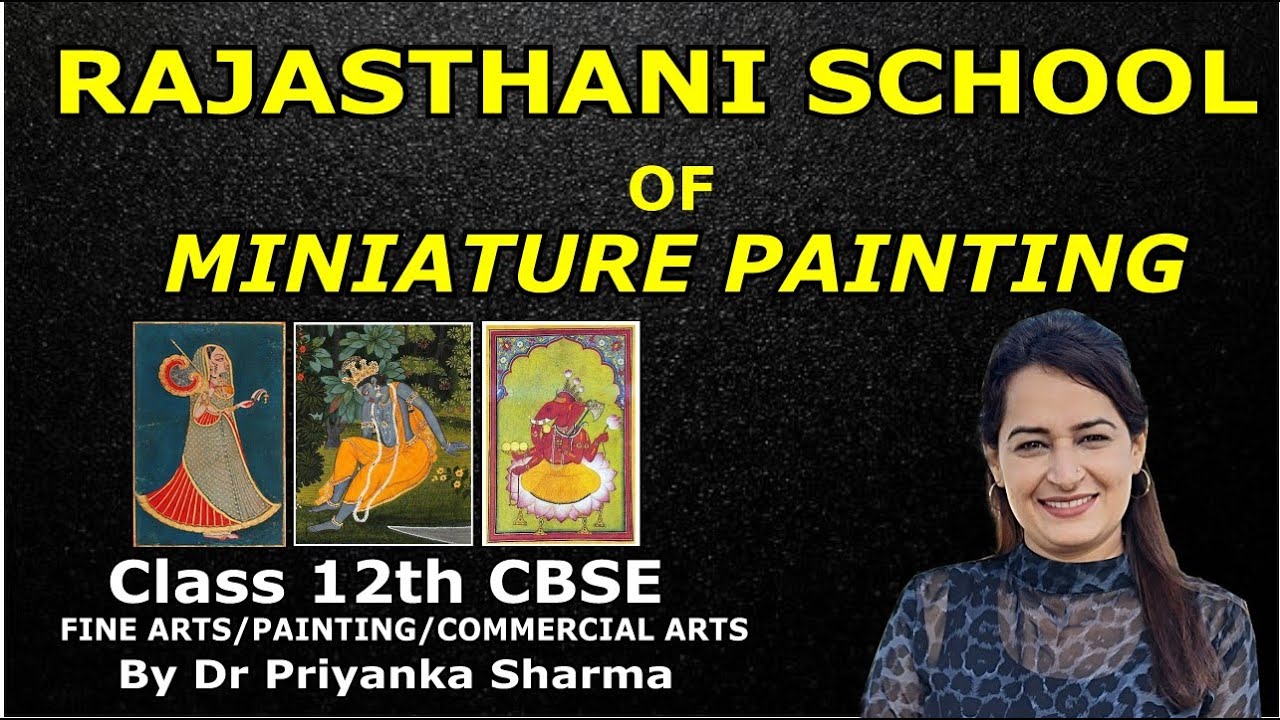
The Kishangarh School of Painting is one of the most expressive and refined styles of Rajasthani miniatures. Famous around the world for its graceful features, it captures the spiritual love between Radha and Krishna. This art style reached its peak in the under the support of Sawant Singh. It is an essential topic for students studying Indian art and culture, showing how deep faith and fine artwork combined in historical India.
🎯 In this chapter, you will understand:
- The key features that make Kishangarh miniature paintings unique.
- How royal patronage and devotion to Krishna shaped this art form.
- The major contributions of King Sawant Singh and master artist Nihal Chand.
- Why this artistic style remains vital for competitive exam preparation.
💡 Why this topic matters: Kishangarh art represents the highest peak of emotional and spiritual expression in Indian miniature painting, frequently asked about in history and culture exams.
🧠 Core Idea: Combining intense devotional love (Bhakti) with delicate courtly elegance to create iconic, ideal figures like Bani Thani.
🎨 Kishangarh School of Painting: Stylized Rajasthani Miniatures and the Pinnacle of Artistic Expression (c. –)
The Kishangarh School stands out among traditional art forms because of its gentle elegance and detailed presentation, which developed through dedicated royal support over many generations.
- (i) These paintings are known as some of the most refined examples of Rajasthani miniatures, moving far beyond basic regional styles to achieve rich royal charm.
- (ii) The artwork connects deeply with regional religious feelings, turning devotional and poetic stories into impressive pictures, especially those about Krishna Lila.
- (iii) Setting up the city and providing constant support created a safe environment for this distinct art style to grow and earn world fame.
✨ Unique Aesthetic Characteristics of Kishangarh Miniatures
The easiest way to recognize this school is by its elongated and delicate human figures, especially the faces, which give everyone an elegant, divine appearance.

Distinctive Facial Features Defining the Kishangarh Style
Portraying figures—especially women—in Kishangarh paintings involves specific choices that highlight grace, as seen in the famous Bani Thani painting.
- (i) Arched and Delicate Eyebrows: Eyebrows are drawn in high, graceful curves, giving the characters a calm and thoughtful expression.
- (ii) Lotus Petal-Shaped Eyes: The eyes look like lotus petals, often painted with a light pink tint and gently lowered eyelids that show deep emotion and longing.
- (iii) Sharp, Slender Nose and Thin Lips: Noses are painted long and sharp, pairing with thin, neat lips to complete the noble and slender appearance.
Evolutionary Stylistic Traits under the Reign of Raj Singh
Though artists worked in the court earlier, a clear and famous style truly took shape during the rule of Raj Singh (–).
- (a) Elongation of the Human Form: Artists began purposefully drawing taller, slender bodies to make figures look graceful and light.
- (b) Lavish Use of Green Color: Painters used rich shades of green across natural settings and clothing, adding strong energy to every picture.
- (c) Depiction of Panoramic Landscapes: Paintings started including wide, open landscape views that became an important part of the main story instead of just simple backgrounds.
👑 Historical Patronage and Spiritual Influence in Kishangarh Art
The founding of the kingdom and the religious choices of its kings guided both the subject matter and artistic style over time.
Foundation of Kishangarh and Early Artistic Activity
The roots of the court go back to the early , setting the stage for the artistic growth that followed a century later.
- (i) Founding of the State: The town of Kishangarh was started in by Kishan Singh, a son of the king of Jodhpur, establishing the local ruling family.
- (ii) Initial Patronage: By the mid-, during the rule of Man Singh (–), court painters were already active with direct royal support.
Krishna Bhakti and Thematic Centrality
The personal religious devotion of the royal family steered the main focus of the artwork toward the life and stories of Krishna.
- (i) Influence of Pushtimargiya Cult: King Raj Singh joined the Pushtimargiya cult of Vallabhacharya, which focuses on devotion to Krishna. This made Krishna Lila themes the primary choice for painters.
- (ii) Themes of Divine Love: Showing the playful and eternal love of Radha and Krishna became the main passion of local artists, defining their long-lasting fame.
🌟 The Peak of Kishangarh Art: Nihal Chand and Sawant Singh
The top period of the Kishangarh School came during the reign of the poet-king Sawant Singh and his gifted chief artist, Nihal Chand.
Sawant Singh’s Patronage and Nihal Chand’s Masterpieces
The rule of Sawant Singh (–) is celebrated as the golden age of Kishangarh art, where paintings reached top quality through court creations.
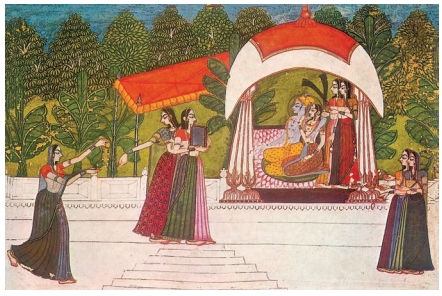
Krishna and Radha - A famous painting from the Kishangarh School, showing the divine love of Radha and Krishna from Indian mythology, filled with fine details and bright colors. - (i) Master Artist Nihal Chand:Nihal Chand became the most famous painter of this golden time, perfecting the school's signature style with expert skill.
- (ii) Radha as Ideal Muse: In Nihal Chand’s paintings, Radha was shown as the perfect divine lover (believed to be modeled after Sawant Singh's partner, Bani Thani) alongside Krishna in fine court and nature views.
- (iii) Illustrations of Poetry: A big part of his work was making visual versions of devotional poems written by King Sawant Singh, who wrote under the pen name Nagaridas.
Artistic Excellence in Composition and Color
The deep skill of artists like Nihal Chand showed in their careful treatment of backgrounds and colors, giving every scene incredible depth.
- (a) Vivid Panoramic Landscapes: Nihal Chand painted wide outdoor scenes filled with buildings, green plants, and lakes, all drawn with great care.
- (b) Accentuated Colors: Using bright, strong colors in outdoor scenes made Kishangarh paintings look glowing and attractive.
- (c) Detailing and Timeless Quality: Incredible attention to tiny details gave Kishangarh paintings a unique and lasting spot in art history.
Importance for Study: Understanding Kishangarh Art for History Aspirants
The Kishangarh School of Painting is a major milestone in Indian art history. It shows how royal support and religious movements like the Pushtimargiya cult came together to create fine art. The stylized look of Radha and Krishna by Nihal Chand gives crucial facts for students taking history tests. Knowing key details like lotus eyes and tall figures helps you understand what King Sawant Singh's court gave to Rajasthani Miniature Painting.
⚡ Quick Revision Capsule: Kishangarh School of Painting
A quick breakdown of key historical facts, artists, and features for exam revision:
| Key Feature | Historical Detail | Exam Significance |
|---|---|---|
| Peak Period | (–) | Golden age under King Sawant Singh |
| Key Figures | King Sawant Singh (Nagaridas) & Nihal Chand | Patron-poet and master artist pairing |
| Facial Style | Lotus-shaped eyes, arched eyebrows, slender nose | Iconic representation of ideal beauty (Bani Thani) |
| Core Theme | Krishna Lila and divine love of Radha & Krishna | Driven by Pushtimargiya Bhakti tradition |
| Color & Landscape | Rich green tones and wide panoramic views | Sets Kishangarh apart from other Rajasthani schools |
📝 Summary
The Kishangarh School of Painting reached its peak during the in Rajasthan, blending deep religious devotion with royal elegance. Driven by the Pushtimargiya tradition and supported by King Sawant Singh, master artist Nihal Chand created legendary works like Bani Thani. Defined by lotus-shaped eyes, tall forms, and rich green landscapes, this artistic style remains an important topic in Indian art history.
🚀 Quick Revision Points
Essential facts to review before examinations:
- (i) Founded in by Kishan Singh; reached its peak under King Sawant Singh (–).
- (ii) Core style features sharp noses, arched eyebrows, elongated bodies, and lotus-like eyes.
- (iii) Deeply connected to Krishna Bhakti and the Pushtimargiya faith.
- (iv) Master artist Nihal Chand painted masterpieces based on poems written by Sawant Singh under the name Nagaridas.
- 💡 Exam Tip: Focus on identifying the combination of Sawant Singh, Nihal Chand, Bani Thani, and lotus-shaped eyes—these are the most common points tested in art and culture MCQs.
❓ Frequently Asked Questions (FAQ)
Q1: Who was the most famous painter of the Kishangarh School?
A1: Nihal Chand was the chief master artist who perfected the unique Kishangarh style under King Sawant Singh.Q2: What are the main physical traits of figures in Kishangarh miniature paintings?
A2: Figures feature tall bodies, high arched eyebrows, sharp slender noses, thin lips, and distinct lotus petal-shaped eyes.Q3: What religious movement influenced Kishangarh art?
A3: The Pushtimargiya cult of Vallabhacharya heavily influenced the school, making Krishna Lila and the divine love of Radha and Krishna the central subjects.