
The Sanchi Stupa-1 is a grand structure built by Emperor Ashoka in the . It marks a major turning point in Early Buddhist Art and Architecture by showing off skilled stone carving and detailed visual storytelling. Its beautifully carved Toranas (gateways) and complex pradakshinapatha (walkway) system give us deep insights into the artistic styles of the . Because of this, it is an essential topic for students studying Indian history and art.
🎯 In this chapter, you will understand:
- The main architectural parts of Sanchi Stupa-1, such as its double walkways and gateways.
- How stone carving techniques improved from flatter panels at Bharhut to deep carvings at Sanchi.
- How early artists used symbols instead of human figures to show the Buddha and his life stories.
- How artwork at Sanchi compares with regional styles found in Mathura and Vengi.
💡 Why this topic matters: Sanchi Stupa-1 is the best-preserved example of early Indian stupa design. It shows how ancient Indian artists moved from simple structures to detailed stone storytelling.
🧠 Core Idea: Early Buddhist art used symbolic signs rather than direct human images of the Buddha, combining religious meaning with dynamic, detailed stone art.
Sanchi Stupa-1: Architectural Features, Evolving Sculptural Development, and Early Buddhist Art in India
Along with other art hubs like Mathura and Vengi, Sanchi Stupa-1 led the growth of Buddhist sculptural art from the onward. It brings together massive building design and detailed carved stories.
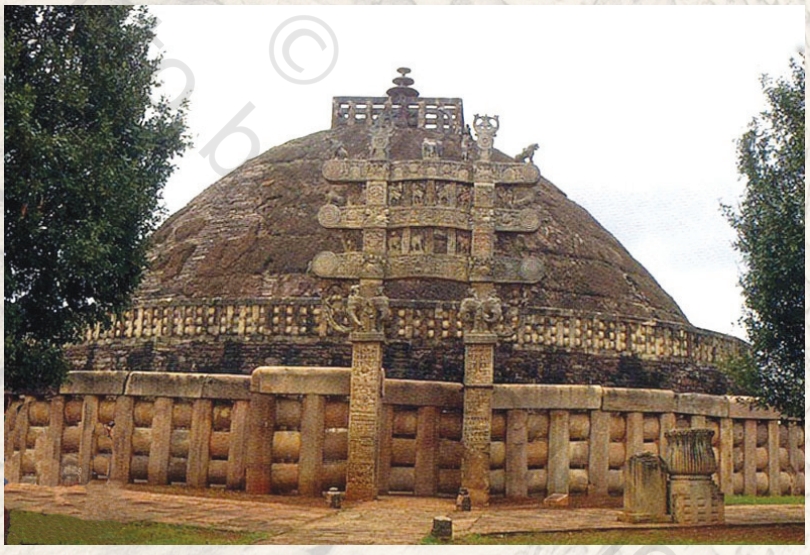
Located in Madhya Pradesh, the site of Sanchi is the most complete and best-preserved early Indian stupa complex. It was first built by Ashoka the Great and was later expanded and improved, especially during the .
- (i) The stylistic progression seen here stands out when compared to older art styles. It shows a clear shift toward livelier, more detailed visual stories across major art centers, including Mathura and Vengi (located in the Guntur District, Andhra Pradesh).
- (ii) Architecturally, Sanchi Stupa-1 stands out because of its two walking paths: the upper and lower pradakshinapatha. These paths gave pilgrims different levels to walk around and meditate near the holy relic mound.
- (iii) The stupa's beauty is made even greater by its four carved toranas (gateways). Each gateway faces one of the four main directions and serves as the main space to display the life of the Buddha and many Jataka stories.
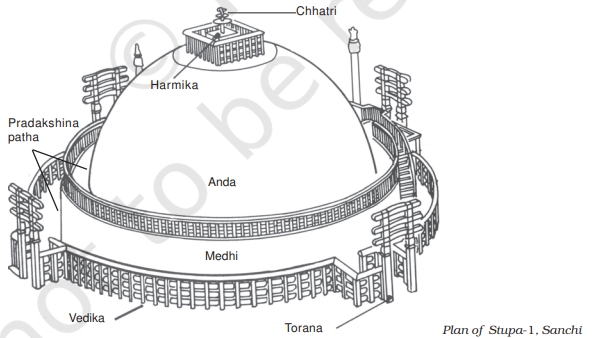
Artistic Characteristics and Stylistic Advancements in Sanchi Sculptures
The stone carvings on the gateways of Sanchi showed a huge improvement in carving skill. Artists moved away from flat, stiff figures to deep carvings that showed real motion and life-like shapes.
High Relief Carvings and Naturalistic Movement
The level of detail and depth in the Sanchi carvings is remarkable. Artists used the full stone surface to make figures in high relief, making them stick out sharply from the background to make stories clearer.
- (i) Figures are carved in naturalistic postures that fill the space nicely, giving the art a lively feel typical of mature Early Buddhist Art.
- (ii) The images show increased movement and energy, with a clear reduced rigidity compared to older artwork.
- (iii) A key detail is that heads are prominently projected, often slightly turned or tilted, adding natural expression and depth to crowded scenes.
Advanced Techniques: Sanchi vs. Bharhut
The stone work at Sanchi clearly shows advanced carving techniques when compared to the slightly older carvings at Bharhut, showing how skills and tools improved over time.
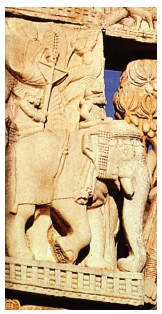
Stone Carving Sanchi Stupa - Intricate stone carvings from the Sanchi Stupa, representing scenes from the Jataka tales and the teachings of Buddha. These carvings demonstrate high-relief technique and complex overlapping figures. - (a) While carvings at Bharhut look flatter with figures close to the surface, Sanchi carvings have greater depth, allowing more figures to fit into layered scenes.
- (b) How artists carved clothes, trees, and crowd scenes at Sanchi shows a better understanding of shape and space, making visual tales much more impactful and easy to follow.
- (c) This artistic step forward proves that well-trained artisan groups were active, capable of handling monumental and detailed commissions supported by Buddhist patronage.
Symbolic Representation and Elaborate Narrative Panels
Artists at Sanchi skillfully blended symbolic representations of the Buddha with detailed scene panels, turning the stupa into a visual book of scripture.
Aniconic Tradition: The Absence of the Human Buddha Image
Following Early Buddhist Art habits, the Buddha was not depicted in human form. Instead, key events in his life were shown through symbols.
- (i) Symbols like the Bodhi Tree (Enlightenment), the Dharma Chakra (First Sermon), the Stupa (Mahaparinirvana), and Footprints (Presence) were used to share the Buddha's teachings and life journey.
- (ii) Relying on symbols meant visitors needed basic knowledge of Buddhist stories, highlighting the sacred and scholarly aspect of the artwork.
Depicting Complex Narrative Sequences on the Toranas
The narrative panels on the four toranas were very elaborate and wide. Rather than single scenes, they showed long, step-by-step stories like chapters in a book, telling tales of the Buddha's past lives (Jatakas) and his final life on Earth.
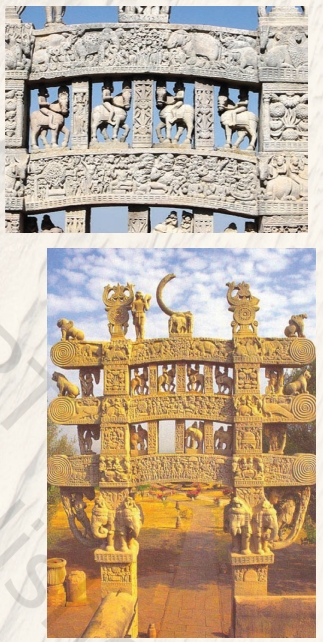
Torana and External Carvings Sanchi Stupa - The toranas (gateway) and external carvings of the Sanchi Stupa, depicting scenes from the life of Buddha and early Buddhist art. These gateways are considered masterpieces of Indian monumental sculpture. - (a) One key story shown is the siege of Kushinara, which covers the fight over who would get the Buddha's relics after his Mahaparinirvana (death).
- (b) Scenes showing the Buddha’s visit to Kapilavastu, his home city, capture the emotion of the event through the expressions and positions of nearby figures.
- (c) Carvings also show real historical events, such as Ashoka’s visit to the Ramgrama Stupa, linking royal rulers to religious history.
The Episode of Queen Mayadevi’s Dream
The important moment of the Buddha’s conception, known as Queen Mayadevi’s Dream, is carved with clear simplicity that carries deep spiritual meaning.
- (i) The scene centers on a reclining image of Queen Mayadevi, shown sleeping peacefully as the event happens.
- (ii) A main part of the story is the elephant, an important symbol, shown descending towards her to represent the Buddha entering the physical world.
Regional Variations: Sculptural Echoes in Mathura and Vengi
While Sanchi set a high bar for art in central India, other nearby regions like Mathura (in Uttar Pradesh) and Vengi (in Andhra Pradesh) created their own clear styles during the same era.
The Mathura School: Similar Quality, Unique Physiognomy
Carvings from Mathura made in this period show a similar high quality and narrative energy as Sanchi, showing that both centers shared ideas and artistic roots.
- (i) Even so, Mathura figures clearly differ in physiognomic details. They often show fuller, rounder body shapes and facial styles that later became famous in art.
- (ii) These local details show how local artistic conventions grew alongside shared Buddhist themes across regions.
Vengi (Andhra Pradesh): Emergence of Southern Stylistic Variations
Further south in Vengi, the carving style developed stylistic variations that reflected regional artistic traditions of the southern peninsula.
- (a) These styles later grew fully at sites like Amaravati and Nagarjunakonda, featuring slimmer figures and energetic, action-packed layouts.
- (b) These differences at Vengi show how Buddhist ideals spread smoothly across India using varied local visual languages.
Conclusion: The Enduring Legacy of Sanchi Stupa-1 for Historical Study
The Sanchi Stupa-1 remains an incredible example of Early Buddhist Art and Architecture. It teaches us about stone story panels, building design, and religious life from the through the . Its carved Toranas and deep carving techniques mark a crucial stage in Indian art, bridging symbol-based art and full-story scenes. For students of Indian history and art, studying Sanchi is essential for understanding how art moved from symbols to human figures, how narrative panel art grew, and how Buddhist patronage spread across regions like Mathura and Vengi.
⚡ Quick Revision Capsule: Sanchi Stupa-1 Comparison & Key Features
This table compares key features, regional art styles, and artistic techniques related to Sanchi Stupa-1 for quick examination review.
| Feature / Aspect | Sanchi Stupa-1 Style | Comparative / Regional Context |
|---|---|---|
| Primary Era & Patronage | Originally commissioned under Ashoka (), expanded in | Parallel developments in Mathura and Vengi under regional rulers |
| Carving Depth Technique | High Relief with deep background separation and dynamic overlapping figures | Flatter relief at older centers like Bharhut |
| Buddha Representation | Strictly Aniconic using symbols (Bodhi Tree, Dharma Chakra, Footprints) | Evolved into human figures in later art at Mathura and Gandhara |
| Architectural Highlights | Twin pradakshinapatha ( upper & lower paths) and four cardinal toranas | Direct influence on southern stupas in Vengi (Amaravati and Nagarjunakonda) |
| Key Narrative Scenes | Queen Mayadevi's Dream, Siege of Kushinara, Ashoka at Ramgrama Stupa | Detailed stories from Jataka tales explaining Buddha's previous lives |
📝 Summary
Sanchi Stupa-1 represents a major milestone in Early Buddhist Art and Architecture built between the and the . It combines monumental architecture—such as double walking paths (pradakshinapatha) and four carved gateways (toranas)—with dynamic, high-relief stone carvings. The artwork uses aniconic symbols like the Bodhi tree and Dharma Chakra to represent the Buddha, while depicting detailed stories like Queen Mayadevi's Dream and scenes from the Jataka stories. The site also helps show how artistic traditions developed alongside regional styles in Mathura and Vengi.
🚀 Quick Revision Points
Essential facts to review before examinations:
- (i) Sanchi Stupa-1 was started by Emperor Ashoka in the and expanded during the .
- (ii) The structure features four main gateways (toranas) and two walking paths (pradakshinapatha).
- (iii) Buddha is shown only through symbols (aniconic art) like footprints, wheel, tree, and stupa.
- (iv) Carvings use high relief, making them much deeper and livelier than older carvings at Bharhut.
- 💡 Exam Tip: When writing exam answers about early Buddhist art, always highlight that Buddha was not shown in human form at Sanchi. Mention specific symbols (Bodhi Tree, Wheel, Footprints) and contrast Sanchi's high-relief carvings with Bharhut's flatter relief!
❓ Frequently Asked Questions (FAQ)
Q1: What makes the gateways (Toranas) of Sanchi Stupa-1 famous?
A1: The four toranas are famous for their deeply carved high-relief stone panels that depict scenes from the life of the Buddha, Jataka stories, and historical events like King Ashoka's visits.Q2: What is the meaning of aniconic representation at Sanchi?
A2: Aniconic representation means showing a holy figure using symbols instead of human forms. At Sanchi, the Buddha is represented by symbols like the Bodhi Tree, Dharma Chakra, and Footprints.Q3: How do Sanchi carvings differ from those at Bharhut?
A3: Carvings at Sanchi use high relief with deeper cuts, dynamic body poses, and projected heads, whereas Bharhut carvings are flatter with figures carved closer to the stone surface.
