
The study of ancient Buddhist monuments in South India shows a rich history of building and carving. Important locations across Andhra Pradesh and Karnataka help us learn how Buddhist art grew between the and the early centuries . Places such as Amaravati and Nagarjunakonda reveal the religious habits and creative styles of that time. Learning about these stupa and vihara sites gives students a clear foundation in Indian art, culture, and ancient history.
🎯 In this chapter, you will understand:
- The major stupa sites and sculptural traditions of Andhra Pradesh and Karnataka.
- The architectural features and artistic shifts seen at the Amaravati Mahachaitya.
- The distinctive regional styles of Nagarjunakonda, Goli, Guntapalle, and Sannati.
- The transition from symbolic art to iconic representations of Buddha and Bodhisattvas.
💡 Why this topic matters: South Indian Buddhist architecture bridges the gap between early symbolic artwork and later detailed image carving, influencing art traditions across Asia.
🧠 Core Idea: Key sites in South India developed unique carved railings, dynamic physical poses in stone, and freestanding monastic structures over several centuries.
Major Buddhist Stupa Sites and Sculptural Art in South India (Andhra Pradesh and Karnataka)
A high number of ancient stupa ruins exist in Andhra Pradesh, showing its role as a key center for early South Indian Buddhism. The region served as a lively center for teaching philosophy and crafting a distinctive carving style that reached far across the region over many centuries.
- (i) Important locations that show early and late stages of building include Jaggayyapetta, Bhattiprolu, Goli, Nagarjunakonda, and Amaravati.
- (ii) The remains of the large stupa known as the Amaravati Mahachaitya stand out for their detailed stone carvings, which are now kept in several major museums.
- (iii) Key carved pieces from Amaravati are preserved in the Chennai Museum, the Amaravati Site Museum, the National Museum in New Delhi, and the British Museum in London, showing their worldwide value.
The Architectural and Sculptural Splendour of Amaravati Stupa
The stupa at Amaravati highlights the finest qualities of early building and stone carving. It shows special structural design ideas and an active artistic style that changed step by step over several hundred years.
Unique Features and Historical Development of the Amaravati Mahachaitya
Work on the great stupa at Amaravati started as early as the . However, its most detailed decorative stone panels were carved later, between the and the .
- (i) A main feature of the site was the Pradakshinapatha (walking path around the structure), which was surrounded by a solid stone fence called a Vedika.
- (ii) The central rounded dome was wrapped in detailed carved stone panels, turning the outer surface into a visual display of sacred stories.
- (iii) These carved panels show important events from the life of Buddha and moral tales known as the Jataka stories, helping visitors learn and show respect.
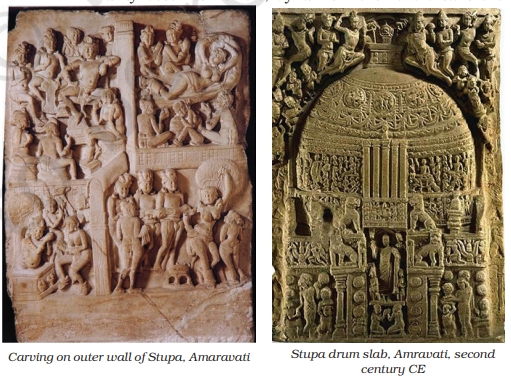
Carving on Stupa of Amravati - Detailed carvings from the Amaravati Stupa, depicting scenes from the life of the Buddha and symbolic motifs of the early Buddhist period. The Dynamic Style of Amaravati Sculptures: Evolutionary Phases
Stone carving at Amaravati changed over time. It shifted from using symbols to show ideas to carving direct human figures of the Buddha with strong emotional depth.
- (a) Early Phase Characteristics: Initial carvings did not include human figures of the Buddha. Artists relied on symbols in story panels to share spiritual ideas.
- (b) Later Phase Characteristics: Later artists carved clear images of the Buddha directly onto the drum panels around the stupa base. Figures were shown in natural poses—facing front, sideways, or from behind—to build lively and layered scenes.
- (c) Signature Sculptural Forms: Figures were carved with slender bodies, often shown in the curved three-bend pose known as tribhanga. The art feels active and deep, using overlapping figures while keeping each shape clean and clear.
Narrative Reliefs: Depictions of Buddha's Life and Jataka Stories
Carved story panels at Amaravati show key life events of the Buddha, turning written traditions into clear visual artwork for visitors to see.
- (i) Panels present life scenes of the Buddha alongside moral lessons from the Jataka tales, creating an easy-to-follow visual guide.
- (ii) The birth of the Buddha is shown with Queen Mayadevi surrounded by her helpers, marking his royal origin.
- (iii) The dream of Queen Mayadevi before his birth is shown as a small elephant, following the early practice of using symbolic figures.
Sculptures of Nagarjunakonda, Goli, and Other Stupa Sites
Following the tradition of Amaravati, nearby locations like Nagarjunakonda and Goli created their own regional carving styles, showing subtle changes in depth and figure movement.
Stylistic Features of Nagarjunakonda and Goli Sculptures
While inspired by the active carvings of Amaravati, artists at Nagarjunakonda and Goli used a calmer approach to physical action and figure depth.
- (i) Carvings here show gentler physical movement compared to the high energy of Amaravati artwork, creating a quieter mood.
- (ii) The panels use shallow carving depth, where body outlines and soft muscle shapes are gently suggested rather than deeply cut.
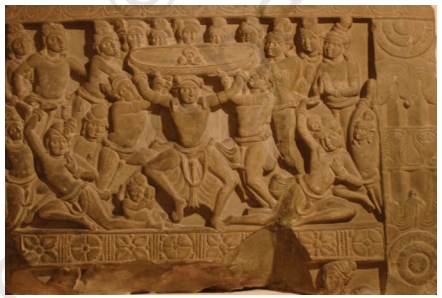
Panel of Nagarjunakonda - A sculptural panel from Nagarjunakonda, depicting scenes from Buddhist mythology and daily life during the ancient period. Presence of Independent Buddha Images at Major Sites
The creation of separate Buddha statues marked a major move toward direct visual worship across South Indian monastic centers.
- (a) These freestanding figures were set up away from story panels, pointing to shared changes in religious practices across the region.
- (b) Standalone Buddha statues have been found at sites including Amaravati, Nagarjunakonda, and Guntapalle.
Rock-Cut and Structured Buddhist Architecture in South India
In addition to large stupas, South India contains important rock-cut cave sites alongside foundations of built temples and residential halls (viharas).
Guntapalle and Anakapalle: Rock-Cut Cave Sites in Andhra Pradesh
Carving halls out of natural rock provided lasting spaces for monks to live, study, and meet together.
- (i) Guntapalle: Located near Eluru, this cave site includes rounded prayer halls (chaitya halls) built around the .
- (ii) Anakapalle: Located near Vishakhapatnam, this site contains rock-cut stupas that show how monastic communities settled near trade routes along the coast.
Sannati: The Major Stupa Site in Karnataka
Artistic styles from Andhra spread westward into modern-day Karnataka, influencing major religious construction sites.
- (a) Sannati Location: Found in the Gulbarga district of Karnataka, Sannati is one of the largest stupa sites uncovered in southern India.
- (b) Sculptural Link: Stone reliefs at Sannati match the artistic style of Amaravati, showing clear cultural sharing between ancient regions.
Structured Chaityas and Viharas: Evidence of Built Architecture
Though wood and brick buildings degrade over time, surviving ruins prove that built temples and monastic living quarters were widespread.
- Survival Challenge: Few freestanding brick or timber prayer halls have stayed intact due to weather and natural wear over hundreds of years.
- Important Surviving Examples: Notable structured sites include the Apsidal Chaitya (Temple 18) at Sanchi and the excavated structural foundations at Guntapalle.
The Development of Buddhist Iconography: Buddha and Bodhisattvas
As Buddhist teachings spread, artistic representation grew to include compassionate spiritual guides known as Bodhisattvas alongside the central Buddha figure.
The Expanding Pantheon: Buddhas and Bodhisattvas in Art
Artistic representation focused on the historical Buddha (Shakyamuni) alongside wise figures who postponed their own final release to help others.
- (i) Art items show the Buddha in varied hand gestures (mudras) and seated or standing postures.
- (ii) Prominent carved figures include Bodhisattvas such as Avalokiteshvara, Padmapani (Lotus-Holder), Vajrapani (Thunderbolt-Holder), Amitabha, and Maitreya (the future Buddha).
- (iii) With the rise of Vajrayana teachings, Bodhisattva figures took on greater importance as symbols of protection, care, and practical help for everyday people.
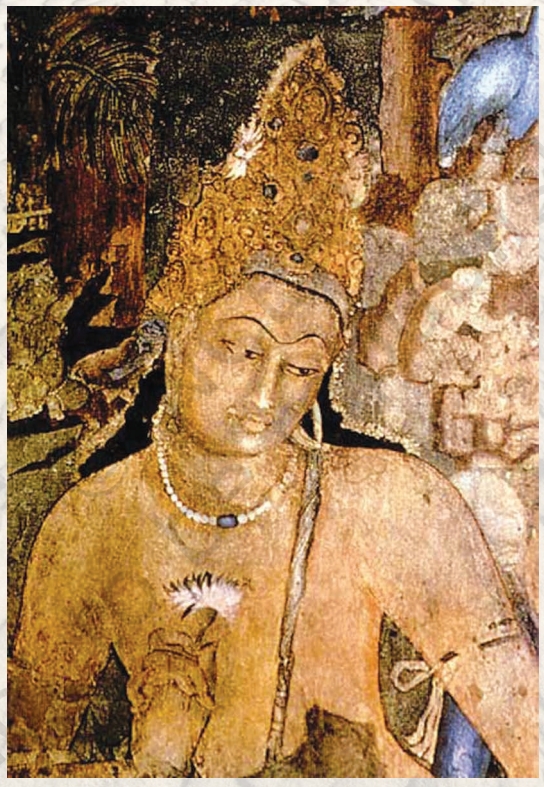
Padampani Bodhisattva Ajanta Cave - A representation of the Bodhisattva Padampani from the Ajanta Caves, symbolizing compassion and the path to Buddhahood.
⚡ Quick Revision Capsule: South Indian Buddhist Sites
A quick summary of key archaeological sites, their main features, and location details:
| Site Name | Key Features | Location / Region |
|---|---|---|
| Amaravati | Colossal stupa, Vedika railing, tribhanga poses, Jataka panels | Andhra Pradesh |
| Nagarjunakonda | Low-relief carving, calm movement, independent Buddha statues | Andhra Pradesh |
| Guntapalle | Rock-cut apsidal chaitya halls from | Eluru, Andhra Pradesh |
| Sannati | Large stupa site linked stylistically to Amaravati reliefs | Gulbarga, Karnataka |
| Anakapalle | Rock-cut stupas and coastal monastic ruins | Vishakhapatnam, Andhra Pradesh |
📝 Summary
The Buddhist sites of South India, including Amaravati, Nagarjunakonda, and Guntapalle, form an important part of ancient Asian art history. Built and expanded between the and early centuries , these sites show a clear transition from symbolic art to human figures of the Buddha and Bodhisattvas like Padmapani. For students, studying these regional hubs explains how architectural forms, carving methods, and spiritual traditions moved across ancient trade paths.
🚀 Quick Revision Points
Essential facts to review before examinations:
- (i) Amaravati is famous for its large dome, carved railings (Vedika), and figures carved in the curved tribhanga stance.
- (ii) Early phase art used symbols for the Buddha, while later phases introduced carved human figures on drum slabs.
- (iii) Nagarjunakonda and Goli carvings feature shallower relief depth and calmer figure movement than Amaravati.
- (iv) Sannati in Karnataka connects directly to the artistic style of Andhra stupa sites.
- 💡 Exam Tip: Remember that early Amaravati art is aniconic (symbolic), while later phases feature explicit Buddha figures and Bodhisattvas like Padmapani and Vajrapani.
❓ Frequently Asked Questions (FAQ)
Q1: What is the main architectural feature of the Amaravati Stupa?
A1: The Amaravati Stupa features a circular walking path (Pradakshinapatha) enclosed by a carved stone railing (Vedika), with dome slabs showing scenes from the Buddha's life.Q2: How do sculptures at Nagarjunakonda differ from those at Amaravati?
A2: Sculptures at Nagarjunakonda show lower relief depth and calmer, less energetic physical movement compared to the dynamic carvings at Amaravati.Q3: What role do Bodhisattvas play in Buddhist art?
A3: Figures like Padmapani and Avalokiteshvara represent compassion and protection, gaining central importance during the growth of Vajrayana Buddhism.
