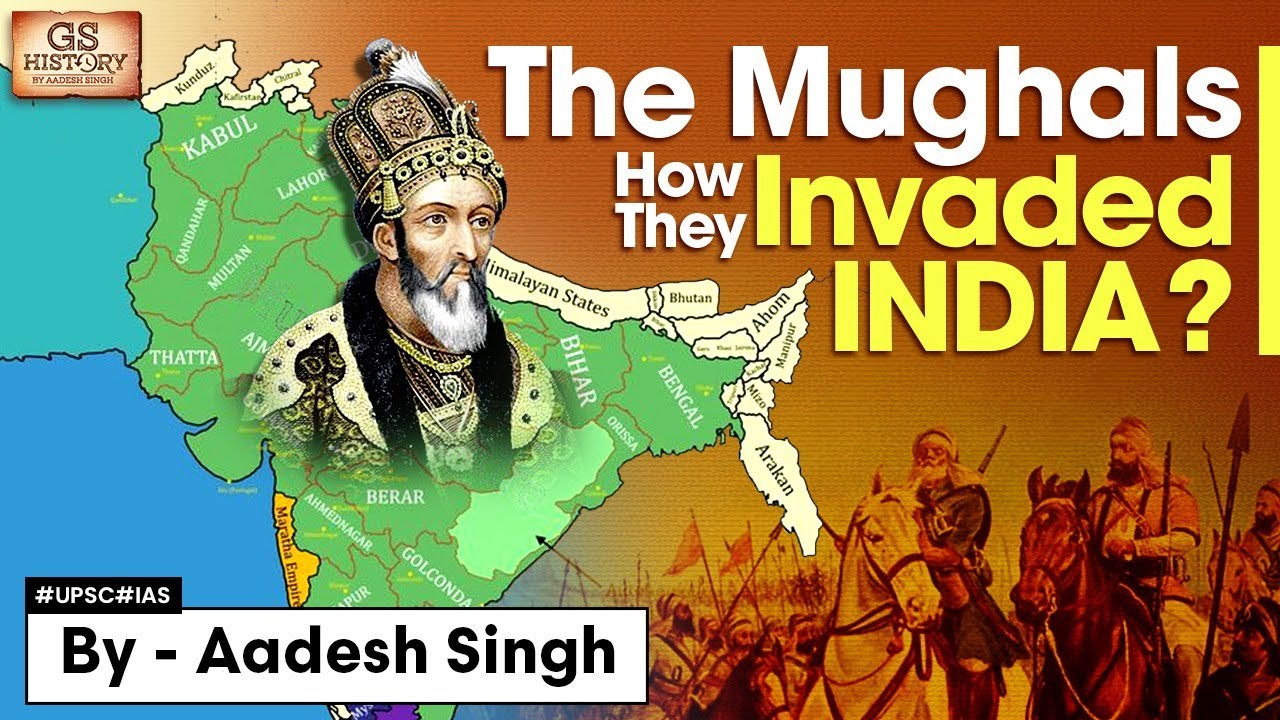
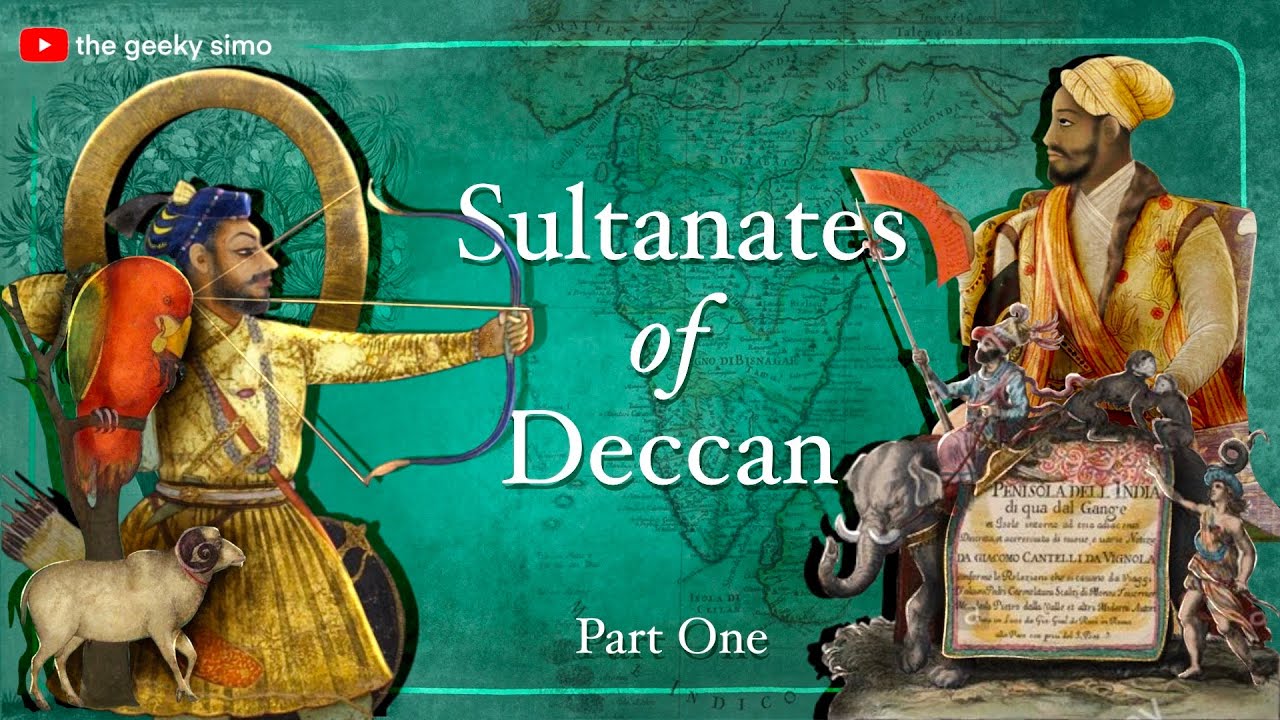
The Deccan Campaigns of Akbar showcase the Mughal Emperor Akbar's strategic expansion in the Deccan region during , highlighting his efforts to establish Mughal suzerainty over resistant Deccani states. These campaigns are significant for students preparing for history exams due to their profound impact on the political landscape of Ahmadnagar, Khandesh, and Bijapur, comprehensively demonstrating the military, diplomatic, and political strategies employed by the powerful Mughal Empire in consolidating its vast territories.
🎯 In this chapter, you will understand:
- How Akbar used diplomatic missions to demand submission from southern rulers.
- The political succession crisis in Ahmadnagar and the heroic defense led by Chand Bibi.
- The military battles that led to the annexation of Berar and Khandesh.
- The strategic fall of Asirgarh Fort in that completed Akbar's southern campaigns.
💡 Why this topic matters: This period marks the first major expansion of the Mughal Empire beyond the Vindhya range, setting the blueprint for future southern operations under Jahangir, Shah Jahan, and Aurangzeb.
🧠 Core Idea:Akbar combined peaceful diplomacy with heavy military pressure to absorb northern Deccani kingdoms and secure strategic fortresses.
Akbar's Assertion of Suzerainty over the Deccani Sultanates
The great Mughal Emperor Akbar was resolute in his ambition to bring the wealthy and strategically vital Deccani states under Mughal suzerainty, initially employing diplomacy before resorting to military force to expand the empire's frontiers southward.
- (i) Previous diplomatic missions and embassies dispatched by Akbar had failed to secure the voluntary submission of the Deccani states, as these rulers remained defiant without the immediate threat of a major military invasion.
- (ii) Akbar formally demanded that the independent Deccani rulers recognize his superior Mughal authority, but these initial attempts to establish peaceful tributary relations yielded no concrete success.
- (iii) The persistent refusal of the Deccani states to voluntarily submit ultimately necessitated the deployment of significant military pressure, justifying a comprehensive campaign to enforce Mughal suzerainty over the region.
Akbar's Diplomatic Offensive in the Deccan (1591)
In the year , Akbar inaugurated his Deccan policy by launching a major diplomatic offensive, sending envoys to several key Deccani states with the clear ultimatum to accept Mughal suzerainty peacefully.

Khandesh's Partial Acceptance Amidst Widespread Deccani Resistance
While the diplomacy largely failed across the region, the state of Khandesh, situated closest to the Mughal border, showed a degree of compliance due to its precarious strategic position, contrasting sharply with the outright rejection from other powerful sultanates.
- (i) The small kingdom of Khandesh, particularly vulnerable to Mughal power, was the only state to partially yield to the diplomatic pressure and envoys.
- (ii) The other major Deccani states, including Ahmadnagar, Bijapur, and Golconda, either unequivocally rejected the Mughal envoys or chose to ignore the demands entirely.
- (iii) Notably, Burhan Nizam Shah of Ahmadnagar showed open defiance by dismissing the Mughal envoy, while other rulers offered only empty promises of future cooperation, effectively stalling Akbar’s demands.
Akbar’s Strategic Preparation for Military Intervention (1591 Onwards)
Following the significant failure of his diplomatic strategy, Akbar strategically shifted his focus, recognizing that military intervention was the only viable path to achieve his objective of securing Mughal suzerainty over the Deccan.
- (a) The Emperor commenced rigorous preparations for a decisive military action in the Deccan, anticipating the necessity of a large-scale campaign.
- (b) The general failure and outright rejection of his diplomacy provided the perfect political justification for the eventual military intervention to enforce his imperial will.
- (c) The revised campaign strategy became centered on aggressively targeting key strategic forts and the ruling heads of the most defiant Deccani states.
Factional Fighting and Mughal Entry into Ahmadnagar (Post-1595)
The death of Burhan Nizam Shah in plunged the Ahmadnagar Sultanate into severe internal disputes and a protracted succession crisis, providing the crucial political opening that paved the way for opportunistic Mughal military entry.
The Complex Nizam Shahi Succession Crisis and Invitation for Mughal Intervention
The vacuum created by the Sultan’s death led to a highly volatile situation where multiple powerful factions backed different claimants to the throne, ultimately leading some desperate Deccani leaders to invite the intervention of the powerful Mughals.
- (i) The throne saw at least four competing candidates contesting the succession, with Bahadur emerging as the primary and strongest claimant favored by a significant faction.
- (ii) The crisis deepened as Ibrahim Adil Shah II of neighboring Bijapur provided external support for Bahadur’s claim, while the respected regent, Chand Bibi, strategically backed her own nephew for the throne.
- (iii) In the midst of this destructive power struggle, prominent Deccani leaders made the fatal error of inviting Mughal intervention, mistakenly viewing them as a potential arbiter in their internal conflict.
Mughal Invasion and the Annexation of Berar (1596)
The combined Mughal forces, led by Prince Murad and the experienced general Abdur Rahim Khan-i-Khanan, marched into the Deccan, initiating the siege of Ahmadnagar which ultimately resulted in the state ceding significant territories.
Chand Bibi's Valiant Defense and the Annexation of Berar Province
The valiant defense of the strategic Ahmadnagar fort by the stateswoman Chand Bibi against the formidable Mughal army temporarily stabilized the region, but ultimately, the sheer military pressure forced a treaty that resulted in the permanent annexation of the crucial province of Berar.
Artistic depiction of Chand Bibi defending Ahmadnagar Fort - (i) The formidable Ahmadnagar fort was defended by the legendary Chand Bibi, who protected the young claimant, Bahadur, during the intense siege by the Mughal forces.
- (ii) After a grueling four-month siege, a temporary peace treaty was negotiated, leading to the province of Berar being permanently ceded to the Mughals in exchange for recognizing the claim of Bahadur to the diminished Ahmadnagar throne.
- (iii) This major territorial concession and the subsequent annexation of Berar deeply alarmed the other neighboring Deccani states, as it established a formidable and permanent Mughal foothold within the southern region.
Combined Deccani Forces Against the Mughals (1597)
In a final desperate attempt to halt the relentless Mughal expansion, a powerful coalition comprising the forces of Bijapur, Golconda, and Ahmadnagar was formed, but their combined efforts to resist the Mughal military machine ultimately ended in defeat.
The Coalition Defeat and the Tragic Fate of Chand Bibi
The united Deccani army's invasion of Berar to dislodge the newly established Mughal presence was decisively crushed, an event that led to the subsequent retreat of the allied forces and the tragic, fatal vulnerability of Chand Bibi.
- (i) The combined Deccani forces bravely invaded the newly annexed Berar province but were soundly defeated by the strategic and superior Mughals in at Astipur.
- (ii) The consequent retreat of the allied forces from Bijapur and Golconda left the state of Ahmadnagar, and specifically the heroic figure of Chand Bibi, politically and militarily exposed.
- (iii) In a tragic turn of events reflecting the internal strife, Chand Bibi was subsequently murdered by one of her own disgruntled political factions, effectively ending her crucial political influence and ability to unify resistance in the Deccan.
The Second Siege of Ahmadnagar and Complete Annexation (1600)
Following the dissipation of the united resistance and the capture of Bahadur Nizam Shah, the Mughals launched a final decisive siege, successfully integrating the core territories of Ahmadnagar into the expanding Mughal Empire by the year .
Territorial Integration and Challenges to Mughal Administration
With the capture of the final ruler, the Mughal annexation of Ahmadnagar was formalized, marking a major milestone for Akbar, though the new territorial acquisitions presented immediate and ongoing challenges to the imperial administration.
- (i) The capture of the last claimant meant that virtually no Nizam Shahi prince remained to negotiate or offer symbolic resistance to the all-powerful Mughals.
- (ii) Despite the successful capture of the fort and the capital, the Mughal expansion beyond the immediate control of the core Ahmadnagar territories remained restricted, indicating lingering local resistance.
- (iii) The complexity of administering the newly conquered region was further compounded by persistent internal disputes and rivalries among the key Mughal commanders themselves.
Akbar's Direct Campaign in Khandesh and the Fall of Asirgarh (1601)
In the final phase of his southern campaign, Akbar personally moved his imperial camp into Malwa and subsequently into Khandesh, setting his sights on the most strategically vital and formidable fort in the region, Asirgarh.
The Great Siege of Asirgarh Fort and the Completion of Deccan Expansion
The act of disrespect shown by the ruler of Khandesh toward Prince Daniyal provoked the final military action by Akbar himself, culminating in the historic, albeit controversial, siege and subsequent surrender of the legendary Asirgarh fort in .
- (i) The primary military action was triggered by a calculated act of disrespect and refusal to submit shown by the Khandesh ruler, Miran Bahadur Khan, toward Prince Daniyal, the son of Akbar.
- (ii) The complex siege of the seemingly impregnable Asirgarh fortress was marred by reports of pestilence and fierce resistance but ultimately concluded in the year with the surrender of the fort and its ruler.
- (iii) With the fall of this last great bastion, the entire state of Khandesh was fully absorbed and integrated into the Mughal Empire, effectively completing the ambitious first phase of Akbar’sDeccan expansion.
⚡ Quick Revision Capsule: Akbar's Deccan Conquests
A structured timeline and summary of major milestones during the Mughal southern campaigns from to :
| Year | Target Region / Event | Key Result & Historical Impact |
|---|---|---|
| Diplomatic Ultimatums dispatched | Envoys sent to Khandesh, Ahmadnagar, Bijapur, and Golconda; only Khandesh complied partially. | |
| Ahmadnagar Succession Crisis | Death of Burhan Nizam Shah triggered civil war; rival factions invited Mughal intervention. | |
| First Siege of Ahmadnagar | Heroic defense by Chand Bibi; peace treaty signed ceding Berar to Mughals. | |
| Battle of Astipur | Combined Deccani coalition defeated in Berar; Chand Bibi later murdered by internal rivals. | |
| Fall of Ahmadnagar & Asirgarh | Full annexation of Ahmadnagar () and capture of Asirgarh Fort in Khandesh (). |
📝 Summary
The comprehensive Deccan campaigns orchestrated by Akbar between stand as a pivotal chapter in Mughal history, showcasing the empire's use of a powerful combination of diplomatic strategy, overwhelming military pressure, and subtle political maneuvering. These events were instrumental in firmly establishing Mughal dominance over the sultanates of Ahmadnagar, Khandesh, and parts of Bijapur. Understanding these campaigns is therefore essential for students diligently studying the patterns of Mughal imperial expansion, the political intricacies of the Deccan region, and the complex historical processes that shaped the map of 17th-century India.
🚀 Quick Revision Points
Essential facts to review before examinations:
- (i) Akbar initiated his southern policy in using diplomacy before turning to military force.
- (ii) Khandesh was the only state that initially accepted partial Mughal demands due to its vulnerable location.
- (iii) Chand Bibi defended Ahmadnagar with distinction but was killed due to internal palace rivalries.
- (iv) The capture of Asirgarh Fort in marked the final major conquest of Akbar's reign.
- 💡 Exam Tip: Focus on the treaty of regarding the ceding of Berar and the strategic importance of Asirgarh Fort as the key turning points frequently tested in history exams.
❓ Frequently Asked Questions (FAQ)
Q1: Why did Akbar start his Deccan campaigns?
A1: Akbar wanted to expand his empire's borders southwards, protect his southern trade routes, and establish Mughal control over the wealthy Deccani sultanates.Q2: Who was Chand Bibi and what was her role?
A2: Chand Bibi was the regent of Ahmadnagar who famously defended the Ahmadnagar Fort against Mughal forces led by Prince Murad in .Q3: What was the significance of the siege of Asirgarh in 1601?
A3: Asirgarh Fort in Khandesh was considered impregnable; its fall in secured the Mughal gateway to Southern India and was Akbar's last major military achievement.