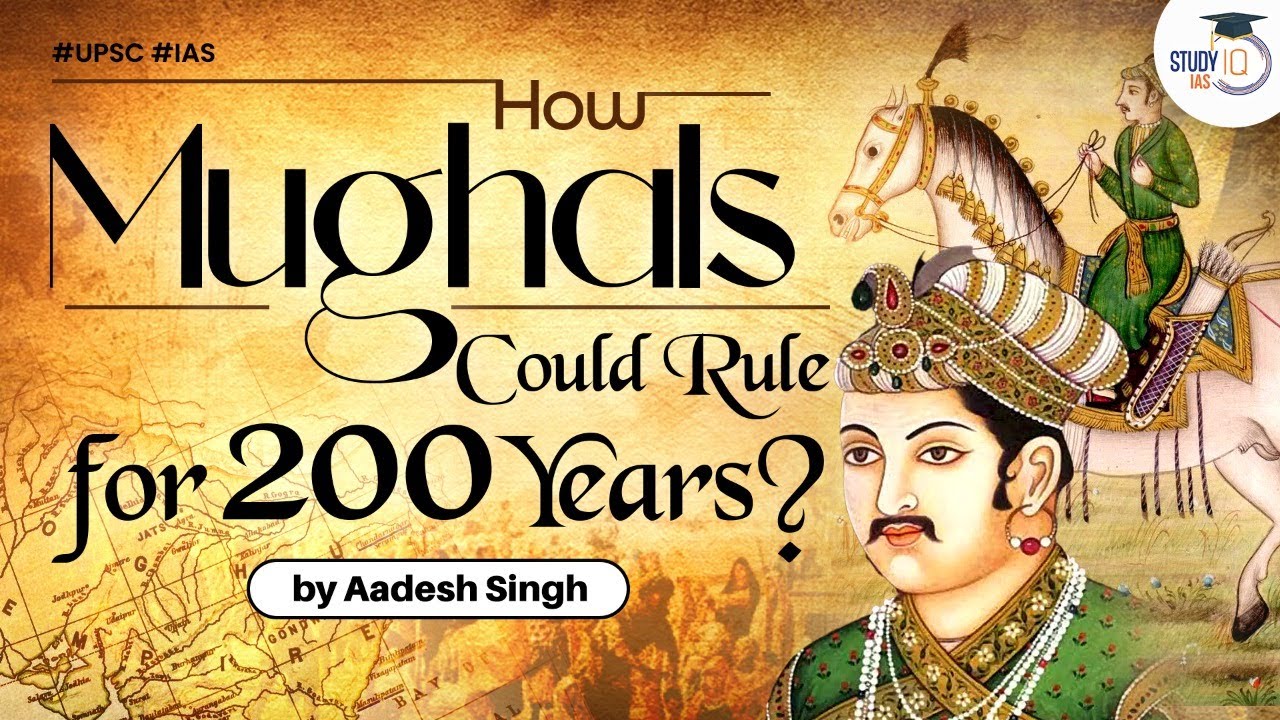
The economic and social conditions in the Mughal Empire from the reign of Emperor Akbar () to the late show a lively period marked by big political challenges, strong farming growth, city expansion, and deep cultural exchange. This detailed historical overview helps students preparing for exams by explaining the village economy, land ownership, trade networks, city life, and learning fostered under Mughal rule.
🎯 In this chapter, you will understand:
- How farming and village life formed the backbone of the Mughal economy.
- The systems of land rights, taxes, and state support for farmers.
- How cities grew through trade, crafts, markets, and labor.
- The rich blend of art, architecture, languages, and ideas across the empire.
💡 Why this topic matters: It reveals how rural farming and busy city trade worked together to build one of the richest empires in world history.
🧠 Core Idea: Mughal prosperity rested on steady farming taxes, active trade routes, and strong support for art and learning, despite big gaps between the rich and the poor.
Economic and Social Conditions in the Mughal Empire
The Mughal Empire expanded its land, kept administrative stability, and helped the economy grow from the into the .
The main strength of the Mughal period came from its structured setup. This framework brought farming success, growing urban centers, active trade networks, and booming art and literature across India.
- (i) Even with early stability, heavy political and administrative challenges grew during the fast land expansion of the late , straining imperial resources.
- (ii) Groundwork for stability was set during Akbar's rule through smart land revenue and administrative reforms that made government work smoother.
- (iii) Major urban centers grew into busy places for trade, learning, and cultural sharing that fueled the economy.
Village Life and Standard of Living in Mughal India
Village society was the essential base of the Mughal economy, where everyday farming and old traditions shaped rural life for most people.

Peasants and the Rural Economy
Farmers worked around crop seasons with help from government loans and local land rights, which decided their economic freedom and tax duties.
- (i) Government loans called Taccavi gave cash support to farmers during hard times or natural disasters so they could buy tools and expand farming for long-term agricultural stability.
- (ii) Khudkasht peasants were a privileged group of farmers who owned hereditary rights to their land and enjoyed economic autonomy.
- (iii) Most daily village business used a simple barter system, but people used real cash to pay taxes and buy goods from outside markets.
Living Conditions of the Masses
Daily life in Mughal society showed a huge gap between the rich rulers and ordinary working people.
- (a) Travel logs written by European visitors showed extreme differences in Mughal India: wealthy nobles lived in luxury while common farmers and workers lived with very little.
- (b) Everyday meals across the empire centered on staple foods like wheat, rice, lentils, and local vegetables, varying by regional climate.
- (c) Simple clothes and homes clearly showed the wide economic disparities between different social ranks.
Social Structure, Education, and Traditions
Village social life relied on shared community events, local faith, and traditional schooling that kept the established social order intact.
- Social bonds: People stayed connected by celebrating local festivals and religious events together.
- Education: Local teachers called gurus and religious schools like Maktabs and Madrasas taught children basic reading and religious books.
- Stratification: Rural social levels depended heavily on powerful landholders called zamindars and traditional land rights.
Land Ownership and Agriculture in the Mughal Era
Farming was the main source of income for the Mughal economy, powered by organized land rights, varied crops, and state support.
Land Tenure and Peasant Rights
Land rules balanced the traditional rights of farmers with the right of the Mughal state to gather taxes through zamindars.
- (i) Farmers held customary rights to farm and pass land to their children as long as they paid their required land revenue tax to the government.
- (ii) Wealthy Zamindars held large tracts of land and collected taxes, which sometimes led them to unfairly treat poorer farmers.
- (iii) Rules for land tenure systems varied from region to region, shaping local power dynamics differently across the empire.
Agricultural Growth and Innovations
The Mughal period encouraged farmers to grow more crops through better tools and profitable commercial plants.
Irrational tools like the Persian wheel helped boost farming yields during the Mughal era. - (a) Growing commercial cash crops like cotton and indigo boosted local businesses and foreign trade.
- (b) Better farming tools, including Persian water wheels for watering fields, improved overall crop yields.
- (c) Large grain storehouses kept extra food safe for trade and provided emergency relief during food shortages.
State Support for Agriculture
The imperial government helped farmers directly, though harvest results still depended heavily on weather conditions.
- Incentives and loans: The government gave short-term Taccavi loans to help farmers clear new land and grow more food.
- Research and infrastructure: The state built helpful canals and roads that made it easier to move crops to local markets.
- Environmental factors: Good harvests depended on regular monsoon rains, which decided crop amounts each year.
Urban Life and Wage Economy
Cities in the Mughal Empire were lively centers filled with craft markets, skilled workers, and varied cultures, though most city workers lived simply.
Urban Workforce and Living Standards
Most city residents worked hard to keep urban businesses and services running on modest pay.
- (i) The urban poor made up most of the city population, including craftsmen, domestic servants, and soldiers.
- (ii) Low daily pay meant workers earned just enough for basic needs, keeping the city wage economy tight and modest.
- (iii) Community charities backed by wealthy nobles gave free food and basic shelter to poor residents in times of need.
Trade and Commerce in Cities
Big cities served as political centers and major engines for regional trade and manufacturing.
- (a) Famous city markets in Agra, Delhi, and Lahore connected local trade routes with foreign traders.
- (b) Organized worker groups called guilds helped craftsmen produce famous textiles, fine metalwork, and luxury items.
- (c) Building public projects like roads, inns, and bridges boosted urban development and kept trade moving smoothly.
Urban Society and Culture
Mughal cities brought diverse groups together, creating a rich shared culture in public spaces.
- Neighborhoods: City areas were divided into distinct quarters reflecting the varied faiths and languages of residents.
- Public spaces: Local bazaars, gardens, and mosques served as key gathering spots for community events and entertainment.
- Urban culture: Daily mixing between people of different backgrounds created a shared city lifestyle.
Cultural Exchange and Intellectual Growth
Royal Mughal courts supported learning, religious respect, art, and early science, creating a rich shared culture across India.
Arts, Literature, and Architecture
Royal support created famous buildings and artistic styles that remain iconic today.
- (i) Grand stone monuments, strong forts, and detailed mosques show a blend of Indian, Persian, and Timurid architectural designs.
- (ii) Fine miniature paintings and detailed writing arts flourished in court workshops to illustrate royal history books.
- (iii) Royal leaders encouraged writers and musicians, expanding the cultural sophistication of the empire.
Religion and Cultural Syncretism
The Mughal era encouraged cultural sharing and open ideas, guided by tolerance under Akbar.
- (a) Respected Sufi teachers spread peaceful spiritual ideas that helped different religious groups live together in harmony.
- (b) The Persian language served as the official court language, while Islamic schools influenced higher education.
- (c) Akbar's policy of open tolerance helped people of various faiths contribute peacefully to regional art and life.
Science, Trade, and Cultural Exchanges
The empire shared ideas and goods with neighboring countries, advancing scientific learning and global connections.
- Scientific progress: Scholars made progress in astronomy, traditional Unani medicine, and math by blending Persian and Indian ideas.
- Trade routes: Land and sea trade routes made it easy to trade goods and share ideas with Central Asia, Persia, and Europe.
- Knowledge exchange: Visiting scholars and travelers connected India with global centers of learning in nearby lands.
⚡ Quick Revision Capsule: Mughal Socio-Economic System
A quick comparison of core socio-economic sectors during the Mughal era:
| Sector | Key Features | Impact / Legacy |
|---|---|---|
| Rural Economy | Dependence on seasonal harvests, Khudkasht land rights, and state Taccavi loans | Maintained baseline agricultural stability and state tax revenue |
| Agricultural Production | Cultivation of staple grains alongside cash crops like cotton and indigo | Fueled raw materials for domestic craft guilds and foreign export |
| Urban Centers | Thriving markets in Agra, Delhi, and Lahore backed by craft guilds | Created bustling commercial hubs despite low wages for urban laborers |
| Cultural Synthesis | Blending of Persian, Timurid, and Indian styles in art, architecture, and language | Left enduring monuments, miniature paintings, and a rich composite culture |
| Scientific Exchange | Advancements in astronomy, mathematics, and traditional Unani medicine | Connected Indian scholars with global networks across Central Asia and Europe |
📝 Summary
The study of the Mughal Empire from the to the shows a powerful state built on steady farming, busy trade cities, and rich art. Understanding village setups, land rules, city growth, and shared culture gives students a clear view of historical India. Government reforms, active trade, and support for learning left a lasting legacy on the region's history.
🚀 Quick Revision Points
Essential facts to review before examinations:
- (i) Taccavi loans provided government financial relief to farmers for expanding cultivation or coping with crop failures.
- (ii) Khudkasht peasants held inherited rights to farm their lands while paying annual revenue to the state.
- (iii) Cash crops like indigo and cotton powered foreign trade networks and supported urban craft production.
- (iv) Major urban centers like Agra, Delhi, and Lahore served as administrative and trade hubs.
- 💡 Exam Tip: Pay special attention to terms like Taccavi, Khudkasht, and Zamindars, as well as the distinction between staple crop production and commercial cash crops.
❓ Frequently Asked Questions (FAQ)
Q1: What were Taccavi loans in the Mughal Empire?
A1: They were emergency loans provided by the Mughal state to help farmers buy seeds, tools, or expand cultivation during difficult times.Q2: How did Khudkasht peasants differ from other rural farmers?
A2: Khudkasht peasants held hereditary rights to cultivate their specific lands and enjoyed higher economic independence in the village hierarchy.Q3: What were the primary cash crops driving Mughal trade?
A3: Indigo and cotton were the main commercial crops that supported internal textile crafts and lucrative foreign trade.