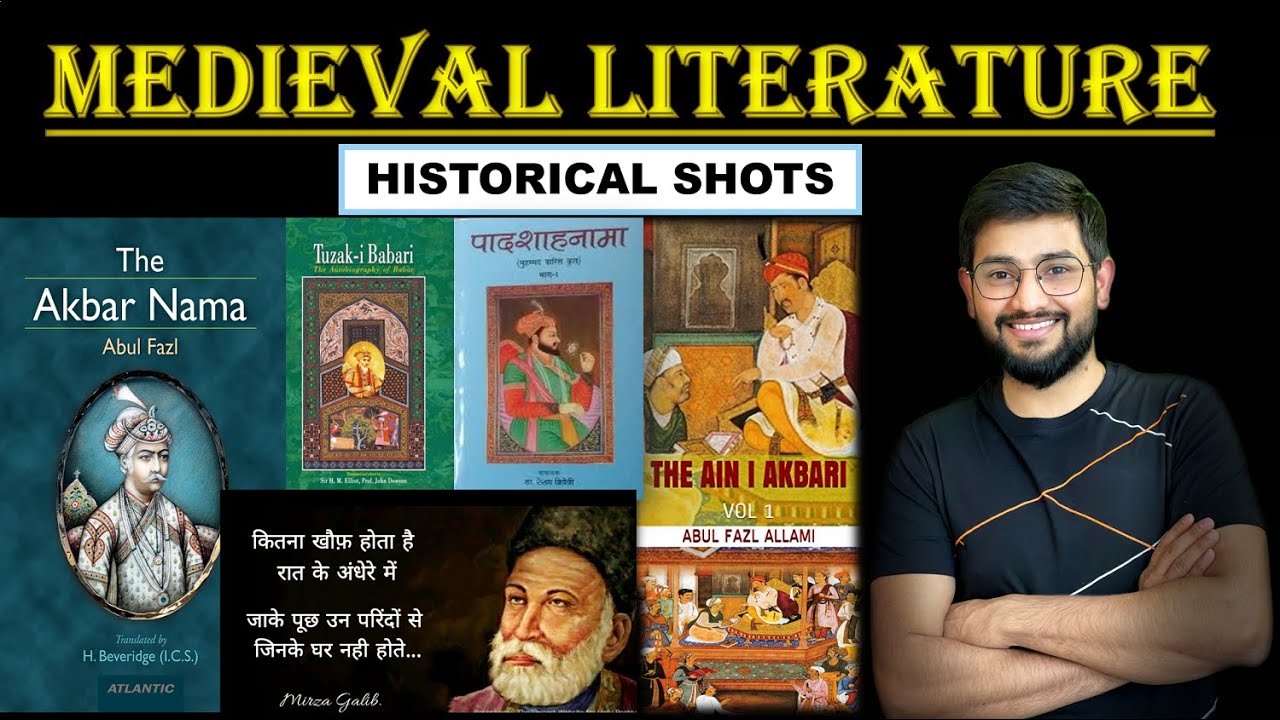
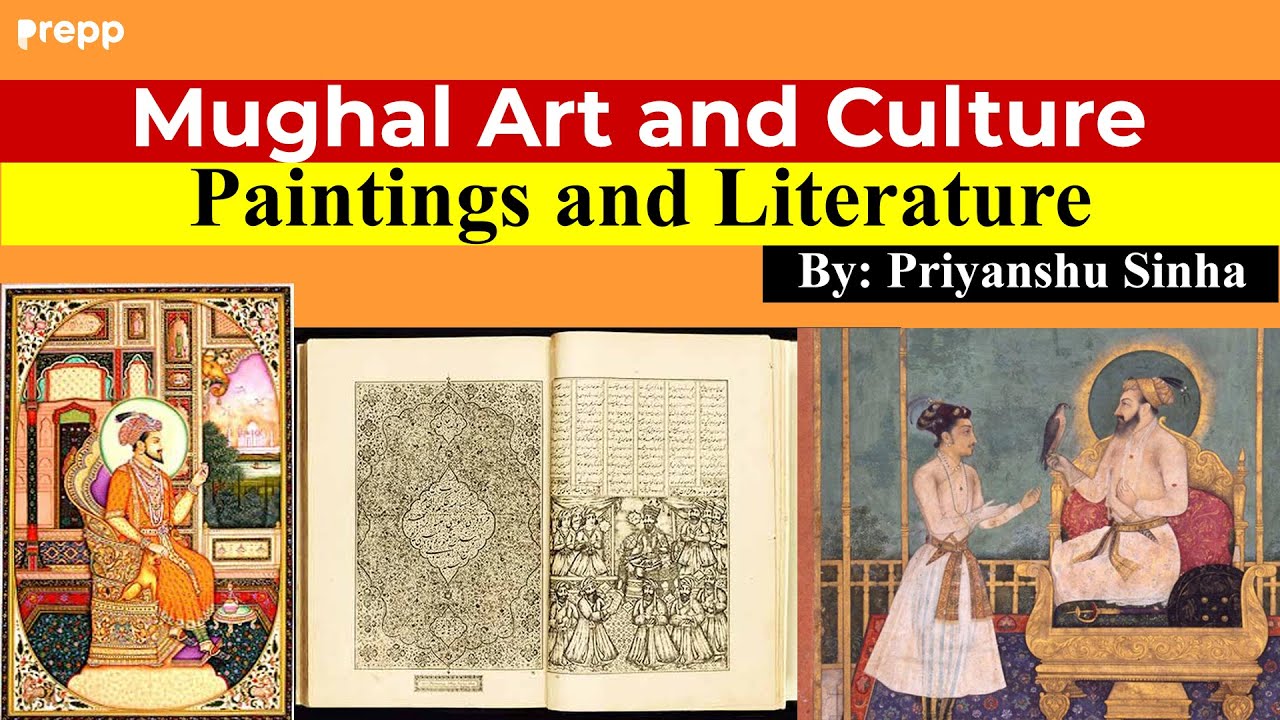
The rich era of medieval India saw an incredible growth in culture. This period was marked by the wide expansion of Sanskrit literature, the arrival of influential Arabic and Persian works, the rise of regional languages, and a deep mixing of styles in fine arts. This mix shows strong intellectual activity and cultural harmony across the region. This topic is essential for students preparing for exams to understand key writers, major book translations, and literary movements that shaped Indian history.
🎯 In this chapter, you will understand:
- How Sanskrit literature continued to flourish with deep philosophy and legal commentaries.
- The growth of Persian as an administrative language and its impact on history writing.
- How Bhakti saints and regional kings boosted local languages like Hindi, Bengali, and Marathi.
- The blending of Indian and Perso-Arabic traditions in music and fine arts.
💡 Why this topic matters: It highlights how diverse traditions blended to create India's rich medieval culture and literary heritage.
🧠 Core Idea: Medieval India witnessed a remarkable exchange of ideas through language, translations, literature, and music under varied patronage.
Evolution of Indian Literature and Cultural Fusion in Medieval Period ()
Medieval India acted as a meeting point for different cultures. This led to combined achievements across Sanskrit, Persian, Arabic, regional tongues, and artistic traditions.
This period tells the story of how varied traditions met and grew together, supported by different rulers who encouraged artistic and literary work across many regions.
- (i) The intellectual world saw strong activity in complex Sanskrit philosophy and storytelling, linking the present to ancient ideas.
- (ii) Government support established Persian as the main language for court work and high culture, introducing new forms of writing and history.
- (iii) At the grass-roots level, local languages grew rapidly, accompanied by a creative blending of styles in music and arts.
Sanskrit Literature: Continuity and Deepening Thought in Medieval India
Even after Turko-Afghan rulers came to power, Sanskrit remained an important language for philosophy, higher learning, and creative writing throughout the medieval period.

Sanskrit Philosophical and Narrative Masterpieces
The medieval era saw intense intellectual work that produced many new Sanskrit writings, showing continuous growth rather than decline.
- (i) Scholars from various schools wrote large Sanskrit texts covering poetry, science, and philosophical debate.
- (ii) Great thinkers like Ramanuja (who developed Visistadvaita), Madhava (who taught Dvaita), and Vallabha (who explained Shuddhadvaita) organized and refined Vedic philosophy.
- (iii) Important progress was also made in non-religious fields such as drama, poetry, medical guides, astronomy, and music theory.
Scholarly Commentaries and Compilation of Legal Digests
An essential task during this time was writing authoritative commentaries and legal collections on the Dharmashastra. This work was especially active between the to update old laws.
- (a) The need to explain and update older legal books led to many detailed Dharmashastra commentaries across different regions.
- (b) Famous legal writers included Vijnaneshwar, who wrote the Mitakshara commentary on the Yajnavalkya Smriti, and Chandeshwar of Bihar, who authored multiple legal guides.
- (c) The Jain community contributed greatly to Sanskrit learning, especially through scholars like Hemachandra Suri, an advisor to the Solanki kings.
Limited Cross-Cultural Translation Efforts into Sanskrit
Although cultural mixing was common, only a few Islamic and Persian books were translated directly into Sanskrit compared to translations made in the opposite direction.
- (i) A small number of specific works, mainly dealing with romance or practical sciences, were adapted from Persian and Islamic collections into Sanskrit.
- (ii) One example was the translation of the Persian romantic story of Yusuf and Zulaikha into Sanskrit. In addition, works about scientific tools like the astrolabe were translated to expand Indian astronomical knowledge.
Arabic and Persian Literature: Patronage and the Art of History Writing in India
Political changes made Arabic and Persian vital languages in administration and scholarship, leading to a unique blend of local and foreign traditions.
Arabic Literary Tradition: Confined to Scholarly Circles
While Persian was used in courts, Arabic remained the main language for religious rules, Islamic law, and classical religious study.
- (i) Arabic was mostly used by religious scholars, theologians, and thinkers focusing on Islamic law and classical religious texts.
- (ii) Some scientific and astronomical books in Arabic were translated into other languages like Hindi and Persian, showing a practical interest in technical knowledge.
Persian Literary Dominance and Historical Records
Persian became the primary language for government work and creative literature across the subcontinent starting around the .
- (a) Persian became the official language for government documents, literature, and historical records in the courts of Delhi and the Deccan.
- (b) Writers like Masud Sad Salman and the poet-musician Amir Khusrau enriched Indian literature by adding local themes and words to their Persian works.
- (c) Proper historical record-keeping developed in Persian through court historians like Ziauddin Barani (author of Tarikh-i-Firuz Shahi), Afif, and Isami.
- (d) Important Sanskrit books on medicine, music, and history—such as Kashmir's historical text Rajatarangini—were translated into Persian for court readers.
The Ascendancy of Regional Languages and Bhakti Literature
The growth of local languages made literature accessible to everyone, strengthened regional identity, and carried spiritual messages to the common public.
Emergence, Popularization, and Royal Patronage
Languages like Hindi, Bengali, and Marathi had old roots, but they grew quickly during the medieval period due to religious movements and royal support.
Bhakti saints helped popularize regional languages through devotional poetry and songs. - (i) Languages like Hindi, Bengali, and Marathi can be traced back to language shifts around the and earlier.
- (ii) The Bhakti movement played a major role in expanding regional tongues because saints sang and wrote in the everyday language of local people.
- (iii) Local rulers and regional kings provided financial support and patronage that helped these languages mature.
Regional Literary Masterpieces and Translation of Epics
Regional writings included love stories, historical tales, and translations of ancient epics into popular local dialects.
- (a) Rulers like Nusrat Shah of Bengal funded translations of the great Sanskrit epics, the Mahabharata and Ramayana, into Bengali.
- (b) Sufi writers worked alongside Bhakti poets. For instance, Malik Muhammad Jaisi wrote the romantic epic Padmavat in the Awadhi dialect of Hindi.
- (c) Strong literary traditions also developed in Telugu, Marathi, and other regional languages in Southern and Western India.
Fine Arts and Cultural Synthesis in Medieval Indian Music
The fine arts, especially music, reflected the era's collaborative spirit by combining native Indian styles with Perso-Arabic traditions.
Innovations and Fusion in Musical Traditions
New musical forms and instruments brought by Turkic rulers were smoothly integrated into the traditional Indian music system.
- (i) New instruments like the rabab and sarangi, along with new scales, enriched classical Indian music.
- (ii) Amir Khusrau created the sitar (a mix of the Persian tambura and Indian veena) and introduced new musical modes (ragas).
- (iii) Indian music texts like the Ragadarpan were translated into Persian during the reign of Firuz Shah.
Royal and Sufi Patronage of Music
Music grew both in the spiritual environment of Sufi shrines and in royal courts.
- (a) Rulers like Sultan Husain Sharqi of Jaunpur (who helped develop the Khyal style) and Raja Man Singh of Gwalior actively supported music.
- (b) Musical forms developed in devotional Sufi shrines (where Qawwali grew) as well as in royal court settings.
- (c) Rulers like Sikandar Lodi continued to encourage and support music on a large scale.
⚡ Quick Revision Capsule: Medieval Indian Literature & Cultural Fusion
A summary of key languages, figures, literary contributions, and musical developments during the medieval period:
| Category | Key Figures & Writers | Major Works & Contributions |
|---|---|---|
| Sanskrit Literature | Ramanuja, Madhava, Vallabha, Vijnaneshwar, Hemachandra Suri | Philosophical systems, Mitakshara legal commentary, Dharmashastra digests, scientific texts. |
| Persian & Arabic | Amir Khusrau, Ziauddin Barani, Masud Sad Salman, Isami | Tarikh-i-Firuz Shahi, translations of Rajatarangini and Ragadarpan into Persian. |
| Regional Languages | Malik Muhammad Jaisi, Bhakti Saints, Nusrat Shah (Patron) | Padmavat in Awadhi, Bengali translations of Ramayana & Mahabharata. |
| Fine Arts & Music | Amir Khusrau, Sultan Husain Sharqi, Raja Man Singh | Invention of Sitar, development of Khyal style and Qawwali, creation of new ragas. |
📝 Summary
The medieval period () was a landmark era of cultural mixing in India. It enriched Sanskrit literature, brought in major Persian and Arabic works, and raised the status of regional languages through the Bhakti movement. Music and arts saw a lasting blend of Indian and Perso-Arabic traditions through the work of figures like Amir Khusrau, Ramanuja, Hemachandra Suri, and Malik Muhammad Jaisi. Studying this period helps students understand India's shared history and artistic growth.
🚀 Quick Revision Points
Essential facts to review before examinations:
- (i) Sanskrit remained a strong medium for deep philosophy, legal commentaries like Mitakshara, and scientific treatises.
- (ii) Persian served as the main court language and introduced detailed history writing through scholars like Ziauddin Barani.
- (iii) Regional languages expanded quickly thanks to Bhakti saints and local rulers like Nusrat Shah.
- (iv) Musical traditions fused Indian and Persian elements, creating new instruments like the sitar and epic works like Padmavat.
- 💡 Exam Tip: Focus on the specific contributions of Amir Khusrau, key court historians like Ziauddin Barani, and epic translations sponsored by regional kings.
❓ Frequently Asked Questions (FAQ)
Q1: What role did Sanskrit play during the medieval period?
A1: Sanskrit continued to be an important language for philosophy, law, medical guides, and technical literature. Works by thinkers like Ramanuja and legal commentaries like Mitakshara were written during this era.Q2: How did Persian become a major language in medieval India?
A2: Persian was adopted as the official administrative and court language by the Delhi Sultanate and Mughal rulers. It was widely used for record-keeping, historical chronicles, and translations of native texts.Q3: What were the major musical developments in medieval India?
A3: This period saw a blend of Indian and Perso-Arabic music traditions. Amir Khusrau introduced the sitar and new ragas, while new forms like Khyal and Qawwali developed under royal and Sufi patronage.