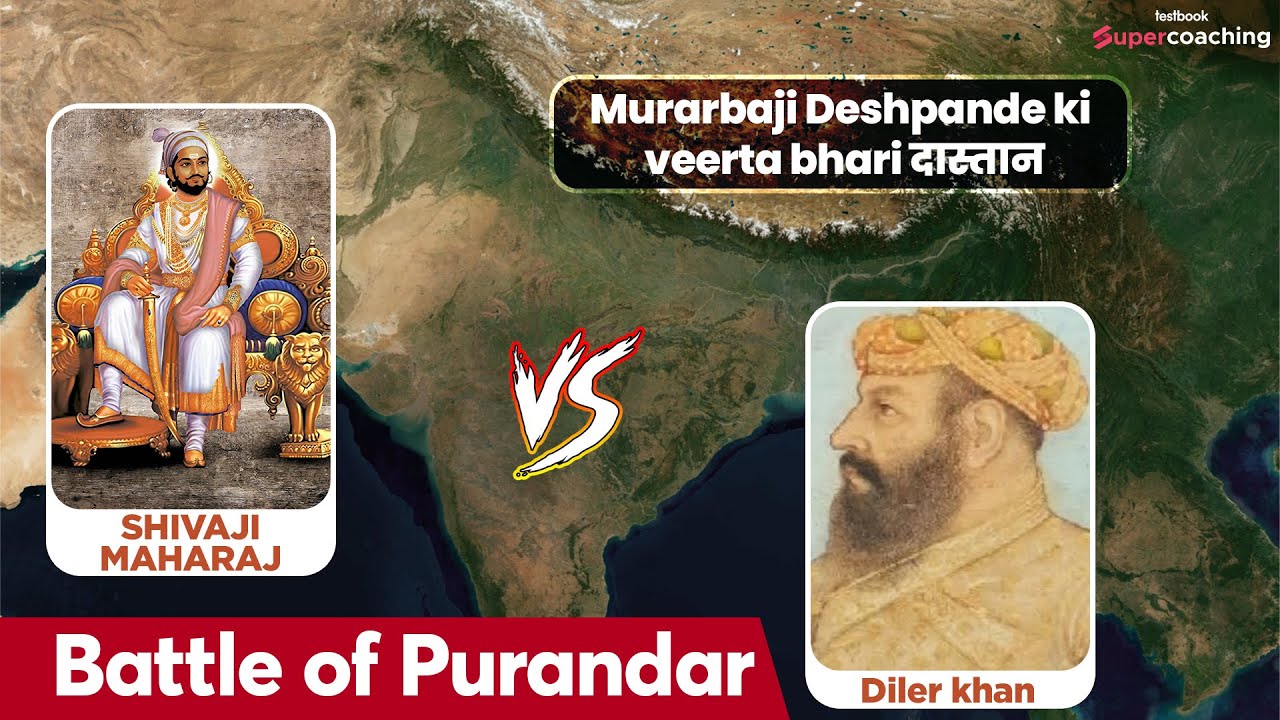
The Treaty of Purandar, Shivaji’s grand coronation, and his subsequent administrative and military reforms mark crucial turning points in Indian history. These momentous events encapsulate Chhatrapati Shivaji's unwavering struggles against the powerful Mughals, his pioneering approach to governance, and his lasting achievements in establishing an independent Maratha state. This comprehensive topic is essential for students preparing for competitive examinations as it provides clear insights into the military strategies, political maneuvers, and innovative administrative systems of the Maratha Empire.
🎯 In this chapter, you will understand:
- How conflict resumed with the Mughals after the Treaty of Purandar, leading to Shivaji's coronation in .
- The structure and key roles of the Ashtapradhan (Eightfold Ministry) in Maratha governance.
- The features of Shivaji’s disciplined military, standing cavalry (paga), and southern expeditions.
- The revenue administration, land assessments, and the strategic levies of Chauth and Sardeshmukhi.
💡 Why this topic matters: It highlights how a regional power challenged a vast empire through organized military discipline, strong land administration, and administrative self-rule.
🧠 Core Idea: Strategic political resilience combined with systematic governance structures laid the foundation for long-term Maratha sovereignty.
Chhatrapati Shivaji’s Resurgence: Conflict and Coronation (1670–1680)
The renewed conflict following the Treaty of Purandar and subsequent challenges with the Mughal Empire decisively shaped Shivaji’s rapid rise as the most formidable Maratha sovereign in the Deccan region.
The breakdown of peace with the Mughals, brought on by Emperor Aurangzeb's policies, reignited Shivaji’s territorial conquests and expanded his influence across western India.
- (i) Emperor Aurangzeb provoked Shivaji by taking a narrow view of the Treaty of Purandar after the failed Bijapur expedition, giving Shivaji a direct reason to restart military actions.
- (ii) Shivaji firmly opposed the Mughal demand to give up 23 forts and annual revenues of four lakhs of hun without fair compensation or recognition.
- (iii) In , Shivaji resumed his campaign against the Mughals, highlighted by the second sacking of the wealthy trade port of Surat, which damaged Mughal finances and prestige.
- (iv) Over the next four years (), Shivaji retook Purandar and many other lost forts while the Mughals were distracted by an Afghan uprising on their north-western border.
- (v) In , Shivaji’s coronation at Raigarh formally raised his status from a regional leader to an independent king and founder of the Maratha Empire.
- (vi) His coronation improved his social and political standing, giving him the authority to make equal treaties with the Deccani Sultans of Bijapur and Golconda.
Shivaji’s Innovative Administration: Strategic Synthesis of Governance
Chhatrapati Shivaji’s state administration combined existing Deccani governance practices with new reforms designed to increase efficiency, accountability, and central control.

The Ashtapradhan Council: The Eightfold Ministry of the Maratha State
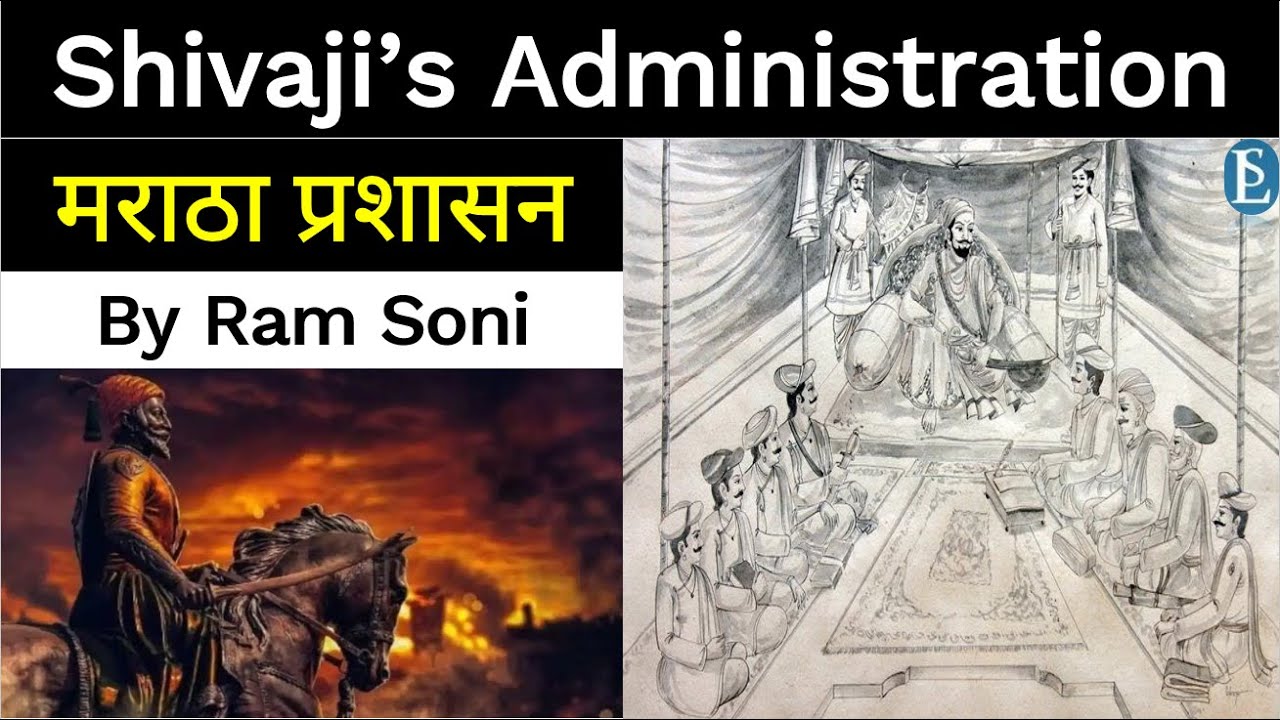
Shivaji set up an eight-member council of ministers called the Ashtapradhan. Each minister was appointed by the king and managed a specific department.
- (i) All eight members were directly answerable to the king and functioned as advisers rather than an independent decision-making body.
- (ii) The Peshwa (Prime Minister) looked after general finances and administration, while the Sar-i-Naubat (Senapati) headed the army and military operations.
- (iii) The rest of the council included the Majumdar (Accountant General), the Wakenavits (Intelligence and Household Affairs), the Surunavis or Chitnis (Secretary for correspondence), the Dabir (Foreign Affairs and Ceremonies), the Nyayadhish (Chief Justice), and the Panditrao (High Priest for religious affairs).
Shivaji’s Major Achievements: Military Discipline, Revenue Systems, and State Building
The achievements of Chhatrapati Shivaji stem from his organized army, a fair revenue system, and strong state foundations.
Military System: Discipline, Standing Cavalry, and Fort Defense
Shivaji’s military system emphasized strict discipline, stopped unorganized looting, and paid soldiers regular cash salaries.
- (i) Plundering was strictly forbidden in Shivaji’s army, and regular cash salaries helped build loyalty among soldiers.
- (ii) The core of his army was a standing cavalry called the paga, consisting of 30,000 to 40,000 professional soldiers supervised by officers called havaldars.
- (iii) His expansive Karnataka expedition, supported by Qutb Shah of Golconda, brought valuable territorial gains in the south.
Revenue System: Land Assessment and Taxation (Chauth and Sardeshmukhi)
The Maratha Revenue System was based on the land settlement model of Malik Ambar in the Deccan, later updated by Annaji Datto in .
Diagram representing land revenue assessment and border tax collection - Land Survey Reform: Based on Malik Ambar's model and refined by Annaji Datto in to assess land output directly.
- Levy of Chauth:Chauth (a tax equal to one-fourth of land revenue) was collected from nearby Mughal lands to protect them from Maratha raids.
- Centralizing Authority: By reducing the power of local deshmukhs over land revenue, Shivaji strengthened direct state control and improved revenue collection for his army and administration.
Legacy of Shivaji: Enduring Statehood and Challenge to Mughal Supremacy
When Chhatrapati Shivaji passed away, the administrative system he built continued to maintain regional independence.
- (i) Shivaji died in , leaving behind a structured administrative system that provided a solid framework for future leaders.
- (ii) His efforts created a strong Maratha state that challenged Mughal dominance across the subcontinent.
⚡ Quick Revision Capsule: Key Elements of Shivaji's Governance
The table below summarizes the primary administrative portfolios, tax systems, and military features established under Chhatrapati Shivaji:
| Category | Key Term / Designation | Primary Role & Functions |
|---|---|---|
| Executive Head | Peshwa | Managed general state finances and civil administration as the prime minister. |
| Military Command | Sar-i-Naubat (Senapati) | In charge of overall military organization, recruitment, and field operations. |
| Standing Cavalry | Paga | Regular army cavalry unit of 30,000–40,000 troops supervised by havaldars. |
| Border Revenue | Chauth | A tax equal to one-fourth of revenue collected from neighboring Mughal districts for protection. |
| Revenue Assessment | Annaji Datto Reforms () | Direct measurement of land based on Malik Ambar's original Deccan model. |
📝 Summary
The signing of the Treaty of Purandar, the setup of Shivaji’s administration, and his military achievements highlight his role as a key state builder in India. His coronation in , the Ashtapradhan system, and revenue sources like Chauth established a strong Maratha government. Understanding these developments helps students learn about Maratha-Mughal history and early modern administrative systems.
🚀 Quick Revision Points
Essential facts to review before examinations:
- (i) Shivaji resumed conflict with the Mughals in and was crowned at Raigarh in .
- (ii) The administrative council consisted of eight ministers called the Ashtapradhan, led by the Peshwa.
- (iii) The standing regular cavalry was called the paga, managed by salaried officers called havaldars.
- (iv) Land revenue was reformed by Annaji Datto in , while Chauth provided income from outside lands.
- 💡 Exam Tip: Remember that members of the Ashtapradhan were directly appointed by Shivaji and held individual administrative portfolios rather than acting as an independent cabinet.
❓ Frequently Asked Questions (FAQ)
Q1: When was Chhatrapati Shivaji crowned at Raigarh?
A1: Shivaji was formally crowned at Raigarh in the year , establishing himself as an independent sovereign ruler.Q2: What was the main role of the Peshwa in the Ashtapradhan council?
A2: The Peshwa served as the Prime Minister, overseeing general civil administration and state finances.Q3: What was Chauth in Maratha revenue administration?
A3: Chauth was a tax equal to one-fourth of land revenue collected from neighboring Mughal territories in exchange for protection from Maratha raids.