The complex relationship between the Sikhs and the Mughal Empire forms an essential chapter in history, changing from relative peace to outright conflict. Key events, including the succession of Guru Tegh Bahadur in , the political moves of Ram Rai, and the execution of the ninth Guru in , show the rising religious and political tensions between the court and the growing Sikh community. This period helps students preparing for history exams understand the roots of Sikh resistance and the founding of the Khalsa Panth.
🎯 In this chapter, you will understand:
- How Sikh-Mughal relations shifted during the 17th century.
- The causes and historical impact of Guru Tegh Bahadur's martyrdom in 1675.
- The contrasting perspectives in official Persian chronicles versus popular accounts.
- How imperial policies led to the creation of the Khalsa in 1699 under Guru Gobind Singh.
💡 Why this topic matters: It highlights how local socio-religious movements responded to state pressure, leading to significant structural changes in medieval Indian history.
🧠 Core Idea: State-sponsored religious intolerance and internal leadership challenges transformed a peaceful spiritual movement into a organized martial resistance.
Evolution of Sikh-Mughal Relations: From Relative Peace to Conflict During the Guru Tegh Bahadur Era ()
Early interactions between the Sikhs and the Mughal administration started with peaceful coexistence, but later changed due to succession disputes and state orders.
Small disagreements happened during the rule of Shah Jahan, but the period before saw no major military battles. Tensions grew mainly around who would lead as the Ninth Guru and the imperial interference that followed.
- (i) After Guru Har Kishan passed away, Guru Tegh Bahadur was recognized as the ninth Guru in , marking an important moment for Sikh leadership.
- (ii) Another claimant, Ram Rai, sought support from the Mughal EmperorAurangzeb and received land at Dehra Dun, creating a divide backed by the empire.
- (iii) The new Guru stayed away from political rivalries. He focused on spiritual work, traveling through Bihar and joining Raja Ram Singh's expedition to Assam until .
The Watershed Moment: Martyrdom of Guru Tegh Bahadur in Delhi ()
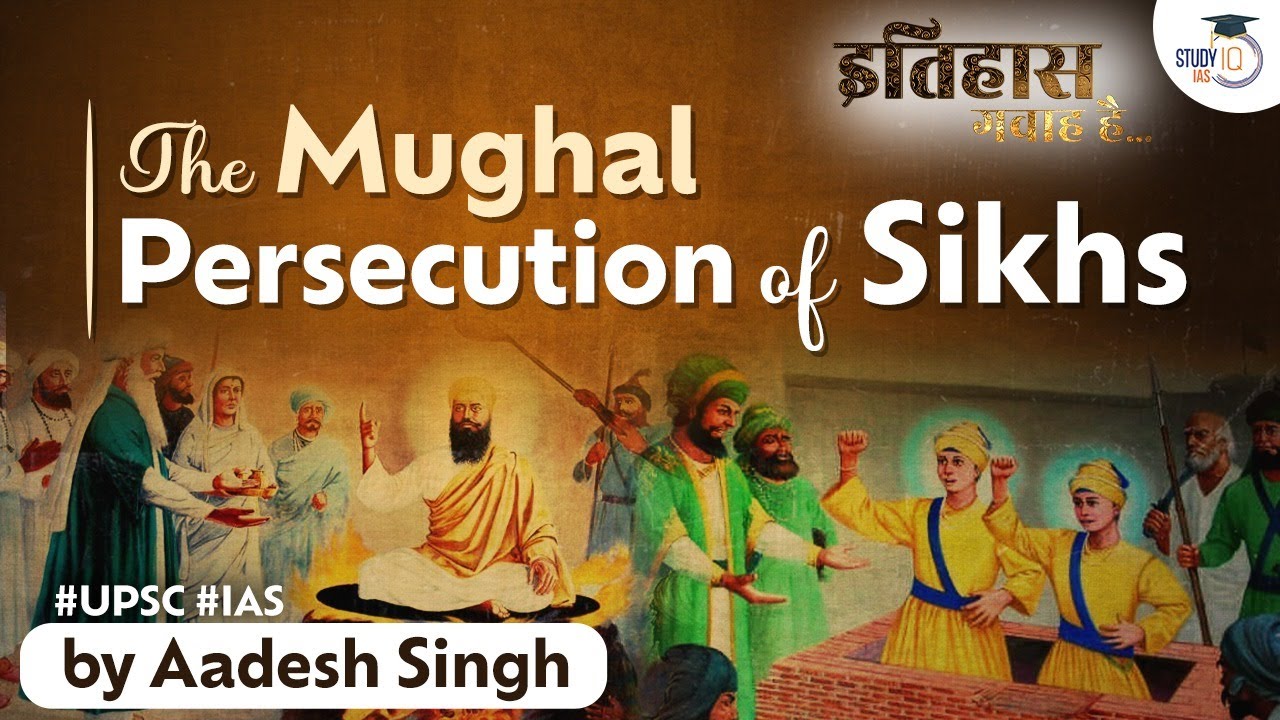
The execution of Guru Tegh Bahadur in was a major turning point that permanently increased ideological and political conflict between the Sikh community and the Mughal State.

Causes and Context of Guru Tegh Bahadur's Execution: A Historical Analysis
Several factors led to the Guru's martyrdom, including direct disagreement with state policy, standing up for others, and court political rivalries.
- (i) The Guru was arrested and taken to Delhi with five followers. Facing charges of political and religious offenses, he was executed when he refused to give up his faith.
- (ii) Historical accounts highlight that he stood up for religious freedom, specifically helping Hindus and Kashmiri Brahmans who sought his support against forced conversions.
- (iii) He also voiced strong opposition against religious oppression led by Sher Afgan, the Mughal Governor of Kashmir at the time.
- (iv) Leadership rivalries inside the community also contributed, as Ram Rai's influence at Aurangzeb's court affected how the Emperor viewed the Guru.
Official Persian Accounts: Imperial Justification and Divergent Narratives of the Sikh Conflict
Official records from the Mughal Empire, written in Persian, presented specific reasons to justify the harsh state action against the Sikh Leader.
Detailed Review of Persian Narratives and Imperial Justification
Imperial chroniclers framed the execution as a matter of law and order or political control rather than purely a religious dispute.
- (i) One official claim alleged that the Guru worked with a dervish named Hafiz Adam to collect money across the Punjab region.
- (ii) Local news writers, called waqia navis, reported to Aurangzeb that the Guru's public gatherings could create local instability.
- (iii) Certain Persian texts mention the incident alongside events in Lahore, attempting to portray it as a local law-enforcement issue rather than a central policy conflict.
Guru Tegh Bahadur: Champion Against Local Injustice and Peasant Oppression
Beyond imperial politics, popular history remembers the Guru as a protector of ordinary people who stood against regional corruption and unfair treatment.
Popular Accounts of the Guru's Support for Peasants and Resistance to Exploitation
During his travels, the Guru saw the daily difficulties of common people and offered them help.
Agrarian conditions in 17th-century Punjab - Support for Farmers: Accounts show he helped rural communities struggling under heavy demands from local land collectors, known as jagirdars and zamindars.
- Defender of Justice: Because of his assistance, common citizens viewed him as a key protector who stood up against arbitrary local authority.
Heightened Religious Tensions: The Impact of Aurangzeb's Strict Policies on Sikh-Mughal Conflict
Conflict grew stronger as Aurangzeb introduced strict religious policies across the empire, treating non-state religious leaders as potential challenges to his authority.
Detailed Analysis of Religious Policies, Enforcement of Sharia, and Temple Destruction
The state's demand for strict conformity made clashes with independent spiritual leaders far more likely.
- (i) The emperor strictly enforced Islamic law, or sharia, and ordered the destruction of prominent non-Muslim places of worship in cities like Mathura and Varanasi.
- (ii) In this rigid environment, any public opposition from a respected spiritual teacher led to swift imperial action.
- (iii) The Guru's sacrifice caused the Sikhs to rethink their relationship with the state, encouraging a move toward the Punjab hills and setting off a shift toward self-defense.
Transformation of Sikhism under Guru Gobind Singh and the Formation of the Khalsa ()
The martyrdom of the Ninth Guru led directly to structural changes within the movement under Guru Gobind Singh, leading to the creation of the Khalsa Panth in .
Key Events Leading to the Establishment of the Khalsa and the Militant Stance
The establishment of the Khalsa turned the peaceful community into an organized group capable of protecting itself from political and local threats.
- (i) Working from Makhowal (later named Anandpur Sahib), the young Guru defended his community against local attacks, including conflicts with nearby Hindu hill rulers who worried about rising Sikh power.
- (ii) Clashes with central Mughal forces increased, culminating in a major siege in that forced the Sikh forces to leave Anandpur.
- (iii) Despite promises of safe passage, the Guru's two younger sons were captured and executed by imperial officers, an event that deeply united the community.
- (iv) The martyrdom of Guru Tegh Bahadur and ongoing hardship made military readiness necessary for the long-term survival of the Sikhs.
⚡ Quick Revision Capsule: Key Historical Milestones
A quick summary of key timeline dates, figures, and historical events covered in this guide:
| Time Period / Date | Key Historical Figure / Term | Historical Significance |
|---|---|---|
| Guru Tegh Bahadur | Assumed leadership as the Ninth Sikh Guru following Guru Har Kishan. | |
| – | Ram Rai | Challenged succession, received land at Dehra Dun from Aurangzeb, creating internal rivalry. |
| Martyrdom in Delhi | Execution of the Ninth Guru after standing up for religious freedom for Kashmiri Brahmans. | |
| Waqia Navis | Mughal intelligence reporters who provided state records and justification for imperial actions. | |
| Khalsa Panth | Established by Guru Gobind Singh at Anandpur Sahib to organize self-defense and martial preparedness. |
📝 Summary
Sikh-Mughal relations changed permanently during the from uneasy peace to open conflict. This shift was driven by imperial interference in succession, rigid state policies, and expanding central authority. The martyrdom of Guru Tegh Bahadur in , followed by the leadership of Guru Gobind Singh, led to the formation of the Khalsa in . Understanding these events helps students see how political pressures reshaped religious communities in medieval India.
🚀 Quick Revision Points
Essential facts to review before examinations:
- (i) Guru Tegh Bahadur became the Ninth Guru in and traveled widely across Bihar and Assam.
- (ii) The execution in in Delhi was a key turning point triggered by religious policies and local advocacy.
- (iii) Persian sources framing the conflict (written by waqia navis) presented it as a administrative law-and-order issue.
- (iv) In , Guru Gobind Singh created the Khalsa at Anandpur Sahib to build an organized force against injustice.
- 💡 Exam Tip: When answering exam questions, contrast the official Persian chronicle accounts (which emphasize state administrative control) with popular community accounts (which highlight religious freedom and defense against peasant exploitation).
❓ Frequently Asked Questions (FAQ)
Q1: Why did Sikh-Mughal relations shift from peace to conflict in the 17th century?
A1: The shift was caused by Mughal court interference in Sikh leadership succession, increasing imperial religious enforcement, and the execution of Guru Tegh Bahadur in 1675.Q2: What was the significance of the Khalsa formation in 1699?
A2: Created by Guru Gobind Singh, the Khalsa turned the community into an organized force capable of defending its religious rights and resisting oppressive local officials.Q3: How do official Persian chronicles differ from popular community accounts regarding the 1675 execution?
A3: Official Persian reports by waqia navis framed the event as a local political or revenue issue, while popular accounts highlight the Guru's sacrifice to protect religious freedom and defend farmers against exploitation.