The long rule of Aurangzeb, lasting from to , marks the largest expansion of the Mughal Empire while also bringing in firm political and religious rules that changed Indian history. This period is very useful for history students and people preparing for exams like UPSC, SSC, and State PCS because it explains how Mughal administration, economy, and culture worked during .
🎯 In this chapter, you will understand:
- How far the Mughal Empire expanded under Aurangzeb.
- The personal choices, austerity, and religious discipline of the emperor.
- Key administrative, economic, legal, and tax reforms including the Jizyah tax.
- Different views of historians on his overall rule and long-term legacy.
💡 Why this topic matters: Aurangzeb's reign represents the peak of Mughal geographical reach and provides crucial insights into administrative strength and political challenges during medieval Indian history.
🧠 Core Idea: While military campaigns stretched Mughal power across almost the entire Indian subcontinent, strict governance and heavy war spending created deep social and financial challenges.
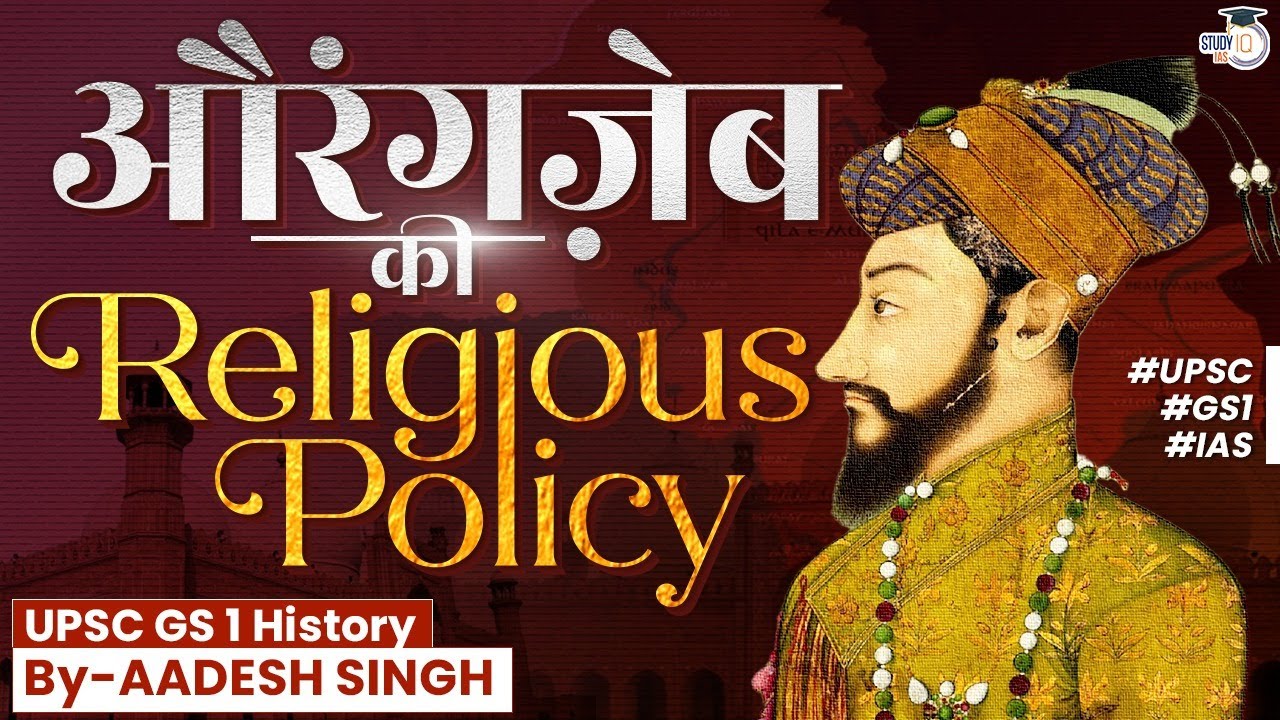
⚔️ Aurangzeb’s Reign: Mughal Empire Expansion, Political Policies, and Religious Orthodoxy (1658–1707)
Under Aurangzeb, the Mughal Empire grew to its biggest geographical size, combined with a strong and central way of ruling.
During this period, Mughal control spread deep into the Deccan region, alongside the systematic introduction of strict rules that shaped the history of statecraft in India.
- (i) The large empire stretched from Kashmir in the north down to the fort city of Jinji in the far south, and from the Hindukush mountains in the west to Chittagong in the east.
- (ii) Important military wins, especially taking over the Deccan Sultanates of Bijapur and Golconda, marked this southern expansion, leading to a long struggle with the Marathas.
- (iii) The introduction of new religious and economic measures, including specific tax rules, brought new administrative changes that historians study today.
👑 Understanding Aurangzeb’s Personal Traits and Defining Governance Style
Aurangzeb was known for his personal discipline and simple living style, which directly influenced his way of ruling the empire.

Austerity and Simplicity: The Frugal Life of the Emperor
Unlike earlier rulers, Aurangzeb chose a very simple and frugal lifestyle, staying away from court luxuries.
- (i) He met his personal expenses by making caps and writing copies of the Quran, avoiding unnecessary spending from the treasury.
- (ii) He preferred simple arrangements in the palace rather than grand displays of luxury.
- (iii) His daily routine involved regular prayers, fasting, and adherence to personal discipline.
Discipline and Orthodoxy: Aligning Rule with Sunni Principles
Aurangzeb enforced strict discipline in governance based on traditional Sunni principles.
- (a) He followed strict Sunni principles as his main framework throughout his four-decade rule.
- (b) He emphasized high standards of personal moral conduct for himself and his administrative officials.
- (c) He worked to maintain social order and law enforcement through direct centralized control.
🛡️ Imperial Family Discipline and Dynastic Succession Policies
The emperor applied firm discipline within his family to prevent struggles over the throne.
Imprisonment of Prince Muazzam and Control over Dynastic Challenges
His decision regarding his son, Prince Muazzam (who later became Bahadur Shah I), showed his firm approach toward internal challenges.
- (i) He ordered the detention of Prince Muazzam when he suspected political moves that could disturb imperial authority.
- (ii) This step showed his uncompromising control over internal royal politics.
- (iii) By keeping close watch over potential rivals, he prevented major rebellions within his family during his lifetime.
📜 Historians’ Views: Assessing Aurangzeb’s Complex Rule and Legacy
Scholars hold different perspectives when reviewing Aurangzeb's long period of rule and policies.
Positive Assessments of Military and Administration
Some historical analyses highlight his success in expanding and holding together a huge empire.
- (i) He is recognized for leading military campaigns that resulted in unprecedented territory size.
- (ii) His organized administration kept control across distant provinces.
- (iii) Secure trade routes helped maintain economic activity and internal trade across the realm.
Critical Views on Religious Policies and Intolerance
Other studies focus on the challenges brought about by his strict administrative and religious orders.
- (a) Strict enforcement of religious laws in administration created friction across different regions.
- (b) Measures that alienated local groups weakened long-term political partnerships within the empire.
- (c) Specific actions, including the reintroduction of the Jizyah tax, caused political discontent among subjects.
⚡ Quick Revision Capsule: Key Aspects of Aurangzeb's Reign (1658–1707)
A structured quick reference to the main areas of Aurangzeb's administration and governance policies:
| Domain | Key Policy / Feature | Historical Impact |
|---|---|---|
| Territorial Reach | Expansion into Deccan (Bijapur & Golconda) | Reached maximum geographical area, stretching from Kashmir to Jinji. |
| Legal System | Codification via Zawabit-i-Alamgiri | Established clear legal references based on Hanafi jurisprudence. |
| Moral Regulations | Appointment of Muhtasibs | Monitored public conduct and restricted practices like court music. |
| Taxation | Re-imposition of Jizyah in | Generated revenue for wars but increased social and political tension. |
| Personal Lifestyle | Frugality & simple living | Funded personal expenses by hand, avoiding court lavishness. |
⚖️ Political and Legal Policies: Aligning Statecraft with Legal Codes
Aurangzeb worked to organize state administrative functions using codified legal principles.
Governance Based on Hanafi Jurisprudence
The administration referenced established traditions of legal thought for state rulings.
- (i) Judicial decisions relied on standard interpretations of Hanafi legal thought.
- (ii) Official measures aimed to align state functions with formal legal standards.
- (iii) Legal matters were systematically handled through imperial judicial officers.
The Zawabit-i-Alamgiri Reforms and Legal Codification
To keep governance systematic, imperial decrees were collected into written legal compilations like Zawabit-i-Alamgiri.
- (a) These compiled regulations provided written guidance for local and central officers.
- (b) The step helped streamline state judicial procedures across different provinces.
- (c) The focus remained on centralized, structured administration across all territories.
💰 Economic Policies: Revenue System and the Cost of War
Military spending during long campaigns required steady revenue, leading to changes in taxation.
Expansion of Trade and Commerce Routes
Securing new territories helped protect land routes for traders and merchants.
- (i) Taking control of strategic regions connected trade channels across provinces.
- (ii) Safe roads helped both regional marketplaces and coastal trade connections.
- (iii) Imperial outposts protected valuable land routes across northern and southern India.
Increased Taxation and Revenue Generation
The long military campaigns in the Deccan needed massive financial resources.
- (a) Protracted army movements required collecting higher taxes from imperial lands.
- (b) Reintroduced cesses put additional pressure on farmers and trade groups.
- (c) Agricultural workers and merchants faced an increasing tax load during his later years.
🕌 Religious Regulations and Enforcement of Moral Codes
Aurangzeb introduced administrative roles to supervise public conduct and court decorum.
Strict Moral Standards and the Office of Muhtasib
A system was put in place to ensure public adherence to moral regulations.
- (i) He appointed official inspectors called Muhtasibs to oversee moral conduct in cities.
- (ii) Court celebrations like the Persian festival of Nauroz were stopped at court.
- (iii) These regulations aimed to maintain strict discipline in court life and public spaces.
🎨 Cultural Policies: Austerity, Arts, and Restrictions on Court Music
In line with his personal simplicity, state funds were redirected away from court entertainment.
Restrictions on Music, Arts, and Royal Patronage
Courtly entertainment saw significant reductions in imperial funding.
- (i) Formal music performances and grand events were reduced in the royal court.
- (ii) Royal financial support shifted toward scholarly compilations and educational activities.
- (iii) Expenditure on lavish building projects and mini paintings was scaled back compared to earlier reigns.
🏛️ Temple Policies: Intervention and Orders
Aurangzeb's policies regarding religious structures remain a widely discussed area of medieval Indian history.
Orders for Temple Destruction and Repairs
Specific orders were issued regarding religious buildings, often linked with political situations and local rebellions.
- (i) Imperial orders targeted major religious sites in places like Banaras and Mathura during times of political conflict.
- (ii) Actions taken against structures like the Somnath temple remain central to historical discussions.
- (iii) Records also show instances where grants and protection were given to specific temples, showing a mixed political approach.
🧾 The Re-imposition of the Jizyah Tax
In , the reintroduction of the Jizyah tax marked a major policy decision in Mughal administration.
The Impact of Jizyah and its Motives
This tax choice served both revenue requirements and political objectives.
- (i) Non-Muslim subjects paid the tax, which added revenue to the central treasury.
- (ii) Certain exemptions were granted, though the policy added strain on social relations.
- (iii) The tax helped fund growing military needs while showing a clear return to orthodox policies.
📚 Modern Historiography on Aurangzeb: Balanced Assessments
Today's historians look at Aurangzeb's rule through a complete evaluation of administrative, military, and social factors.
Synthesizing Achievements and Controversies
Current research evaluates both his political accomplishments and the problems that arose during his reign.
- (i) Historians study his success in building the largest territorial state in Mughal history.
- (ii) At the same time, scholars point out how his strict choices created friction among regional allies.
- (iii) His rule is viewed as a period of strong central control that also showed early signs of future political stress.
📝 Summary & Legacy
The long rule of Aurangzeb (–) stands as the largest territorial era of the Mughal Empire. However, long campaigns in the south, heavy spending on wars, strict social rules, and taxes like Jizyah created social and political strain. His strong administrative focus, legal compilations like Zawabit-i-Alamgiri, and firm leadership make him a key figure in Indian history. Understanding his reign helps students grasp the complex political and administrative shifts that marked the later Mughal period.
🚀 Quick Revision Points
Essential facts to review before examinations:
- (i) Aurangzeb ruled for nearly 49 years from to , bringing the Mughal Empire to its largest area.
- (ii) Southern campaigns annexed Bijapur and Golconda into the imperial framework.
- (iii) Legal decisions were compiled in Zawabit-i-Alamgiri following Hanafi jurisprudence.
- (iv) The poll tax Jizyah was brought back in to support state expenses.
- 💡 Exam Tip: Focus on comparing Akbar's liberal administrative policies with Aurangzeb's centralized orthodox policies for essay questions in competitive exams.
❓ Frequently Asked Questions (FAQ)
Q1: What was the maximum territorial extent of the Mughal Empire under Aurangzeb?
A1: The empire stretched from Kashmir in the north down to Jinji in the south, and from the Hindukush in the west to Chittagong in the east.Q2: What was Zawabit-i-Alamgiri?
A2: It was a structured collection of imperial laws and decrees compiled during Aurangzeb's rule based on Hanafi legal thought.Q3: When was the Jizyah tax reintroduced?
A3: It was reintroduced in to generate state revenue for army expenses and reflect traditional governance policies.