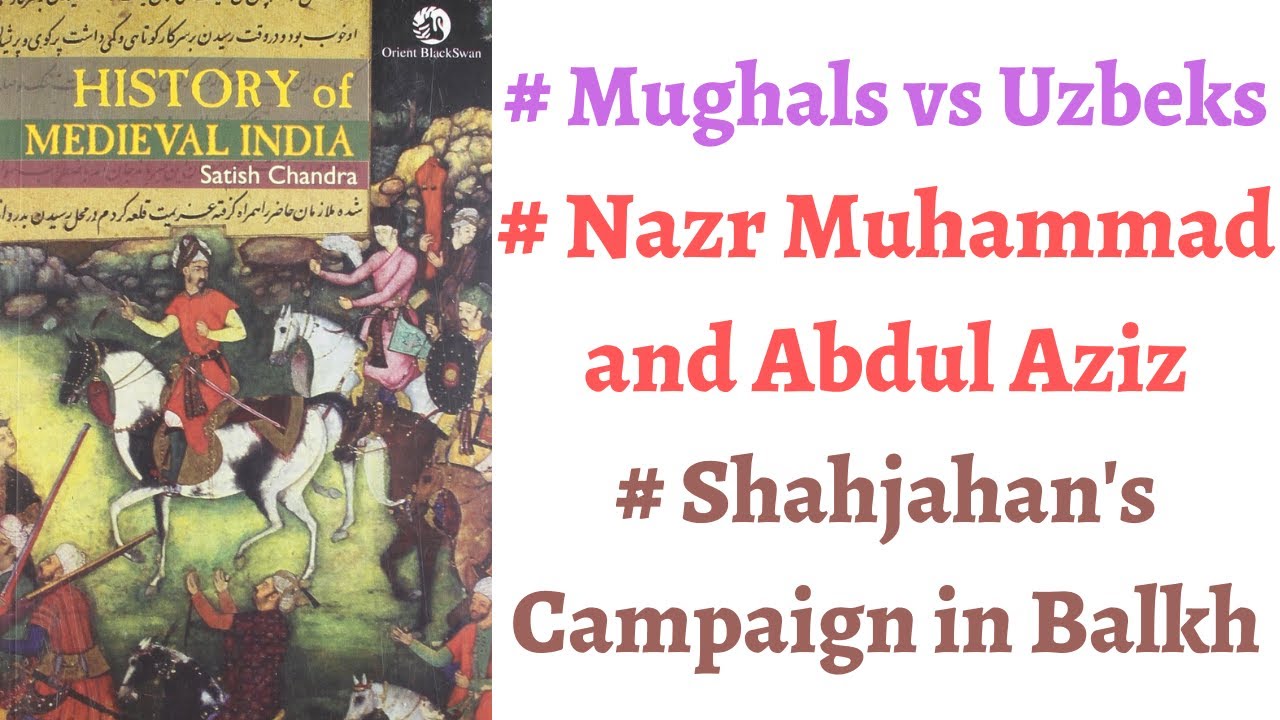
The Mughal campaign in Balkh and Badakhshan unfolded dramatically during under the reign of Emperor Shah Jahan. It represents a significant historical chapter detailing the empire's ambitious but costly venture into Central Asia. This complex military and diplomatic episode was driven by the need to decisively counter persistent Uzbek threats along the volatile northern border of Kabul. The goal was to establish a secure buffer zone and reaffirm Mughal influence in Transoxiana. The campaign is crucial for students and competitive exam preparation because it shows the strategic objectives of Mughal foreign policy, the challenges faced by commanders like Prince Murad, the swift Uzbek retaliation under Abdul Aziz, and the major logistical and political difficulties that shaped the campaign's long-term legacy.
🎯 In this chapter, you will understand:
- The main goals behind Shah Jahan's intervention in Balkh and Badakhshan.
- The military clashes between the Mughal army and Uzbek forces led by Abdul Aziz Khan.
- The diplomatic talks and political reasons behind the Mughal retreat.
- The overall legacy and long-term consequences of the Central Asian campaign.
💡 Why this topic matters: It highlights the balance between military power and practical geography in Mughal foreign strategy.
🧠 Core Idea: Tactical military victories could not overcome severe supply chain issues and extreme mountain distances.
Mughal Campaign in Balkh and Badakhshan (1646–47): Shah Jahan’s High-Stakes Central Asian Strategy
Shah Jahan’s primary strategic objective was to curb recurring Uzbek threats and establish Balkh as an indispensable, loyal strategic buffer state to safeguard the Kabul frontier. The initial deployment of Mughal forces was a blend of diplomatic response and preemptive military action. It was prompted when Nazr Muhammad, the ruler of Bokhara, requested Shah Jahan’s aid against his rebellious son, Abdul Aziz. The Emperor seized this moment to project imperial power.
- (i) Border Security Concerns:Shah Jahan harbored deep anxieties over persistent Uzbek raids targeting the Kabul frontier, alongside fears of destabilizing alliances between Central Asian powers and local Afghans.
- (ii) The Call for Aid: The opportunity arose when Nazr Muhammad Khan, ruler of Bokhara and Balkh, found himself in a difficult position and sought Mughal military support against his ambitious son, Abdul Aziz.
- (iii) Initial Military Mobilization: A massive Mughal army under young Prince Murad Bakhsh marched from Kabul in , carrying explicit orders from Shah Jahan to act with caution and diplomatic tact.
- (iv) The Forced Occupation: The mission took an unforeseen turn due to Prince Murad’s rash tactical decisions, leading to the flight of Nazr Muhammad Khan. This forced the Mughals into the role of an occupying power in Balkh, turning an assistance mission into a full military occupation.
Major Military Operations and Daunting Challenges of Uzbek Warfare (1647)
The unauthorized Mughal occupation of Balkh served as a critical trigger. It shifted the situation from a supportive mission to an intense, full-scale campaign against a unified Uzbek resistance.

Uzbek Mass Retaliation and The Strained Mughal Defense in Balkh
Prince Murad's aggressive actions destroyed local cooperation. This forced the Mughal army to switch from peacekeeping to defending against both the hostile population and gathering Uzbek forces.
- (i) Widespread Hostility: Heavy-handed actions alienated the local population, compelling the Mughals to defend Balkh and Badakhshan against hostile local groups and retaliating Uzbeks.
- (ii) Rallying the Tribes: The powerful Abdul Aziz Khan rallied an immense force of nearly 120,000 Uzbek tribesmen to expel the foreign Mughal presence.
- (iii) Major Field Victory: Despite being vastly outnumbered, disciplined and technologically superior Mughal forces defeated the main Uzbek field army near Balkh in .
- (iv) Opening for Dialogue: This field victory demonstrated the strong combat abilities of the Mughal army and opened a new path for diplomatic talks.
Strategic Negotiations with Key Uzbek Leaders
Following major military clashes, both exiled Nazr Muhammad and defeated Abdul Aziz cautiously sought political dialogue with Shah Jahan, recognizing that continued fighting was too costly.
- (a) Twin Diplomatic Fronts: Surprisingly, both Nazr Muhammad and his son Abdul Aziz simultaneously started peace talks with the Mughal Emperor.
- (b) Shah Jahan’s Preference:Shah Jahan favored reinstating the older ruler, Nazr Muhammad, viewing him as a more predictable and friendly neighbor for Balkh.
- (c) The Cost of Conflict: The massive expenditure of money, soldiers, and time made diplomatic talks the most practical option for the empire.
Political and Diplomatic Maneuvers: The Great Mughal Retreat
While Shah Jahan managed diplomacy well, he could not turn battlefield success into permanent territorial control, revealing clear limits to the campaign.
Shah Jahan’s Core Geopolitical Aims and Realities
The Emperor aimed for stable frontiers, but long distances and difficult mountain terrain made holding these distant lands impossible.
- (i) Securing a Friendly State: The primary goal was placing a cooperative ruler in Balkh to reduce Afghan unrest and keep the northern border safe.
- (ii) Complications and Hostility: Hasty decisions by Prince Murad, along with rising tensions from the Persian Empire to the west, complicated Mughal plans.
- (iii) Logistical and Distance Weakness: Maintaining a steady supply line over huge distances across mountain ranges undermined long-term Mughal control in Balkh and Badakhshan.
Campaign Outcomes and Long-Term Political Results
Although Mughal troops proved their strength on the battlefield, the overall political gains were limited.
- (a) Prestige Boost: Decisive victories in Balkh enhanced the military prestige of the Mughal Empire across Central and South Asia.
- (b) Limited Political Gains: Long-term political benefits remained small, as spent resources did not lead to permanent expansion or lasting control.
- (c) Diplomatic Reconciliation: The campaign resulted in a stable relationship where Nazr Muhammad remained friendly toward the Mughals, preventing a hostile unified front.
Legacy and Enduring Historical Significance of the Mughal Central Asian Expedition
Historians view the ambitious Mughal expedition to Balkh and Badakhshan as a military success that ended in a strategic political failure. Ultimately, Shah Jahan chose a diplomatic exit over a long and draining war. The campaign prevented the rise of a single, hostile Uzbek state on the border. However, it also revealed clear limits to Mughal authority far from India. For students of history, this event stands as an important example of strong Mughal military power operating under severe logistical weaknesses across the steep Hindu Kush mountains.
⚡ Quick Revision Capsule: Mughal Campaign in Balkh & Badakhshan
A high-level overview summarizing the key facets of Emperor Shah Jahan's Central Asian campaign.
| Aspect | Key Details | Historical Significance |
|---|---|---|
| Primary Objective | Secure the Kabul border and create a buffer zone in Balkh. | Aimed to prevent Uzbek raids and secure the northern frontier. |
| Initial Catalyst | Request for help from Nazr Muhammad against his son Abdul Aziz. | Transformed from a supportive aid mission into an occupation. |
| Key Battle (1647) | Mughal forces defeated the main Uzbek army near Balkh. | Demonstrated Mughal tactical and technological superiority. |
| Main Failure Factor | Severe logistical issues and long supply lines across the Hindu Kush. | Proved that long-distance territorial annexation was unsustainable. |
| Final Result | Diplomatic withdrawal after reinstating Nazr Muhammad. | Preserved prestige but resulted in zero net territorial gains. |
📝 Summary
During , Emperor Shah Jahan launched a major campaign into Central Asia to protect Kabul and establish a friendly buffer in Balkh. While Mughal armies won field battles against large Uzbek forces, harsh terrain and long supply lines made holding the region impossible. The empire negotiated a diplomatic withdrawal, keeping border security intact while showing the geographical limits of Mughal expansion.
🚀 Quick Revision Points
Essential facts to review before examinations:
- (i) Shah Jahan launched the expedition in to secure the northern frontier of Kabul.
- (ii) Prince Murad’s hasty decisions turned a friendly mission into an imperial occupation.
- (iii) Mughal forces won a major field victory against Abdul Aziz Khan outside Balkh in .
- (iv) Severe supply chain problems across mountain passes forced a diplomatic exit.
- 💡 Exam Tip: Remember that the campaign was a military success but a strategic failure due to supply lines and terrain.
❓ Frequently Asked Questions (FAQ)
Q1: Why did Shah Jahan launch the Balkh campaign?
A1: He wanted to protect the Kabul frontier from Uzbek raids and set up a friendly buffer state in Central Asia.Q2: Who led the Uzbek opposition against the Mughals?
A2: Abdul Aziz Khan, the son of Nazr Muhammad, led the Uzbek forces.Q3: What was the primary reason for the Mughal retreat from Balkh?
A3: Severe logistical problems, harsh weather, and long supply lines across the Hindu Kush made holding the territory impossible.