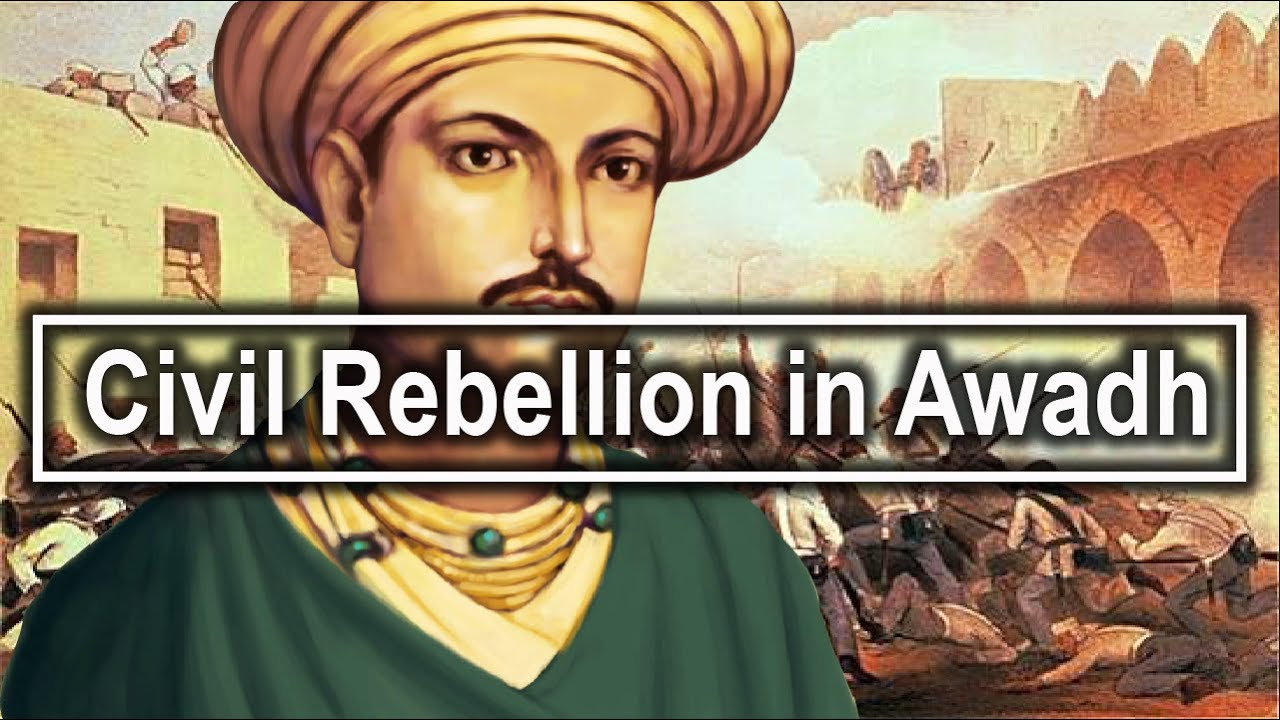
The Civil Rebellion in Awadh in stands as one of the earliest armed uprisings against British authority in colonial India. Centered around the deposed ruler Wazir Ali Khan, this uprising highlighted growing tensions between native Indian rulers and the expanding East India Company. The conflict included the famous Massacre of Benares, showing how political betrayal, economic control, and continuous British interference in native princely states sparked widespread anger. Understanding this event helps students learning Indian history see how early organized resistance against British rule began.
🎯 In this chapter, you will understand:
- How British interference in Awadh led to the deposition of Wazir Ali Khan.
- The key events surrounding the Massacre of Benares in .
- The military defeat, escape, and extradition of Wazir Ali Khan.
- The overall historical significance of early native resistance against colonial rule.
💡 Why this topic matters: It reveals the early mechanics of British political control in Indian princely states and how local rulers attempted to fight back against colonial expansion.
🧠 Core Idea: Foreign political interference and economic pressure led deposed rulers to organize armed rebellions against colonial power.
Early Resistance to British Rule: The Civil Rebellion in Awadh (1799) and the Massacre of Benares
The rebellion was a direct result of British policies that installed and removed native rulers to gain political and financial power in the key region of Awadh. These actions created deep anger among local leaders and set the stage for open revolt against the East India Company.
The sequence of political events in Awadh shows a clear pattern of colonial control:
- (i) Wazir Ali Khan became the fourth ruler of Awadh in with initial recognition and backing from the British authority.
- (ii) His short rule ended quickly as his relationship with British officials broke down, leading to his removal in favor of his uncle, Saadat Ali Khan II.
- (iii) After losing his throne, Wazir Ali Khan was sent to live in Benares (Varanasi), where he was forced to live as a deposed leader dependent on a British pension.
Catalyst for Unrest: The Massacre of Benares (1799) Led by Wazir Ali Khan
The forced removal and humiliation of the young Nawab triggered a violent act of defiance that shocked colonial administrators and sparked open rebellion across the region.

Assassination of George Frederik Cherry, The British Resident
In , Wazir Ali Khan organized a sudden attack. During what was supposed to be a friendly lunch meeting, he attacked and killed George Frederik Cherry, the British official serving as the resident in charge of the region.
- (i) This targeted attack was part of a larger plan that showed the anger and frustration of the former ruler.
- (ii) At the same time, guards loyal to the former Nawab attacked other officials, killing at least two European officers and severely injuring the main magistrate of Benares.
- (iii) This violent event became widely known across India and Britain as the Massacre of Benares, causing widespread concern within the East India Company administration.
Military Confrontation and Final Defeat of Wazir Ali Khan by General Erskine
After the events in Benares, Wazir Ali Khan gathered supporters to launch a military challenge, but his forces could not match the organized British army.
Rebellion, Flight, and Asylum Seeking of Wazir Ali
To rebuild his position, Wazir Ali assembled an army of thousands of loyal soldiers and dissatisfied locals. However, his troops were quickly defeated in battle by British forces commanded by General Erskine.
Route taken by Wazir Ali Khan while seeking refuge after his military defeat. - (a) Following his defeat in the main battle, the deposed Nawab escaped north toward the hilly region of Butwal near the border.
- (b) Unable to stay there safely, he later traveled to seek political shelter with the ruler of Jaipur, hoping to find safety and plan future resistance.
Extradition and Confinement in Fort William: The Final Fate of Wazir Ali Khan
British officials worked continuously to capture Wazir Ali Khan, putting strong diplomatic pressure on native allied rulers to hand him over so he could no longer lead resistance against British authority.
Negotiations by Arthur Wellesley with the Raja of Jaipur
British officer Arthur Wellesley (who later became the Duke of Wellington) used diplomatic negotiations to convince the ruler of Jaipur to surrender Wazir Ali Khan back to British forces.
- (i) The ruler of Jaipur agreed to hand him over only after securing promises that Wazir Ali Khan would not be executed or put in heavy iron chains.
- (ii) Following these agreed terms, Wazir Ali surrendered to British forces in , bringing an official end to the uprising.
- (iii) He was taken to Fort William in Calcutta, where he spent the rest of his life as a state prisoner under constant guard.
⚡ Quick Revision Capsule: Civil Rebellion in Awadh (1799)
A quick overview of key figures, dates, and historical outcomes associated with the Awadh rebellion:
| Event / Aspect | Key Details & Figures | Historical Impact |
|---|---|---|
| Primary Leader | Wazir Ali Khan (Deposed 4th Nawab of Awadh) | Led one of the earliest organized armed revolts against British expansion. |
| Key Turning Point | Massacre of Benares () | Assassination of British Resident George Frederik Cherry. |
| Military Action | Defeated by General Erskine | Scattered native forces and forced the Nawab to flee toward Butwal. |
| Diplomatic Surrender | Negotiated by Arthur Wellesley with the Raja of Jaipur | Extradition agreed on condition of no execution or heavy chains. |
| Final Outcome | Surrender in ; Imprisonment at Fort William | Permanent removal of Wazir Ali Khan as an active political opponent in Calcutta. |
📝 Summary
The Civil Rebellion in Awadh of remains an important early landmark in Indian history. It demonstrated how rapid British political expansion, ruler replacement, and administrative control created strong resistance among local Indian rulers. Centered on Wazir Ali Khan and the dramatic Massacre of Benares, this historical event offers clear evidence of early anti-colonial uprisings prior to the larger rebellions of the nineteenth century.
🚀 Quick Revision Points
Essential facts to review before examinations:
- (i) Wazir Ali Khan was deposed as Nawab of Awadh and replaced by Saadat Ali Khan II.
- (ii) The revolt began in with the assassination of British Resident George Frederik Cherry.
- (iii) British commander General Erskine defeated the rebellion's forces in open combat.
- (iv) Arthur Wellesley negotiated the extradition of Wazir Ali Khan from the ruler of Jaipur.
- 💡 Exam Tip: Focus on the cause-and-effect relationship: British political interference led directly to the deposition of native rulers, which ignited early uprisings like the Massacre of Benares.
❓ Frequently Asked Questions (FAQ)
Q1: Who was Wazir Ali Khan and why did he rebel?
A1: He was the deposed fourth Nawab of Awadh who rebelled after being removed from his throne by the East India Company in favor of his uncle.Q2: What was the Massacre of Benares?
A2: It was the assassination of British Resident George Frederik Cherry and other officials by Wazir Ali Khan and his loyal followers in Benares.Q3: Where was Wazir Ali Khan imprisoned after his surrender?
A3: After his surrender in , he was kept as a state prisoner in Fort William located in Calcutta.