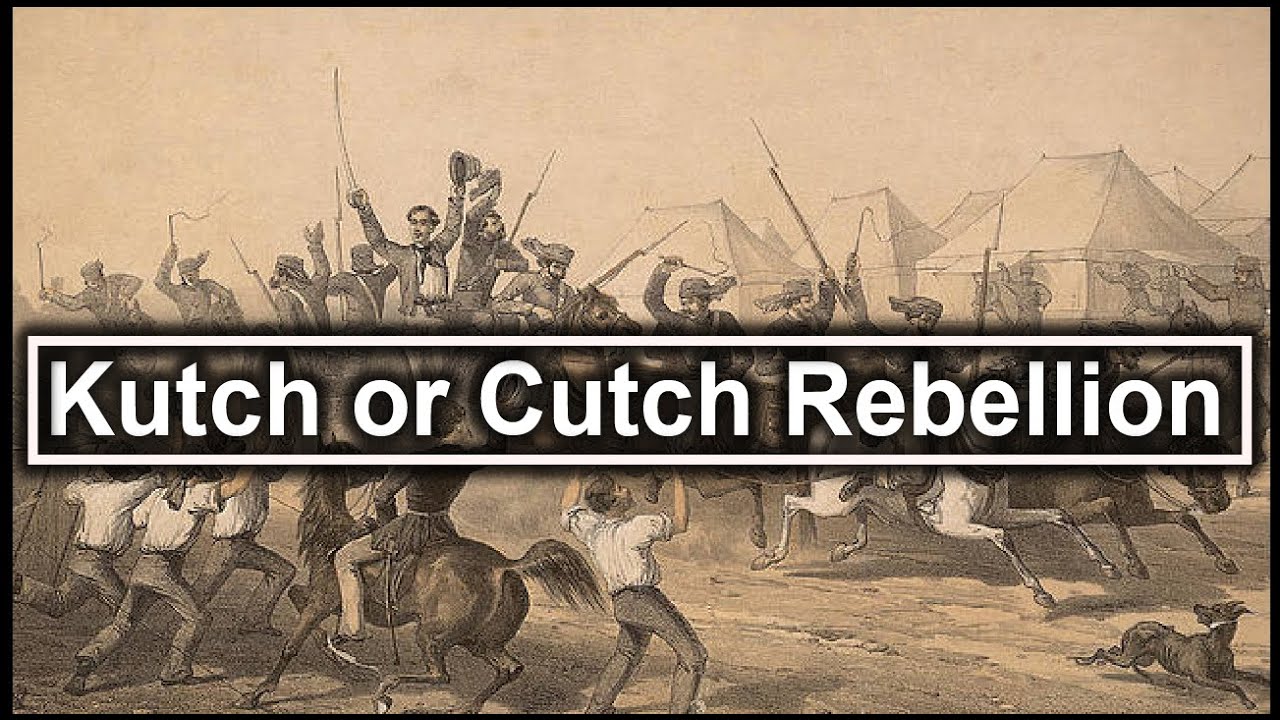
The Kutch Rebellion (also known as the Cutch Uprising), spanning from to , was a long and major conflict in western India. It was driven by succession disputes among royalty, strong resistance from local chieftains, and increasing interference by the British East India Company in the internal affairs of the princely state. The uprising eventually forced the British to place an infant ruler under a regency council and adopt a softer, diplomatic policy to maintain peace. This history gives valuable insights into early colonial challenges and the fierce defense of regional autonomy.
🎯 In this chapter, you will understand:
- The main reasons behind the Kutch Rebellion and how the British intervened.
- How royal family conflicts and local chieftain resistance escalated the uprising.
- The administrative changes, heavy land taxes, and military campaigns during the conflict.
- Why the British East India Company shifted from military force to a policy of conciliation.
💡 Why this topic matters: It highlights early Indian resistance against foreign rule and shows how the British adapted their administrative strategies when military force failed.
🧠 Core Idea: Local leaders successfully resisted colonial expansion in Kutch, forcing foreign administrators to abandon harsh control in favor of negotiated diplomacy.
Major Causes and British Intervention in the Kutch (Cutch) Rebellion: 1816–1832
The prolonged uprising in Kutch grew out of local power struggles and direct foreign involvement in state affairs. Political tensions were already present in the region, but interference by the British turned those internal issues into an explosive political crisis.
Treaties and Growing Discontent:
- (i) In , a formal treaty was signed between British authorities and Maharaja Bharamal II. While meant to stabilize the throne, it angered local chieftains who felt their traditional authority and rights were being ignored.
- (ii) By , resistance reached a breaking point. Raja Bharamal II attempted to push back against colonial expansion by gathering Arab and African mercenary troops to drive out the British. Local chieftains who felt wronged immediately supported his efforts.
- (iii) The British military retaliated quickly, defeating and removing Raja Bharamal II from power. They placed his infant son on the throne and created a regency council. Under the close direction of a permanent British resident, this council held the real authority over Kutch.
Escalation of Resistance and Colonial Administrative Reaction
Replacing the Maharaja with direct colonial control only increased public anger. Persistent local unrest forced the British to conduct widespread military operations and eventually reconsider their administrative strategy.

Deep-Seated Administrative and Taxation Grievances
The new regency council implemented policies based on foreign models, disrupting the traditional socio-economic setup of Kutch and provoking widespread anger.
- (i) High land revenue assessments and arbitrary administrative rules imposed by the regency council angered local chieftains. They viewed these acts as direct attacks on their financial privileges and local authority.
- (ii) Demands to restore Raja Bharamal II gained renewed momentum when news reached the region of British military difficulties during the ongoing Burma War. Seeing potential weakness, rebels pressed their demands even harder.
British Military Campaigns and Strategic Shift to Conciliation
Faced with a long and costly insurgency across difficult local terrain, British leaders had to give up their harsh approach and choose a practical compromise.
Challenges of Military Control in Kutch's Terrain
- (a) Despite spending large amounts of money and sending strong forces into the region, suppressing the decentralized guerrilla forces proved ineffective.
- (b) Continuous unrest showed Company officials that holding the area purely through force was neither financially practical nor politically stable over time.
Strategic Turn towards Stability and Conciliation
- (i) Realizing that raw military power had limits, the Company made a clear decision to adopt a long-term conciliatory approach.
- (ii) This updated policy addressed key concerns of local chieftains, creating a stable political atmosphere and bringing the long period of rebellion to an end.
Significance and Relevance for Students: The Kutch Rebellion (1816–1832)
The events of the Kutch Rebellion (–) offer a clear case study in colonial history. They illustrate how external political interference in princely states led to severe local resistance. Studying this period helps explain early British administrative systems, regency arrangements under foreign supervision, and the shift toward diplomatic reconciliation after prolonged conflict.
Key Highlights of the Uprising:
Timeline of colonial intervention and policy changes in Kutch from 1816 to 1832. - Royal Succession Conflict: Interference in domestic political succession created instability across the ruling family and regional chieftains.
- Foreign Troop Mobilization: Mercenary contingents of Arab and African soldiers were gathered by Raja Bharamal II to fight colonial forces.
- Regency Governance: Strategic use of an infant ruler and puppet council allowed the British resident to control administration behind the scenes.
- Conciliatory Diplomacy: Protracted guerrilla warfare in tough terrain forced foreign rulers to modify harsh land tax laws and respect local privileges.
⚡ Quick Revision Capsule: Kutch Rebellion (1816–1832)
A structured breakdown of the key figures, timeline, causes, and outcomes of the rebellion:
| Event Parameter | Historical Details | Impact & Significance |
|---|---|---|
| Timeframe & Location | – in Kutch, Gujarat | A prolonged regional uprising against foreign influence. |
| Key Key Ruler | Maharaja Bharamal II | Resisted British control using mercenary forces before being deposed in . |
| Primary Causes | Succession disputes, high land tax, interference by the British East India Company | Disrupted local economies and united chieftains against foreign power. |
| Colonial Strategy | Deposition of ruler, infant regency council under a British resident | Established indirect control while keeping administrative authority. |
| Final Settlement | Shift from military force to a conciliatory policy | Restored political stability and respected local traditional privileges. |
📝 Summary
The Kutch Rebellion (–) stands as an early example of local resistance against colonial expansion in India. Fueled by succession disputes, foreign political intrusion, and high land taxes imposed by a puppet regency council, the uprising united rulers and local chieftains against the British East India Company. When military operations across difficult terrain failed to bring lasting peace, the colonial government abandoned strict force in favor of a conciliatory approach, bringing stability to the region while highlighting the strength of local autonomy.
🚀 Quick Revision Points
Essential facts to review before examinations:
- (i) The conflict started with the treaty between the British and Maharaja Bharamal II.
- (ii) In , Raja Bharamal II raised Arab and African mercenary troops to expel colonial forces.
- (iii) The British deposed Raja Bharamal II and appointed his infant son under a controlled regency council.
- (iv) Heavy land assessments and news of British setbacks during the Burma War energized rebel forces.
- 💡 Exam Tip: Focus on how the British East India Company used regency councils and residents for indirect control, and note how regional resistance forced them to change from military intervention to conciliatory policies.
❓ Frequently Asked Questions (FAQ)
Q1: What started the Kutch Rebellion in 1816?
A1: The conflict was triggered by succession battles and the treaty with the British, which disrupted traditional power balances and ignored the rights of local chieftains.Q2: How did Raja Bharamal II attempt to resist colonial rule?
A2: In , Raja Bharamal II recruited Arab and African mercenary troops with support from local chieftains to remove British forces from Kutch.Q3: Why did the British shift to a conciliatory policy in Kutch?
A3: Protracted insurgency across tough terrain showed that direct military suppression was inefficient and costly, forcing the British to adopt diplomacy to secure lasting peace.