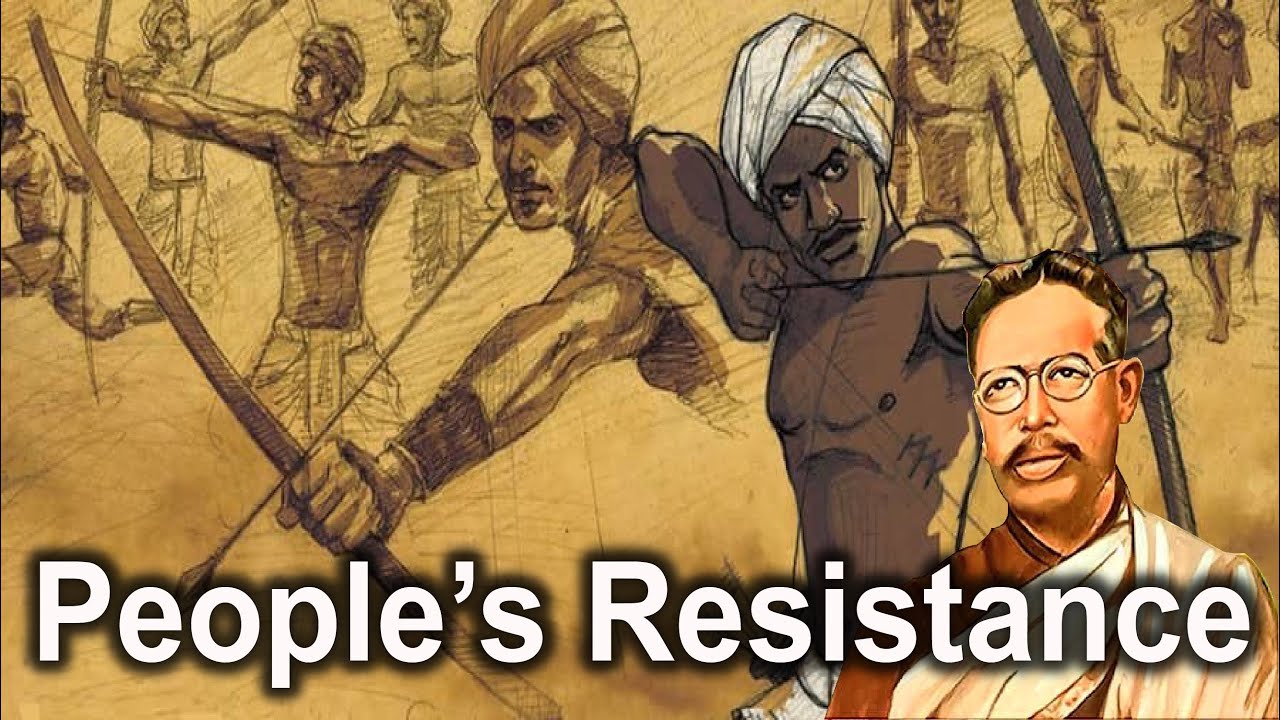
The People's Resistance in India represents a vast and determined struggle against the entrenched system of British rule. This movement drew together many different groups affected by foreign rule, including farmers, craftspeople, tribal communities, soldiers, and religious leaders. Early organized protests broke out in cities like Benares (Varanasi) and Surat, followed by major uprisings in regions like Bareilly. These localized yet powerful movements prove the resilience, unity, and deep rejection of foreign exploitation across Indian society. Understanding the reasons behind these movements, how anti-colonial feelings began, and the different forms of resistance is essential for students preparing for competitive exams in Indian history.
🎯 In this chapter, you will understand:
- How diverse groups across Indian society united against British colonial policies.
- The key differences between pre-colonial grievances and destructive British economic exploitation.
- How new land revenue systems and forest laws triggered widespread civil and tribal uprisings.
- The impact of British industrial trade policies on local artisans and traditional Indian manufacturing.
💡 Why this topic matters: Early anti-British protests laid the groundwork for the larger Indian national movement that followed decades later.
🧠 Core Idea: British economic extraction and policy disruptions forced previously distinct social groups to unite in active resistance.
Early People's Resistance in India: Defining the Scope of Anti-British Struggles ()
During this turbulent time, the term "people" included almost every group in Indian society whose traditional work and social life were harmed by expanding colonial rule. This broad group included farmers, skilled craftspeople, independent tribal groups, former rulers who lost power, Indian soldiers (sepoys) serving in the British army, and influential religious leaders.
- (i) Broad participation proves that people across all classes and regions in Indian society suffered under the new colonial system, forcing distinct groups to take collective action.
- (ii) While some groups acted locally to fix specific problems, many found common ground and joined forces to protect their interests against unprecedented British economic exploitation.
- (iii) Key Early Examples of Civil Resistance:
- Benares Agitation (): A major public protest in Benares (Varanasi) against an unfair house tax introduced by the colonial government.
- Surat Riots (): Violent public anger in Surat sparked by economic hardship and a new, heavy tax on salt.
- Bareilly Rising (): A large protest in Bareilly against an excessive local police tax and extra municipal fees.
- (iv) Historian Bipan Chandra divides this resistance into three main types: civil rebellions, tribal uprisings, and local peasant movements. In addition, revolts by Indian sepoys inside Company forces were a vital part of the struggle against foreign oppression.
Genesis of People's Resistance: Roots of Anti-British Sentiment and Organized Opposition
Local protests existed in pre-colonial India, but the systematic and harsh policies of British rule made these grievances much worse, pushing people toward organized and often violent resistance.

Transition from Pre-Colonial Protests to Colonial-Era Grievances
Pre-colonial rulers sometimes made heavy tax demands, but colonial rule changed the entire system into something far more damaging.
- (i) Driven only by profit and tax revenue, the East India Company abandoned traditional duties like public works and community welfare, making life much harder for ordinary people.
- (ii) The traditional relationship between rulers and subjects broke down because colonial policies focused solely on extracting wealth, causing widespread poverty and destroying social safety nets.
Tribal Resistance: The Fight for Autonomy and Against Forest Intrusion
Tribal communities had long enjoyed independence in their homelands. They were among the hardest hit when new British land and forest laws took away their rights, driving them to fierce, organized, and violent resistance.
- (i) Along with heavy taxes, tribal groups faced an immediate threat to their cultural, economic, and political independence.
- (ii) The colonial government took over ancestral forests—the foundation of tribal life—and declared them state property, forcing tribes off their land and destroying their self-sufficient lifestyle.
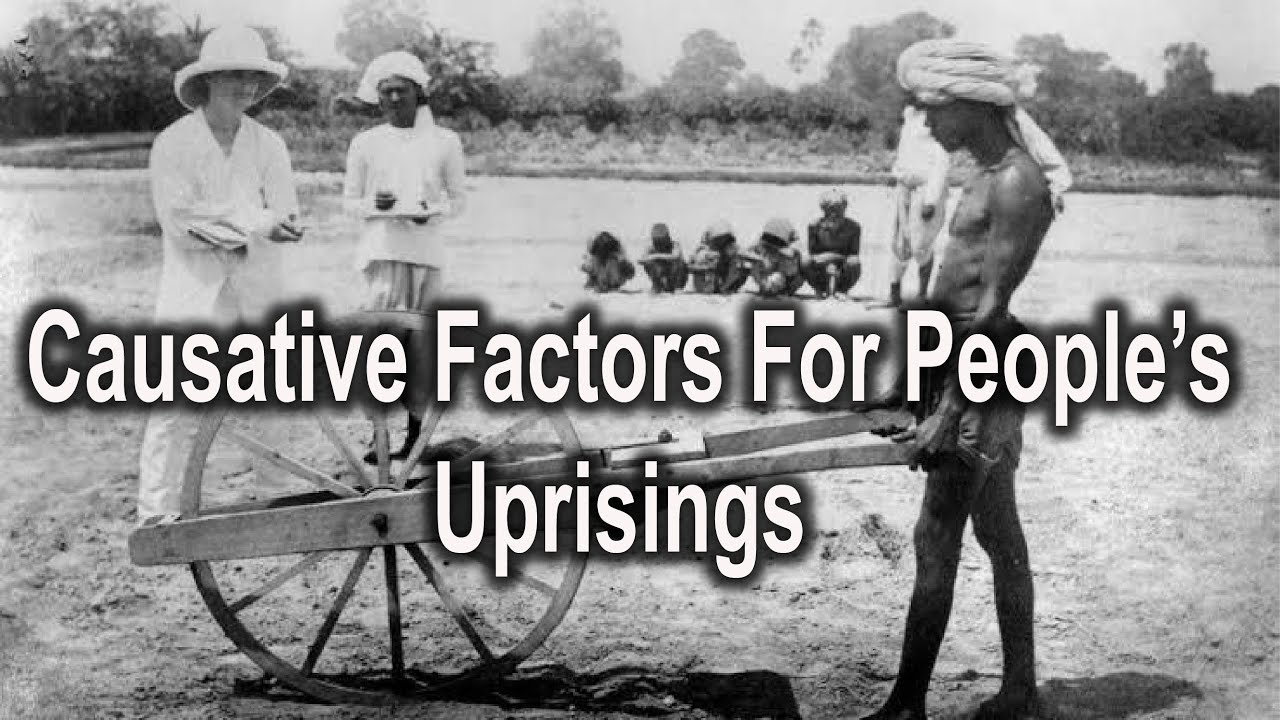
Causative Factors for People's Uprisings: Triggers for Anti-British Movements
These widespread uprisings were not random. They were directly caused by damaging economic rules, social disruption, and harsh administration imposed by the imperialist British government across India.
Economic Exploitation: Heavy Land Revenue Systems and Evictions
The main goal of British rule was extracting wealth through high land taxes and strict collection rules, which ruined rural life across India, took land away from farmers, and created widespread poverty.
- (i) New tax collection methods—such as the Permanent Settlement, Ryotwari System, and Mahalwari System—led to the eviction of farmers from their lands and allowed outsiders to take over tribal areas.
- (ii) Rural families suffered under a new class of tax collectors (zamindars), greedy landlords, and money-lenders, all supported by British courts and law enforcement.
- (iii) The rapid growth of colonial administration led to a direct loss of tribal control over their traditional farmland and forest resources.
Impact on Indigenous Industry: The Destruction of Local Craftsmanship
British trade rules turned India into an exporter of cheap raw materials and a buyer of British manufactured goods. This policy wiped out India's once-thriving local factories and handicraft workshops.
- (i) The flood of cheap British factory goods and heavy taxes on Indian exports destroyed local handloom and handicraft industries across the country.
- (ii) Destroying local industries left millions of artisans and craftspeople without work, forcing them to move to farming villages and placing huge extra pressure on agricultural land.
⚡ Quick Revision Capsule: Early People's Resistance ()
This table summarizes key early uprisings, their causes, and the affected social groups for quick review:
| Event & Timeframe | Key Causes & Triggers | Affected Groups |
|---|---|---|
| Benares Agitation () | Imposition of an arbitrary house tax by colonial authorities | Urban residents, house owners, local traders |
| Surat Riots () | Onerous duty on salt and severe economic hardship | Local public, merchants, urban laborers |
| Bareilly Rising () | Excessive police taxes and municipal levies | Townspeople, local traders, urban residents |
| Tribal Resentment | Loss of forest rights, land grabbing, intrusion into autonomy | Tribal communities, forest dwellers |
| Handicraft Decline | Import of British factory goods and destruction of local manufacturing | Artisans, weavers, traditional craftspeople |
📝 Summary
The People's Resistance movements across India show how deeply people opposed British rule between and . These protests brought together farmers, craftspeople, tribal groups, soldiers, and religious leaders. Driven by heavy taxes, economic exploitation, and the destruction of local industries, these early uprisings demonstrate the defiant spirit of Indian society against foreign rule. Events like the Benares Agitation, Surat Riots, and Bareilly Rising are essential topics for students of Indian history, as they formed the groundwork for the larger freedom movement that followed.
🚀 Quick Revision Points
Essential facts to review before examinations:
- (i) Early resistance involved a broad coalition of society, including farmers, craftspeople, tribal groups, and sepoys.
- (ii) Key urban protests broke out in Benares (), Surat (), and Bareilly ().
- (iii) British land systems like the Permanent Settlement and Ryotwari System caused mass peasant evictions.
- (iv) British trade policies flooded markets with cheap imported goods, ruining traditional weavers and artisans as documented by historians like Bipan Chandra.
- 💡 Exam Tip: Focus on linking economic causes (such as land revenue policies and industrial decline) directly to specific regional uprisings when answering history exam questions.
❓ Frequently Asked Questions (FAQ)
Q1: Who participated in the early People's Resistance against British rule?
A1: The movement included farmers, skilled craftspeople, tribal communities, former rulers, Indian sepoys, and religious leaders affected by British policies.Q2: What caused the early urban uprisings in Benares, Surat, and Bareilly?
A2: These protests were caused by unfair taxes, such as the house tax in Benares (), the salt tax in Surat (), and police taxes in Bareilly ().Q3: How did British policies harm traditional Indian artisans?
A3: British trade policies allowed cheap factory goods into India while placing high taxes on Indian exports, ruining traditional handicraft industries and forcing artisans to rely on farming.