The Home Rule League Movement of India during the era of marked a significant phase in the struggle for self-government. Spearheaded by iconic leaders like Tilak and Besant, this movement combined strategic political activism, grassroots mobilization, and advocacy for administrative reforms. This narrative covers the formation, key leaders, objectives, activities, government repression, decline, and contributions of the movement, making it essential for students preparing for competitive exams in history and polity.
🎯 In this chapter, you will understand:
- The origin and primary goals of the Home Rule Leagues during World War I.
- The distinct roles played by Bal Gangadhar Tilak and Annie Besant in organizing their respective leagues.
- How government repression and internal shifts led to the movement's eventual decline.
- The long-term impact of the movement in setting the stage for Gandhian mass politics.
💡 Why this topic matters: It explains how Indian freedom fighters shifted from seasonal political requests to a year-round national movement for self-governance.
🧠 Core Idea: Achieving self-government (Swarajya) within the British Commonwealth through constitutional methods, political education, and mass public awareness.
Formation of Home Rule Leagues in India: Key Leaders, Objectives, Activities, Repression, and Legacy
The Home Rule Movement emerged as an organized response from India to the global changes brought by . Driven by a desire for dignity and autonomy, the movement sought to secure self-government within the framework of the British Commonwealth. It marked a move toward a steady form of political work, replacing temporary seasonal meetings with a year-round national effort.
- (i) The movement served as a measured response to the , aiming for self-government within the British Commonwealth.
- (ii) It stood in contrast to radical Ghadractivities happening abroad, as it preferred constitutional methods and public advocacy over armed conflict.
- (iii) The focus remained on forming a national alliance of dedicated leaders working throughout the year to ask for administrative reforms and achieve Swarajya.
Key Leaders, Factors, and Early Activities of Home Rule Leagues
The momentum of the movement was driven by prominent leaders and shaped by political, social, and wartime factors. This phase saw the combination of local campaigns and regional coordination.

Prominent Leaders and the Core Objectives of the Movement
The leadership provided a clear plan to build a strong national network that could demand self-government through organized work and public education.
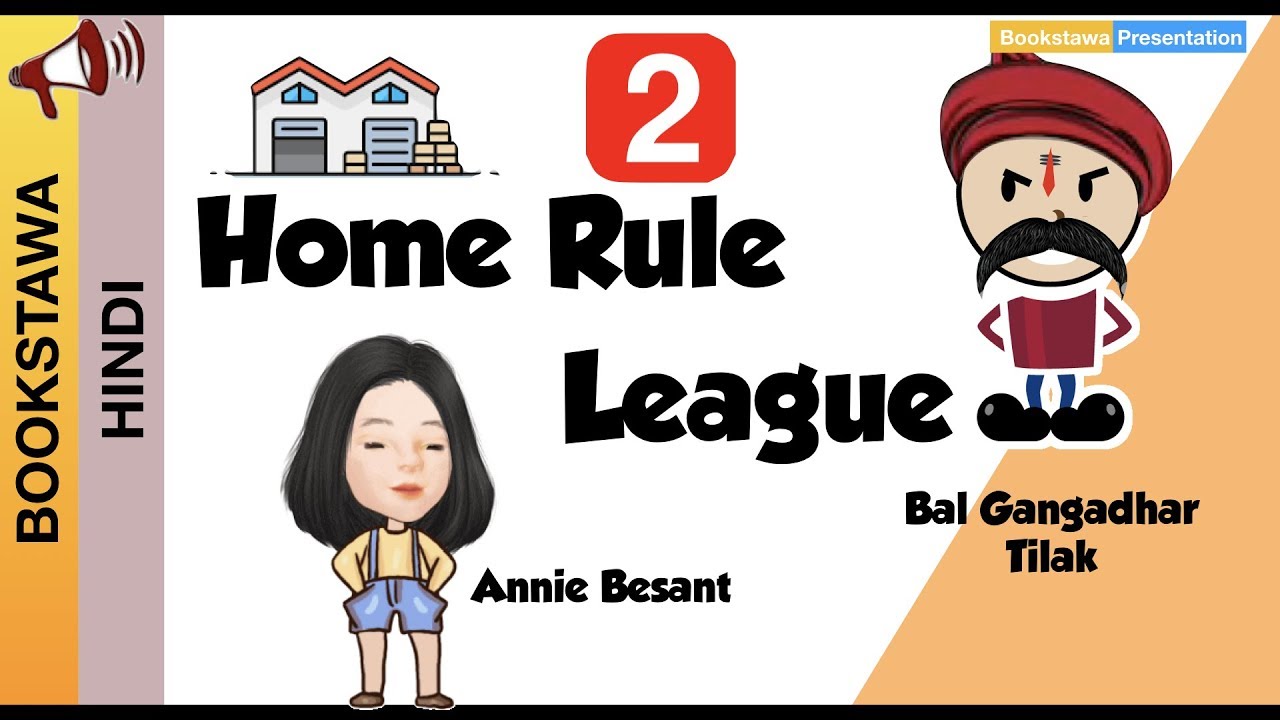
- (i) Bal Gangadhar Tilak and Annie Besant led separate leagues, introducing new political energy across India.
- (ii) Other notable leaders who supported the movement included G.S. Khaparde, Sir S. Subramania Iyer, Joseph Baptista, and Mohammad Ali Jinnah.
- (iii) The main goal was to establish national networks to demand self-government by focusing on political education and public awareness.
Key Factors Leading to the Rise of the Home Rule Movement
Several internal and external pressures came together to create the right environment for a major national push, including economic struggles and changing public viewpoints.
- (i) People realized that continuous pressure from nationalists was necessary to get meaningful concessions from the government.
- (ii) Many Moderates felt disappointed with the limited scope of the Morley-Minto reforms.
- (iii) The struggles of , such as high taxation and rising prices, made the public ready for active protests.
- (iv) The war helped weaken myths about European superiority as Indians watched European nations fight one another.
- (v) The leadership of Tilak after his release in was crucial, as he focused on asking for administrative reforms rather than violent action.
- (vi) Annie Besant, who arrived in India in , expanded the movement by taking ideas from the Irish Home Rule model.
Detailed Activities of Tilak’s and Besant’s Home Rule Leagues
The two leagues worked in different regions but shared the common goal of spreading political awareness through speeches, newspapers, and local groups.
- (a) Tilak’s Indian Home Rule League:
Founded in and based in Poona, this league covered Maharashtra (except Bombay city), Karnataka, Central Provinces, and Berar.
- (i) Focused on the demand for Swarajya.
- (ii) Promoted education in local regional languages.
- (iii) Asked for the reorganization of states based on language lines.
- (b) Besant’s All-India Home Rule League:
Started in , this league covered the rest of India, including Bombay city, and was known for its wide reach.
- (i) Built a network of nearly 200 branches across the country.
- (ii) Used meetings, newspapers, pamphlets, and social work to spread political education.
- (iii) The enthusiasm of the movement grew further with the news of the Russian Revolution.
- (a) Tilak’s Indian Home Rule League:
Repression, Decline, and Permanent Contributions of the Home Rule Movement
The movement eventually faced harsh government repression and internal operational challenges. However, its end helped prepare the nation for Mahatma Gandhi and a new period of mass participation in politics.
Government Repression and the Surge of Nationwide Protests
British authorities used strict measures to suppress the campaign, but these actions only strengthened the determination of Indian nationalists.
- (i) The arrest of key leaders like Tilak and Besant triggered widespread public protests.
- (ii) Besant’s arrest in was a major moment, leading to countrywide demonstrations backed by figures like Sir S. Subramania Iyer and Tilak.
- (iii) Government repression failed to stop the agitation; instead, it strengthened the resolve of workers and boosted nationalist sentiments.
Factors Leading to Decline and the Emergence of Gandhi
Towards the end of the decade, a mix of proposed constitutional reforms and changes in leadership caused the movement to lose momentum.
- (i) The movement began to fade by due to organizational challenges, local communal disturbances, and the announcement of the Montagu-Chelmsford reforms.
- (ii) A leadership gap occurred when Tilak traveled to England and Besant became less consistent in her leadership.
- (iii) The arrival of Gandhi and his method of mass action soon became the central force in national politics.
- (iv) In , Gandhi accepted the presidency of the renamed Swarajya Sabha, which later merged into the Indian National Congress.
Significant Long-Term Contributions to Indian Nationalism
Even though the leagues eventually closed, the organizational and psychological changes they introduced into Indian politics remained permanent.
- (i) The movement successfully expanded Indian politics from limited urban discussions to mass participation, preparing the ground for future Gandhian campaigns.
- (ii) It created practical connections between cities and rural areas.
- (iii) It trained a new group of nationalists and prepared the public for larger national movements.
- (iv) Public pressure from the leagues influenced the Montagu declaration and the Montford reforms, shaping future constitutional developments.
- (v) It helped revive the Congress party, turning it back into an active organization for national action.
- (vi) By bringing urgency to political demands, it helped prepare India for its continuing struggle for freedom.
⚡ Quick Revision Capsule: Home Rule League Comparison
A side-by-side comparison of the two leagues formed under the Home Rule Movement:
| Feature | Tilak's Indian Home Rule League | Besant's All-India Home Rule League |
|---|---|---|
| Founding Date | ||
| Headquarters | Poona | Madras (Adyar) |
| Regional Coverage | Maharashtra (excluding Bombay city), Karnataka, Central Provinces, Berar | Rest of India (including Bombay city) |
| Organizational Reach | 6 regional branches | Approximately 200 branches |
| Key Demands / Focus | Swarajya, vernacular education, linguistic states | Self-government, political education, wide pamphlet distribution |
📝 Summary
The Home Rule League Movement during played a key role in connecting educated leaders with the wider public, spreading political awareness, and building organizational strength across India. Despite government suppression and its eventual decline around , it created the structural foundation for mass movements led by Gandhi, strengthened political networks, and remained an important chapter in India's Struggle for Independence.
🚀 Quick Revision Points
Essential facts to review before examinations:
- (i) Founded by Tilak () and Besant () to demand Swarajya.
- (ii) Used non-violent, constitutional methods like meetings, classes, and printed pamphlets.
- (iii) Influenced the British government to issue the Montagu Declaration in .
- (iv) Merged functionally into the Indian National Congress under Gandhi's leadership in .
- 💡 Exam Tip: Always remember the geographic divisions: Tilak’s league was restricted to 6 branches (Maharashtra except Bombay, Karnataka, Central Provinces, and Berar), while Besant’s league covered the entire rest of India with around 200 branches.
❓ Frequently Asked Questions (FAQ)
Q1: Who started the Home Rule Movement in India?
A1: The movement was started by Bal Gangadhar Tilak in and Annie Besant in through two separate leagues.Q2: What was the main objective of the Home Rule Leagues?
A2: The primary goal was to achieve Swarajya (self-government) for India within the British Empire using peaceful and constitutional methods.Q3: How did the movement contribute to the freedom struggle?
A3: It created a nationwide network of political workers, spread political awareness to towns and rural areas, and set up the organizational base needed for later campaigns described in India's Struggle for Independence.