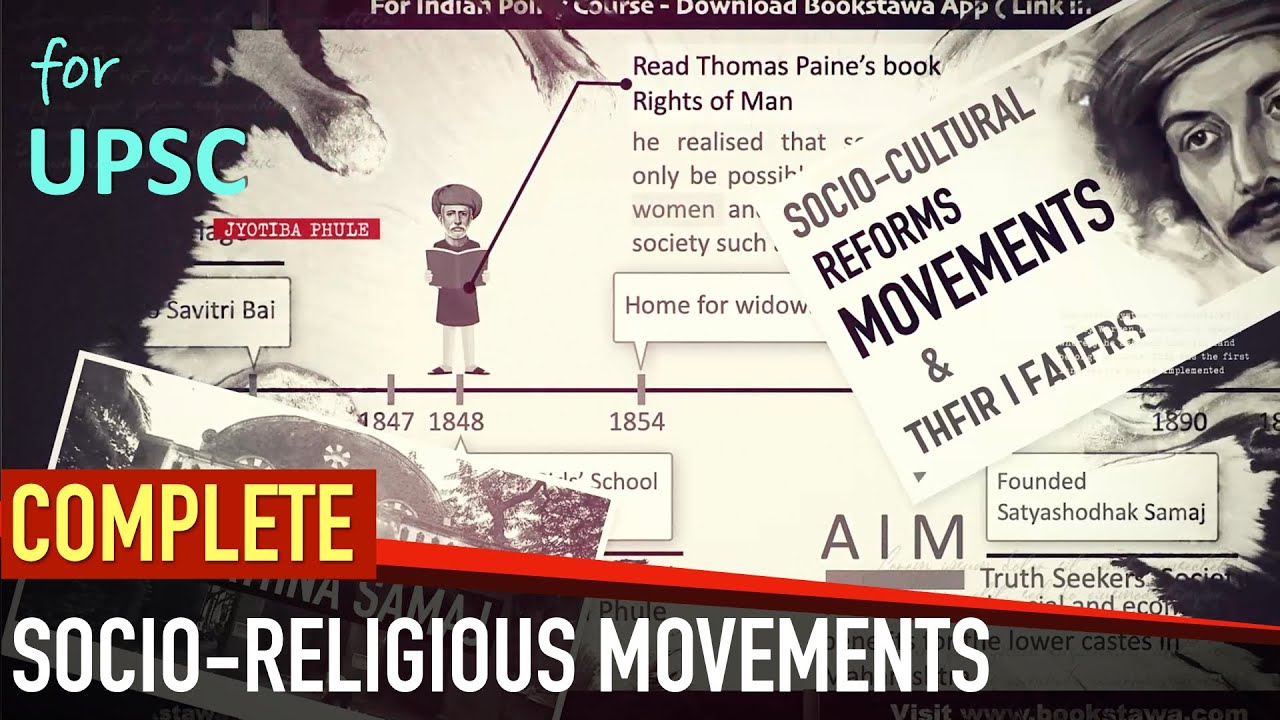
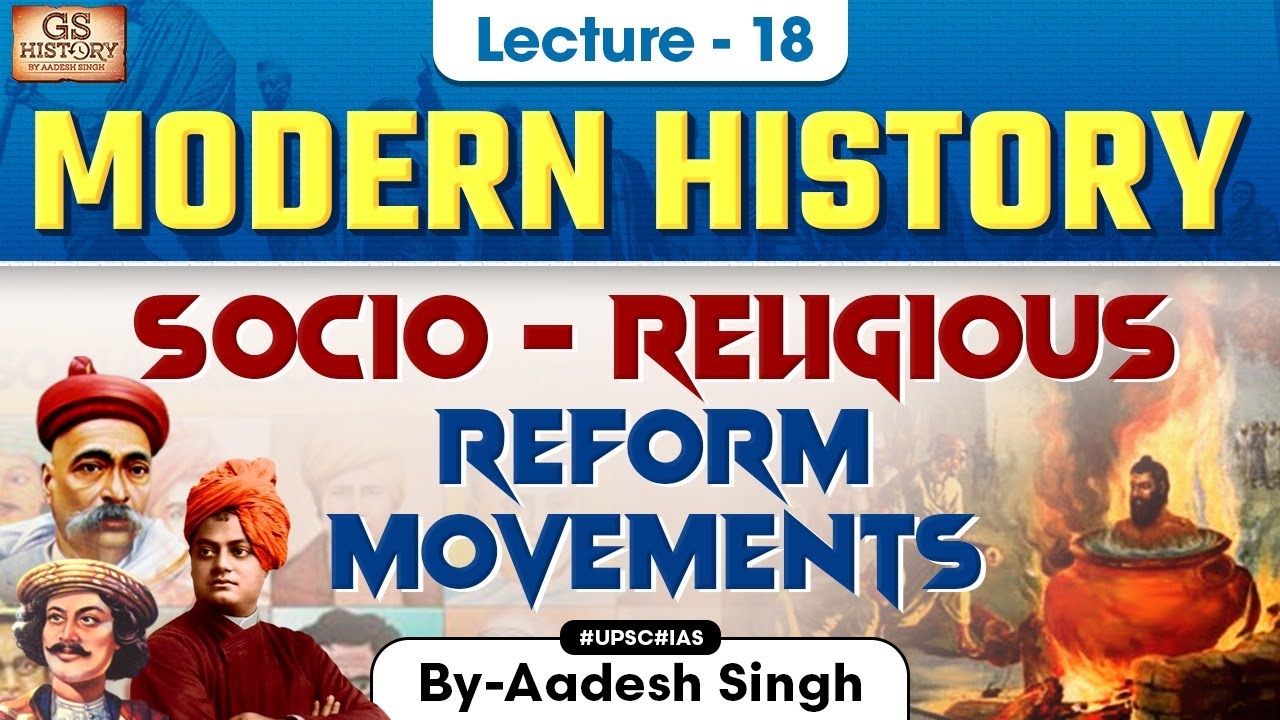
The major socio-religious reforms in India during the and are very important for students preparing for competitive examinations. They show how rationalism, cultural revival, and social modernization transformed traditional society. While these movements built a strong national consciousness and encouraged individual empowerment, they also accidentally created social division and communalism, showing how Indian society managed the balance between tradition and growth.
🎯 In this chapter, you will understand:
- How rational thinking and scientific logic challenged old social beliefs.
- The ways reformers revived Indian culture while encouraging social progress.
- The limitations caused by a narrow middle-class leadership base.
- How selective historical views contributed to religious and social divides.
💡 Why this topic matters: It explains the origins of modern Indian thought, social equality efforts, and the background of modern national unity.
🧠 Core Idea: The reform era was a twin-edged transformation that pushed scientific progress and human rights while carrying social limitations and religious divides.
Reform Movements in India: A Comprehensive Analysis of Positive and Negative Aspects (–)
This period of social change created a deep intellectual transformation while changing Indian society forever. As the country responded to colonial rule, reformers searched for a healthy balance between modern scientific thinking and pride in local heritage, even though some social limitations remained.
Major Dimensions of the Reform Era:
- (i) Positive Contributions: A clear step toward rational thought, social empowerment for marginalized groups, and a structural modernization of Indian values.
- (ii) Negative Consequences: A narrow social base, growing mysticism, and social compartmentalization between communities.
- (iii) Educational Significance: Essential learning for students to understand the origins of the Indian Renaissance and the national movement for freedom.
Positive Aspects: The Dawn of Rationalism, Individual Empowerment, and Cultural Revival
Reformers helped shape a new vision for India by using rationalism and social modernization to rebuild self-respect and awareness during the .

A Brave Stance Against Orthodox Opposition and Social Persecution
Early reformers worked under dangerous conditions because conservative groups strongly resisted any changes to traditional social rules.
- (i) Social Resistance: Reformers regularly faced public boycotts and insults from conservative groups who wanted to protect old traditions.
- (ii) Physical Peril: In dangerous cases, key leaders survived attack attempts, showing their strong dedication to equality and justice.
- (iii) Intellectual Victory: They proved that scientific reasoning and logical thinking were more valuable than blind faith or harmful customs.
The Liberation of the Individual through Rational Thought and Judgment
By breaking the old monopoly over learning, reformers encouraged a more secular and logical way of living.
- (a) Breaking Shackles: These efforts helped free everyday citizens from unfair social rituals and religious exploitation.
- (b) Personal Agency: They encouraged people to think independently and evaluate social rules logically instead of following them blindly.
- (c)
Fostering a Secular Mindset
Building an evidence-based approach to daily life and spiritual views:
- (i) Taught that human reason is the true test of real knowledge.
- (ii) Promoted practical logic across religious ideas and social activities.
The Power of Translation and Scriptural Reinterpretation
Reformers brought important religious texts to everyone by creating vernacular translations, ending the old monopoly over sacred knowledge.
- Key Aspects of Cultural Revival:
Linguistic Access and Heritage
By translating ancient scriptures into everyday regional languages, reformers removed language barriers to knowledge.
Translation of classic texts into vernacular languages expanded public access to knowledge. - Simplified Devotion: They created simpler spiritual practices so people could worship without expensive ceremonies.
- National Identity: This broad cultural revival built the foundation for a shared national consciousness.
Modernization and the Quest for National Integration
The goal was to combine modern global ideas into Indian tradition rather than replacing local heritage entirely.
- (a) Authentic Progress: Reform leaders pushed for modernization rooted in Indian values while avoiding blind imitation of Western ways.
- (b) Global Connectivity: These changes reconnected India with worldwide scientific and social progress.
- (c) Unified Vision: The movements helped create national unity across different regions and backgrounds.
Negative Aspects: Critical Limitations and the Shadow of Unintended Consequences
Despite these achievements, the reform movements were limited by their small social base and specific ideological gaps.
The Constraint of a Narrow Social Base
A main weakness was that reform efforts did not reach deep into rural Indian society.
- (i) Elite Leadership: The movement was mostly guided by educated, urban middle-class groups who were sometimes detached from village life.
- (ii) Mass Exclusion: Reform programs largely missed working farmers and urban poor communities who formed the majority of the nation.
- (iii) Mobilization Gap: Leaders struggled to involve the wider public, leaving reform ideas limited to educated circles.
The Rise of Mysticism and Social Compartmentalization
A heavy emphasis on religious identity sometimes weakened the scientific spirit that early reformers built.
- (a) Unscientific Ideas: Certain branches promoted mysticism and supported questionable beliefs under the badge of tradition.
- (b) Religious Segregation: Focusing on separate religious reforms divided communities into distinct social groups.
- (c)
Internal and External Divides
- (i) It created wider distances between upper-caste and lower-caste groups in society.
- (ii) It encouraged a segregated structure in social interaction.
Neglect of the Broader Spectrum of Cultural Growth
By focusing mainly on religious topics, other essential areas of growth were ignored.
- (i) Artistic Stagnation: Movements paid little attention to creative arts, architecture, literature, and music.
- (ii) Scientific Gap: While supporting logical thinking, leaders largely overlooked practical scientific technology and laboratories.
- (iii) Historical Bias: Some reformers wrongly viewed the entire medieval period as backward, missing its rich cultural developments.
Partisan Historical Narratives and the Seeds of Communalism
Selective interpretations of historical events created partial views of the past.
- (a) Ancient Focus: High praise was mostly given to the ancient period of Indian history.
- (b) Medieval Alienation: By ignoring medieval progress, these narratives created distance among different social communities.
- (c) Erosion of Composite Culture: These selective views grew communalism at the expense of India's shared heritage.
⚡ Quick Revision Capsule: Indian Reform Movements
This table compares the major positive results and notable limitations of the reform movement era.
| Aspect | Positive Impacts | Limitations & Drawbacks |
|---|---|---|
| Intellectual Outlook | Promoted rationalism and logical thinking over blind faith. | Sometimes defended mysticism and unscientific claims. |
| Social Inclusion | Empowered individuals and challenged traditional orthodoxy. | Remained limited to a narrow middle-class social base. |
| Cultural Identity | Translated scriptures into local vernacular languages. | Overlooked developments in art, architecture, and technology. |
| National Movement | Built early national consciousness and unity. | Created religious divisions and fed into communalism. |
| Historical View | Rebuilt self-confidence against colonial rule. | Ignored medieval accomplishments, weakening shared culture. |
📝 Summary
The reform movements of the and served as a major engine for social transformation in India. By advancing human rights, critical thinking, and language access through vernacular works, these efforts paved the way for modern social awakening. However, their reliance on middle-class leadership, along with an overemphasis on ancient history, resulted in social gaps and religious divides. Studying these strengths and limitations gives students a realistic view of how modern Indian society developed.
🚀 Quick Revision Points
Essential facts to review before examinations:
- (i) Early reformers introduced rationalism to challenge harmful customs and orthodox resistance.
- (ii) Language barriers were removed through regional translations of ancient texts.
- (iii) The movement had a narrow social base that largely missed rural working populations.
- (iv) Selective historical focus weakened composite culture and laid roots for communalism.
- 💡 Exam Tip: When writing answers on reform movements, always maintain a balanced structure covering both positive contributions (rationalism, women's education, vernacular growth) and limitations (narrow base, religious division).
❓ Frequently Asked Questions (FAQ)
Q1: What was the main positive impact of the 19th-century reform movements?
A1: The primary positive impact was the rise of rationalism, scientific thinking, individual empowerment, and the translation of knowledge into local Indian languages.Q2: Why did reform movements struggle to reach the masses?
A2: The movements were mostly led by urban, educated middle-class individuals, creating a narrow social base that failed to fully involve rural communities and workers.Q3: How did reform movements unintentionally contribute to communalism?
A3: By focusing almost exclusively on ancient historical glory and ignoring medieval contributions, some movements created religious divisions that damaged India's shared culture.