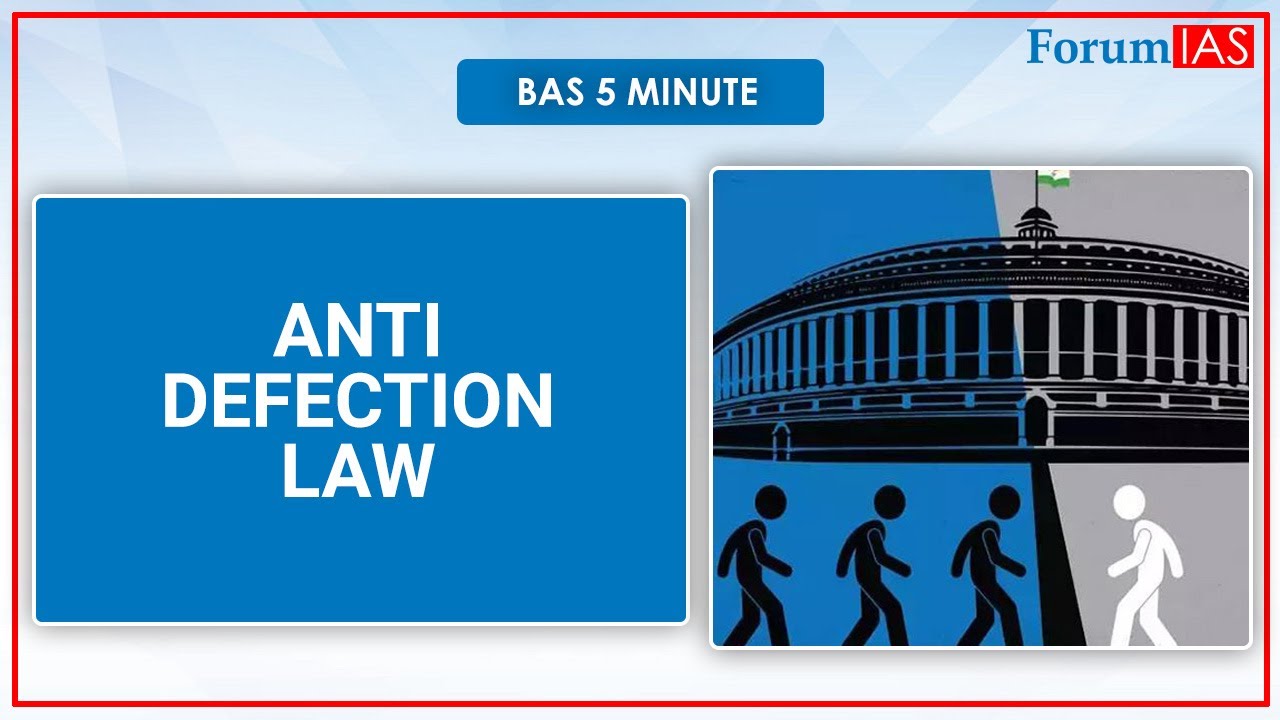
The historic 52nd Constitutional Amendment Act of , widely recognized as the Anti-Defection Law, represents a major landmark reform in the evolution of Indian governance. By introducing the Tenth Schedule to the Constitution, this law aims to stop politicians from changing parties unethically (known as political defections) and helps make the Parliament and State Legislatures stable and long-lasting. This is a very essential topic for UPSC students focusing on polity and constitutional ethics.
🎯 In this chapter, you will understand:
- Why the 52nd Amendment was passed in to stop political party switching.
- How the 91st Amendment of closed legal loopholes regarding party splits.
- The main disqualification rules for party members, independent members, and nominated members.
- The powers of the Presiding Officer and how courts can review their decisions.
💡 Why this topic matters: Political stability is required for a healthy democracy. Without anti-defection laws, elected representatives could easily switch parties for personal gain, ignoring the choice made by voters during elections.
🧠 Core Idea: The Tenth Schedule lays down exact rules so that if an MP or MLA breaks party discipline or switches parties dishonestly, they lose their seat in the legislature.
📌 52nd Amendment Act 1985 and the Anti-Defection Law in India: A Historical Perspective
The 52nd Amendment Act was passed to disqualify Members of Parliament (MPs) and Members of Legislative Assemblies (MLAs) if they defected from their original political party. It acts as a safety shield to keep the nation's democratic system strong and trustworthy. This legal change was created to stop the famous "Aaya Ram, Gaya Ram" practice, where politicians constantly jumped from one party to another. It made deep constitutional changes so that the actual decision of ordinary citizens during elections is respected by politicians.
To make this law work properly across all legislative bodies in India, the government introduced new ground rules that altered the constitutional framework:
- (i) It strategically made comprehensive changes in four distinct Articles of the Constitution (Articles 101, 102, 190, and 191) to accommodate the new rules.
- (ii) The act introduced a completely new provision known as the Tenth Schedule, which explicitly lists the conditions for disqualification.
- (iii) In the common political lexicon, this entire framework is popularly referred to as the anti-defection law.
💡 91st Amendment Act 2003 and its Impact on Anti-Defection Provisions
As the years went on, people noticed that the original law had a major loophole. Groups of politicians were breaking away together in large numbers and calling it a "party split" to avoid penalty. To stop this misuse, the government passed the 91st Amendment Act of 2003 to make the rules much stricter and plug the legal gaps.

The 91st Amendment completely removed the rule that gave shelter to party splits, bringing significant changes to how defections are handled:
- (i) Before this amendment, if one-third of the party members left together, it was protected as a valid "split"; however, this protection is no longer available to defectors.
- (ii) This crucial change was designed to prevent the misuse of the law and discourage bulk defections that often led to the unexpected collapse of elected governments.
📜 Key Provisions of the Tenth Schedule under the Anti-Defection Law
The Tenth Schedule works as an easy-to-follow guidebook. It clearly lists what acts count as breaking loyalty toward a political party and explains what punishments the lawmaker will face if they disobey these rules.
1. Disqualification of Members on Grounds of Defection
Disqualification is the primary punishment used to maintain discipline among members of the legislative house. These rules apply whether the lawmaker belongs to a regular party, ran as an independent candidate, or was nominated by the President or Governor.
A. Members of Political Parties
Lawmakers elected on a political party symbol must follow party rules and directives during key legislative votes:
- (i) A member faces disqualification if they voluntarily give up their political party membership.
- (ii) They are liable if they vote or stay absent from voting against the party direction or party whip without getting prior permission, unless the political party forgives (condones) their action within 15 days.
B. Independent and Nominated Members
Different clear timing rules apply to lawmakers who are elected without a party or nominated directly to the House:
- (i) Independent Members: They are strictly disqualified if they join any political party after the election process is finished.
- (ii) Nominated Members: These members are given a waiting window of six months to join a party; however, they face disqualification if they join a political party after this six-month period ends from the date they sit in Parliament or the Assembly.
2. Exceptions to Disqualification under Anti-Defection Law
The law understands that certain practical political changes can happen, so it gives protection in specific situations where a lawmaker will not be punished:
- (i) Merger Protections: A lawmaker is safe from disqualification if their original political party merges with another party, as long as at least two-thirds of the members of that legislative party agree to the merger.
- (ii) The Presiding Officer: When a member gets chosen as the Speaker or Chairman of the House, they can voluntarily leave their political party so they can remain completely fair and neutral. They can join their old party again after their term finishes without facing any penalty.
- (iii) Removed Exemptions: Remember that the 91st Amendment Act 2003 completely removed the old rule that protected a one-third split in a political party.
3. Authority to Decide on Defection Cases and Judicial Review
The ultimate power to check defection claims lies within the leadership structure of the House, but courts also play a crucial role to ensure fair decisions.
- (i) The Presiding Officer (the Speaker for Lok Sabha and State Legislative Assemblies, or the Chairman for Rajya Sabha and Legislative Councils) is the sole initial authority to decide if a member should be disqualified.
- (ii) The Judicial Shift: Even though the original law said the Speaker's decision was final and could not be questioned in court, the Supreme Court changed this in the famous Kihoto Hollohan Case (1993). The court declared that all Speaker decisions are open to judicial review.
- (iii) This means courts can step in and re-examine decisions if the officer acted with bad intention (mala fide), unfairly, or against constitutional rules.
4. Rule-Making Power and the Procedure under the Tenth Schedule
To make sure the Anti-Defection Law is implemented step-by-step in a fair manner, the presiding officer is given full power to set up procedural rules.
- (i) The presiding officer creates procedural rules, which must be placed in front of the House for 30 days so that members can review, pass, or modify them.
- (ii) Formal Process: A defection case is never started automatically by itself; it strictly requires a formal complaint written and submitted by another member of that House.
Procedural Safeguards for the Accused
The law ensures a fair trial environment before taking away a representative's elected seat:
- (i) The accused member is always given a full opportunity to explain their position and defense before a final verdict is declared.
- (ii) If the case is complicated, the presiding officer may send the complaint to the Committee of Privileges for a detailed investigation.
- (iii) Outcome: Therefore, disqualification does not happen instantly; it moves through a calm, organized legal process to guarantee true justice.
⚡ Quick Revision Capsule: Anti-Defection Provisions at a Glance
This simple overview table helps you quickly revise the key terms, rules, and exceptions under the Tenth Schedule:
| Category / Feature | Key Constitutional Provision | Exceptions / Special Rules |
|---|---|---|
| Primary Legislation | 52nd Constitutional Amendment Act () introducing the Tenth Schedule | Altered Articles 101, 102, 190, and 191 |
| Party Members Disqualification | Giving up membership voluntarily or voting against the party whip | Condoned by party within 15 days |
| Independent Members | Disqualified if they join any political party after winning the election | No exceptions allowed |
| Nominated Members | Disqualified if they join a political party after 6 months | Allowed to join a party within the first 6 months |
| Allowed Party Merger | Requires agreement of at least two-thirds of legislative party members | Old one-third split rule deleted by 91st Amendment () |
📝 Summary
The passage of the 52nd Amendment Act in and its important updates through the 91st Amendment Act in have been extremely crucial in giving stability to Indian Democracy. By punishing opportunistic political defections, the law protects public trust in democratic elections. For UPSC students, mastering the Tenth Schedule, the powers of the Presiding Officer, and landmark judgments like the Kihoto Hollohan Case is vital for understanding Indian Polity.
🚀 Quick Revision Points
Essential facts to review before examinations:
- (i) The Tenth Schedule was inserted by the 52nd Amendment Act of .
- (ii) The 91st Amendment () removed the protection previously given to a one-third party split.
- (iii) Party mergers require at least a two-thirds majority of the legislative party members to avoid defection.
- (iv) In the landmark Kihoto Hollohan Case (1993), the Supreme Court held that the decision of the Speaker or Chairman is subject to judicial review.
- 💡 Exam Tip: Always remember that independent members cannot join any political party after election, whereas nominated members are allowed a 6-month window from taking their seat.
❓ Frequently Asked Questions (FAQ)
Q1: What happens if a lawmaker votes against their party's whip?
A1: They face disqualification under the Tenth Schedule unless their party forgives the act within 15 days.Q2: Can a Speaker's decision on defection be challenged in court?
A2: Yes, following the Supreme Court judgment in the Kihoto Hollohan Case, decisions made by the Speaker or Chairman are open to judicial review.Q3: Is a one-third split in a political party valid today?
A3: No, the 91st Amendment Act of deleted the provision that protected a one-third split.